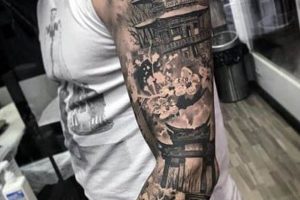



Tattoos rendered in shades of black and grey ink offer a distinct aesthetic, ranging from subtle and delicate imagery to bold and dramatic designs. This stylistic approach often features fine lines, intricate shading, and realistic depictions, lending itself well to portraits, animals, religious iconography, and abstract patterns. Examples include a realistically rendered portrait of a loved one, a detailed depiction of a wolf, or a geometric design composed of varying shades of grey.
The timeless quality of monochrome artwork translates beautifully to skin, allowing for a classic and versatile tattoo that ages gracefully. The absence of color emphasizes the skill of the artist in creating depth, texture, and contrast through meticulous shading techniques. Historically, black and grey tattoos have roots in Chicano culture and prison tattooing, but have evolved into a widely appreciated and highly sought-after style across various subcultures and artistic movements. This technique permits a broader range of subtle tonal variations, creating a sense of dimension and realism often unattainable with full-color palettes. The focused palette also contributes to a more unified and harmonious aesthetic, especially for larger or more complex compositions.
Further exploration of this style includes discussions of popular design motifs, the artistic techniques employed in creating these tattoos, and the selection of a reputable and skilled artist specializing in black and grey work. Proper aftercare for these tattoos is also crucial for maintaining their longevity and vibrancy. Understanding these aspects allows for informed decisions about design choices and the overall tattooing process.
1. Subject Matter

Subject matter plays a crucial role in the effectiveness of black and grey tattoos. The monochromatic palette lends itself particularly well to certain themes and imagery. Realism, often involving portraits of people or animals, thrives in this style. The subtle gradations of grey allow for detailed depictions of textures, shadows, and depth, creating lifelike representations. Religious iconography, particularly depictions of deities or spiritual figures, also benefits from the gravitas and timelessness associated with black and grey. Similarly, depictions of flora and fauna, ranging from delicate flowers to powerful predators, find compelling expression in this style. Geometric patterns and abstract designs offer another avenue for exploration, using varying shades of grey to create intricate visual rhythms and illusions of depth.
The choice of subject matter influences not only the aesthetic impact but also the technical execution of the tattoo. Detailed portraits require a high level of skill in rendering subtle variations in tone and texture. Large-scale pieces, such as back pieces or sleeves, necessitate careful planning and composition to maintain visual coherence across the body’s contours. The subject matter should also resonate with the individual’s personal narrative, reflecting their values, beliefs, or experiences. For instance, a portrait of a historical figure might signify admiration for their achievements, while a depiction of a personal totem animal could represent a connection to nature or a specific set of personal characteristics. Choosing appropriate imagery enhances the emotional impact and personal significance of the tattoo.
Ultimately, successful black and grey tattoos achieve a harmonious balance between technical execution and thematic resonance. Careful consideration of subject matter, coupled with an understanding of the stylistic strengths of the medium, results in a powerful and enduring work of art. This deliberate approach ensures the tattoo remains a meaningful and aesthetically compelling expression of personal identity.
2. Shading Techniques

Shading techniques form the cornerstone of successful black and grey tattooing. The interplay of light and shadow brings depth, dimension, and realism to the artwork, transforming flat designs into compelling visual narratives. Mastery of these techniques distinguishes exceptional black and grey tattoos from simpler monochrome designs.
- Whip Shading
Whip shading utilizes a smooth, controlled back-and-forth motion of the tattoo machine, creating soft gradations of grey. This technique excels in rendering subtle transitions between tones, ideal for smooth surfaces, realistic portraits, and soft backgrounds. The needle moves in a pendulum-like motion, depositing ink in varying densities to achieve the desired shading effect.
- Packing
Packing involves saturating a specific area with dense black ink, creating solid blocks of color. This technique provides contrast and definition, often used for outlines, bold lines, and areas requiring deep shadow. The needle moves in a tight, circular motion to ensure even ink distribution and a consistent black tone.
- Stippling
Stippling employs small dots of ink to create texture and shading. This technique allows for intricate detail and nuanced tonal variations, suitable for creating realistic textures like fur, feathers, or weathered skin. The density of the dots determines the value of the grey, with closely packed dots creating darker tones and sparsely placed dots yielding lighter shades.
- Brush Shading
Brush shading mimics the strokes of a paintbrush, creating textured and dynamic shading effects. This technique adds a sense of movement and fluidity to the design, often used for depicting hair, fabric folds, and dynamic backgrounds. The needle moves in longer, sweeping motions, creating a textured effect reminiscent of brushstrokes.
The skillful combination of these shading techniques allows artists to achieve a wide range of visual effects, from smooth and subtle transitions to dramatic contrasts and intricate details. Understanding these techniques and their application is essential for appreciating the artistry and complexity of black and grey tattoos. The interplay of these methods, carefully executed by a skilled artist, elevates the tattoo beyond a simple image, transforming it into a nuanced and expressive work of art.
3. Placement

Placement significantly impacts the overall aesthetic and narrative of a black and grey tattoo. Consideration of the body’s natural contours and the design’s composition is crucial. A sprawling, intricate design might be best suited for a larger canvas like the back or chest, allowing for detailed execution and visual impact. Conversely, smaller, more concise designs might find a harmonious home on the wrist, forearm, or ankle, emphasizing the body’s natural lines. The placement should complement the design, creating a cohesive and balanced visual statement. For example, a flowing, serpentine design might gracefully wrap around the arm or leg, while a symmetrical design might be centrally positioned on the chest or back.
The placement also influences the tattoo’s visibility and how it interacts with clothing and movement. A tattoo on a frequently exposed area like the hand or neck carries different social implications than a tattoo concealed by clothing. Placement choices can emphasize or downplay the tattoo, allowing for personal expression tailored to individual preferences and social contexts. Practical considerations, such as the potential for distortion due to muscle movement or skin stretching, should also inform placement decisions. Areas prone to significant movement or stretching, such as joints, might require design adjustments to maintain the tattoo’s integrity over time. For instance, a portrait on the inner forearm might distort when the wrist bends, requiring the artist to anticipate and account for such movement during the design process.
Careful placement elevates a black and grey tattoo from a simple image to a thoughtfully integrated piece of body art. The interplay between design, body contours, and personal expression creates a powerful and enduring visual statement. Understanding the impact of placement allows for informed decisions that enhance the tattoo’s aesthetic appeal and personal significance. Strategic placement maximizes the design’s visual impact and longevity, ensuring the tattoo remains a compelling and meaningful expression of individual identity.
4. Artist Selection
The selection of a skilled artist represents a critical step in realizing a successful black and grey tattoo. This choice significantly impacts the final result, influencing the tattoo’s aesthetic quality, longevity, and overall impact. Finding an artist with a strong portfolio demonstrating proficiency in black and grey realism is paramount. A thorough research process ensures the chosen artist possesses the technical expertise and artistic sensibilities aligned with the desired aesthetic.
- Portfolio Review
A comprehensive review of an artist’s portfolio provides crucial insight into their technical skills, artistic style, and preferred subject matter. Close examination of completed black and grey tattoos reveals the artist’s proficiency in shading, composition, and detail rendering. Examples of healed work offer valuable insight into the long-term quality and aging process of the artist’s tattoos. A portfolio showcasing a consistent level of high-quality work, particularly within the desired style, indicates a reliable and experienced artist.
- Specialization and Experience
Artists often specialize in particular styles, subject matter, or techniques. Seeking an artist with demonstrable experience in black and grey realism ensures their skillset aligns with the desired aesthetic. Years of experience translate to refined techniques, efficient execution, and a deeper understanding of the nuances of black and grey tattooing. An artist’s specialization signals a dedicated focus and mastery within a specific niche, increasing the likelihood of a successful outcome.
- Consultation and Communication
Open communication with a potential artist plays a vital role in establishing a collaborative and trusting relationship. A thorough consultation allows for a detailed discussion of design concepts, placement considerations, and technical aspects of the tattoo. Effective communication ensures a shared understanding of the desired outcome, minimizing potential misinterpretations and maximizing the chances of a successful collaboration. Clear communication fosters a comfortable and collaborative environment, contributing to a positive tattooing experience.
- Hygiene and Professionalism
Adherence to strict hygiene protocols is non-negotiable in tattooing. A reputable artist prioritizes client safety by maintaining a clean and sterile working environment. Proper sterilization of equipment, use of disposable needles, and adherence to universal precautions demonstrate a commitment to client well-being. Professional conduct, including clear communication, respectful interactions, and informed consent procedures, further underscores a responsible and ethical approach to tattooing.
Diligent artist selection directly influences the success of a black and grey tattoo. Careful consideration of an artist’s portfolio, specialization, communication style, and hygiene practices ensures a positive experience and a high-quality, enduring result. Investing time in this selection process safeguards against potential complications and maximizes the likelihood of achieving a tattoo that meets or exceeds expectations, a piece of art that resonates with personal meaning and aesthetic appeal for years to come. This meticulous approach transforms the tattooing experience from a simple transaction into a collaborative artistic endeavor.
5. Aftercare Practices
Diligent aftercare is essential for preserving the integrity and vibrancy of black and grey tattoos. These tattoos, characterized by intricate shading and subtle tonal variations, require specific care to ensure the artwork ages gracefully. Neglecting proper aftercare can lead to premature fading, blurring of fine lines, and loss of detail, compromising the aesthetic impact of the tattoo. Conversely, meticulous aftercare practices contribute significantly to the longevity and visual appeal of the design, maintaining its crispness and clarity for years to come. For instance, consistent moisturizing prevents the skin from drying out and cracking, which can distort the tattoo’s fine lines and shading. Protecting the tattoo from excessive sun exposure is crucial, as UV radiation can cause the black ink to fade and the grey tones to lose their subtle variations. A freshly healed tattoo, unprotected from the sun, can lose its vibrancy within months, diminishing the impact of the carefully crafted artwork.
Practical application of aftercare principles involves keeping the tattoo clean and moisturized. A gentle, fragrance-free cleanser should be used to wash the tattoo, avoiding harsh scrubbing or abrasive materials. A thin layer of fragrance-free, alcohol-free moisturizer should be applied regularly, keeping the skin hydrated and promoting healthy healing. Sun protection, in the form of high-SPF sunscreen or protective clothing, is paramount, especially during prolonged sun exposure. These practices, while seemingly simple, play a crucial role in preserving the intricate details and tonal gradations characteristic of black and grey tattoos. An individual who diligently follows aftercare instructions, protecting their tattoo from the sun and maintaining proper hygiene, will likely observe minimal fading and blurring, preserving the tattoo’s artistic integrity for an extended period. Conversely, neglecting these practices can lead to significant deterioration of the tattoo’s quality, resulting in a faded and less defined appearance over time.
Ultimately, aftercare represents an integral aspect of the black and grey tattoo experience, extending beyond the initial application process. Adherence to proper aftercare protocols safeguards the investment of time, artistry, and personal expression embodied in the tattoo. This commitment to ongoing care ensures the intricate details and subtle gradations, which define the beauty of black and grey tattoos, remain vibrant and compelling for years to come. The long-term aesthetic impact relies heavily on responsible aftercare, preserving the artistic integrity and personal significance of the tattoo as a lasting work of art.
Tips for Black and Grey Tattoo Designs
Successful execution of black and grey tattoo designs relies on careful planning and informed decision-making. The following tips offer guidance for navigating the process, ensuring a satisfying and enduring result.
Tip 1: Research Artists Extensively: Thorough research is paramount when selecting a tattoo artist specializing in black and grey realism. Examine portfolios, focusing on healed work to assess long-term quality. Look for artists demonstrating proficiency in the specific style and subject matter desired.
Tip 2: Consider Placement Carefully: Tattoo placement significantly impacts the design’s visual impact and longevity. Large, intricate designs benefit from larger canvases like the back or chest. Smaller, more concise designs may suit the wrist, forearm, or ankle. Placement should complement the body’s natural contours and the design’s composition.
Tip 3: Prioritize High-Quality Reference Images: Clear, high-resolution reference images are crucial for achieving realistic and detailed tattoos. Provide the artist with multiple angles and perspectives to ensure accurate representation of the subject matter.
Tip 4: Discuss Design Elements Thoroughly: Open communication with the artist is essential. Clearly articulate design preferences, including specific details, desired shading techniques, and overall aesthetic vision. A collaborative approach ensures a shared understanding and a satisfying outcome.
Tip 5: Understand the Healing Process: Tattoo healing requires patience and diligent aftercare. Follow the artist’s aftercare instructions meticulously to minimize complications and ensure optimal healing. This includes keeping the tattoo clean, moisturized, and protected from sun exposure.
Tip 6: Plan for Long-Term Maintenance: Black and grey tattoos, like all tattoos, require ongoing maintenance to retain their vibrancy. Regular moisturizing and consistent sun protection prevent premature fading and maintain the integrity of the design over time. Touch-ups may be necessary years later to refresh faded areas or sharpen lines.
Tip 7: Embrace the Collaborative Process: View the tattooing process as a collaborative artistic endeavor. Open communication, mutual respect, and a shared vision contribute to a positive experience and a successful outcome. Trust the artist’s expertise while actively participating in the design process.
Careful consideration of these tips contributes significantly to a successful black and grey tattoo experience. Informed decision-making and proactive communication with the artist ensure a result that aligns with individual aesthetic preferences and stands the test of time.
By understanding the nuances of design, placement, artist selection, and aftercare, individuals can embark on the journey of acquiring a black and grey tattoo with confidence and clarity, ensuring a piece of art that resonates with personal meaning and aesthetic appeal for years to come.
Frequently Asked Questions about Black and Grey Tattoos
This section addresses common inquiries regarding black and grey tattoo designs, offering clarity and guidance for those considering this distinctive style.
Question 1: How do black and grey tattoos age compared to color tattoos?
Black and grey tattoos tend to age gracefully, often retaining their definition and contrast over time. While all tattoos experience some degree of fading with age, the monochromatic palette of black and grey tends to hold up better than vibrant color tattoos, which can lose saturation and vibrancy over time. However, proper aftercare and sun protection remain crucial for maintaining the long-term quality of any tattoo.
Question 2: Are black and grey tattoos more or less painful than color tattoos?
Pain levels are subjective and vary based on individual pain tolerance, tattoo placement, and the artist’s technique. Generally, the pain difference between black and grey and color tattoos is negligible. The number of passes and the depth of needle penetration, rather than ink color, primarily influence discomfort.
Question 3: What are the most popular design motifs for black and grey tattoos?
Popular motifs include portraits, animals, religious iconography, geometric patterns, and lettering. The versatility of black and grey allows for realistic depictions, intricate details, and subtle tonal variations, accommodating a wide range of stylistic preferences.
Question 4: How much do black and grey tattoos typically cost?
Cost varies depending on factors such as size, complexity, artist experience, and geographic location. Larger, more intricate designs requiring multiple sessions naturally incur higher costs. Consulting with a reputable artist provides accurate cost estimates based on individual design specifications.
Question 5: How long does it take for a black and grey tattoo to heal completely?
Complete healing typically takes several weeks, generally ranging from two to four weeks depending on individual healing rates and the tattoo’s size and location. Following proper aftercare instructions promotes efficient healing and minimizes potential complications.
Question 6: Can black and grey tattoos be covered up or removed?
While cover-ups and removal are possible, black and grey tattoos, especially those with dense black ink, present specific challenges. Cover-ups often require larger and darker designs to effectively conceal the existing tattoo. Laser removal requires multiple sessions and may not completely eliminate the ink, particularly dense black areas.
Understanding these frequently asked questions provides valuable insight into the unique characteristics and considerations associated with black and grey tattoos. Thorough research and consultation with a reputable artist facilitate informed decision-making and ensure a satisfying and enduring result.
Further exploration of this art form might delve into specific design styles, artist portfolios, and advanced aftercare techniques, providing a comprehensive understanding of the black and grey tattoo aesthetic.
Conclusion
Exploration of black and grey tattoo designs reveals a rich tapestry of artistic expression. From the subtle nuances of shading techniques to the careful consideration of placement and subject matter, each element contributes to the overall impact and longevity of the artwork. Selecting a skilled artist specializing in this style is paramount, as their expertise ensures the intricate details and tonal variations are rendered with precision and artistry. Diligent aftercare practices safeguard the investment, preserving the tattoo’s vibrancy and clarity for years to come.
Black and grey tattoos offer a timeless aesthetic, capable of conveying powerful imagery and personal narratives. The enduring appeal of this style lies in its versatility, allowing for both bold statements and subtle expressions. Careful consideration of design choices, coupled with a commitment to proper aftercare, ensures these tattoos remain compelling and meaningful expressions of individual identity, testaments to the enduring power of art etched onto the canvas of human skin.