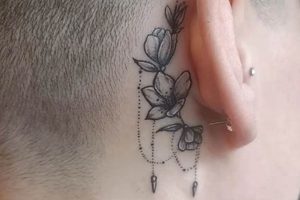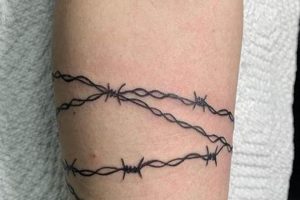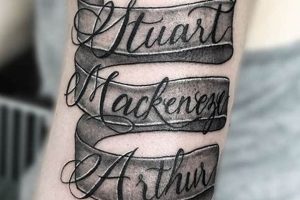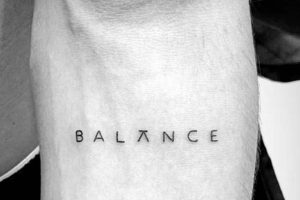



Short passages of scripture permanently inked onto the skin allow individuals to carry deeply personal expressions of faith, inspiration, or remembrance. These range from single words like “faith” or “grace” to longer verses offering comfort, guidance, or motivation. For instance, Psalm 23:4, “Even though I walk through the darkest valley, I will fear no evil, for you are with me,” provides strength during challenging times, while John 3:16, “For God so loved the world that he gave his one and only Son, that whoever believes in him shall not perish but have eternal life,” encapsulates a core tenet of Christian belief.
Such permanently displayed expressions of faith can serve as daily reminders of one’s beliefs, providing comfort, strength, and a connection to something larger than oneself. They can also act as conversation starters, opening doors to share personal beliefs and connect with others who share similar values. Historically, religious tattoos, including scriptural passages, have been used as symbols of protection, devotion, and belonging to specific faith communities. This practice continues today, blending ancient tradition with modern artistic expression.
Exploring this topic further will delve into popular choices of scriptural text, design considerations such as font and placement, and the cultural significance behind this enduring form of self-expression.
1. Verse Selection

Verse selection represents the cornerstone of meaningful scriptural tattoos. The chosen passage embodies the individual’s faith, values, or personal journey. Careful consideration should be given to the verse’s theological implications, personal resonance, and intended message. A verse chosen impulsively may lack lasting significance, while a deeply contemplated selection can offer enduring inspiration. For example, someone seeking strength during adversity might choose Isaiah 41:10: “So do not fear, for I am with you; do not be dismayed, for I am your God. I will strengthen you and help you; I will uphold you with my righteous right hand.” Conversely, someone celebrating new life might select Psalm 139:13-14: “For you created my inmost being; you knit me together in my mothers womb. I praise you because I am fearfully and wonderfully made; your works are wonderful, I know that full well.”
The impact of verse selection extends beyond personal meaning. The chosen passage becomes a permanent part of one’s physical presentation, communicating values and beliefs to the world. This public display necessitates thoughtful reflection on the verse’s potential interpretations and cultural sensitivities. While John 11:35, “Jesus wept,” offers a powerful expression of empathy, its brevity might lack context for observers. Including additional elements, such as symbolic imagery, can enhance understanding and aesthetic appeal. Furthermore, consulting with religious leaders or knowledgeable individuals can provide valuable insights into a verse’s nuances and potential interpretations.
Ultimately, effective verse selection hinges on aligning personal significance with thoughtful consideration of broader implications. This process requires introspection, research, and attention to detail. The chosen verse becomes a powerful symbol of faith, a constant source of inspiration, and a testament to one’s personal narrative. This thoughtful approach ensures the tattoo remains a meaningful and cherished expression of belief for years to come.
2. Font choice

Font choice significantly impacts the overall aesthetic and legibility of scriptural tattoos. Typography conveys specific connotations, influencing how the message is perceived. A font’s style, size, and kerning (spacing between letters) contribute to the tattoo’s readability and artistic impact. Elegant, flowing scripts, like calligraphy or Spencerian, may suit verses emphasizing grace or beauty, while bolder, more angular fonts, such as Gothic or Old English, might complement passages focused on strength or resilience. For example, a delicate script for Corinthians 13:4-7, “Love is patient, love is kind”, enhances the verse’s message of gentle compassion, while a strong, bold font for Joshua 1:9, “Be strong and courageous. Do not be afraid; do not be discouraged, for the Lord your God will be with you wherever you go,” amplifies the verse’s message of fortitude. Incorrect font pairings can clash with the intended message, diminishing the tattoo’s impact. A heavily stylized or overly ornate font can also hinder readability, especially with longer passages or smaller tattoo sizes. Therefore, careful font selection is crucial for effectively communicating the chosen scripture’s meaning and ensuring long-term aesthetic satisfaction.
Practical considerations further underscore the importance of font choice. Intricate fonts with fine details might blur or lose clarity over time, particularly in areas prone to stretching or sun exposure. Consulting with experienced tattoo artists is vital. They possess expertise in font selection, considering factors like skin tone, tattoo placement, and desired size. They can also advise on appropriate letter spacing and sizing for optimal readability and visual balance. Providing the artist with examples of preferred fonts can facilitate this collaborative process. Examining portfolios to assess their proficiency with different typographic styles further ensures alignment with personal aesthetic preferences. Finally, requesting a stencil preview on the skin allows visualization of the final design and font rendering before the permanent inking process begins.
Font selection, while seemingly a minor detail, represents a crucial element in creating a successful and meaningful scriptural tattoo. The chosen typography interacts dynamically with the verse’s message, contributing to its aesthetic appeal, legibility, and long-term visual impact. Thoughtful consideration of font style, size, and spacing, combined with expert consultation, ensures the chosen scripture remains a powerful and visually compelling expression of personal faith.
3. Placement on Body

Placement significantly influences the presentation and personal significance of scriptural tattoos. Consideration of visibility, size, and the body’s natural contours ensures the chosen verse complements the individual’s physique and aligns with their desired level of discretion. Highly visible placements, such as the forearm or wrist, allow for easy sharing of one’s faith, potentially sparking conversations and fostering connections with others who share similar beliefs. A wrist tattoo of “Philippians 4:13,” for instance, serves as a readily accessible reminder of personal strength. More discreet locations, like the ribcage or back, offer personal reflection and intimacy, reserving the message’s full impact for select viewings. A larger passage from Psalm 23 on the back might provide solace and comfort primarily for the individual. The body’s natural curvature can also enhance or detract from the tattoo’s aesthetic appeal. Circular designs naturally complement the shoulder or upper arm, while linear passages often suit the forearm or spine.
Beyond aesthetics, placement can also amplify the verse’s symbolic meaning. A tattoo encircling the wrist might represent eternal commitment to one’s faith, mirroring the symbolism of a wedding ring. Placement over the heart can emphasize the deeply personal and emotional connection to the chosen scripture. A verse related to guidance, such as Proverbs 3:5-6, positioned on the foot, could symbolize one’s journey through life guided by faith. Practical considerations also influence placement choices. Areas prone to frequent sun exposure might experience faster ink fading, necessitating more frequent touch-ups. Similarly, areas subject to friction or stretching, like the inner elbow or fingers, may experience quicker ink degradation. Understanding these factors allows informed decisions that ensure the longevity and aesthetic integrity of the tattoo.
Effective placement, therefore, requires a holistic approach, balancing aesthetic considerations with personal symbolism and practical limitations. Careful planning and consultation with experienced tattoo artists ensures the chosen scripture is displayed in a manner that respects both the body and the message’s intended meaning. This harmonious integration of body and scripture enhances the tattoo’s overall impact, transforming it into a powerful and enduring expression of personal faith.
4. Visual elements
Visual elements significantly enhance scriptural tattoos, transforming simple text into compelling works of art. These elements provide context, amplify meaning, and create visually appealing compositions. Careful selection and integration of imagery ensure the visual elements complement the chosen scripture, enriching its message without overshadowing its significance. A dove accompanying a verse about peace, such as Matthew 5:9, “Blessed are the peacemakers, for they will be called children of God,” reinforces the verse’s message of tranquility and harmony. Similarly, an anchor paired with Hebrews 6:19, “We have this hope as an anchor for the soul, firm and secure,” visually represents steadfast faith and unwavering hope. Incorporating imagery relevant to the scriptures narrative or symbolic meaning creates a more profound and personalized expression of faith. A burning bush alongside Exodus 3:2, where Moses encounters God, adds a powerful visual narrative to the verse. Conversely, ill-fitting imagery can detract from the message, creating a jarring disconnect between visual and textual elements. A skull paired with a verse about love could generate confusion or misinterpret the intended meaning.
Practical considerations govern the effective use of visual elements. The chosen imagerys complexity, size, and placement should harmonize with the scriptural text. Intricate designs require sufficient space to maintain clarity and prevent blurring over time. Smaller tattoos necessitate simpler, bolder imagery to ensure visual impact. Placement also influences how the visual element interacts with the body’s contours. A flowing design might complement the curve of the arm or leg, while a symmetrical image could suit the chest or back. Furthermore, the chosen visual elements should maintain stylistic consistency with the scriptural font. A delicate script paired with a bold, graphic image could create visual dissonance. Consulting with experienced tattoo artists proves invaluable during this design phase. Their expertise ensures the chosen imagery complements the scripture’s message and enhances the tattoo’s overall aesthetic appeal. They can also advise on appropriate sizing, placement, and stylistic choices that consider the individual’s skin tone and body type.
Visual elements represent a powerful tool for elevating scriptural tattoos beyond simple text. Thoughtful selection and integration of imagery amplify the chosen verses meaning, creating a visually captivating and deeply personal expression of faith. Careful consideration of practical aspects, combined with expert guidance, ensures these visual elements harmonize seamlessly with the scriptural text, resulting in a powerful and enduring testament to ones beliefs.
5. Language selection

Language selection adds a profound layer of meaning and authenticity to scriptural tattoos. Choosing the original biblical languageHebrew, Aramaic, or Greekor opting for a specific translation significantly impacts the tattoo’s resonance and cultural connection. Original language selections offer a direct link to the scriptures’ historical roots, carrying the weight of centuries of tradition and interpretation. A Hebrew rendering of “Shalom” (peace) evokes a deeper connection to Jewish heritage than its English equivalent. Similarly, a Greek inscription of “Agape” (love) resonates with the New Testament’s original expression of unconditional love. However, legibility and accurate representation become paramount. Consulting with language experts ensures proper spelling, grammar, and appropriate script form, preventing unintended misinterpretations or aesthetic inaccuracies. Furthermore, understanding the chosen language’s cultural context avoids potential misappropriation or offense.
Selecting a specific translation, such as the King James Version or the New International Version, offers accessibility and familiarity. Individuals often connect deeply with specific translations due to personal experiences, upbringing, or theological preferences. A verse rendered in the familiar language of one’s childhood Bible can evoke powerful emotional connections. However, translational nuances can alter a verse’s meaning subtly. Comparing different translations ensures the chosen rendition accurately reflects the intended message and theological understanding. For instance, the phrase “fear not” appears frequently in the King James Version, while modern translations often use “do not be afraid,” subtly shifting the tone and emphasis. Considering these nuances ensures the selected translation aligns with the individual’s desired interpretation and resonates with personal beliefs.
Language selection in scriptural tattoos represents a complex interplay of personal significance, cultural sensitivity, and accurate representation. Whether opting for the original biblical languages or a preferred translation, careful consideration and expert consultation ensure the chosen language enhances the tattoo’s meaning and resonates authentically with the individual’s faith and heritage. This thoughtful approach transforms the scriptural tattoo into a powerful testament to one’s beliefs, reflecting both personal connection and historical reverence for the chosen text.
Tips for Scriptural Tattoo Design
Careful planning ensures a scriptural tattoo remains a meaningful and aesthetically pleasing expression of faith. Consideration of the following tips contributes to a successful and enduring design.
Tip 1: Research Thoroughly
Thorough research is crucial before committing to a scriptural tattoo. Understanding the chosen verse’s full context within its respective book and the broader biblical narrative prevents misinterpretations or unintended connotations. Consulting theological resources or discussing the verse with religious leaders provides valuable insights.
Tip 2: Prioritize Readability
Legibility should always take precedence over elaborate design. A clearly rendered font, appropriate sizing, and sufficient spacing between letters ensure the scripture remains readable over time. Avoid overly stylized or excessively small fonts, especially for longer passages.
Tip 3: Choose Experienced Artists
Seek experienced tattoo artists specializing in script and fine-line work. Examine portfolios for examples of previous scriptural tattoos to assess their skill and style. A skilled artist ensures clean lines, accurate lettering, and a visually appealing composition.
Tip 4: Consider Long-Term Care
Scriptural tattoos, like all tattoos, require proper aftercare and ongoing maintenance. Protecting the tattoo from sun exposure with sunscreen and following the artist’s aftercare instructions preserves its vibrancy and prevents premature fading. Regular moisturizing also helps maintain the skin’s health and the tattoo’s clarity.
Tip 5: Reflect Personal Significance
A scriptural tattoo should resonate deeply with personal beliefs and values. Choosing a verse solely for its aesthetic appeal or popularity can diminish its long-term significance. The chosen scripture should reflect a genuine connection to one’s faith and personal journey.
Tip 6: Balance Aesthetics and Meaning
Strive for a balance between aesthetic appeal and meaningful representation. While visual elements enhance a tattoo’s artistry, they should not overshadow the scripture’s core message. Ensure the design complements the chosen verse without detracting from its significance.
Tip 7: Embrace Simplicity
Simplicity often yields the most powerful and enduring designs. A clean font, carefully chosen placement, and minimal embellishments can create a striking and timeless tattoo that emphasizes the scripture’s inherent beauty and meaning.
Careful consideration of these tips ensures the chosen scripture becomes a cherished and meaningful piece of body art, reflecting one’s faith and values with clarity and enduring beauty.
By adhering to these guidelines, individuals can confidently embark on the journey of transforming a deeply personal scriptural passage into a powerful and enduring work of art.
Frequently Asked Questions about Scriptural Tattoos
Individuals considering scriptural tattoos often have questions regarding design, practicality, and cultural sensitivity. This section addresses common concerns to provide clarity and guidance.
Question 1: Does getting a scriptural tattoo violate religious tenets?
Interpretations vary across religious traditions. Some denominations discourage tattoos in general, while others hold no specific prohibitions against scriptural ink. Consulting with religious leaders within one’s specific faith provides clarity on relevant doctrines.
Question 2: What are appropriate locations for scriptural tattoos?
Placement depends on personal preference and desired visibility. Common locations include the forearm, wrist, back, ribs, and ankle. Placement should consider factors like clothing coverage, sun exposure, and potential visibility in professional settings.
Question 3: How can one ensure the accuracy of a scriptural tattoo in a different language?
Verification with individuals fluent in the chosen language, especially religious scholars or native speakers, is essential. This process ensures accurate translation, correct grammar, and appropriate script form, preventing unintended errors.
Question 4: Do scriptural tattoos fade faster than other tattoo types?
Fading depends on factors like ink quality, sun exposure, skin type, and aftercare practices. No inherent difference exists in fading rates between scriptural and other tattoo types. Proper aftercare, including sun protection, is crucial for all tattoos.
Question 5: Can scriptural tattoos be removed or altered?
Laser removal or cover-up techniques can alter or remove unwanted tattoos. However, laser removal can be costly and time-consuming, while cover-ups require careful design considerations. Thorough planning before getting a scriptural tattoo is essential to minimize future regrets.
Question 6: How can one choose a meaningful and appropriate scripture?
Meaningful scripture selection involves reflecting on personal beliefs, values, and life experiences. Consider verses that provide inspiration, guidance, or comfort. Consulting with religious leaders or engaging in personal study can aid in selecting a deeply resonant passage.
Careful consideration of these frequently asked questions empowers individuals to make informed decisions about scriptural tattoos, ensuring the final design aligns with personal beliefs, aesthetic preferences, and cultural sensitivities.
Further exploration of this topic might include examining specific scriptural passages commonly chosen for tattoos, discussing artistic styles and design trends, or showcasing examples of well-executed scriptural tattoo designs.
Conclusion
Scriptural passages chosen for permanent inscription on the body represent a powerful intersection of faith, personal narrative, and artistic expression. Careful consideration of verse selection, font choice, placement, visual elements, and language ensures a meaningful and aesthetically pleasing outcome. Thorough research, consultation with experienced tattoo artists, and attention to long-term care contribute to a successful and enduring design that resonates with personal beliefs and values.
Permanent displays of faith through scriptural tattoos offer a powerful means of expressing one’s deepest convictions. The enduring nature of these inscriptions necessitates thoughtful reflection, ensuring the chosen passage remains a source of inspiration and a testament to one’s unwavering commitment to faith. This enduring art form continues to evolve, offering individuals a unique canvas for expressing their connection to the divine.