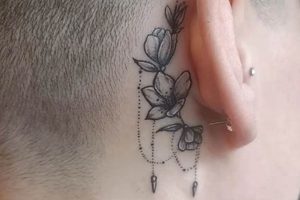



Large-scale tattoo designs offer a significant canvas for artistic expression, enabling intricate details and complex compositions. Examples include full back pieces depicting mythological scenes, elaborate sleeve designs showcasing flora and fauna, or extensive chest pieces representing abstract concepts. These designs often require multiple sessions to complete, allowing for a collaborative process between the artist and the client.
The canvas size provided by large-scale body art allows for a greater depth of narrative and symbolism compared to smaller designs. Historically, extensive tattooing has held cultural significance in various societies, representing status, spirituality, or group affiliation. Today, large-scale work continues to resonate with individuals seeking a powerful and enduring form of self-expression. This commitment to a large-scale project can represent a significant personal journey, reflecting deeply held values, beliefs, or experiences.
Exploring various artistic styles, placement considerations, and the commitment involved in larger pieces are essential factors in planning such a design. Understanding the process, healing time, and long-term care requirements are crucial for achieving a successful and aesthetically pleasing outcome.
1. Placement

Placement is a critical factor in large-scale tattoo design. The body’s natural contours serve as a three-dimensional canvas, influencing how the artwork flows and interacts with the individual’s form. A design intended for the back, for example, might incorporate the spine or shoulder blades as integral elements of the composition. Similarly, a rib piece benefits from designs that follow the natural curve of the rib cage. Understanding how placement impacts the visual presentation of the design is essential for achieving a cohesive and aesthetically pleasing result. A large, flowing design placed on a smaller, flatter area might appear cramped or distorted, while a smaller, more contained design on a larger area could lack impact.
Consideration must also be given to the visibility and exposure of the chosen location. A highly visible placement, like the forearm, might be suitable for individuals comfortable with displaying their artwork regularly. Conversely, a less visible placement, such as the back or thigh, offers greater discretion. Practical considerations like clothing and professional environments also influence placement choices. Certain professions may require tattoos to be covered, influencing the suitability of highly visible locations. Factors such as muscle movement and skin stretching over time should also be considered, as these can impact the long-term appearance of the tattoo, especially with intricate designs. A skilled artist will factor in these elements to ensure the design retains its integrity as the body changes.
Careful placement maximizes the artistic potential of large-scale tattoos, ensuring the design complements the body’s form and remains visually appealing over time. Balancing aesthetic considerations with practical lifestyle factors and professional requirements ensures the tattoo remains a source of personal satisfaction rather than regret. Consulting with a reputable artist experienced in large-scale work is crucial. They can provide valuable insights into placement strategies that optimize both the visual impact and longevity of the chosen design.
2. Theme/Concept

Theme and concept serve as the foundation for successful large-scale tattoo designs. A compelling theme provides a cohesive narrative, unifying diverse elements into a harmonious whole. Large canvases offer the space to explore complex themes in greater depth than smaller tattoos. Themes might draw inspiration from mythology, nature, literature, personal experiences, or abstract concepts. A sprawling back piece might depict a battle between mythical creatures, reflecting themes of struggle and resilience. A sleeve could showcase a journey through a dense forest, embodying themes of exploration and transformation. The chosen theme should resonate deeply with the individual, reflecting personal values, beliefs, or significant life events. This personal connection imbues the artwork with meaning and ensures lasting satisfaction.
Developing a strong concept within the chosen theme provides direction and focus for the design. A theme of “nature,” for example, might be further conceptualized as a specific ecosystem like a coral reef or a redwood forest. This focused concept guides the selection of imagery, color palettes, and compositional elements. Conceptual clarity ensures the final artwork conveys a clear and impactful message. A sprawling, detailed design lacking a strong underlying concept can appear fragmented and visually overwhelming. Conversely, a well-defined concept provides a framework that unifies even the most intricate details, creating a visually compelling and narratively rich artwork.
Careful consideration of theme and concept is essential for impactful large-scale tattoo designs. A compelling theme interwoven with a well-defined concept provides a roadmap for the entire process, from initial brainstorming to final execution. This ensures the final product is not merely a collection of images, but a cohesive and meaningful work of art that resonates with the individual for years to come. Selecting a reputable artist experienced in translating complex themes and concepts into visually stunning tattoos is critical for realizing the full potential of large-scale designs.
3. Artistic Style

Artistic style is a crucial element in large-scale tattoo design, significantly impacting the final aesthetic and overall impression. The chosen style dictates the visual language of the tattoo, influencing the use of line, color, shading, and composition. Selecting a style that aligns with the chosen theme and the individual’s personal aesthetic is essential for a cohesive and satisfying result.
- Realism
Realism aims to depict subjects as accurately as possible, mirroring photographic detail and precision. Portraits of people or animals, detailed depictions of landscapes, or intricate reproductions of objects are common examples. In the context of large-scale tattoos, realism allows for stunningly lifelike imagery, maximizing the impact of the expansive canvas. However, it requires a highly skilled artist capable of rendering fine details with precision.
- Traditional
Traditional styles, such as American Traditional or Japanese Traditional, feature bold lines, vibrant colors, and iconic imagery. Think anchors, eagles, roses, dragons, and koi fish. These styles lend themselves well to large-scale tattoos, creating visually striking pieces with a classic, timeless appeal. Their bold nature ensures the design remains clear and impactful, even from a distance.
- Watercolor
The watercolor style mimics the fluid, translucent qualities of watercolor paintings. Characterized by soft color gradients, gentle washes, and often abstract forms, this style can create dreamlike and ethereal large-scale tattoos. The flowing nature of watercolor works particularly well with designs that incorporate movement and organic shapes. It allows for a unique and artistic expression, though requires an artist skilled in translating this painterly style to skin.
- Geometric/Abstract
Geometric and abstract styles employ precise lines, shapes, and patterns, often incorporating elements of sacred geometry or non-representational forms. Mandala designs, intricate linework, and patterns inspired by nature or mathematics are characteristic examples. These styles can create visually captivating large-scale tattoos with a sense of balance and harmony, offering a modern and sophisticated aesthetic. The scalability of geometric patterns makes them particularly well-suited to larger pieces.
The interplay between artistic style and the expansive canvas of large-scale tattoos allows for a powerful form of self-expression. Choosing a style that complements the chosen theme and resonates with individual preferences ensures a cohesive and impactful result. Careful consideration of these stylistic nuances during the design process is crucial for creating a large-scale tattoo that not only visually captivates but also holds deep personal meaning.
4. Detail and Complexity

Detail and complexity are integral components of large-scale tattoo designs, directly influencing the visual impact and narrative depth. The expansive canvas provides ample space for intricate details and elaborate compositions, allowing artists to create visually rich and narratively compelling artwork. A large back piece depicting a historical battle scene, for example, can incorporate numerous figures, weaponry, and background elements, adding layers of meaning and visual interest. Similarly, a full sleeve showcasing a dense forest can feature individual leaves, branches, and animals, creating a sense of depth and realism. The level of detail and complexity must be carefully balanced with the overall design and the chosen artistic style. Overly intricate details in a small area can appear cluttered, while a lack of detail in a large area can result in a design feeling empty or unfinished.
The relationship between detail and complexity also influences the time commitment and cost associated with large-scale tattoos. Highly detailed and complex designs require multiple sessions, sometimes spanning months or even years, to complete. This extended timeframe allows for meticulous execution and precise placement of each element, ensuring the final result meets the highest artistic standards. The increased time commitment also allows for adjustments and refinements throughout the process, facilitating a collaborative relationship between the artist and the client. This collaborative approach ensures the final artwork aligns perfectly with the individual’s vision and expectations. Understanding the time investment involved is crucial for individuals considering large-scale projects.
Successfully incorporating detail and complexity into large-scale tattoos requires careful planning and execution. A skilled artist will consider factors such as composition, visual balance, and the interplay of elements to create a cohesive and visually compelling narrative. Effective use of negative space, strategic placement of focal points, and skillful rendering of details contribute to the overall impact of the design. Balancing these elements ensures the final artwork is not merely a collection of details, but a unified and meaningful expression of personal style and narrative. The ability to manage detail and complexity effectively distinguishes a truly skilled tattoo artist, contributing to the creation of large-scale tattoos that are both visually stunning and deeply meaningful.
5. Artist Selection

Artist selection is paramount for large-scale tattoo projects. The scale and complexity of these designs necessitate a skilled artist capable of executing the concept effectively. A large-scale tattoo represents a significant investment of both time and resources, making the choice of artist a critical decision. Technical proficiency, artistic vision, and experience with large-scale work are key factors to consider. An artist specializing in photorealism, for example, might not be the best choice for a traditional Japanese-style back piece. Conversely, an artist known for bold, traditional work might not possess the nuanced skills required for a delicate, intricate watercolor design. Researching an artist’s portfolio, reviewing testimonials, and scheduling consultations are essential steps in the selection process. A thorough understanding of the artist’s strengths and style ensures alignment with the individual’s vision for the tattoo.
The collaborative nature of large-scale tattoo projects further emphasizes the importance of artist selection. These projects often involve multiple sessions, requiring open communication and a strong working relationship between the artist and the client. A skilled artist will actively listen to the client’s ideas, offer constructive feedback, and incorporate individual preferences into the design process. This collaborative approach fosters trust and ensures the final artwork reflects the client’s vision accurately. Effective communication also allows for flexibility and adjustments throughout the process, accommodating any necessary refinements or modifications. A positive and productive artist-client relationship contributes significantly to the overall success and satisfaction with the final tattoo. Compatibility in terms of communication style and artistic vision is therefore as crucial as technical skill.
Choosing the right artist is fundamental to the successful realization of large-scale tattoo designs. Technical expertise, artistic style, experience with large projects, and a collaborative approach are essential factors to consider. A well-chosen artist acts as a partner in the creative process, guiding the project from concept to completion and ensuring a result that is both visually stunning and deeply meaningful. The long-term nature of large-scale tattoos underscores the importance of selecting an artist whose work will stand the test of time, both technically and aesthetically.
Tips for Large-Scale Tattoo Designs
Planning and executing large-scale tattoos requires careful consideration of several factors to ensure a successful and satisfying outcome. The following tips provide guidance for navigating the process effectively.
Tip 1: Plan for the Long Term: Large-scale tattoos require multiple sessions, often spanning months or even years. Consider the time commitment and ensure a schedule aligns with personal availability. A realistic timeframe allows for proper healing between sessions and prevents rushing the process.
Tip 2: Budget Accordingly: Large-scale work represents a significant financial investment. Discuss pricing with the chosen artist upfront and establish a clear payment plan. Factor in potential travel expenses, aftercare products, and touch-up sessions.
Tip 3: Research Artists Thoroughly: Selecting the right artist is crucial. Review portfolios, focusing on artists experienced in large-scale designs and the preferred style. Seek recommendations and consult with potential artists to discuss the project’s scope and vision.
Tip 4: Prioritize Aftercare: Large-scale tattoos require diligent aftercare to ensure proper healing and prevent complications. Follow the artist’s instructions meticulously and invest in high-quality aftercare products. Proper aftercare contributes to the longevity and vibrancy of the tattoo.
Tip 5: Consider Placement Carefully: Body contours and lifestyle influence placement choices. Consider visibility, clothing restrictions, and potential changes to body shape over time. Discuss placement options with the artist to ensure optimal aesthetic presentation and long-term satisfaction.
Tip 6: Develop a Cohesive Concept: A strong concept provides a narrative framework for the design. Collaborate with the artist to develop a concept that resonates personally and offers sufficient depth for a large canvas. A well-defined concept ensures a unified and meaningful artwork.
Tip 7: Embrace the Journey: Large-scale tattooing is a process. Embrace the journey, trust the artist’s expertise, and maintain open communication throughout the process. This collaborative approach fosters a positive experience and ensures a final product that exceeds expectations.
Following these tips promotes a positive and fulfilling experience, resulting in a large-scale tattoo that is both visually stunning and a source of personal pride for years to come. Careful planning, thorough research, and open communication are key elements for success.
By considering these factors, individuals embarking on large-scale tattoo projects can make informed decisions, maximizing their chances of achieving a beautiful and meaningful piece of body art.
Frequently Asked Questions
Addressing common inquiries regarding large-scale tattoo designs provides clarity and facilitates informed decision-making.
Question 1: What is the typical time commitment for a large-scale tattoo?
Completion time varies based on design complexity, size, and individual pain tolerance. Large-scale projects typically require multiple sessions, potentially spanning months or even years. Each session can last several hours, with adequate healing time between sessions crucial.
Question 2: How does one determine the right placement for a large-scale design?
Placement depends on several factors, including the design itself, body contours, and desired visibility. Consulting with an experienced tattoo artist is essential. Artists can advise on how a design will interact with the body’s natural curves and suggest placements that complement both the design and the individual’s physique.
Question 3: What are the typical costs associated with large-scale tattoos?
Costs depend on factors like the artist’s experience, design intricacy, size, and geographic location. Large-scale work represents a significant financial commitment. Obtaining detailed quotes from reputable artists is recommended before proceeding. Transparency regarding pricing and payment plans is essential.
Question 4: How does aftercare differ for large-scale tattoos compared to smaller ones?
While the fundamental principles of aftercare remain consistent, the larger surface area requires more diligent care and attention. Keeping the area clean, moisturized, and protected from sun exposure is critical. Large-scale tattoos may also require specialized aftercare products or techniques, as advised by the artist. Strict adherence to aftercare instructions is essential for proper healing and color retention.
Question 5: What factors should be considered when selecting an artist for a large-scale project?
Experience with large-scale work, artistic style, and a strong portfolio demonstrating proficiency in the desired aesthetic are essential. Recommendations, consultations, and a review of healed work provide valuable insights into an artist’s capabilities and suitability for a large-scale project.
Question 6: Can large-scale tattoos be removed or covered up?
Removal or cover-up of large-scale tattoos presents significant challenges. Laser removal requires multiple sessions and may not completely erase the ink, particularly with complex or layered designs. Cover-ups necessitate an even larger design, potentially limiting artistic options. Careful consideration and planning are paramount before committing to large-scale work due to the relative permanence of the art form.
Understanding these key considerations empowers individuals to make informed decisions regarding large-scale tattoo projects, facilitating a positive and fulfilling experience.
Further exploration of specific design styles, artist portfolios, and aftercare practices can provide additional insights for those contemplating large-scale body art.
Large-Scale Tattoo Designs
Large-scale tattoo designs represent a significant commitment, demanding careful consideration of artistic style, placement, and the technical expertise of the chosen artist. Theme and concept provide the foundation for a cohesive and meaningful piece, while meticulous attention to detail and complexity elevates the artwork to a higher level of expression. Successful execution relies on a collaborative relationship between the artist and the individual, ensuring the final result aligns with personal vision and aesthetic preferences. Understanding the process, including the time commitment, financial investment, and aftercare requirements, is crucial for a positive and fulfilling experience.
Large-scale body art offers a powerful medium for self-expression, enabling individuals to transform their bodies into living canvases that tell stories, embody values, and reflect personal journeys. The decision to embark on such a project should be approached with thoughtful consideration and a deep understanding of the commitment involved. When executed with care and precision, large-scale tattoos become enduring works of art, reflecting individual narratives and enriching personal expression for years to come.