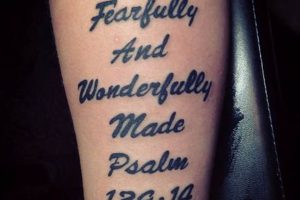



Scriptural passages serve as a popular source of inspiration for body art. These designs can range from simple, single-word inscriptions to elaborate depictions of biblical scenes or figures. Examples include short phrases like “Faith, Hope, Love” (1 Corinthians 13:13) or visually symbolic representations of the cross, dove, or anchor.
The enduring appeal of this form of expression lies in its ability to convey deeply personal beliefs, values, and experiences. Such tattoos can serve as permanent reminders of spiritual guidance, sources of strength during challenging times, or expressions of gratitude and devotion. Historically, religious iconography has played a significant role in various cultures, and this practice continues to resonate with individuals seeking a tangible connection to their faith. The permanence of tattoos further emphasizes the commitment to these beliefs.
This article will further explore various aspects of incorporating scriptural text into body art, covering topics such as popular selections, design considerations, and the cultural significance of religious tattoos.
1. Verse Selection

Verse selection represents a crucial initial step in the process of designing scriptural tattoos. The chosen passage acts as the foundation upon which the entire design rests, influencing not only the aesthetic outcome but also the personal meaning imbued within the tattoo. A thoughtful selection process considers the individual’s beliefs, experiences, and the specific message they wish to convey. The impact of this choice extends beyond mere aesthetics, shaping the long-term relationship the individual will have with their body art. For instance, someone seeking comfort might choose Psalm 23:4, “Even though I walk through the darkest valley, I will fear no evil, for you are with me,” while someone celebrating a milestone might opt for Jeremiah 29:11, “For I know the plans I have for you, declares the Lord, plans to prosper you and not to harm you, plans to give you hope and a future.”
The practical significance of careful verse selection becomes evident when considering the permanence of tattoos. A hastily chosen verse might later hold different connotations or lose its original meaning for the individual. Thorough reflection and research into different translations and interpretations are therefore essential. Consulting with religious leaders or engaging in personal study can provide valuable insights and ensure the chosen verse aligns with one’s intended message and spiritual understanding. Furthermore, considering the length and complexity of the verse is crucial for practical design considerations, as longer passages may require larger tattoo areas or stylistic adjustments.
Ultimately, effective verse selection contributes significantly to the creation of a meaningful and enduring scriptural tattoo. It provides the conceptual core, informing the artistic choices and ensuring the final result resonates deeply with the individual’s faith and personal narrative. Careful consideration during this stage avoids potential regrets and fosters a strong connection between the individual, their beliefs, and their chosen body art.
2. Visual Representation

Visual representation plays a critical role in translating the abstract concepts of scriptural verses into tangible and evocative tattoo designs. It bridges the gap between the written word and artistic expression, allowing individuals to externalize their faith in a visually compelling manner. The effectiveness of the visual representation directly impacts the tattoo’s ability to communicate its intended message and resonate with both the wearer and the observer. The chosen imagery, style, and artistic elements work in concert with the selected verse to create a cohesive and meaningful piece. For example, a verse about strength could be visually represented by an image of a lion, oak tree, or mountains, amplifying the verse’s core message. Similarly, a verse about peace might be accompanied by imagery of a dove, calm waters, or olive branches.
Careful consideration of visual elements is essential due to the inherent limitations of the tattoo medium. Factors such as size, placement, and color palette influence the overall impact and legibility of the design. A small, intricate design might be lost on a large area of the body, while a large, bold design might not be suitable for a smaller, more delicate area. Color choices can further enhance or detract from the design’s message; vibrant colors can convey joy and celebration, while muted tones can express solemnity or reflection. Practical considerations, such as the tattoo artist’s skill and experience, also influence the final outcome. A skilled artist can translate complex concepts into visually stunning and meaningful representations, ensuring the tattoo remains aesthetically pleasing and effectively communicates its intended message for years to come.
Successful visual representation elevates scriptural tattoos beyond mere text inscriptions, transforming them into powerful expressions of faith and personal narrative. It adds layers of meaning and depth, allowing individuals to personalize their chosen verse and connect with it on a deeper level. By carefully considering the interplay between the chosen verse, visual elements, and artistic execution, individuals can create tattoos that serve as lasting reminders of their beliefs and inspire meaningful reflection.
3. Placement on Body

Placement on the body constitutes a significant factor in the overall impact and meaning of scriptural tattoos. The chosen location interacts with the verse’s message, influencing its visibility, personal significance, and how it is perceived by others. Placement decisions often reflect a balance between personal expression and social context. A highly visible placement, such as the forearm or hand, might signify a desire to openly share one’s faith, while a more discreet location, such as the back or ribcage, might suggest a more personal and intimate connection to the chosen verse. For instance, a wrist placement could symbolize the wearer’s commitment to acting in accordance with their faith, while a placement over the heart might emphasize the emotional and spiritual significance of the verse. The physical location interacts with the tattoo’s message, creating a layered meaning specific to the individual and their chosen verse.
Practical considerations also influence placement choices. The size and complexity of the design, the body’s natural contours, and the potential for distortion over time all play a role. Larger, more intricate designs necessitate larger areas, such as the back, chest, or thigh. Smaller, simpler designs might be better suited to the wrist, ankle, or behind the ear. The curvature of the body can affect how the tattoo appears, requiring careful planning to ensure the design maintains its intended form. Additionally, areas prone to stretching or wrinkling, such as the stomach or inner arm, might experience design distortion over time. Understanding these factors ensures the longevity and aesthetic integrity of the tattoo. For example, a long passage from Psalm 119 might be best suited to a larger area like the back, while a shorter verse like John 3:16 could be placed on the wrist or forearm.
Careful consideration of placement maximizes the impact and personal significance of scriptural tattoos. It allows individuals to create a powerful visual statement of their faith while also accounting for practical considerations. The chosen location becomes an integral part of the tattoo’s narrative, adding depth and complexity to its message. A thoughtful approach to placement ensures the tattoo remains a meaningful and aesthetically pleasing expression of faith for years to come. This conscious choice contributes to the overall harmony and impact of the design, integrating the scriptural message seamlessly with the individual’s physical form.
4. Font and Styling

Font and styling choices significantly impact the aesthetic and communicative power of scriptural tattoos. Typography acts as a visual language, conveying not only the literal meaning of the verse but also its tone, historical context, and emotional resonance. Careful selection ensures the chosen font complements the scriptural passage and harmonizes with the overall design, enhancing both its legibility and artistic impact. These choices contribute significantly to the tattoo’s ability to convey the desired message effectively and resonate with the individual’s personal expression of faith.
- Font Selection
Different fonts evoke different eras and sentiments. A gothic font might convey a sense of tradition and reverence, while a modern sans-serif font might represent a more contemporary interpretation of faith. Script fonts can add an elegant and personalized touch, while block fonts can emphasize strength and clarity. Selecting a font that aligns with the verse’s message and the individual’s personal aesthetic is crucial for creating a cohesive and meaningful design. For instance, a verse from the Old Testament might be rendered in a font reminiscent of ancient Hebrew script, while a verse from the New Testament might be rendered in a more classical Roman style font.
- Styling Elements
Styling elements, such as bolding, italics, and ornamentation, further enhance the visual impact and meaning of the tattoo. Bolding can emphasize specific words or phrases within the verse, drawing attention to key themes or concepts. Italics can add a sense of elegance or intimacy. Ornamentation, such as flourishes, borders, or symbolic imagery, can complement the scriptural message and personalize the design. However, excessive styling can detract from legibility and overwhelm the overall composition, requiring careful consideration and balance.
- Size and Spacing
Size and spacing contribute significantly to the tattoo’s readability and aesthetic balance. The font size should be proportionate to the tattoo’s placement and the length of the verse, ensuring legibility without overcrowding the chosen area. Appropriate spacing between letters and lines enhances readability and prevents the design from appearing cluttered. These elements should be carefully considered in relation to the chosen font and the overall composition of the tattoo.
- Color and Contrast
Color and contrast influence the tattoo’s visibility and emotional impact. Black ink remains a classic choice for its boldness and timelessness, while colored inks can add layers of symbolism and personalization. Sufficient contrast between the ink color and the individual’s skin tone is crucial for ensuring the tattoo remains legible over time. Color choices should complement the chosen font and styling elements, enhancing the overall aesthetic and contributing to the tattoo’s intended message.
The interplay between font, styling, size, spacing, and color creates a visual language that complements and amplifies the chosen scriptural verse. These elements, when thoughtfully considered, transform a simple text inscription into a powerful expression of faith and personal narrative. A cohesive and harmonious design enhances the tattoo’s legibility, aesthetic appeal, and long-term impact, ensuring the chosen verse remains a meaningful and visually compelling representation of the individual’s beliefs.
5. Language and translation

Language and translation are integral to the process of selecting scriptural passages for tattoos, impacting not only the aesthetic of the design but also its accuracy and cultural relevance. The chosen language significantly influences the visual appearance and overall impact of the tattoo. The translation, if required, introduces complexities related to interpretation and potential variations in meaning. Careful consideration of both language and translation ensures the final design accurately reflects the intended message and resonates authentically with the individual’s faith and cultural background. The choice impacts both the visual form and the conveyed meaning, requiring careful consideration of the nuances of different languages and translations.
- Original Language
Opting for the original language of the biblical text, such as Hebrew, Aramaic, or Greek, can add depth and authenticity to the tattoo. This choice connects the wearer directly to the historical and cultural roots of the scripture. However, it necessitates careful research to ensure accurate transcription and understanding of the chosen passage. For instance, a Hebrew inscription of “Shalom” (peace) carries a deeper cultural weight than its English translation. Understanding the nuances of the original language ensures the tattoo’s accuracy and cultural sensitivity.
- Modern Translations
Modern translations offer accessibility and clarity, particularly for individuals unfamiliar with ancient languages. Numerous translations exist, each with its own stylistic and interpretative nuances. Selecting a translation that resonates with the individual’s understanding of the verse is crucial. Comparing different versions, such as the King James Version, New International Version, or English Standard Version, allows individuals to identify the translation that best captures the intended meaning and aligns with their personal beliefs. This careful selection ensures the tattoo accurately reflects their understanding of the chosen scripture.
- Linguistic Nuances
Different languages possess unique scripts, calligraphic traditions, and aesthetic qualities. These linguistic nuances contribute to the visual appeal of the tattoo and can further personalize its meaning. The flowing script of Arabic, the complex characters of Chinese, or the elegant strokes of Sanskrit each offer distinct visual possibilities. Understanding these nuances allows individuals to select a language that complements the chosen verse and enhances the overall aesthetic of the tattoo. For example, a verse about love might be particularly impactful in a language known for its poetic expression.
- Cultural Sensitivity
When incorporating scriptural passages from other cultures, cultural sensitivity is paramount. Researching the cultural context of the chosen verse, including its traditional interpretations and symbolism, ensures respectful and accurate representation. Consulting with religious leaders or cultural experts can provide valuable insights and prevent unintentional misappropriation or misrepresentation of sacred texts. This demonstrates respect for the cultural origins of the scripture and avoids potential offense or misinterpretation.
The interplay of language and translation significantly shapes the meaning and impact of scriptural tattoos. A thoughtful approach to these elements ensures the chosen verse is rendered accurately, respectfully, and in a way that resonates deeply with the individual’s faith and cultural understanding. The chosen language and translation ultimately contribute to the creation of a powerful and enduring personal statement of belief, visually representing the chosen scripture in a meaningful and culturally sensitive way.
6. Artistic Incorporation

Artistic incorporation elevates scriptural tattoos beyond simple text transcriptions, transforming them into personalized visual narratives. It involves integrating the chosen verse with complementary artistic elements to create a cohesive and evocative design. This process deepens the tattoo’s meaning and enhances its aesthetic appeal, allowing individuals to express their faith in a unique and visually compelling manner. The chosen artistic elements interact with the scriptural text, adding layers of symbolism and personal significance.
- Imagery and Symbolism
Incorporating relevant imagery and symbolism enhances the narrative power of the scriptural tattoo. A verse about hope might be accompanied by imagery of a sunrise, a bird in flight, or a blossoming flower. A verse about strength could be visually represented by a lion, an anchor, or a mountain range. These symbolic elements amplify the verse’s message and provide additional layers of meaning, creating a visually richer and more personalized tattoo. Selecting imagery relevant to the chosen verse enhances the tattoo’s overall impact and communicative power.
- Composition and Layout
Composition and layout decisions influence the visual flow and balance of the tattoo. The placement of the verse in relation to the accompanying imagery, the use of negative space, and the overall arrangement of elements contribute to the design’s aesthetic harmony. A well-composed tattoo guides the viewer’s eye and emphasizes the interplay between the text and visual elements, creating a cohesive and visually appealing piece. Careful consideration of composition and layout ensures the design remains balanced and aesthetically pleasing.
- Style and Technique
The chosen artistic style and technique further personalize the scriptural tattoo and reflect the individual’s aesthetic preferences. Realism, watercolor, traditional, and geometric styles each offer unique possibilities for expressing the chosen verse. The artist’s skill and experience in executing these styles contribute significantly to the final outcome. The chosen style influences the tattoo’s overall mood and aesthetic, aligning with the individual’s personal expression of faith.
- Color Palette
The color palette significantly impacts the emotional tone and visual impact of the scriptural tattoo. Vibrant colors can convey joy, celebration, and spiritual awakening, while muted tones might represent contemplation, peace, or reverence. The chosen colors interact with the imagery and symbolism, enhancing the overall message and aesthetic of the tattoo. Careful color selection complements the chosen verse and creates a harmonious and evocative design.
Through the thoughtful integration of these artistic elements, scriptural tattoos become powerful expressions of faith and personal identity. Artistic incorporation transforms the chosen verse into a visually compelling narrative, enriching its meaning and ensuring its enduring impact. This process allows individuals to connect with their chosen scripture on a deeper level, creating a lasting reminder of their beliefs and a powerful testament to their faith journey. The artistic elements woven into the design elevate the scriptural text, resulting in a personalized and meaningful work of art.
Tips for Scriptural Tattoo Designs
Careful planning ensures a meaningful and aesthetically pleasing result when incorporating scriptural text into body art. The following tips offer guidance for navigating the various considerations involved in this process.
Tip 1: Research Thoroughly
Thorough research is paramount. Investigate different translations, interpretations, and cultural contexts of the chosen verse. This ensures accurate representation and prevents unintended misinterpretations. Consulting religious texts, scholars, or spiritual leaders can offer valuable insights.
Tip 2: Choose a Reputable Artist
Selecting a skilled and experienced tattoo artist specializing in fine line work or script is essential for achieving a high-quality result, particularly for intricate designs or non-Latin alphabets. Review portfolios and seek recommendations to ensure the artist’s style aligns with the desired aesthetic.
Tip 3: Prioritize Placement
Consider the tattoo’s visibility, personal significance, and the body’s natural contours when deciding on placement. Highly visible areas convey openness about one’s faith, while more discreet locations offer personal reflection. Placement also impacts design longevity due to skin changes over time.
Tip 4: Select Appropriate Font and Size
Font and size significantly impact legibility and aesthetics. Choose a font that complements the scriptural passage and ensure the size is proportionate to the chosen placement. Overly small or intricate fonts can blur over time, while excessively large fonts might appear overwhelming.
Tip 5: Reflect on Color Choices
Color adds symbolic depth and visual interest. Consider the color’s cultural and religious connotations, as well as its interaction with skin tone. Black ink provides classic timelessness, while colors can enhance specific themes or imagery within the design.
Tip 6: Plan for Long-Term Care
Tattoos require ongoing care to maintain their vibrancy and clarity. Follow aftercare instructions diligently and protect the tattoo from excessive sun exposure. Regular moisturizing and touch-ups, if needed, preserve the design’s integrity over time.
Tip 7: Embrace the Personal Journey
Recognize that scriptural tattoos represent a deeply personal expression of faith. The process of selecting a verse, choosing a design, and undergoing the tattooing process itself can be a spiritually enriching experience. Embrace this journey of personal reflection and self-expression.
Adhering to these guidelines helps individuals create scriptural tattoos that are not only aesthetically pleasing but also meaningful representations of their faith and personal narratives. Careful planning and thoughtful execution ensure the chosen verse remains a powerful and enduring symbol of one’s beliefs.
The subsequent conclusion will offer final thoughts on the significance and lasting impact of incorporating scriptural verses into body art.
Frequently Asked Questions about Scriptural Tattoos
This section addresses common inquiries regarding the process and considerations involved in choosing scriptural verses for tattoos.
Question 1: Are scriptural tattoos considered disrespectful to religious beliefs?
Opinions vary across different faiths and individuals. Some view tattoos as a form of self-expression and devotion, while others hold reservations. Researching one’s own faith’s perspective on body art is recommended. Respectful execution and sincere intent are crucial.
Question 2: What are the most popular scriptural verses chosen for tattoos?
Popular choices often include verses offering comfort, strength, or guidance. Examples include Philippians 4:13, Psalm 23:4, John 3:16, and Isaiah 41:10. Ultimately, the most meaningful verse is one that resonates deeply with the individual.
Question 3: How can one ensure the accuracy of a scriptural tattoo in a foreign language?
Consulting with religious scholars, native speakers, or utilizing reputable translation resources ensures accuracy. Thorough research and verification are crucial, especially with ancient languages like Hebrew, Greek, or Aramaic.
Question 4: Does the placement of a scriptural tattoo hold specific meaning?
Placement can add layers of personal significance. Visible placements might indicate a desire to share one’s faith openly, while discreet locations often represent a more personal connection to the verse. Practical considerations, like skin changes over time, also influence placement choices.
Question 5: What factors influence the cost of a scriptural tattoo?
Cost depends on factors such as size, complexity, color, artist’s experience, and studio location. Intricate designs, larger sizes, and the use of multiple colors typically increase the cost. Obtaining quotes from multiple artists is advisable.
Question 6: How should one care for a new scriptural tattoo?
Following the tattoo artist’s aftercare instructions diligently is crucial for proper healing and preventing infection. This typically involves keeping the tattoo clean, moisturized, and protected from sun exposure. Avoiding swimming and certain activities during the healing period is also recommended.
Careful consideration of these frequently asked questions helps individuals make informed decisions about incorporating scriptural verses into their body art. Thorough research, respectful execution, and a deep understanding of the chosen verse ensure a meaningful and lasting result.
The following section will provide a conclusion summarizing the significance and lasting impact of scriptural tattoos.
Conclusion
Scriptural passages offer a rich source of inspiration for deeply personal and meaningful tattoos. Careful consideration of verse selection, visual representation, placement, font, styling, language, translation, and artistic incorporation ensures a design that resonates with the individual’s faith and personal narrative. Practical considerations, such as artist selection and aftercare, are equally crucial for achieving a high-quality and lasting result. The exploration of these elements underscores the significance of thoughtful planning and execution in creating scriptural tattoos that serve as powerful expressions of belief.
Body art derived from sacred texts represents a profound intersection of faith, personal expression, and artistic creation. These tattoos can serve as enduring reminders of spiritual guidance, sources of strength, or expressions of devotion. The permanence of these designs underscores the wearer’s commitment to their chosen verses, creating a lasting connection between the individual, their beliefs, and their chosen form of expression. Ultimately, the power and significance of scriptural tattoos lie in their ability to connect individuals to something larger than themselves, offering a tangible link to their faith and a source of enduring inspiration.