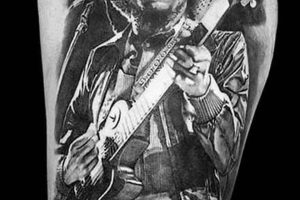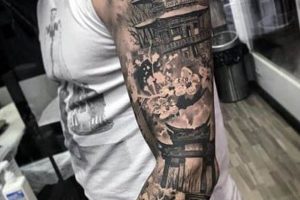



Tattoos emblematic of trades and working-class professions often incorporate imagery associated with specific tools, equipment, or materials. These designs can range from realistic depictions of wrenches, hammers, and gears to more stylized representations of construction scenes, industrial landscapes, or nautical motifs. For example, a welder might choose a tattoo featuring a welding torch and mask, while a carpenter might opt for a design showcasing a saw and square.
Such designs serve as powerful expressions of personal identity, pride in one’s craft, and solidarity with a particular community. Historically, tattoos have been used to mark membership in groups or signify accomplishments, and this tradition continues within various trades. These visual markers can foster a sense of belonging and shared experience among individuals working in similar fields, contributing to a strong sense of camaraderie. They also act as a lasting testament to the dedication and skill required in physically demanding occupations.
Common themes within this genre include depictions of strength, resilience, and hard work. Exploring the symbolism and artistic variations within these themes offers a rich understanding of the cultural significance and personal meaning embedded in these permanent works of art.
1. Tools of the Trade

The “Tools of the Trade” theme represents a core element within blue-collar tattoo designs. These tattoos serve as visual testaments to a worker’s chosen profession, showcasing the instruments integral to their daily tasks and livelihood. A mechanic might choose a wrench and socket set, a carpenter a hammer and saw, or a plumber a pipe wrench and adjustable pliers. The specific tools chosen hold deep personal significance, reflecting both the individual’s skillset and their connection to their trade.
This direct representation of one’s occupation through permanently inked tools reinforces a sense of pride and identity. The tools become more than just objects; they symbolize dedication, expertise, and the tangible results of hard work. A well-worn hammer etched onto a forearm speaks volumes about the carpenter’s experience and commitment to their craft. Such tattoos can also serve as conversation starters, connecting individuals within the same trade and fostering a sense of community.
Ultimately, “Tools of the Trade” tattoos offer a powerful visual language for expressing professional identity within the blue-collar community. They showcase the essential role of these tools in shaping both individual livelihoods and the broader landscape of labor. The selection and depiction of these tools offer a personalized and enduring tribute to the value and dignity of skilled trades.
2. Industry Symbols
Industry symbols in tattoo art provide a broader representation of a worker’s affiliation with a particular sector, going beyond the specificity of individual tools. These symbols often encapsulate the essence of an entire industry, its history, and its values. For instance, a nautical star represents a connection to maritime industries, while a crossed pickaxe and shovel signify mining. Gears, flames, or chemical symbols can denote manufacturing, oil and gas, or chemical processing respectively. The choice of industry symbol allows individuals to express their connection to a larger professional community and its shared heritage.
These symbolic representations serve several functions within the context of blue-collar tattooing. They can act as visual shorthand, immediately conveying a worker’s field to others within the same or related industries. This can foster a sense of camaraderie and shared understanding. Moreover, industry symbols often carry historical weight, reflecting the evolution and significance of specific sectors within society. A steelworker might choose a blast furnace to represent the historical importance of steel production, while an electrician might opt for a lightning bolt to signify the harnessing of electrical power. These choices demonstrate a respect for the traditions and progress within their respective fields.
In summary, incorporating industry symbols into blue-collar tattoos allows for a broader expression of professional identity. These symbols connect individual workers to a larger community, highlighting shared experiences, values, and historical context. Understanding the symbolism behind these designs provides a richer appreciation for the diverse ways individuals choose to express their connection to their chosen profession and its broader impact on society.
3. Strength and Resilience

Blue-collar work often demands physical and mental fortitude. “Strength and Resilience” as a theme in tattoo art reflects the inherent challenges and triumphs experienced within these professions. These tattoos serve as visual reminders of the wearer’s ability to overcome adversity, persevere through difficult situations, and maintain a strong work ethic. They embody the spirit of enduring hardship and emerging stronger, a core value within many blue-collar communities.
- Physical Endurance:
Representations of powerful animals like bears or bulls, or depictions of mythological figures known for their strength, symbolize the physical demands of blue-collar labor. Images of knotted ropes or chains can represent the enduring nature of physical labor and the strength required to perform it day after day. These designs highlight the physicality inherent in many trades and the ability to withstand strenuous work.
- Mental Fortitude:
Anchor tattoos, compasses, or lighthouses can symbolize steadfastness, guidance, and unwavering resolve in the face of challenges. These designs represent the mental strength required to navigate complex tasks, problem-solve under pressure, and maintain focus in demanding environments. They speak to the inner resilience cultivated through demanding work.
- Overcoming Adversity:
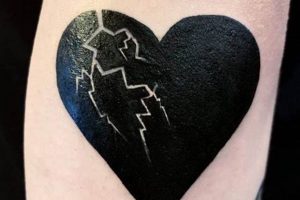
Scars, wounds, or broken chains can be incorporated into designs to represent overcoming personal or professional obstacles. The phoenix, rising from ashes, is a powerful symbol of rebirth and triumph over adversity, resonating with individuals who have faced and overcome challenges in their careers or personal lives. These visual narratives of resilience and overcoming hardship speak to the ability to bounce back from setbacks.
- Solidarity and Support:
Hands clasped in a handshake, or groups of workers depicted together, can symbolize the importance of community and mutual support within blue-collar professions. These images reflect the strength derived from collective effort, shared experiences, and the camaraderie forged through working together in challenging environments. They underscore the power of unity and shared struggle.
These diverse representations of strength and resilience within blue-collar tattoo art reflect the deep-seated values and experiences of individuals within these professions. They offer a powerful visual language for expressing personal triumphs, honoring the demanding nature of their work, and celebrating the enduring spirit of the working class.
4. Work Ethic

The concept of “Work Ethic” holds significant weight within blue-collar communities and frequently finds expression through tattoo art. These tattoos go beyond mere aesthetic decoration; they serve as powerful symbols of dedication, perseverance, and pride in one’s labor. They reflect a deep-seated respect for hard work and its integral role in personal identity and community values. Exploring the various facets of this theme provides insight into the cultural significance of these tattoos within the working class.
- Dedication and Perseverance:
Clocks or hourglasses symbolize the dedication of time and effort required in demanding jobs. Images of worn hands or tools signify years of dedicated service and the perseverance required to master a craft. These designs emphasize the commitment and steadfastness valued within blue-collar professions.
- Pride in Labor:
Depictions of completed projects, such as a finished building or a harvested field, represent the satisfaction derived from hard work and the tangible results of one’s efforts. Strong hands gripping tools or industrial landscapes can symbolize pride in contributing to essential industries and building something lasting. These tattoos celebrate the value and dignity of labor.
- Self-Reliance and Independence:
Images of solitary figures working diligently or tools standing alone can represent the self-reliance and independence often associated with blue-collar work. Knots, anchors, or sturdy trees can symbolize stability, groundedness, and the ability to weather challenges through one’s own efforts. These designs reflect the value placed on individual skill and resourcefulness.
- Mentorship and Legacy:
Generational tools passed down within families or depictions of older workers guiding younger apprentices can symbolize the importance of mentorship and the passing down of knowledge and skills within trades. These designs represent the continuity of tradition and the value placed on experience and guidance within blue-collar communities.
These varied representations of “Work Ethic” in blue-collar tattoo art offer a glimpse into the core values and principles upheld within these communities. They underscore the importance of dedication, perseverance, and pride in one’s labor, highlighting the profound connection between work, identity, and community within the working class. These tattoos serve not just as personal expressions but as testaments to the enduring spirit and cultural significance of blue-collar work.
5. Community Pride

Community pride manifests significantly within blue-collar tattoo designs, reflecting a strong sense of belonging and shared identity among individuals within specific trades or industries. These tattoos often symbolize solidarity, shared experiences, and the collective values upheld within these working communities. The act of permanently marking oneself with imagery representative of one’s profession reinforces a connection to a larger group, fostering camaraderie and mutual respect among colleagues.
Union logos, specific trade emblems, or depictions of workers united in their tasks serve as visual declarations of membership and shared purpose. For example, a firefighter might choose a tattoo depicting a Maltese cross, a widely recognized symbol of the fire service and its commitment to protecting communities. Construction workers might opt for images of cranes or skylines, representing their contribution to building the physical infrastructure of cities. These shared symbols create a visual language that transcends individual workplaces, fostering a sense of connection among workers across geographical boundaries.
Understanding the role of community pride in blue-collar tattooing provides valuable insight into the social and cultural dynamics within these professions. These tattoos represent more than just individual expression; they signify a collective identity forged through shared experiences, challenges, and triumphs. They highlight the importance of community support and solidarity within often-demanding and sometimes hazardous occupations. Recognizing this connection allows for a deeper appreciation of the symbolism and meaning embedded within these permanent expressions of working-class identity.
Tips for Choosing Blue Collar Tattoo Designs
Selecting a tattoo design requires careful consideration, especially when aiming to represent one’s profession and values. The following tips offer guidance for choosing impactful and meaningful blue-collar-themed tattoos.
Tip 1: Research Symbolism: Thorough research ensures accurate and appropriate representation of chosen imagery. Understanding the historical and cultural context of specific symbols prevents misinterpretations and ensures the design aligns with intended meaning.
Tip 2: Personalize the Design: Incorporating personal elements, such as initials, dates, or specific tools used in one’s trade, adds a unique and meaningful touch to the design, transforming a generic image into a personalized statement.
Tip 3: Consider Placement and Size: Placement impacts visibility and how the design interacts with body contours. Size should complement the chosen imagery and the body part, ensuring proper scale and visual impact. Larger, more detailed designs might suit the back or chest, while smaller, simpler designs might be more appropriate for the forearm or wrist.
Tip 4: Choose a Skilled Artist: A skilled tattoo artist specializing in the desired style (e.g., realism, traditional, or illustrative) ensures a high-quality, well-executed tattoo. Reviewing portfolios and seeking recommendations helps identify artists whose style aligns with the desired aesthetic.
Tip 5: Reflect on Longevity: Tattoos are permanent. Careful consideration of the chosen design’s long-term relevance ensures the tattoo remains meaningful and representative of one’s identity and values over time. Avoid trendy or fleeting designs that might lose significance later.
Tip 6: Plan for Aftercare: Proper aftercare is crucial for healing and preserving the vibrancy of the tattoo. Following the artist’s instructions regarding cleaning, moisturizing, and sun protection ensures optimal healing and prevents complications.
Careful planning and thoughtful consideration of these tips contribute to a successful and meaningful tattoo that reflects professional pride and personal values for years to come.
Ultimately, the most impactful tattoos are those that resonate deeply with the individual and authentically represent their identity and experiences. These guidelines provide a framework for making informed decisions that result in meaningful, well-executed, and enduring works of art.
Frequently Asked Questions about Blue Collar Tattoo Ideas
This section addresses common inquiries regarding tattoos themed around blue-collar professions, providing clarity and guidance for those considering such designs.
Question 1: What makes a tattoo “blue collar”?
Blue-collar tattoos typically feature imagery related to trades, tools, industry symbols, or themes of hard work, resilience, and community within the working class. They represent pride in one’s profession and often reflect the values associated with skilled labor.
Question 2: Are blue-collar tattoos only for people in those professions?
While most common among individuals within these trades, anyone who appreciates the symbolism, aesthetics, or values associated with blue-collar work can choose such a design. The key is a genuine appreciation for the subject matter.
Question 3: What are some popular blue-collar tattoo motifs?
Popular motifs include tools of the trade (wrenches, hammers, etc.), industry symbols (gears, nautical stars), depictions of strength and resilience (anchors, lions), and representations of work ethic (clocks, hardworking hands). These can be stylized or realistic depending on personal preference.
Question 4: How can one ensure a respectful and accurate representation of a specific trade?
Thorough research is crucial. Consulting with individuals within the specific trade, studying historical context, and understanding the symbolism associated with specific tools or imagery ensures a respectful and accurate representation.
Question 5: What factors should be considered when choosing placement and size?
Placement depends on desired visibility and how the design interacts with the body’s contours. Size should complement the chosen imagery and body part. Consider practicality, comfort, and how the tattoo might evolve with age and changes in body shape.
Question 6: How important is finding a skilled tattoo artist?
Finding a skilled artist specializing in the desired style is essential. A skilled artist ensures a high-quality, well-executed tattoo that accurately reflects the chosen design and stands the test of time. Review portfolios and seek recommendations to find an artist whose work aligns with your vision.
Careful consideration of these frequently asked questions allows individuals to approach the process of choosing a blue-collar tattoo with greater understanding and awareness, ensuring a meaningful and well-executed design that reflects their values and connection to the working world.
This concludes the frequently asked questions section. Further exploration of specific blue-collar tattoo themes and styles follows.
Blue Collar Tattoo Ideas
This exploration of blue-collar tattoo ideas has delved into the rich symbolism and diverse expressions found within this specific genre of body art. From tools of the trade and industry symbols to representations of strength, resilience, work ethic, and community pride, these tattoos offer a powerful visual language for individuals connected to the working class. They serve as permanent testaments to professional identity, shared values, and the enduring spirit of skilled labor.
The significance of these designs extends beyond mere aesthetics. They represent a deep connection to one’s chosen profession, a celebration of hard work and dedication, and a powerful affirmation of belonging within a larger community. Choosing a blue-collar tattoo involves careful consideration of personal values, historical context, and artistic representation. Ultimately, these tattoos offer a lasting tribute to the dignity and enduring legacy of blue-collar work and the individuals who contribute to it.