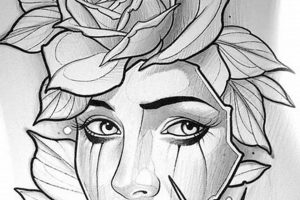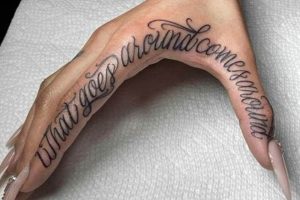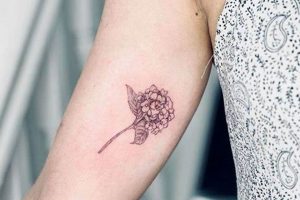



The inner bicep presents a unique canvas for body art, offering a relatively flat and sizable area suitable for various designs. This placement allows for both visible displays and discreet concealment, depending on sleeve length. Examples include script tattoos, intricate mandalas, or realistic portraits.
Choosing this location offers several advantages. The skin on the inner bicep tends to age well, preserving the integrity of the design over time. It’s also a less painful area compared to other parts of the body, making it a popular choice for first-time recipients. Historically, arm tattoos have held cultural significance across various civilizations, often symbolizing strength, protection, or spiritual beliefs. This area continues to be a prime location for expressing personal narratives through art.
Considerations for this placement include design size and complexity, pain tolerance, and lifestyle. Exploring design options, consulting with experienced artists, and understanding aftercare procedures are crucial steps in the process.
1. Placement

Placement is a critical factor in realizing successful inner bicep tattoos. It dictates how the design interacts with the body’s natural contours, influencing the overall aesthetic and the longevity of the art. Careful consideration of placement ensures the tattoo complements the individual’s physique and the design’s intended message.
- Orientation and Flow
The natural curve of the inner bicep presents unique opportunities and challenges for design orientation. A skilled artist will consider whether a design should follow the muscle’s curve or contrast it, enhancing the visual flow and creating a harmonious composition. A vertical design, for instance, might elongate the arm, while a horizontal one could emphasize breadth. The chosen orientation significantly impacts the overall aesthetic.
- Visibility and Concealment
The inner bicep offers a degree of versatility in terms of visibility. Designs can be positioned for display or discreet concealment depending on personal preference and lifestyle. A tattoo placed higher on the inner bicep will be more visible with short sleeves, while a design positioned lower can be easily covered. This flexibility allows individuals to control when and how their body art is presented.
- Interaction with Existing Tattoos
If existing tattoos are present on the arm, the placement of a new inner bicep tattoo needs to harmonize with the current artwork. A cohesive overall composition should be considered, ensuring the new design complements rather than clashes with existing pieces. This may involve incorporating existing elements into the new design or strategically placing the new tattoo to create a unified visual narrative.
- Size and Proportion
The size of the tattoo should be proportionate to the available canvas on the inner bicep. Larger, more intricate designs require more space and careful planning to avoid a cramped or distorted appearance. Smaller, simpler designs might be better suited for smaller areas or for individuals seeking a more minimalist aesthetic. Correct sizing ensures the design’s details are clearly visible and maintain their intended impact.
Ultimately, effective placement enhances the visual impact of an inner bicep tattoo, ensuring its longevity and integration with the individual’s body. A well-placed tattoo becomes a seamless extension of personal expression, reflecting careful planning and consideration of these crucial factors.
2. Size and Shape

Size and shape are fundamental considerations in inner bicep tattoo design. The available canvas on the inner bicep, while relatively flat and sizable, varies among individuals. A design’s dimensions must complement the wearer’s physique and the specific location on the inner bicep. A large, intricate design might overwhelm a smaller bicep, while a small, simplistic design might appear lost on a larger one. Proportionality is key; the tattoo should enhance the arm’s natural contours, not clash with them. For instance, a long, narrow design might accentuate the bicep’s length, while a wider design could emphasize its breadth. The shape of the design also plays a crucial role. Circular or symmetrical designs often work well with the bicep’s curvature, while more angular or asymmetrical designs can create a striking contrast. Consider a detailed portrait versus a minimalist band: each demands a specific approach to size and shape for optimal visual impact.
Practical implications of size and shape extend beyond aesthetics. Larger designs require more time and multiple sessions, increasing the overall cost and healing time. Intricate details in smaller designs might blur or lose definition over time due to the skin’s natural aging process. Therefore, design choices must balance artistic vision with practical limitations. An experienced tattoo artist can provide valuable guidance on appropriate sizing and shaping, ensuring the design’s longevity and visual appeal. Choosing a design that aligns with the individual’s pain tolerance is also crucial, as larger pieces require longer sessions.
In summary, the interplay between size and shape significantly impacts the success of inner bicep tattoos. Careful consideration of these elements, combined with professional consultation, ensures a design that complements the individual’s physique, expresses the desired message effectively, and stands the test of time. Ignoring these factors can lead to a visually unappealing result, potentially requiring costly and time-consuming removal or cover-up procedures.
3. Style and design

Style and design are integral to the success of inner bicep tattoos, representing the core artistic expression and personal narrative. The chosen style dictates the overall aesthetic, influencing the emotional impact and longevity of the piece. Design elements, including imagery, color palettes, and composition, must harmonize with the inner bicep’s curvature and the individual’s anatomy. Consider the difference between a delicate floral design rendered in watercolor style and a bold geometric pattern in blackwork. The former evokes a sense of femininity and grace, while the latter projects strength and modernity. Each style carries its own visual language, impacting the tattoo’s message and overall effect. Realistic portraits, tribal motifs, Japanese irezumi, and abstract expressionism are further examples of diverse styles adaptable to the inner bicep. Selecting a style aligned with personal aesthetics and the desired message is paramount.
Effective design considers the inner bicep’s unique canvas. The area’s natural curve can be incorporated into the design, enhancing its flow and visual impact. For instance, a serpentine design could gracefully follow the bicep’s contour, while a symmetrical design might emphasize its central axis. Color palettes should complement skin tone and desired visual impact. Bold colors create a vibrant statement, while muted tones offer a subtler aesthetic. The interplay of light and shadow, achieved through skillful shading and linework, adds depth and dimension. Compositional balance, considering elements like negative space and visual weight, ensures a harmonious and aesthetically pleasing result. A skilled artist will guide these design choices, tailoring them to the individual’s preferences and the inner bicep’s specific characteristics.
The synergy between style and design ultimately determines the tattoo’s success. A well-executed design, rendered in a suitable style, transforms the inner bicep into a personal canvas, conveying a unique narrative. Careful consideration of these elements ensures the tattoo remains a source of personal pride and artistic expression for years to come. Conversely, a poorly conceived design or an inappropriate style can result in a regrettable outcome, potentially requiring costly and time-consuming removal or cover-up procedures. Therefore, thorough research, consultation with experienced artists, and careful planning are essential steps in the process.
4. Pain Tolerance

Pain tolerance plays a significant role in the realization of inner bicep tattoo designs. While generally considered a less sensitive area compared to other tattoo locations, individual pain thresholds vary. This variability necessitates careful consideration of design complexity and size. A larger, more intricate design requires a longer session, potentially exceeding an individual’s pain threshold. Conversely, smaller, simpler designs can be completed more quickly, minimizing discomfort. Understanding one’s pain tolerance is crucial for making informed decisions regarding design choices and managing expectations during the tattooing process. For example, someone with a low pain tolerance might opt for a smaller, less detailed design or consider multiple shorter sessions to manage discomfort effectively. Conversely, an individual with a higher pain tolerance may be more comfortable with larger, more complex designs requiring longer single sessions.
Several factors influence pain perception during tattooing. These include the individual’s overall health, current stress levels, and previous tattooing experience. Adequate rest, hydration, and a balanced meal before the session can contribute to a more comfortable experience. Open communication with the tattoo artist about pain management strategies, such as breaks or topical anesthetics (where permitted and appropriate), is essential. Managing expectations and understanding the potential for discomfort allows individuals to approach the process with greater confidence and minimize anxiety. This open communication fosters a collaborative environment, allowing the artist to adjust the pacing and technique as needed, ensuring the client’s comfort and the successful completion of the tattoo.
Discomfort during tattooing is a natural part of the process. However, acknowledging and addressing individual pain tolerance is crucial for a positive experience. Realistic expectations, combined with open communication with the artist and appropriate preparation, contribute to a smoother process and a more enjoyable outcome. Ignoring pain tolerance can lead to premature termination of the session, resulting in an incomplete or compromised design. Therefore, considering pain tolerance as an integral factor in design choices and session planning is essential for a successful and satisfying tattoo experience.
5. Artist Selection
Artist selection is paramount when considering tattoos for the inner bicep. This area, while offering a relatively forgiving canvas, still requires a skilled artist to execute designs effectively. The chosen artist’s expertise directly impacts the final result, influencing the tattoo’s aesthetic appeal, longevity, and overall success. Finding an artist specializing in the desired style and possessing a strong understanding of anatomy and skin dynamics ensures a tattoo that complements the body’s natural contours and stands the test of time.
- Style Specialization
Different artists specialize in various tattoo styles. Whether the desired aesthetic is realism, traditional, neo-traditional, watercolor, or geometric, selecting an artist proficient in that particular style is crucial. An artist specializing in photorealism, for example, may not be the best choice for a traditional Japanese-style tattoo. Reviewing an artist’s portfolio provides insights into their strengths and preferred styles, enabling informed decision-making.
- Anatomical Knowledge
The inner bicep’s curvature and muscle movements present unique challenges for tattoo artists. A skilled artist possesses a strong understanding of human anatomy, allowing them to place the design strategically, ensuring it flows naturally with the body’s contours and maintains its integrity over time. This anatomical knowledge is particularly relevant for larger pieces or designs incorporating elements that wrap around the arm.
- Experience and Reputation
An experienced artist with a positive reputation within the tattoo community often signifies a commitment to quality and professionalism. Researching an artist’s background, client testimonials, and industry recognition provides valuable insights into their skill level and ethical practices. Experience often translates into better design execution, efficient use of time, and effective communication throughout the process.
- Hygiene and Safety Practices
Adhering to strict hygiene and safety protocols is non-negotiable in tattooing. A reputable artist prioritizes client safety by using sterilized equipment, following proper aftercare procedures, and maintaining a clean and sanitary workspace. Verifying an artist’s adherence to these standards is critical for minimizing the risk of infections and complications. This includes confirming the use of single-use needles and appropriate sterilization techniques for reusable equipment.
The synergy between artist expertise and the unique canvas of the inner bicep dictates the tattoo’s success. Selecting an artist based on careful research, portfolio review, and an understanding of their specialization, experience, and safety practices ensures a tattoo that reflects the individual’s vision and remains a source of pride for years to come. A poorly chosen artist can result in a subpar tattoo, potentially requiring costly and time-consuming removal or cover-up procedures. Therefore, investing time and effort in artist selection is a critical step in realizing a successful inner bicep tattoo.
6. Aftercare Procedures

Aftercare procedures are inextricably linked to the success and longevity of inner bicep tattoos. This crucial phase, often overlooked, directly impacts the vibrancy, clarity, and overall health of the newly tattooed skin. The inner bicep, while generally less prone to complications than other areas, still requires diligent aftercare to ensure optimal healing and prevent infection. Neglecting proper aftercare can lead to ink fading, blurring, infection, and scarring, compromising the aesthetic integrity of the tattoo. Conversely, meticulous adherence to aftercare protocols promotes efficient healing, preserving the design’s vibrancy and clarity for years to come. For example, consistent moisturizing prevents excessive scabbing and itching, which can dislodge ink particles and lead to patchy healing. Likewise, protecting the tattoo from direct sunlight during the initial healing phase minimizes fading and discoloration. These practices, though seemingly simple, significantly impact the long-term quality of the tattoo.
Specific aftercare instructions may vary slightly depending on the artist and the individual’s skin type. However, several core principles remain consistent. These include keeping the tattoo clean and dry, avoiding harsh soaps and chemicals, and applying a thin layer of fragrance-free, hypoallergenic moisturizer regularly. Protecting the tattoo from friction caused by clothing or excessive movement also promotes undisturbed healing. Furthermore, avoiding swimming and prolonged exposure to water during the initial healing period minimizes the risk of infection. For instance, tight-fitting clothing can irritate the freshly tattooed skin, leading to inflammation and potential ink loss. Similarly, submerging the tattoo in chlorinated or saltwater can disrupt the healing process and introduce harmful bacteria. Understanding and adhering to these specific guidelines ensures optimal healing and preserves the tattoo’s intended aesthetic.
Effective aftercare is an essential component of realizing a successful inner bicep tattoo. This diligent approach, involving consistent and informed practices, protects the investment of time, money, and artistic expression. Failure to adhere to proper aftercare procedures can compromise the tattoo’s appearance and longevity, potentially necessitating costly and time-consuming corrective measures. Therefore, prioritizing aftercare as an integral part of the tattooing process is crucial for preserving the design’s integrity and ensuring lasting satisfaction.
Tips for Inner Bicep Tattoos
Several key considerations contribute to successful inner bicep tattoo designs. These tips encompass practical advice and stylistic guidance, ensuring the final result aligns with individual preferences and stands the test of time. Careful attention to these factors optimizes both the aesthetic appeal and the longevity of the tattoo.
Tip 1: Research Thoroughly
Comprehensive research is crucial. Explore various tattoo styles, research reputable artists, and gather inspiration from existing designs. This preparation ensures informed decisions regarding design choices, artist selection, and overall aesthetic direction. For instance, exploring different art styles like realism, traditional, or geometric helps narrow down preferences and identify artists specializing in those areas.
Tip 2: Consider Placement Carefully
The inner bicep’s curvature and visibility should inform placement decisions. Consider how the design interacts with the body’s natural contours and whether visibility or concealability is desired. A design placed higher on the inner bicep will be more visible with short sleeves, whereas a lower placement allows for easier concealment.
Tip 3: Size Matters
Proportionality is key. The design’s size should complement the individual’s physique and the available canvas on the inner bicep. Larger designs require more space and potentially multiple sessions, while smaller designs offer a more minimalist approach. A large, intricate design might overwhelm a smaller bicep, while a small design could appear lost on a larger one.
Tip 4: Choose a Reputable Artist
Artist selection is paramount. Research an artist’s portfolio, experience, hygiene practices, and client testimonials. A skilled artist specializing in the desired style ensures a high-quality, long-lasting tattoo. Look for artists who demonstrate proficiency in the specific style desired, whether it’s realism, traditional, or geometric.
Tip 5: Communicate Effectively
Open communication with the chosen artist is essential. Discuss design ideas, placement preferences, size considerations, and pain tolerance. This collaboration ensures the final design aligns with the individual’s vision and expectations. Clear communication about desired imagery, color palettes, and overall aesthetic helps the artist create a personalized design.
Tip 6: Prioritize Aftercare
Diligent aftercare is crucial for preserving the tattoo’s vibrancy and longevity. Follow the artist’s aftercare instructions meticulously, keeping the tattoo clean, moisturized, and protected from sunlight and friction. Proper aftercare prevents infection, minimizes fading, and ensures optimal healing. This includes avoiding harsh soaps, excessive scrubbing, and prolonged exposure to sunlight.
Tip 7: Plan for Touch-Ups
Recognize that touch-ups might be necessary over time to maintain the tattoo’s vibrancy and clarity. Factors like sun exposure, skin aging, and individual healing processes can impact the tattoo’s appearance over time. Planning for potential touch-ups ensures the design retains its intended aesthetic in the long term.
Adhering to these tips ensures a positive tattooing experience and a visually appealing, long-lasting result. Careful planning, thorough research, and open communication contribute significantly to the success of inner bicep tattoos.
By following these guidelines, individuals can approach the process with confidence, ensuring a result that reflects personal expression and artistic vision.
Frequently Asked Questions
This section addresses common inquiries regarding inner bicep tattoos, providing factual information and clarifying potential misconceptions. Understanding these aspects empowers individuals to make informed decisions, ensuring a positive and successful tattooing experience.
Question 1: How painful are inner bicep tattoos?
Pain levels vary depending on individual pain thresholds. The inner bicep is generally considered less sensitive than areas like the ribs or ankles. However, individual experiences differ. Consulting with a tattoo artist can provide further insights.
Question 2: How long do inner bicep tattoos take to heal?
Healing typically takes 2-4 weeks. Factors influencing healing time include design size, individual healing rates, and adherence to aftercare instructions. Proper aftercare is crucial for optimal healing.
Question 3: What design styles work well on the inner bicep?
Various styles suit the inner bicep, including script, mandalas, floral designs, portraits, and geometric patterns. The choice depends on personal preferences and the artist’s specialization. Consulting with an artist can help determine the most suitable style.
Question 4: Can inner bicep tattoos be covered easily?
Concealment depends on the tattoo’s size and placement. Designs placed lower on the inner bicep are generally easier to cover with clothing. Higher placements offer greater visibility, particularly with short sleeves.
Question 5: How much do inner bicep tattoos cost?
Cost varies depending on factors like design complexity, size, artist’s experience, and geographic location. Obtaining quotes from multiple reputable artists allows for informed budget planning.
Question 6: What should one consider before getting an inner bicep tattoo?
Careful consideration of design, placement, artist selection, pain tolerance, aftercare commitment, and potential long-term implications is advised. Thorough research and consultation with experienced artists facilitate informed decision-making.
Understanding these common concerns empowers individuals to approach the process with greater confidence. Further inquiries should be directed to reputable tattoo artists for personalized guidance.
The information provided here aims to inform and educate. Consulting with a professional tattoo artist remains the most reliable source of personalized advice.
Conclusion
Exploring potential tattoo designs for the inner bicep requires careful consideration of several factors. Placement, size, style, pain tolerance, artist selection, and aftercare procedures all contribute significantly to a successful outcome. A harmonious balance between artistic vision and practical considerations ensures a tattoo that complements individual anatomy, expresses personal narratives effectively, and withstands the test of time. Understanding these elements allows for informed decision-making, maximizing the potential for a positive and fulfilling tattooing experience.
Ultimately, a well-executed inner bicep tattoo becomes a powerful form of self-expression, a visual narrative etched onto the skin. The choices made during the planning and execution phases determine the tattoo’s longevity and its ability to resonate with personal meaning. Thorough research, open communication with experienced artists, and diligent aftercare are crucial investments in this enduring form of art. This commitment ensures the chosen design remains a source of pride and personal significance for years to come.