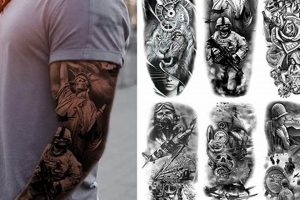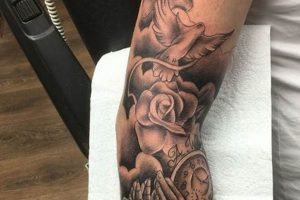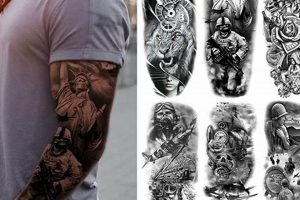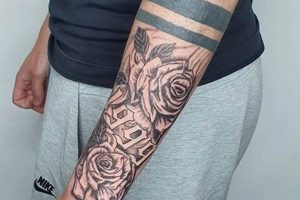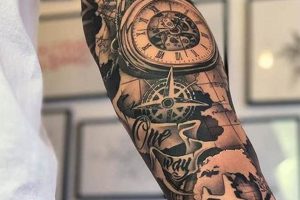



Full arm tattoo designs, often referred to as “sleeves,” offer a large canvas for artistic expression. They can range from intricate, interconnected designs telling a story or representing a theme, to collections of individual pieces unified by style or placement. Examples include nature scenes, portraits, geometric patterns, or depictions of cultural symbols.
Choosing a full arm tattoo design represents a significant commitment, both in terms of time and cost. The scale allows for complex narratives and detailed artwork, providing opportunities for wearers to express their personality, beliefs, and experiences in a visually striking manner. Historically, full arm tattoos have held cultural significance in various societies, symbolizing status, group affiliation, or spiritual beliefs. Today, they continue to be a popular form of self-expression and body art.
Exploring various styles, themes, and artistic approaches is crucial when considering such a substantial piece. Factors like color palettes, the artist’s specialization, and aftercare requirements should be carefully evaluated.
1. Theme
A cohesive theme provides the conceptual foundation for a successful full arm tattoo. It serves as the unifying narrative, linking individual elements into a harmonious whole and imbuing the design with personal significance.
- Narrative
A narrative theme tells a story, unfolding across the arm. This could be a personal journey, a depiction of a favorite book, or a historical event. For instance, a sleeve could depict the stages of a butterfly’s metamorphosis, symbolizing transformation and growth.
- Symbolic
Symbolic themes utilize imagery to represent abstract concepts, beliefs, or values. A sleeve incorporating various religious or spiritual symbols, such as mandalas or crosses, exemplifies this approach. These symbols can hold deep personal meaning for the wearer.
- Cultural
Cultural themes draw inspiration from specific cultures or traditions. A sleeve depicting elements of Japanese folklore, such as koi fish and cherry blossoms, reflects a connection to that specific cultural heritage.
- Nature-Inspired
Nature-inspired themes focus on elements of the natural world, often evoking a sense of tranquility or power. A forest scene featuring detailed depictions of trees, animals, and flowers exemplifies this theme, potentially symbolizing the wearer’s connection to the environment.
Careful consideration of these thematic approaches allows for a deeply personalized and meaningful full arm tattoo design. The chosen theme informs subsequent design choices, ensuring the final result is a cohesive and powerful expression of the individual’s identity and values.
2. Style

Style significantly impacts the overall aesthetic and message conveyed by a full arm tattoo. Selecting a style aligns the design with specific artistic traditions, influencing the use of color, linework, and imagery. Understanding various styles allows for informed decisions that reflect personal preferences and enhance the narrative or symbolic meaning.
- Realism
Realism focuses on accurate and detailed depictions of subjects, often resembling photographs. Portraits, animals, and natural landscapes are common subjects. In the context of a full arm tattoo, realism can create a striking visual impact, showcasing the artist’s technical skill and the wearer’s appreciation for lifelike representation.
- Traditional Japanese
Traditional Japanese, or Irezumi, employs bold lines, vibrant colors, and iconic imagery like dragons, koi fish, and cherry blossoms. This style often incorporates symbolic elements from Japanese folklore and mythology. A full arm Irezumi tattoo can be a powerful statement of cultural appreciation and personal connection to these traditional motifs.
- American Traditional
American Traditional features bold outlines, a limited color palette, and classic imagery such as anchors, eagles, and roses. This style has a rich history rooted in early 20th-century tattooing. A full arm American Traditional tattoo often evokes a sense of nostalgia and timeless appeal.
- Tribal
Tribal tattooing draws inspiration from various indigenous cultures worldwide. These designs often feature bold black ink, geometric patterns, and symbolic representations of ancestry or spiritual beliefs. A full arm tribal tattoo can be a powerful expression of cultural heritage and personal identity.
The chosen style dictates the overall visual impact of the full arm tattoo. Careful consideration of these styles, and others like watercolor or neo-traditional, ensures the final piece aligns with the wearer’s aesthetic preferences and the intended message. Selecting a style that resonates with the individual’s personality and the thematic content enhances the expressive power of the tattoo.
3. Placement

Placement is a critical factor in the overall composition and impact of a full arm tattoo. The natural contours of the arm, including the muscles and joints, influence how the design flows and interacts with the body. Strategic placement enhances the visual narrative, creating a sense of movement and depth. For example, a dragon design could be placed to wrap around the arm, emphasizing its serpentine form. Similarly, individual elements within a larger theme can be positioned to highlight their significance or interrelationships.
Placement also affects the visibility and presentation of the tattoo. The inner arm offers a more private canvas, while the outer arm allows for greater public display. Consideration of these visibility aspects allows individuals to tailor their tattoo placement to their personal preferences and lifestyle. A professional working in a more conservative environment might choose to place more intricate or personal elements on the inner arm, reserving bolder designs for the outer arm. Practical considerations, such as how clothing might cover or reveal portions of the tattoo, further influence placement decisions.
Understanding the interplay between placement and the overall design is essential for a successful full arm tattoo. Careful planning ensures the chosen imagery complements the body’s natural form, creating a harmonious and visually appealing result. Placement choices contribute significantly to the tattoo’s narrative impact, enhancing the symbolic meaning and emphasizing specific elements. By strategically considering placement, individuals maximize the artistic potential of their full arm tattoo and ensure a cohesive final product.
4. Color palette
Color palettes play a crucial role in the overall impact and meaning of full arm tattoo designs. Careful color selection enhances the visual narrative, evokes specific emotions, and contributes to the overall aesthetic. Understanding the interplay of colors and their symbolic meanings allows for informed decisions that align with the intended message and personal preferences. A well-chosen palette can transform a design, adding depth, vibrancy, and emotional resonance.
- Black and Gray
Black and gray palettes offer a timeless and versatile option, suitable for various styles and themes. This classic approach emphasizes shading, contrast, and fine details. Often associated with realism and traditional styles, black and gray can create a powerful and dramatic effect. Portraits, intricate patterns, and religious iconography often benefit from the subtle gradations and depth achievable with this palette.
- Vibrant Color
Vibrant color palettes offer a bold and expressive approach, utilizing a wide spectrum of hues to create visually striking designs. Often associated with styles like traditional Japanese and new school, vibrant colors can evoke feelings of joy, energy, and dynamism. Designs featuring flowers, animals, and fantasy elements often benefit from the vibrancy and visual impact of a rich color scheme. The use of color can further enhance symbolic meanings associated with particular elements.
- Limited Color Palettes
Limited color palettes restrict the design to a few carefully chosen colors, creating a cohesive and impactful aesthetic. This approach can emphasize specific elements, create a sense of harmony, and evoke particular moods. For example, a palette of blues and greens might suggest tranquility and nature, while reds and oranges could convey passion and energy. Limited palettes work well with various styles, from traditional American to geometric designs.
- Color Realism
Color realism focuses on accurately reproducing the colors of real-life subjects, creating a lifelike and visually arresting effect. This approach requires a high level of skill and attention to detail. Portraits, landscapes, and depictions of animals or objects often benefit from the depth and realism achieved through meticulous color matching and blending. The accurate use of color enhances the immersive quality of the design.
The choice of color palette significantly impacts the final aesthetic and expressive power of a full arm tattoo. Careful consideration of color symbolism, personal preferences, and the chosen style ensures the final piece is a cohesive and impactful reflection of the individual’s vision. The color palette acts as a powerful tool for enhancing the narrative, emphasizing key elements, and evoking specific emotions. By thoughtfully selecting a color palette, individuals can create a full arm tattoo that is both visually stunning and deeply meaningful.
5. Artist Selection
Artist selection is paramount when considering a large-scale project like a full arm tattoo. The artist’s skill, style, and experience significantly impact the final result. Choosing an artist whose aesthetic aligns with the individual’s vision ensures the tattoo accurately reflects their desired imagery and thematic elements. A mismatch between artist specialization and the desired style can lead to a disappointing outcome, underscoring the importance of careful research and consideration.
- Portfolio Review
A thorough portfolio review provides essential insights into an artist’s technical abilities, stylistic preferences, and areas of expertise. Examining previous work allows individuals to assess the artist’s proficiency in specific techniques, such as realism, traditional Japanese, or geometric patterns. A portfolio showcasing consistent high-quality work and a clear artistic vision indicates a skilled and reliable professional. For instance, an individual seeking a realistic portrait tattoo should look for an artist with a portfolio demonstrating expertise in portraiture and realistic rendering of skin tones and textures.
- Style Specialization
Artists often specialize in particular tattoo styles, such as realism, traditional Japanese, American traditional, or neo-traditional. Selecting an artist specializing in the desired style ensures the final product aligns with the individual’s aesthetic preferences. An artist specializing in black and gray realism might not be the best choice for someone seeking a vibrant, traditional Japanese-style sleeve. Matching the artist’s specialization to the desired style increases the likelihood of a successful and satisfying outcome. For a watercolor style tattoo, an artist specializing in that technique will have a deeper understanding of color blending and abstract imagery essential for achieving the desired effect.
- Consultation and Communication
Open communication and a thorough consultation process are essential for establishing a strong artist-client relationship and ensuring the final design accurately reflects the individual’s vision. A consultation provides an opportunity to discuss ideas, explore thematic elements, and address any concerns. Effective communication ensures a clear understanding of expectations, timelines, and costs. A collaborative approach, where the artist actively listens to the client’s input and offers professional guidance, fosters a positive working relationship and increases the likelihood of a successful outcome. During the consultation, discussing elements like specific imagery, color palettes, and placement ensures the artist understands the desired aesthetic and symbolic meaning.
- Hygiene and Professionalism
Maintaining high hygiene standards is paramount in tattooing. A reputable artist adheres to strict sterilization procedures and utilizes single-use needles and supplies. A clean and organized workspace demonstrates professionalism and a commitment to client safety. Checking for proper licensing and adherence to local health regulations ensures the tattooing process is conducted in a safe and responsible manner. Observing the artist’s workspace and inquiring about sterilization procedures provides valuable insights into their commitment to hygiene and client well-being. Neglecting these aspects can have serious health implications, reinforcing the importance of choosing a reputable and professional artist.
Careful consideration of these factors ensures the chosen artist possesses the necessary skills, experience, and artistic sensibility to bring the individual’s full arm tattoo concept to life. Selecting the right artist is an investment in the quality and longevity of the artwork. A strong artist-client relationship built on trust, communication, and shared aesthetic vision is essential for a successful and fulfilling tattoo experience, resulting in a piece of body art that the individual will cherish for years to come.
6. Aftercare Planning

Aftercare planning is inextricably linked to the success and longevity of a full arm tattoo, often called a “sleeve.” A comprehensive aftercare regimen protects the investment of time, money, and artistic expression represented by the tattoo. Neglecting proper aftercare can lead to complications such as infection, fading, and blurring of the intricate details characteristic of sleeve designs. These designs, often complex and detailed, require diligent care to maintain their vibrancy and clarity over time. For example, a sleeve featuring a detailed depiction of a natural landscape requires meticulous aftercare to preserve the intricate shading and color gradients that bring the scene to life. Without proper healing, the crisp lines and vibrant colors could fade or blur, diminishing the overall impact of the artwork.
The scale and complexity of a sleeve tattoo necessitate a more intensive and prolonged aftercare process. The larger surface area increases the risk of infection if not properly cared for. The healing process can take several weeks, during which strict adherence to aftercare guidelines is crucial. These guidelines typically include keeping the tattoo clean, moisturized, and protected from sun exposure. Failing to follow these practices can compromise the healing process and lead to undesirable outcomes, including scarring or ink loss. For instance, exposing a freshly tattooed sleeve to excessive sunlight can cause the colors to fade prematurely, particularly vibrant hues like reds and yellows. Consistent application of sunscreen during the healing process and beyond is vital for preserving the color saturation and overall vibrancy of the design.
Effective aftercare planning safeguards the artistic investment represented by a full arm tattoo. By prioritizing proper healing, individuals protect the intricate details, vibrant colors, and overall impact of their chosen design. Diligent aftercare ensures the longevity of the tattoo, allowing it to remain a vibrant and meaningful piece of body art for years to come. Understanding the crucial link between aftercare and the preservation of a sleeve tattoo’s aesthetic integrity empowers individuals to make informed decisions and protect their artistic investment. This proactive approach maximizes the lifespan of the tattoo and ensures the design remains a source of personal expression and artistic appreciation.
Tips for Planning a Full Arm Tattoo
Careful planning is essential for a successful full arm tattoo. These tips offer guidance for navigating the process, from concept development to aftercare.
Tip 1: Research Extensively
Thorough research is crucial before committing to a full arm piece. Explore various artists, styles, and themes to gather inspiration and refine personal preferences. Examining different artistic approaches, such as realism, traditional Japanese, or geometric patterns, helps clarify aesthetic goals. This exploration informs subsequent design choices and ensures a cohesive final result.
Tip 2: Develop a Cohesive Theme
A unifying theme strengthens the narrative and visual impact of a full arm tattoo. Connecting individual elements through a central concept creates a cohesive design that tells a story or represents a specific idea. This approach enhances the tattoo’s personal meaning and visual appeal. A nature theme, for example, could incorporate various interconnected elements like trees, flowers, and animals, creating a harmonious and meaningful composition.
Tip 3: Prioritize Artist Selection
Choosing a skilled artist specializing in the desired style is crucial. An artist’s portfolio reveals their technical proficiency, artistic style, and experience with specific subject matter. Selecting an artist whose style aligns with individual preferences ensures the final result accurately reflects the intended vision. For instance, an individual seeking a photorealistic portrait should select an artist with demonstrated expertise in portraiture and realistic rendering techniques.
Tip 4: Plan for Multiple Sessions
Completing a full arm tattoo typically requires multiple sessions, each lasting several hours. Planning for these sessions allows adequate time for healing between appointments and ensures the artist can maintain focus and precision throughout the process. This approach minimizes discomfort and allows the skin to recover between sessions, contributing to a higher quality final result.
Tip 5: Budget Accordingly
Full arm tattoos represent a significant financial investment. Factors influencing cost include the artist’s experience, the complexity of the design, and the number of sessions required. Establishing a realistic budget ensures the project remains financially manageable. Openly discussing costs with the chosen artist during the consultation phase allows for transparent financial planning.
Tip 6: Commit to Aftercare
Diligent aftercare is essential for preserving the vibrancy and longevity of a full arm tattoo. Following the artist’s aftercare instructions meticulously minimizes the risk of infection, promotes proper healing, and maintains the integrity of the design. Proper aftercare includes keeping the tattoo clean, moisturized, and protected from sun exposure. Neglecting these practices can lead to complications and compromise the final result.
Tip 7: Consider Placement and Visibility
Placement considerations should account for both aesthetic and practical factors. The inner arm offers a more discreet canvas, while the outer arm allows for greater visibility. Placement choices also influence how the design interacts with the body’s natural contours. Considering these factors ensures the tattoo complements the individual’s anatomy and aligns with their lifestyle and personal preferences.
Careful consideration of these tips facilitates a successful and rewarding full arm tattoo experience. Thorough planning, combined with open communication with the chosen artist, results in a piece of body art that holds personal meaning and stands the test of time.
By following these guidelines, individuals can embark on the journey of creating a full arm tattoo with confidence and ensure a result that reflects their unique vision and artistic expression.
Frequently Asked Questions about Full Arm Tattoos
Addressing common inquiries regarding full arm tattoos provides clarity and facilitates informed decision-making for those considering this significant form of body art.
Question 1: How much does a full arm tattoo typically cost?
Costs vary significantly based on factors like artist experience, design complexity, and geographic location. Obtaining quotes from multiple reputable artists is recommended.
Question 2: How long does it take to complete a full arm tattoo?
Completion typically requires multiple sessions, each lasting several hours, spread over weeks or months. The overall timeframe depends on the design’s intricacy and the individual’s pain tolerance.
Question 3: Is a full arm tattoo more painful than smaller tattoos?
Pain levels vary based on individual pain thresholds and the specific location on the arm. Areas with thinner skin or closer proximity to bone tend to be more sensitive.
Question 4: How should one choose a suitable artist for a full arm tattoo?
Thorough research and portfolio reviews are essential. Selecting an artist specializing in the desired style and possessing demonstrable experience with large-scale projects ensures a satisfactory outcome. Consultations allow for discussion of concepts and assessment of artist-client compatibility.
Question 5: What are the crucial aftercare steps for a full arm tattoo?
Meticulous aftercare is crucial for proper healing and preservation of the artwork. Following the artist’s specific instructions regarding cleaning, moisturizing, and sun protection is essential. Neglecting aftercare can lead to complications and compromise the tattoo’s longevity.
Question 6: Can a full arm tattoo be removed or covered up?
Removal is possible through laser treatments, but the process can be costly, time-consuming, and may not completely erase the tattoo. Cover-ups are also an option, but the existing tattoo will influence the design possibilities. Consulting with experienced artists regarding removal or cover-up options provides realistic expectations.
Understanding these key aspects of full arm tattoos empowers individuals to make informed decisions and embark on the process with realistic expectations. Thorough research, careful planning, and open communication with a reputable artist contribute significantly to a successful and fulfilling tattoo experience.
Further exploration of specific styles, themes, and artistic approaches can provide additional insights for those considering a full arm tattoo.
Conclusion
Exploration of full arm tattoo design reveals the multifaceted nature of this significant artistic undertaking. Careful consideration of thematic cohesion, stylistic choices, artist selection, and meticulous aftercare planning are crucial for a successful outcome. Placement strategies maximize visual impact, while color palettes enhance narrative and evoke emotion. Understanding these elements empowers individuals to transform their personal narratives and artistic visions into impactful and enduring body art.
Full arm tattoos represent a powerful form of self-expression, intertwining personal narratives with artistic skill. The journey requires thoughtful consideration, dedicated research, and a collaborative partnership with a skilled artist. A well-planned and executed full arm tattoo becomes a canvas narrating individual stories, beliefs, and aspirationsa testament to the enduring power of artistic expression through body art.