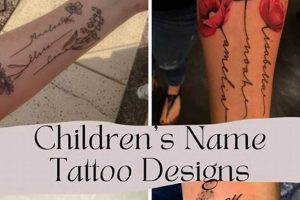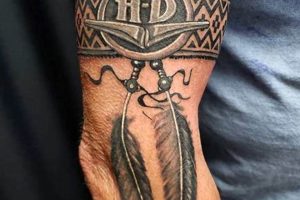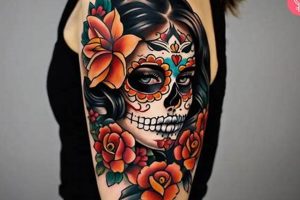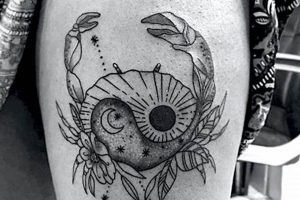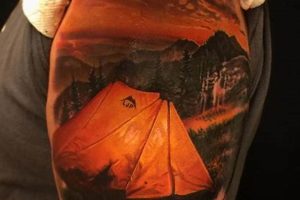



Floral tattoo designs, particularly those featuring this specific bloom, represent a timeless and versatile choice for body art. From simple outlines to intricate, photorealistic renderings, these designs can incorporate various colors, sizes, and accompanying elements like thorns, leaves, or other flowers. Examples include a single red bloom symbolizing love, a bouquet intertwined with a loved one’s name for memorialization, or a stylized black and grey rendering conveying resilience and growth.
The enduring appeal of these botanical designs stems from their rich symbolism and adaptability to individual expression. Historically, different cultures have associated this flower with various meanings, from passion and beauty to war and politics, offering a broad spectrum of interpretations for contemporary tattoo enthusiasts. The flower’s diverse forms and colors also allow for highly personalized designs that can reflect personal experiences, beliefs, or aesthetics. Such tattoos can serve as powerful reminders of significant events, loved ones, or personal values.
Exploration of specific stylistic interpretations, placement considerations, and the symbolic meanings associated with different colors and accompanying elements will further illuminate the depth and breadth of options available within this classic genre of tattoo art.
1. Placement

Placement is a critical factor in tattoo design, significantly influencing the overall aesthetic and symbolic impact of a floral motif. Careful consideration of body contours, visibility preferences, and the design’s size and complexity is essential for a successful outcome. Selecting the appropriate location enhances the interplay between the tattoo and the individual’s form, creating a harmonious and meaningful piece of body art.
- Visibility and Discretion
Placement determines how readily apparent a tattoo is to oneself and others. A wrist tattoo offers daily visibility and ease of display, while a design on the back remains more private, revealed selectively. This consideration allows individuals to align placement with their desired level of self-expression and social context. A small, delicate floral design on the inner wrist might represent a personal sentiment, while a larger, more vibrant piece on the forearm could be intended for broader public display.
- Body Contours and Flow
The human body’s natural curves and lines provide a dynamic canvas for tattoo placement. Skillful artists use these contours to enhance the design’s flow and create a sense of visual harmony. A vine of blossoms winding around the ankle or a single bloom nestled in the curve of the collarbone exemplify how placement can complement the body’s form. This interplay between design and anatomy adds depth and dimension to the artwork.
- Size and Complexity of Design
Larger, more intricate designs require ample space, making areas like the back, chest, or thigh suitable canvases. Smaller, simpler motifs can be effectively placed on areas like the wrist, ankle, or behind the ear. Matching the design’s scale and intricacy to the chosen placement area ensures visual balance and prevents the tattoo from appearing cramped or overwhelming. A sprawling floral design might be better suited for the back, while a single bud could be elegantly placed on a finger.
- Symbolic Significance of Location
In some cases, the placement itself can add symbolic weight to the tattoo. A floral design placed over the heart can emphasize the theme of love and passion, while a bloom positioned near a scar might represent healing and growth. This intentional placement adds another layer of meaning and personal significance to the artwork, transforming it into a powerful visual narrative.
By strategically considering these facets of placement, individuals can ensure that their floral tattoos not only aesthetically enhance their bodies but also effectively communicate their intended message. The placement choice becomes an integral part of the design’s overall narrative, contributing to a more impactful and meaningful piece of body art.
2. Color Symbolism

Color plays a pivotal role in imbuing floral tattoos with symbolic depth and personal meaning. The chosen hues can dramatically alter the overall message conveyed by the design, transforming a simple bloom into a powerful emblem of individual expression. Understanding the cultural and historical associations of different colors is crucial for creating a tattoo that resonates with intended symbolism.
- Red
Universally recognized as the color of passion and romantic love, red in floral tattoos often signifies deep affection, desire, and enduring commitment. A vibrant red rose can represent the intensity of a romantic relationship, while a darker shade may symbolize remembrance and enduring love for a lost loved one. The shade of red chosen adds nuances to the overall symbolic message.
- Black
Black roses, while not found in nature, hold a powerful symbolic weight in tattoo art. Often associated with resilience, overcoming adversity, and remembrance of loss, black can also represent rebellion, mystery, and the darker aspects of life. This color choice imbues the floral motif with a sense of strength and solemnity.
- White
White signifies purity, innocence, and new beginnings. In the context of floral tattoos, white often represents spiritual growth, hope, and reverence. It can also symbolize remembrance and honor for those lost. The stark contrast of white against the skin creates a visually striking and symbolically potent design.
- Yellow
Yellow evokes feelings of joy, friendship, and optimism. A yellow rose tattoo can represent platonic love, new opportunities, and the celebration of life. It can also symbolize healing and overcoming challenges, infusing the design with a sense of positivity and resilience.
Careful selection of color allows individuals to imbue their floral tattoos with layers of personal meaning. Whether adhering to traditional color associations or creating unique combinations, the chosen hues contribute significantly to the overall narrative expressed by the design. This interplay between color and symbolism transforms a simple floral motif into a powerful statement of individual expression.
3. Accompanying Elements

Accompanying elements significantly enhance the narrative depth and visual complexity of floral tattoo designs. These additions, ranging from other floral motifs to symbolic objects, transform a single bloom into a personalized and multi-layered piece of art. Careful selection of these elements allows for nuanced storytelling and imbues the design with greater symbolic weight.
Thorns, a natural companion to this specific flower, can represent the duality of beauty and pain, symbolizing resilience, protection, or the challenges overcome in life. Incorporating other flowers, such as lilies representing purity or forget-me-nots signifying remembrance, adds layers of meaning and allows for the creation of visually rich bouquets. Skulls juxtaposed with blossoms symbolize the cycle of life and death, while butterflies suggest transformation and rebirth. Adding elements like clocks or compasses further personalizes the design, potentially representing the passage of time or a life journey. A dagger intertwined with a rose might symbolize betrayal or a painful experience, while a crown adds an element of regality and power. These additions create a complex interplay of symbols, allowing individuals to express intricate narratives through their body art.
The strategic use of accompanying elements transforms a simple floral tattoo into a powerful symbol of personal expression. These additions enrich the visual narrative and allow for a deeper exploration of themes and personal experiences. Careful consideration of symbolic resonance and visual harmony ensures a cohesive and impactful design that effectively communicates the intended message.
4. Style (e.g., realism, watercolor)

Artistic style significantly impacts the aesthetic and expressive qualities of floral tattoo designs. The chosen style dictates the overall visual impact, influencing how the subject matter is represented and perceived. From highly detailed realism to abstract interpretations, the selected style imbues the tattoo with a distinct character and contributes to its symbolic meaning.
- Realism
Realistic depictions capture the intricate details of this flower, including subtle variations in petal texture, color gradients, and the delicate interplay of light and shadow. This style emphasizes botanical accuracy and creates a visually stunning, lifelike representation of the flower. Hyperrealism takes this approach further, achieving a photographic level of detail that can be truly captivating.
- Watercolor
The watercolor style mimics the fluidity and translucency of watercolor paintings, creating a soft, dreamlike aesthetic. This approach often incorporates vibrant color palettes and gentle blends, resulting in a tattoo that resembles a work of art on canvas. The ethereal quality of watercolor lends itself well to romantic and expressive floral designs.
- Traditional/American Traditional
Traditional tattooing employs bold lines, vibrant colors, and simplified forms. Floral motifs in this style often feature clean outlines and a limited color palette, resulting in a classic and timeless aesthetic. This style emphasizes symbolic representation over intricate detail, focusing on the essential elements of the design.
- Geometric/Abstract
Geometric or abstract styles offer a modern and stylized interpretation. These designs may incorporate geometric shapes, lines, and patterns to create a unique and visually striking representation of the flower. This approach allows for greater artistic freedom and can result in tattoos that are both aesthetically compelling and symbolically resonant.
The chosen style serves as a crucial element in shaping the overall aesthetic and symbolic impact of a floral tattoo. Selecting a style that aligns with individual preferences and the intended message ensures a cohesive and meaningful piece of body art. The stylistic approach contributes significantly to the tattoo’s visual impact and its ability to communicate a specific narrative or emotional resonance.
5. Size and Composition

Size and composition are integral aspects of floral tattoo design, profoundly influencing the visual impact and narrative potential. Careful consideration of scale and arrangement ensures the design harmonizes with the body’s contours and effectively communicates the intended message. A thoughtful approach to these elements elevates the tattoo from a simple image to a compelling piece of body art.
Scale dictates the overall impression. A small, delicate bud tucked behind the ear conveys intimacy and subtle beauty, while a sprawling, full-blown rose across the back makes a bold, dramatic statement. Size should be chosen in relation to both the desired level of visibility and the chosen placement area. Composition refers to the arrangement of elements within the design. A single rose conveys simplicity and elegance, whereas a bouquet, incorporating various blooms, foliage, and other elements, tells a more complex story. Compositional choices, such as incorporating flowing lines or geometric arrangements, further contribute to the design’s visual impact and symbolic meaning. A cascading arrangement of blossoms might represent growth and abundance, while a tightly clustered group could symbolize unity and connection. The interplay between positive and negative space within the composition also contributes to the overall aesthetic balance.
Understanding the relationship between size, composition, and the intended message is crucial for effective tattoo design. A large-scale, intricate composition might be suitable for expressing a complex personal narrative, while a small, minimalist design could represent a singular, powerful sentiment. Careful consideration of these elements ensures that the final tattoo not only aesthetically pleases but also effectively communicates the desired message, transforming a simple floral motif into a powerful and personalized statement.
Tips for Effective Floral Tattoo Design
Achieving a successful and meaningful floral tattoo requires careful planning and consideration. The following tips offer guidance for navigating the design process and ensuring a satisfying outcome.
Tip 1: Research Thoroughly
Extensive research is crucial before committing to a design. Explore various styles, artists’ portfolios, and symbolic meanings associated with different floral motifs and accompanying elements. Understanding the historical and cultural significance of chosen imagery ensures a design that resonates deeply.
Tip 2: Consult with a Reputable Artist
Collaboration with a skilled and experienced tattoo artist is essential. A professional artist can provide valuable insights into design choices, placement considerations, and technical aspects, ensuring the final tattoo meets expectations and complements individual anatomy.
Tip 3: Prioritize Quality over Cost
Tattoos are permanent investments. Prioritizing quality artistry and materials over cost ensures a lasting and aesthetically pleasing result. A well-executed tattoo by a reputable artist is a worthwhile investment in self-expression.
Tip 4: Consider Placement Carefully
Placement significantly impacts visibility, comfort, and how the design interacts with body contours. Consider lifestyle, clothing choices, and the desired level of discretion when selecting placement. This ensures the tattoo remains aesthetically pleasing and appropriately displayed.
Tip 5: Reflect on Personal Meaning
Infuse the design with personal significance. Consider experiences, values, or beliefs that resonate deeply and explore ways to incorporate these elements symbolically. A meaningful tattoo serves as a powerful reminder of personal narratives and values.
Tip 6: Plan for Aftercare
Proper aftercare is essential for preserving the vibrancy and longevity of a tattoo. Follow the artist’s instructions diligently and maintain a consistent aftercare routine to promote healing and prevent complications. This ensures the tattoo remains vibrant and healthy for years to come.
By adhering to these guidelines, individuals can navigate the design process with confidence, ensuring a floral tattoo that not only aesthetically enhances their bodies but also serves as a meaningful and enduring form of self-expression.
The subsequent conclusion will summarize key considerations and offer final recommendations for embarking on this artistic journey.
Frequently Asked Questions about Rose Tattoo Designs
This section addresses common inquiries regarding floral tattoo designs, offering clarity and guidance for those considering this form of body art.
Question 1: How painful are floral tattoos?
Pain levels vary based on individual pain tolerance, placement, and the design’s size and complexity. Areas with thinner skin or closer proximity to bone tend to be more sensitive. Consulting with a tattoo artist can provide more specific insights related to chosen placement.
Question 2: How long do these tattoos take to heal?
Healing typically takes 2-3 weeks, but complete healing can take several months. Proper aftercare, including keeping the tattoo clean and moisturized, is crucial for optimal healing and color retention.
Question 3: How much do these tattoos typically cost?
Cost varies based on size, complexity, artist’s experience, and geographic location. Smaller, simpler designs generally cost less than larger, more intricate pieces. Obtaining quotes from multiple reputable artists is recommended.
Question 4: Can these tattoos be covered up or removed?
Cover-ups are possible, but depend on the existing tattoo’s size, color, and placement. Laser removal is an option for complete removal, but requires multiple sessions and may not fully erase the tattoo. Consulting with a specialist is recommended for assessing cover-up or removal options.
Question 5: What are the best colors for long-lasting floral tattoos?
Darker, more saturated colors tend to hold their vibrancy longer than lighter shades. Black, deep red, and dark blue are known for their longevity. Proper aftercare and sun protection are essential for preserving color saturation over time.
Question 6: How does one choose the right tattoo artist for a floral design?
Researching artists’ portfolios, reviewing client testimonials, and seeking recommendations are crucial steps in selecting a qualified artist. Look for artists specializing in the desired style (e.g., realism, watercolor) and possessing a strong understanding of floral motifs.
Careful consideration of these frequently asked questions empowers individuals to make informed decisions regarding floral tattoo designs. Consulting with experienced professionals and conducting thorough research contributes to a positive and fulfilling tattoo experience.
The information provided herein offers a comprehensive overview of floral tattoo design considerations, from stylistic choices to practical advice. Empowered with this knowledge, individuals can embark on their tattoo journey with confidence and clarity, transforming personal narratives into enduring works of art.
Conclusion
Exploration of this enduring motif reveals a rich tapestry of symbolic meanings, stylistic interpretations, and practical considerations. From placement and color symbolism to accompanying elements and artistic styles, each facet contributes to the creation of deeply personal and visually compelling body art. Careful consideration of size, composition, and collaboration with skilled artists ensures a harmonious fusion of artistic vision and individual expression. Understanding the historical and cultural significance embedded within these designs further enriches their narrative power.
Floral tattoo designs offer a timeless canvas for narrating personal journeys, values, and aspirations. The enduring appeal of this botanical motif lies in its adaptability and capacity to embody a spectrum of human experiences. By embracing thoughtful design choices and prioritizing artistic excellence, individuals can transform these symbolic blooms into powerful and enduring expressions of self.