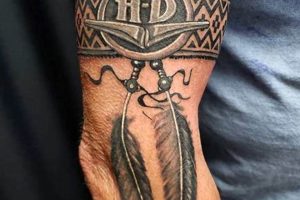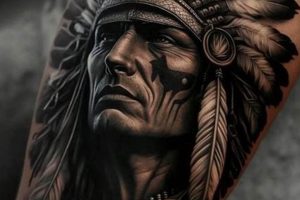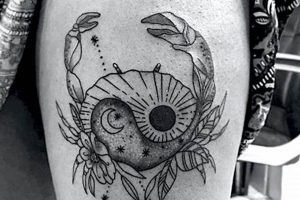



Representations of the anatomical heart entwined with religious symbolism, often depicting flames, thorns, and a divine light, serve as popular choices for body art. These designs can range from traditional depictions to more contemporary and personalized interpretations.
Such imagery holds profound meaning for many individuals, symbolizing devotion, divine love, sacrifice, and spiritual transformation. Rooted in Catholic iconography, the symbolism has transcended its purely religious origins to become a powerful emblem of personal belief, resilience, and remembrance. This rich historical context adds layers of significance to the design, making it a compelling choice for those seeking meaningful body art.
Exploring the diverse styles and artistic interpretations available provides individuals with the opportunity to create deeply personal and visually striking tattoos. From minimalist linework to intricate realism and vibrant color palettes, the following sections will delve into various design options and considerations.
1. Placement

Placement significantly impacts the overall aesthetic and symbolic meaning of a sacred heart tattoo. Careful consideration of body contours and the desired visibility of the design are crucial for achieving a harmonious and impactful result.
- Chest
Positioning over the heart carries strong symbolic weight, emphasizing the design’s connection to devotion and deep-seated emotions. This placement provides ample space for larger, more detailed artwork.
- Forearm
The forearm offers a visible yet easily concealable location. This placement is suitable for designs ranging from smaller, minimalist representations to more elaborate compositions that extend along the arm.
- Back
The back provides a large canvas, allowing for expansive and intricate designs. This placement allows for greater artistic freedom and the incorporation of additional elements like wings, scriptural text, or surrounding ornamentation.
- Hand/Wrist
Smaller, simpler designs can be placed on the hand or wrist, serving as a constant reminder of personal beliefs or cherished values. This visible location makes the tattoo a powerful statement.
Ultimately, the chosen placement should complement the specific design elements and the individual’s personal preferences. The interplay between size, detail, and location contributes to the overall impact and meaning conveyed by the sacred heart tattoo.
2. Style (traditional, modern)

Style significantly influences the aesthetic and symbolic interpretation of sacred heart tattoos. Traditional styles often adhere to established iconography, emphasizing religious symbolism through vibrant colors, bold lines, and detailed depictions of flames, thorns, and divine light. These designs evoke a sense of classic religious art and often incorporate elements like halos or crosses. Examples include depictions reminiscent of stained-glass windows or traditional Catholic imagery found in churches. This style choice emphasizes the historical and spiritual roots of the symbol.
Modern interpretations, conversely, offer greater stylistic freedom. Minimalist designs utilizing fine lines and negative space create a contemporary feel while retaining the core symbolism. Abstract representations might incorporate geometric shapes or unconventional color palettes, focusing on the emotional and personal resonance of the design rather than strict adherence to traditional imagery. Watercolor effects, geometric patterns, or the incorporation of other symbolic elements like animals or nature motifs exemplify modern approaches. These adaptations allow for greater personalization and reflect individual interpretations of the sacred heart’s meaning.
The chosen style profoundly impacts the overall message conveyed. Traditional styles emphasize reverence and historical context, while modern styles prioritize individual expression and contemporary aesthetics. Understanding this interplay allows individuals to select a style that authentically reflects their personal beliefs and aesthetic preferences, ensuring a meaningful and visually compelling tattoo.
3. Incorporating Elements (Flowers, Thorns)

Symbolic elements woven into sacred heart tattoo designs add layers of meaning and visual richness. These additions personalize the imagery, allowing individuals to express specific aspects of their beliefs, experiences, or emotions. Careful selection and placement of these elements contribute to the overall narrative conveyed by the tattoo.
- Roses
Roses symbolize love, beauty, and sacrifice. Intertwining roses with the sacred heart intensifies the themes of divine love and devotion. Red roses evoke passion and earthly love, while white roses represent purity and spiritual love. The choice of color further nuances the symbolic meaning.
- Thorns
Thorns represent pain, sacrifice, and the struggles of life. Their inclusion in sacred heart tattoos acknowledges the hardships inherent in the human experience while simultaneously highlighting the transformative power of faith and resilience. Thorns wrapped around the heart visually depict the burdens borne with strength and acceptance.
- Lilies
Lilies symbolize purity, innocence, and resurrection. Their presence adds a dimension of hope and spiritual rebirth to the design, signifying the transformative potential of faith. White lilies are particularly associated with the Virgin Mary and reinforce the themes of purity and divine grace.
- Scriptural Text
Incorporating scriptural verses, meaningful quotes, or names of loved ones personalizes the design and adds a narrative element. This text can be incorporated within the heart, around it, or as a separate element, creating a deeply personal and meaningful tribute to faith, love, or remembrance.
The thoughtful integration of these elements transforms the sacred heart tattoo from a traditional symbol into a personalized narrative of faith, resilience, and devotion. The interplay between the core imagery and the chosen elements creates a powerful visual representation of individual beliefs and experiences.
4. Color Palettes
Color palettes play a crucial role in conveying emotion and symbolism within sacred heart tattoo designs. The chosen colors can significantly impact the overall aesthetic and deepen the personal meaning embedded within the artwork. Understanding the symbolic weight of different colors allows for a more informed and impactful design choice.
- Traditional Colors
Traditional color palettes often feature rich reds, deep golds, and vibrant blues. Red symbolizes the blood of Christ and passionate love, while gold represents divinity and heavenly glory. Blue signifies purity, faith, and the heavens. These color combinations evoke a sense of classic religious iconography and emphasize the spiritual significance of the design.
- Black and Gray
Black and gray palettes offer a more subdued and timeless aesthetic. Black can represent mourning, remembrance, or the darker aspects of the human experience, while gray signifies solemnity and reflection. This palette can create a dramatic and powerful image, focusing on the emotional depth and resilience associated with the sacred heart.
- Modern Interpretations
Modern color palettes embrace greater artistic freedom, incorporating unconventional color combinations and techniques. Watercolor effects, pastel hues, or vibrant neon shades can create a unique and personalized design. These choices often prioritize individual expression and contemporary aesthetics, allowing for a wider range of emotional and symbolic interpretations.
- Symbolic Color Choices
Specific colors can be incorporated to represent personal experiences or beliefs. Purple can symbolize royalty, spirituality, or penance. Green might represent hope, renewal, or connection to nature. Incorporating colors with personal significance adds another layer of meaning to the tattoo, transforming it into a unique and powerful symbol.
The interplay between color and imagery in sacred heart tattoos creates a powerful visual language. Careful consideration of color palettes allows individuals to express the specific emotions, beliefs, and experiences they wish to convey through their chosen design. The selected colors contribute significantly to the overall impact and personal resonance of the tattoo.
5. Size and Detail

Size and detail are integral considerations in sacred heart tattoo design, profoundly impacting the visual impact and feasibility of realizing the desired artistic vision. The chosen size dictates the level of detail achievable and influences placement options. A smaller tattoo necessitates simplified designs, focusing on clean lines and essential elements, while a larger scale allows for intricate details, elaborate ornamentation, and the incorporation of additional symbolic elements.
For instance, a small wrist tattoo might feature a minimalist outline of the sacred heart with a single rose, emphasizing simplicity and elegance. Conversely, a large chest piece could depict the heart engulfed in flames, adorned with thorns and roses, and incorporating detailed scriptural text or portraiture, showcasing the complexity and depth of the symbolism. The available space and the intended level of detail must be carefully balanced to ensure a harmonious and visually appealing result.
Practical considerations also influence the relationship between size and detail. Intricate designs require skilled artists and multiple sessions to execute flawlessly. Smaller, simpler tattoos can be completed more quickly and require less commitment in terms of time and expense. Understanding these practical implications empowers individuals to make informed decisions, aligning their artistic vision with their budget, pain tolerance, and lifestyle. Ultimately, the interplay between size and detail determines the overall aesthetic and feasibility of the sacred heart tattoo, contributing significantly to its long-term visual appeal and personal significance.
Tips for Sacred Heart Tattoo Designs
Careful planning ensures a successful and meaningful tattoo. These tips offer guidance for navigating the design process effectively.
Tip 1: Research Thoroughly
Explore various artistic interpretations and styles before committing to a design. Gather inspiration from historical representations, modern adaptations, and other symbolic elements that resonate personally. Thorough research fosters a well-informed decision and contributes to a unique and meaningful outcome.
Tip 2: Consult with a Reputable Artist
Collaborating with a skilled tattoo artist specializing in the desired style ensures a high-quality and personalized result. Discuss design ideas, placement options, and color palettes with the artist to refine the concept and ensure it aligns with individual preferences and body contours.
Tip 3: Consider Placement Carefully
Placement impacts both visibility and symbolic meaning. Consider the size and complexity of the design when choosing a location. Larger pieces suit the back or chest, while smaller, more discreet designs fit the wrist or forearm. Placement should complement the overall aesthetic and personal significance of the tattoo.
Tip 4: Reflect on Personal Meaning
Infuse the design with personal meaning by incorporating elements that reflect individual beliefs, experiences, or values. Adding symbolic flowers, scriptural text, or personalized imagery creates a unique and deeply resonant piece of art.
Tip 5: Choose Colors Wisely
Color palettes evoke specific emotions and symbolism. Traditional colors emphasize religious significance, while modern palettes offer greater artistic freedom. Consider the desired mood and message when selecting colors, ensuring they complement the overall design and personal preferences.
Tip 6: Balance Size and Detail
Intricate details require larger canvases, while smaller tattoos necessitate simplified designs. Balance size and detail to ensure a harmonious and visually appealing result. Consider the available space, the desired level of complexity, and the artist’s skill level when making this decision.
Tip 7: Plan for Aftercare
Proper aftercare ensures the longevity and vibrancy of the tattoo. Follow the artist’s instructions diligently for cleaning, moisturizing, and protecting the tattoo during the healing process. Careful aftercare preserves the artwork and minimizes the risk of complications.
These considerations ensure a well-executed, meaningful, and visually striking tattoo that resonates with personal beliefs and aesthetic preferences for years to come.
By following these guidelines, individuals can embark on the process of designing a sacred heart tattoo with confidence and clarity, ensuring a result that holds deep personal significance and enduring artistic value.
Frequently Asked Questions
Addressing common inquiries regarding sacred heart tattoo designs provides clarity and facilitates informed decision-making. The following questions and answers offer valuable insights for those considering this symbolic form of body art.
Question 1: What is the typical cost of a sacred heart tattoo?
Cost depends on factors such as size, complexity, artist’s experience, and geographic location. Smaller, simpler designs generally cost less than larger, more intricate pieces requiring multiple sessions. Consulting with reputable artists provides accurate cost estimates based on individual design specifications.
Question 2: How painful is getting a sacred heart tattoo?
Pain levels vary based on individual pain tolerance, placement, and tattoo size. Areas with more nerve endings, such as the ribs or chest, tend to be more sensitive. Discussing pain management options with the chosen artist helps mitigate discomfort during the process.
Question 3: How long does a sacred heart tattoo take to heal?
Healing typically takes 2-4 weeks, depending on individual healing rates and the size/complexity of the tattoo. Proper aftercare, as instructed by the tattoo artist, is crucial for optimal healing and minimizing the risk of infection or complications.
Question 4: Can sacred heart tattoos be customized?
Customization options are vast. Incorporating elements like flowers, thorns, scriptural text, or other symbolic imagery personalizes the design and reflects individual beliefs, experiences, or values. Collaborating with a skilled artist allows for the creation of a truly unique and meaningful piece.
Question 5: What are the best placement options for a sacred heart tattoo?
Placement depends on desired visibility, size, and personal preference. The chest, back, forearm, and hand/wrist are common locations, each offering different aesthetic and symbolic implications. Considering these factors helps determine the most suitable placement for individual needs.
Question 6: What are the different styles available for sacred heart tattoos?
Styles range from traditional religious depictions to modern and abstract interpretations. Traditional styles emphasize classic iconography, while modern approaches prioritize individual expression and artistic freedom. Researching various styles helps individuals select the aesthetic that best reflects their personal preferences.
Careful consideration of these frequently asked questions empowers individuals to approach the process of getting a sacred heart tattoo with greater understanding and confidence, ensuring a fulfilling and meaningful experience.
Exploring various design galleries and consulting with experienced tattoo artists further enhances the decision-making process, allowing for the creation of a truly personalized and impactful piece of body art.
Sacred Heart Tattoo Ideas
Exploration of sacred heart tattoo designs reveals a rich tapestry of symbolic meaning and artistic expression. From traditional religious iconography to modern, personalized interpretations, these designs offer a powerful means of conveying devotion, resilience, and remembrance. Placement, style, incorporated elements, color palettes, and size/detail considerations contribute significantly to the overall aesthetic and personal resonance of the tattoo.
Careful consideration of these elements, coupled with consultation with skilled artists, empowers individuals to create deeply meaningful and visually striking body art. The enduring power of the sacred heart symbol, combined with the artistry of tattooing, provides a lasting testament to personal beliefs, experiences, and the transformative power of faith.