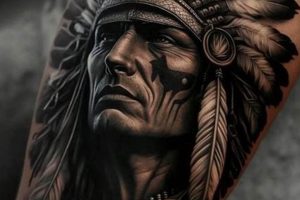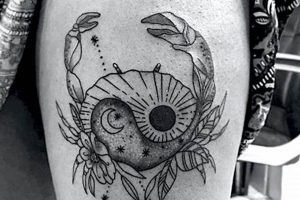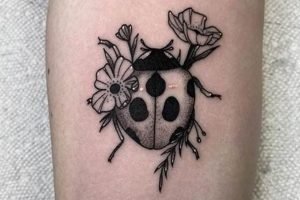



Tattoos grounded in the artistic principle of realism strive for accurate visual representation of the subject matter. They frequently feature portraits, animals, objects, or scenes rendered with meticulous detail and lifelike shading to mimic photographs or paintings. Examples include highly detailed depictions of loved ones, intricate reproductions of famous artwork, or strikingly realistic portrayals of nature scenes.
The strength of this style lies in its ability to capture powerful imagery with impressive accuracy, offering a medium for deeply personal and evocative body art. Historically, the evolution of tattooing equipment and techniques has allowed for increasingly sophisticated representations of realism. This style remains popular due to its versatility and the enduring appeal of highly detailed artwork translated onto the skin. Precise execution and skilled artistry are essential to capturing the nuanced gradations of tone and texture integral to the style’s success.
The following sections will explore various aspects of achieving realistic tattoos, including the selection of appropriate subject matter, considerations for placement on the body, the crucial role of the artist’s skill, and the importance of aftercare for preserving the artwork’s vibrancy and detail over time.
1. Subject Matter

Subject matter acts as the foundation of a realistic tattoo, directly influencing its visual impact and personal significance. The choice of subject dictates the technical challenges and artistic opportunities presented to the tattoo artist. A portrait, for instance, demands precise rendering of facial features and subtle expressions, while a wildlife depiction requires careful attention to fur texture and anatomical accuracy. The subject’s inherent complexity, combined with the desired level of detail, shapes the tattoo’s overall design and execution. Realistic depictions of inanimate objects like timepieces or flowers, for example, rely on capturing intricate details of light and shadow to achieve a three-dimensional effect on the skin.
Careful subject selection is crucial for achieving a cohesive and impactful realistic tattoo. Consideration should be given not only to personal meaning but also to how the chosen subject translates onto the body. The subject’s form and composition can either harmonize with the body’s contours or clash with them, impacting the overall aesthetic outcome. A sprawling landscape scene, for instance, may lend itself well to a larger canvas like the back, while a delicate floral arrangement might be better suited to a smaller area like the wrist. Understanding the interplay between subject matter and body placement enhances the artistic potential of the tattoo.
Successfully translating a chosen subject into a realistic tattoo requires careful planning and open communication between the client and the artist. Discussing reference images, desired level of detail, and placement ensures a shared vision. The subject’s inherent qualities, combined with the artist’s technical skill and interpretation, ultimately determine the tattoo’s success in achieving a convincing and meaningful representation of the intended imagery.
2. Artist Skill

Artist skill is paramount in realizing the full potential of realism tattoo ideas. The technical demands of this style require a high level of proficiency in several key areas. A skilled artist bridges the gap between concept and execution, translating a two-dimensional image into a three-dimensional, living piece of art.
- Needle Control and Depth
Precise needle control governs ink deposition depth and distribution within the skin. Varied needle depths create a spectrum of tonal values crucial for realistic shading. Inconsistencies in depth can lead to uneven color saturation or blurring, compromising the illusion of depth and realism. Experienced artists manipulate needle depth with precision to achieve smooth transitions between light and shadow, mimicking the natural gradations observed in real-life subjects.
- Understanding of Anatomy and Form
A strong grasp of anatomy is essential for rendering realistic human or animal forms. Accurate representation of musculature, skeletal structure, and proportions underpins believable depictions. Without this foundational knowledge, even technically proficient tattoos can appear distorted or unnatural. Artists specializing in realism often study anatomical references to enhance their ability to capture lifelike forms and postures.
- Color Theory and Mixing
Proficiency in color theory enables artists to create realistic skin tones, capture subtle color variations within a subject, and achieve seamless blending between hues. Understanding color interactions and the impact of light on color perception allows for accurate representation of the subject’s appearance. Skilled artists mix inks to create custom shades, replicating the nuances of natural coloration and capturing the play of light and shadow.
- Composition and Design
Strong compositional skills are crucial for translating reference material or original concepts into compelling tattoo designs. Considerations of scale, placement on the body, and the interplay of elements within the design contribute to a harmonious and visually balanced result. Effective composition enhances the overall impact of the tattoo, ensuring that the subject matter is presented in a way that is both aesthetically pleasing and impactful.
These interconnected skills contribute to the successful execution of realistic tattoos. The artist’s expertise in these areas determines the level of detail, accuracy, and overall impact of the final artwork. Selecting an artist with a proven track record in realism is therefore essential for achieving the desired result and ensuring a high-quality, enduring tattoo.
3. Placement

Placement plays a critical role in the overall effectiveness of realism tattoos. The body’s natural contours act as a canvas, influencing how the tattoo’s composition is perceived and how the design interacts with the wearer’s form. Strategic placement enhances the illusion of realism by allowing the tattoo to conform to the body’s curves, creating a seamless integration between artwork and anatomy. A portrait, for instance, might be strategically positioned on the chest or upper arm to utilize the underlying musculature to enhance the subject’s three-dimensionality. Similarly, a sprawling landscape scene may be more effectively displayed across the back, taking advantage of the broader surface area to showcase the artwork’s scale and detail.
The interplay between placement and subject matter contributes significantly to the tattoo’s overall impact. A tattoo depicting a serpent coiling around an arm or leg, for example, leverages the body’s natural form to accentuate the creature’s sinuous movement. Conversely, placing a portrait on an area with significant muscle movement or flexion, like the inner elbow or knee, could distort the facial features and compromise the realistic portrayal. Careful consideration of how the chosen subject interacts with the selected placement area is therefore crucial for maximizing the tattoo’s visual impact and preserving its realism over time. The scale of the tattoo should also be factored into placement decisions. Larger, more intricate designs require ample space to ensure sufficient detail and avoid a cluttered or cramped appearance.
Effective placement maximizes the realism of a tattoo by harmonizing the design with the body’s unique topography. It contributes to the long-term aesthetic success of the tattoo by considering factors such as muscle movement and skin stretching that can affect the artwork over time. Consultation with an experienced tattoo artist is crucial for determining optimal placement, ensuring that the chosen design complements the wearer’s body and enhances the realism of the artwork.
4. Detail and Shading

Detail and shading are fundamental to achieving realism in tattoos. They function as the building blocks of three-dimensionality on a two-dimensional surface, mimicking the way light interacts with form in the real world. Detail encompasses the intricate lines, textures, and subtle variations that characterize a subject, while shading uses gradations of tone to create depth and volume. The interplay of these two elements is crucial for capturing the nuances of light and shadow that give a tattoo the illusion of realism. A portrait, for example, relies on detailed rendering of individual hairs, wrinkles, and pores, combined with carefully placed shading to define facial features and create a sense of depth. Similarly, a realistic depiction of a flower depends on precise linework to delineate the delicate petals and intricate shading to convey the subtle curves and folds of its form.
The level of detail and shading complexity directly correlates with the perceived realism of the tattoo. Highly detailed tattoos often incorporate fine lines, intricate textures, and a wide range of tonal values to create a photographic effect. This meticulous approach requires significant skill and time on the part of the artist. Subtle shifts in shading can drastically alter the perception of depth and form. The careful placement of highlights and shadows, for example, can make a flat surface appear rounded or give the illusion of texture to smooth skin. Understanding the impact of light source direction and the resulting cast shadows is crucial for creating believable realism. Furthermore, the choice of ink colors plays a vital role in achieving realistic skin tones and capturing the subtle variations in color found in natural subjects.
Mastering detail and shading is essential for creating convincing realism in tattoos. These elements bring a design to life, transforming a flat image into a three-dimensional representation of the subject. The artist’s skill in manipulating line weight, texture, and tonal values directly impacts the overall quality and realism of the final artwork. A deep understanding of these techniques allows artists to capture the nuances of light, shadow, and form, resulting in tattoos that possess a remarkable degree of realism and visual depth.
5. Reference Material

Reference material forms the bedrock of successful realism tattoo designs. It provides the artist with a visual blueprint, guiding the accurate representation of the subject matter and ensuring the final tattoo captures the desired level of detail and realism. High-quality reference material is essential for translating a concept into a tangible piece of art, bridging the gap between imagination and execution.
- Source Material Quality
High-resolution images are crucial for capturing intricate details. Blurry or low-quality images hinder the artist’s ability to discern fine nuances, potentially compromising the tattoo’s realism. Clear photographs, professional illustrations, or high-definition digital renders provide the necessary clarity for accurate reproduction. The quality of the source material directly influences the artist’s ability to replicate the subject’s textures, colors, and intricate details onto the skin.
- Multiple Angles and Perspectives
Providing the artist with multiple angles and perspectives of the subject enhances their understanding of its three-dimensional form. Different viewpoints reveal subtle details that might be missed with a single image. For portraits, multiple angles help capture the unique shape of the face and the interplay of light and shadow. For objects or animals, various perspectives aid in accurately portraying their volume and texture. This comprehensive visual information allows the artist to create a more realistic and nuanced representation.
- Lighting and Shadow Reference
Understanding how light interacts with the subject is essential for creating realistic shading and depth in a tattoo. Reference images that clearly showcase highlights and shadows provide the artist with a guide for replicating the play of light and shadow on the skin. Photographs taken under controlled lighting conditions, or even 3D models with simulated lighting, can offer valuable insights into how light shapes the subject’s appearance and influences its perceived form.
- Contextual Imagery
In addition to direct depictions of the subject, contextual imagery can provide valuable information for enhancing realism. For example, images of the subject’s natural environment, related objects, or similar artistic styles can inspire the overall composition and inform the artist’s creative choices. This broader context can enrich the tattoo’s narrative and enhance its visual impact. For a wildlife tattoo, images of the animal’s habitat can inform background elements, while examples of related artwork can inspire stylistic choices.
The careful selection and utilization of reference material are integral to achieving high-quality realism tattoos. Comprehensive reference material allows artists to accurately capture the intricacies of the subject matter, ensuring the final tattoo is a faithful and compelling representation of the intended design. By providing artists with clear, detailed, and informative visuals, clients contribute significantly to the successful realization of their realistic tattoo aspirations.
Tips for Realism Tattoos
Achieving truly realistic tattoos requires careful planning and consideration. The following tips offer guidance for navigating the process and ensuring a successful outcome.
Tip 1: Research Artists Extensively:
Seek artists specializing in realism. Examine portfolios for consistent high-quality work demonstrating proficiency in detail, shading, and anatomical accuracy. An artist’s experience and specialization within realism are crucial for capturing the desired level of detail and achieving a lifelike representation.
Tip 2: Invest Time in Consultation:
Thorough consultations are essential. Discuss desired subject matter, placement, and stylistic preferences with potential artists. Open communication ensures a shared vision and allows the artist to tailor the design to individual needs and expectations. This collaborative approach maximizes the likelihood of a successful outcome.
Tip 3: Provide High-Quality Reference Material:
Clear, high-resolution images from multiple angles are invaluable. Detailed references enable the artist to accurately capture the subject’s nuances, ensuring a faithful and realistic representation. Providing comprehensive visual information empowers the artist to create a truly lifelike tattoo.
Tip 4: Consider Placement Carefully:
Placement impacts both aesthetics and longevity. Discuss ideal placement with the artist, considering body contours, muscle movement, and how these factors might affect the tattoo over time. Strategic placement enhances the tattoo’s visual impact and ensures its long-term integrity.
Tip 5: Understand the Time Commitment:
Realism tattoos often require multiple sessions due to their complexity and detail. Be prepared to dedicate the necessary time for completion. Rushing the process can compromise the quality and longevity of the artwork. Patience is key to achieving a truly exceptional result.
Tip 6: Prioritize Aftercare:
Diligent aftercare is essential for preserving the vibrancy and detail of a realism tattoo. Follow the artist’s aftercare instructions meticulously to promote proper healing and prevent complications. Proper aftercare protects the investment and ensures the tattoo’s longevity.
Tip 7: Embrace the Investment:
High-quality realism tattoos represent a significant investment of both time and resources. Recognize the value of skilled artistry and the importance of dedicating adequate resources to achieve the desired result. This investment yields a lasting piece of art that can be enjoyed for a lifetime.
By adhering to these guidelines, individuals pursuing realistic tattoos can maximize their chances of achieving a stunning and enduring piece of body art. Careful planning and informed decision-making are crucial for realizing the full potential of realism tattoo ideas.
The following conclusion will summarize key considerations and underscore the enduring appeal of realism in the art of tattooing.
Frequently Asked Questions about Realism Tattoos
This section addresses common inquiries regarding realism tattoos, providing concise and informative responses to facilitate informed decision-making.
Question 1: How much do realism tattoos typically cost?
Costs vary based on size, complexity, artist experience, and geographic location. Larger, more intricate designs by highly sought-after artists command higher prices. Obtaining a precise quote requires consultation with a specific artist.
Question 2: How long do realism tattoos take to complete?
Completion time depends on the design’s size, detail, and individual pain tolerance. Intricate, large-scale pieces may require multiple sessions spanning several hours each, sometimes spread over weeks or months to allow for proper healing between sessions.
Question 3: Are realism tattoos more painful than other styles?
Pain levels are subjective and vary based on individual tolerance, placement, and tattoo size. Realism often involves detailed shading and fine lines, which can prolong the process and potentially increase discomfort. Discussing pain management strategies with the artist can help mitigate discomfort during the procedure.
Question 4: How do I choose the right artist for a realism tattoo?
Thorough research is crucial. Examine portfolios for artists specializing in realism, focusing on consistency, detail, and anatomical accuracy. Seek reviews and testimonials to gauge client satisfaction and professionalism.
Question 5: What is the best placement for a realism tattoo?
Optimal placement depends on the specific design and individual preferences. Larger designs benefit from larger areas like the back, chest, or thighs. Consider how body contours and muscle movement might affect the tattoo’s appearance over time. Consult with an experienced artist to determine the most suitable placement for the chosen design.
Question 6: How do I care for a realism tattoo after it’s completed?
Diligent aftercare is essential for preserving the tattoo’s vibrancy and preventing complications. Follow the artist’s aftercare instructions meticulously. This typically involves keeping the tattoo clean, moisturized, and protected from sun exposure during the healing process. Proper aftercare promotes optimal healing and ensures the tattoo’s longevity.
Careful consideration of these frequently asked questions, combined with thorough research and consultation with a qualified artist, facilitates informed decisions and contributes to a positive realism tattoo experience.
The next section provides a concluding summary of key takeaways and emphasizes the enduring appeal of realism in the art of tattooing.
Realism Tattoo Ideas
Realism in tattooing presents a powerful medium for translating intricate detail and lifelike imagery onto the skin. Successful execution relies on a confluence of factors, including meticulous artistry, careful subject selection, strategic placement, and high-quality reference material. The technical demands of this style necessitate a deep understanding of anatomy, shading, and color theory, underscoring the importance of selecting a skilled and experienced artist. Placement considerations must account for the body’s natural contours and how they interact with the chosen design, ensuring a harmonious and aesthetically pleasing result. Diligent aftercare is paramount for preserving the vibrancy and longevity of the artwork, protecting the investment in both time and resources.
The enduring appeal of realism tattoos stems from their ability to capture powerful imagery with remarkable accuracy. Whether commemorating loved ones, celebrating personal passions, or showcasing artistic appreciation, realism offers a compelling avenue for self-expression. The pursuit of realism in tattooing represents a commitment to detail, precision, and enduring artistic representation. This dedication to capturing the nuances of the real world on the canvas of the human body ensures the continued evolution and appreciation of realism within the ever-expanding world of tattoo art.