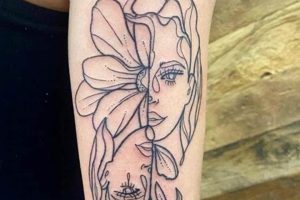



Floral designs based on the month of one’s birth offer a symbolic and personalized approach to body art. For instance, a January birth month might be represented by a carnation, while a June birth month could feature a rose. These designs can incorporate various styles, colors, and additional elements for unique representations.
Connecting personal expression with the natural world, these symbolic tattoos can hold deep meaning for the wearer. The historical significance of floriography, the language of flowers, further enhances this connection, allowing individuals to express sentiments and personality traits through their chosen floral design. This practice adds a layer of depth and personal narrative to the art form.
Further exploration will delve into specific floral representations for each month, along with stylistic considerations such as watercolor, minimalist, or traditional approaches. The potential for incorporating additional elements like birthstones, quotes, or other meaningful symbols will also be examined.
1. Floral Symbolism
Floral symbolism plays a crucial role in birth month flower tattoo designs, imbuing them with deeper meaning beyond mere aesthetics. The specific flower associated with each month carries its own symbolic weight, allowing individuals to express personality traits, aspirations, or significant life events through their chosen design. Understanding these symbolic associations is essential for creating a truly personalized and meaningful tattoo.
- Cultural Significance
Flowers hold diverse meanings across cultures. For example, the lily, often associated with purity in Western cultures, can symbolize mourning in some Eastern traditions. Considering these cultural nuances can enrich the significance of a birth month flower tattoo, particularly for individuals with diverse cultural backgrounds. This allows for a more nuanced and layered expression of personal identity.
- Historical Context
The language of flowers, known as floriography, has historical roots, particularly in Victorian times. During this era, flowers were used to convey messages that social customs often prohibited expressing directly. Incorporating this historical context into a birth month flower tattoo can add an element of intrigue and historical depth to the design.
- Personal Interpretation
While traditional meanings provide a foundation, individuals can also imbue their birth month flower tattoo with personal significance. A rose, traditionally symbolizing love, could also represent a personal journey of growth or resilience, depending on the individual’s experiences. This personal interpretation adds a unique and deeply meaningful layer to the tattoo.
- Visual Representation
The style and accompanying elements of the tattoo can further enhance its symbolic meaning. For instance, a vibrant, fully bloomed flower might represent vitality and joy, while a delicate, partially closed bud could symbolize potential and new beginnings. Careful consideration of these visual elements allows for a nuanced and layered expression of the chosen symbolism.
By carefully considering the symbolic meaning of the chosen flower, its cultural and historical context, and personal interpretations, individuals can create birth month flower tattoos that resonate deeply with their identity and values. These tattoos become more than just decorative elements; they become powerful symbols of personal expression and storytelling.
2. Birth Month Association

Birth month association forms the core concept behind birth month flower tattoos, directly linking the floral design to an individual’s identity. This connection provides a framework for selecting a specific flower, grounding the tattoo in personal significance. The association imbues the design with inherent meaning, transforming it from a simple floral motif into a personalized symbol. For example, someone born in April might choose a daisy, traditionally representing innocence and new beginnings, reflecting their birth month’s association with springtime. Conversely, a November birth month might be represented by a chrysanthemum, symbolizing longevity and joy in several cultures, aligning with the themes of harvest and transition associated with late autumn.
This practice of associating specific flowers with birth months draws upon various traditions, including floriography, the language of flowers. While interpretations can vary across cultures, common associations have emerged, providing a rich source of symbolic meaning. Understanding these associations allows individuals to select a flower that resonates with their personal values or desired message. The practice also creates a sense of shared identity among individuals born in the same month, fostering a connection through a common symbolic representation. Moreover, birth month flower tattoos offer a unique way to commemorate birthdays or celebrate the lives of loved ones born in specific months. A tattoo featuring a loved one’s birth month flower can serve as a lasting tribute, imbued with personal meaning and shared memories.
In essence, birth month association provides the foundational logic and symbolic framework for these tattoos. It facilitates a deeper connection between the individual and the design, enriching its meaning and transforming a simple aesthetic choice into a powerful personal statement. While cultural variations and personal interpretations exist, the underlying principle remains: connecting an individual’s identity to the natural world through the symbolism of flowers.
3. Design Aesthetics

Design aesthetics play a pivotal role in the successful execution of birth month flower tattoo ideas. Visual elements such as style, size, linework, and color palette significantly impact the overall impression and longevity of the tattoo. Careful consideration of these elements ensures the design effectively communicates the intended message and remains visually appealing over time.
- Style Selection
Various tattoo styles, ranging from minimalist linework to intricate realism or vibrant watercolor, can dramatically influence the final aesthetic. A minimalist approach might emphasize clean lines and simple forms, ideal for smaller, subtler tattoos. Realism focuses on detailed depictions of the flower, creating a lifelike representation. Watercolor styles mimic the fluidity and vibrancy of watercolor paintings, lending a softer, more artistic feel. Selecting a style that aligns with personal preferences and the symbolic meaning of the chosen flower is crucial.
- Size and Placement
Size considerations directly impact the level of detail and visual impact of the tattoo. A larger design allows for greater intricacy and inclusion of additional elements, while a smaller tattoo offers subtlety and discretion. Placement further influences the overall aesthetic, as the contours of the body can enhance or detract from the design. A sprawling floral piece might be well-suited for the back or thigh, while a smaller, simpler design might be more appropriate for the wrist or ankle.
- Linework and Detailing
The quality of linework significantly influences the overall aesthetic and longevity of the tattoo. Bold, clean lines create a strong, defined look, while finer lines offer a more delicate and intricate appearance. The level of detailing, such as the inclusion of fine lines, shading, and texture, contributes to the realism and depth of the design. Careful consideration of these elements ensures the tattoo remains visually appealing over time.
- Color Palette
Color choice significantly impacts the mood and symbolic meaning of the tattoo. Vibrant colors create a bold and energetic statement, while muted tones offer a softer, more understated feel. Black and grey tattoos emphasize texture and form, creating a classic and timeless look. The color palette should complement the chosen flower and enhance its symbolic meaning, contributing to the overall aesthetic and message.
These interconnected aesthetic considerations are crucial for transforming birth month flower concepts into visually compelling and meaningful tattoos. Harmonizing these elements ensures a design that not only resonates with personal significance but also stands the test of time as a beautiful piece of body art.
4. Placement Considerations
Placement considerations are integral to the overall impact of birth month flower tattoo designs. The chosen location on the body significantly influences the aesthetic presentation, practicality, and personal meaning of the tattoo. Careful consideration of these factors ensures the design harmonizes with the body’s natural contours and effectively communicates the intended message.
- Visibility and Discretion
The desired level of visibility plays a key role in placement decisions. Highly visible areas like the forearm or neck allow for open expression and easy appreciation of the design. Conversely, less visible areas like the back or ribs offer discretion and allow for more personal reflection. This consideration depends heavily on individual preferences and social or professional contexts.
- Body Contours and Movement
The natural curves and movements of the body influence how the tattoo appears and ages over time. Placement on areas with frequent movement or flexion, like joints, requires careful design planning to avoid distortion. Flowing designs can be strategically placed to complement the body’s contours, enhancing the overall aesthetic. For example, a vine-like floral design might gracefully wrap around the ankle or along the spine.
- Size and Detailing
The size and complexity of the design dictate appropriate placement. Intricate, large-scale pieces require ample surface area, such as the back or thigh, to fully showcase the detail and artistry. Smaller, simpler designs are well-suited for areas like the wrist, ankle, or behind the ear. Choosing a location that complements the design’s size ensures optimal visual impact and prevents overcrowding.
- Pain Tolerance
Pain tolerance varies significantly across different body areas. Areas with thinner skin and closer proximity to bone, such as the ribs or ankles, tend to be more sensitive. Fleshier areas like the thigh or upper arm generally offer a more comfortable tattooing experience. Considering individual pain thresholds is essential for choosing a placement that allows for a manageable and positive tattooing process.
Ultimately, placement considerations are deeply intertwined with the overall success and personal significance of birth month flower tattoos. By carefully evaluating these factors, individuals can ensure their chosen design is not only visually appealing but also complements their body, lifestyle, and personal expression. This thoughtful approach transforms the tattoo into a harmonious and meaningful extension of the individual’s identity.
5. Color Palette
Color palette selection significantly impacts the overall aesthetic and symbolic meaning of birth month flower tattoos. Color choices influence the mood, visual impact, and even the perceived longevity of the design. A thoughtful approach to color considers not only personal preferences but also the inherent symbolism of the chosen flower and the desired emotional impact.
For instance, a traditional red rose tattoo, often symbolizing passionate love, might utilize deep crimson hues to amplify this sentiment. Conversely, a softer, more romantic interpretation might employ pastel pinks and blush tones. A birth month flower like the carnation, representing January, offers diverse color variations, each with unique symbolic associations. White carnations symbolize purity and innocence, while pink signifies affection and gratitude. Selecting a specific shade allows for a more nuanced expression of personal meaning within the birth month flower framework. Furthermore, color choice affects the tattoo’s visibility and longevity. Vibrant colors tend to fade more quickly than darker, more saturated tones. Understanding these factors allows for informed decisions that align with long-term aesthetic goals.
Careful color consideration elevates birth month flower tattoos from simple decorative elements to powerful expressions of personal identity. The interplay of color and symbolism allows for nuanced storytelling, creating tattoos that resonate deeply with individual experiences and values. Selecting an appropriate color palette is therefore not merely an aesthetic choice but a crucial component in effectively communicating the intended message and ensuring the tattoo’s enduring visual appeal.
6. Artist Selection
Artist selection is paramount when realizing birth month flower tattoo ideas. A skilled artist translates concepts into visually compelling and technically sound tattoos. The chosen artist’s specialization, experience, and artistic style significantly influence the final outcome. For example, an artist specializing in fine line botanical work may be ideal for a delicate floral design, while an artist proficient in realism might be better suited for a detailed, lifelike depiction. A mismatch between artistic style and the desired aesthetic can compromise the tattoo’s overall impact. Reviewing an artist’s portfolio showcasing previous work in similar styles helps ensure alignment with personal preferences and expectations. This due diligence minimizes the risk of unsatisfactory results and ensures the final tattoo reflects the intended vision.
Beyond technical skill, an artist’s understanding of floral symbolism and design principles is essential for creating meaningful birth month flower tattoos. An artist knowledgeable in these areas can offer valuable insights regarding composition, color palette, and incorporation of additional elements, enhancing the symbolic depth and visual appeal. Effective communication between the client and artist ensures the final design accurately reflects the desired message and personal significance. A collaborative approach, involving discussions of stylistic preferences, symbolic intentions, and placement considerations, facilitates a successful outcome. This collaborative process fosters trust and ensures the artist’s vision aligns with the client’s expectations.
Choosing the right artist ensures a birth month flower tattoo concept transforms into a high-quality, meaningful piece of body art. Technical expertise, artistic style, and effective communication contribute to a successful outcome. Thorough research and portfolio review, combined with open communication, are essential for selecting an artist whose skills and vision align with the individual’s desired aesthetic and symbolic expression. This careful selection process maximizes the likelihood of achieving a tattoo that embodies personal meaning and enduring artistic value.
Tips for Birth Month Flower Tattoo Designs
Careful planning ensures a birth month flower tattoo remains a cherished piece of personal expression. These tips offer guidance for navigating the design process effectively.
Tip 1: Research Thoroughly
Explore various floral options associated with the birth month. Consider cultural interpretations and personal symbolism to select a flower that resonates deeply.
Tip 2: Choose a Reputable Artist
Seek an artist specializing in the preferred tattoo style. Review portfolios and consult with potential artists to ensure their expertise aligns with the desired aesthetic.
Tip 3: Consider Placement Carefully
Think about visibility, body contours, and potential lifestyle changes when selecting a location. Placement significantly impacts the tattoo’s presentation and longevity.
Tip 4: Reflect on Color Palette
Color choices influence mood and symbolism. Explore color variations and their cultural associations to enhance the tattoo’s meaning and visual impact.
Tip 5: Plan for Long-Term Care
Discuss aftercare procedures with the chosen artist. Proper care ensures the tattoo heals well and retains its vibrancy over time.
Tip 6: Embrace Personalization
Incorporate additional elements like birthstones, quotes, or other meaningful symbols to create a truly unique and personalized design.
Tip 7: Don’t Rush the Process
Take time to refine the design and ensure all elements align with personal preferences. A well-planned tattoo is a cherished piece of art for years to come.
Following these guidelines contributes to a successful and meaningful birth month flower tattoo experience, resulting in a design that reflects individual style and personal significance.
By considering these aspects, individuals can ensure their chosen design becomes a cherished and meaningful piece of self-expression.
Frequently Asked Questions
This section addresses common inquiries regarding floral tattoos based on birth months.
Question 1: How does one determine the appropriate flower for a specific birth month?
Traditional associations link specific flowers to each month. Numerous resources, including readily available online charts and guides, detail these established connections.
Question 2: Are these floral associations universally recognized?
While common associations exist, interpretations may vary across cultures. Researching potential cultural nuances associated with specific flowers is advised.
Question 3: Can design elements be incorporated alongside the birth month flower?
Incorporating elements like birthstones, initials, or symbolic animals can enhance personalization and create a more complex narrative within the tattoo design.
Question 4: What factors influence the longevity of a floral tattoo’s color vibrancy?
Color vibrancy is affected by ink quality, sun exposure, and individual skin characteristics. Adhering to aftercare instructions provided by the tattoo artist is crucial for preserving color saturation.
Question 5: What stylistic approaches are commonly used for birth month flower tattoos?
Styles range from minimalist linework and traditional American designs to intricate realism and contemporary watercolor effects. Style selection depends on individual preferences and the desired aesthetic.
Question 6: What are the typical costs associated with these types of tattoos?
Cost varies based on factors such as artist experience, design complexity, size, and geographic location. Consulting with prospective artists provides accurate cost estimates.
Careful consideration of these points aids in the decision-making process and contributes to a successful tattoo experience.
Further sections will offer in-depth explorations of specific birth month flowers and their symbolic meanings.
Conclusion
Floral designs based on birth months offer a rich tapestry of symbolic meaning and personal expression. Careful consideration of floral symbolism, design aesthetics, placement, and artist selection ensures a meaningful and visually compelling result. Understanding the historical and cultural nuances associated with specific flowers adds depth and significance to these personalized designs.
Ultimately, birth month flower tattoos represent a powerful intersection of personal narrative and artistic expression. The enduring nature of these designs underscores the importance of thoughtful planning and collaboration with skilled artists. These tattoos serve as lasting reminders of personal identity, values, and connections to the natural world.