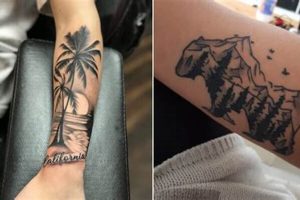



Small, simple designs featuring clear lines and minimal shading are often recommended as starting points for first-time tattoo recipients. Examples include outlines of animals, geometric shapes, single words, or small floral patterns. These designs tend to be less painful and heal more quickly than larger, more complex pieces.
Selecting an appropriate initial design contributes significantly to a positive first tattoo experience. A well-chosen design minimizes potential regret and allows individuals to understand the process and their own pain tolerance before committing to larger or more intricate artwork. Historically, simpler tattooing techniques predate more complex methods, suggesting an enduring practical and aesthetic value in minimalist designs.
The following sections will explore popular design choices, placement considerations, and aftercare best practices specifically for those considering their first tattoo.
1. Small Designs

Small designs represent a cornerstone of tattoo ideas for beginners. Their inherent advantages cater specifically to the needs and concerns of first-time recipients, making them an ideal starting point in the world of body art.
- Reduced Pain and Healing Time
Smaller tattoos involve less needle penetration and skin trauma, leading to significantly reduced pain during the procedure and faster healing afterward. This is particularly beneficial for individuals gauging their pain tolerance and hesitant about committing to larger pieces initially.
- Lower Commitment and Cost
Small designs offer a lower level of commitment both aesthetically and financially. They provide an opportunity to experience the tattoo process without the long-term commitment of a large, complex piece. The lower cost also allows for experimentation with different styles and artists.
- Versatility and Placement Flexibility
Smaller tattoos offer greater flexibility in placement, allowing individuals to experiment with less visible areas or easily concealable locations. This versatility makes them suitable for various lifestyles and professional environments.
- Ease of Modification or Cover-up
Should the need arise, small tattoos are generally easier to modify or cover up compared to larger designs. This provides an additional layer of reassurance for those concerned about potential future regret.
The advantages of small designs directly address the typical anxieties associated with getting a first tattoo. By choosing a smaller design, beginners can approach the experience with greater confidence and minimize potential drawbacks, paving the way for a positive and fulfilling introduction to body art.
2. Simple Lines

Simple lines form a fundamental element within tattoo designs, particularly for beginners. Their clarity and minimalist aesthetic offer several advantages, contributing significantly to a positive first tattoo experience. Understanding the role of simple lines allows for informed design choices and fosters realistic expectations regarding the final result.
- Clarity and Definition
Clean, simple lines provide clear visual definition, ensuring the design remains legible and aesthetically pleasing even as the tattoo ages. This clarity is crucial for smaller tattoos and simpler designs often preferred by beginners. Intricate details reliant on shading and color gradients can lose definition over time, whereas bold, simple lines maintain their impact.
- Reduced Healing Complexity
Simple line tattoos typically involve less trauma to the skin compared to complex designs requiring extensive shading or color packing. This minimized trauma translates to faster healing, reduced risk of complications, and less discomfort during the healing process, a significant benefit for first-time tattoo recipients.
- Adaptability to Various Styles
Simple lines offer remarkable adaptability across various tattoo styles, from minimalist and geometric designs to traditional and illustrative approaches. This versatility allows beginners to explore different aesthetic preferences while adhering to a design approach conducive to a positive first experience.
- Ease of Execution for Artists
While all tattoos require skill and precision, simple line designs often present a more straightforward execution for artists. This can translate to shorter sessions and potentially lower costs, factors often appreciated by those new to the tattooing process.
The advantages of simple lines directly correlate with the priorities of many first-time tattoo recipients: minimized pain, efficient healing, and a clear, lasting aesthetic. By focusing on designs featuring predominantly simple lines, beginners can maximize the likelihood of a successful and satisfying first tattoo experience, laying a solid foundation for future explorations in body art.
3. Minimal Shading

Minimal shading plays a crucial role in successful tattoo designs for beginners. Its judicious application contributes to both the aesthetic appeal and the practical considerations relevant to a first tattoo experience. Overly complex shading techniques can lead to prolonged sessions, increased pain, and elevated risk of complications during the healing process. A minimalist approach to shading, however, offers distinct advantages.
Subtle shading can add depth and dimension to a design without overwhelming the overall simplicity. A small flower, for example, can benefit from delicate shading to create a sense of petal curvature and realism, while still remaining a manageable first tattoo. Similarly, a geometric design can utilize subtle shading to create an illusion of depth or texture, enhancing visual interest without requiring extensive needlework. This balance between visual enhancement and practical simplicity is key for beginners.
Choosing minimal shading allows for easier execution by the artist, often resulting in shorter sessions and potentially lower costs. This streamlined approach also promotes efficient healing, as the skin experiences less trauma compared to heavily shaded designs. For beginners, prioritizing minimal shading allows for a more comfortable introduction to the tattooing process while still achieving a visually appealing result. This strategic approach minimizes potential complications and sets the stage for a positive first experience, encouraging further exploration of body art with greater confidence.
4. Meaningful Symbols

Meaningful symbols represent a powerful component of tattoo ideas for beginners. A first tattoo often carries significant personal weight, marking a milestone, commemorating a loved one, or representing a core value. Incorporating meaningful symbolism enhances the personal resonance of the tattoo, transforming it from mere body art into a permanent expression of self. Choosing a symbol with deeply personal significance contributes to long-term satisfaction with the tattoo, reducing the potential for future regret. A simple wave, for instance, might symbolize a love for the ocean, a connection to a specific coastal location, or a personal journey of overcoming challenges. A small semicolon can represent resilience and hope, particularly meaningful for those who have struggled with mental health challenges. These seemingly simple symbols carry profound personal significance, enriching the tattoo experience.
The selection of meaningful symbols also provides an opportunity for thoughtful reflection and self-discovery. The process of choosing a symbol encourages individuals to consider their values, passions, and life experiences. This introspective process can be particularly valuable for beginners embarking on their first tattoo journey, offering a chance to connect with their inner selves and express their identity in a tangible and permanent way. Furthermore, meaningful symbols can serve as reminders of personal goals, inspirations, or cherished memories. A small compass, for instance, might symbolize a commitment to staying true to one’s path, while a single word representing a personal mantra can serve as a daily source of strength and motivation.
The integration of meaningful symbols into tattoo designs elevates the experience beyond aesthetics, imbuing the artwork with profound personal significance. This connection between personal meaning and physical expression contributes significantly to the long-term satisfaction and emotional value of a first tattoo. By carefully considering the symbolism incorporated into their chosen design, beginners can create a lasting tribute to their values, experiences, and aspirations, ensuring their first tattoo remains a cherished and meaningful piece of personal expression for years to come.
5. Easy Placement

Easy placement is a crucial consideration for first-time tattoo recipients. Selecting a less sensitive area of the body minimizes discomfort during the procedure and allows individuals to assess their pain tolerance before committing to more challenging locations. Easy placement also often correlates with areas that are easily concealed if desired, a significant factor for those navigating professional or social environments with specific dress codes. Understanding ideal placement options contributes significantly to a positive and less stressful first tattoo experience.
- Outer Thigh
The outer thigh provides a large, relatively flat surface area, ideal for accommodating a variety of designs. The muscle mass in this area cushions the bone, reducing pain and providing the artist with a stable canvas. The outer thigh is also easily concealed by clothing, offering discretion if needed.
- Outer Arm (Forearm)
The outer forearm presents another readily accessible and relatively low-pain area. Its visibility allows for easy display of the tattoo while still offering the option of coverage with long sleeves. The forearm’s relatively flat surface provides a good canvas for various designs, from simple linework to moderately detailed pieces.
- Outer Shoulder (Deltoid)
The outer shoulder area, specifically the deltoid muscle, offers a good balance between visibility and concealability. This area tends to be less sensitive than inner areas of the shoulder, making it a suitable option for a first tattoo. The curved surface of the shoulder can also be incorporated into the design, adding an element of visual interest.
- Calf
The calf muscle provides a substantial surface area suitable for larger designs while remaining a relatively low-pain area. Similar to the thigh, the muscle mass cushions the bone, reducing discomfort during the tattooing process. The calf is also easily concealed or displayed depending on clothing choices.
Considering these placement options allows beginners to strategically choose a location that aligns with their pain tolerance, lifestyle, and aesthetic preferences. Selecting an appropriate placement contributes significantly to a comfortable and positive first tattoo experience, setting the stage for future explorations of body art with greater confidence and knowledge.
6. Consult a Professional

Consulting a professional tattoo artist is paramount when considering a first tattoo. This crucial step bridges the gap between initial design ideas and their successful, safe execution. Professional artists possess the expertise to guide beginners through the entire process, from design selection and placement to aftercare procedures. A consultation provides a platform for open communication, allowing individuals to express their vision while benefiting from the artist’s experience and technical knowledge. A skilled artist can translate a beginner’s concept into a technically sound and aesthetically pleasing design, taking into account factors like skin tone, body shape, and desired style. For example, a client might envision a delicate floral design, but the artist can advise on the optimal line thickness and color palette to ensure the tattoo ages gracefully. Similarly, an artist can recommend suitable placement options based on the design’s size and complexity, as well as the client’s pain tolerance and lifestyle.
Beyond design considerations, a professional consultation addresses critical safety and hygiene aspects. Reputable tattoo artists adhere to strict sterilization protocols and utilize high-quality, single-use needles, minimizing the risk of infections and complications. They can also provide detailed aftercare instructions tailored to the individual’s skin type and the specific tattoo, ensuring proper healing and longevity of the design. Attempting to bypass professional expertise by opting for unlicensed practitioners or DIY methods significantly increases the risk of infections, allergic reactions, and unsatisfactory aesthetic outcomes. A poorly executed tattoo can lead to costly and time-consuming removal or cover-up procedures, further emphasizing the importance of seeking professional guidance from the outset.
In essence, consulting a professional tattoo artist represents a non-negotiable element of responsible decision-making for beginners. This crucial step safeguards against potential health risks and ensures the desired aesthetic outcome. Professional guidance empowers individuals to navigate the complexities of tattooing with confidence, transforming their initial ideas into beautiful, safe, and personally meaningful works of art.
Tips for Beginners Considering Tattoos
Navigating the world of tattoos can feel overwhelming for first-timers. These tips offer practical guidance for individuals embarking on their first tattoo journey, ensuring a positive and informed experience.
Tip 1: Research Thoroughly
Thorough research is essential before committing to a tattoo. Investigate various tattoo styles, artists, and studios. Review portfolios, read client testimonials, and verify licensing and hygiene practices. Careful research minimizes potential risks and maximizes the likelihood of a satisfactory outcome.
Tip 2: Start Small and Simple
Opting for a small, simple design minimizes pain, healing time, and potential regret. A smaller tattoo allows individuals to assess their pain tolerance and provides a manageable first experience before committing to larger, more complex pieces.
Tip 3: Choose Meaningful Designs
Select designs that hold personal significance. A tattoo becomes a permanent part of one’s identity; therefore, choosing a meaningful design contributes to long-term satisfaction. Consider symbols, quotes, or imagery that resonate deeply with personal values and experiences.
Tip 4: Prioritize Placement Carefully
Consider placement based on pain tolerance, lifestyle, and professional considerations. Less sensitive areas like the outer thigh, forearm, or outer shoulder are generally recommended for first tattoos. Consider visibility and concealability based on individual needs.
Tip 5: Communicate Effectively with the Artist
Open communication with the chosen artist is crucial. Clearly articulate design preferences, placement desires, and any concerns. A collaborative approach ensures the artist understands the client’s vision and can provide expert guidance.
Tip 6: Prepare for the Session
Adequate preparation contributes to a smooth tattooing process. Ensure proper hydration and nourishment prior to the appointment. Avoid alcohol or blood-thinning medications in the days leading up to the session. Arrive on time and follow the artist’s pre-session instructions.
Tip 7: Follow Aftercare Instructions Diligently
Diligent aftercare is crucial for proper healing and longevity of the tattoo. Follow the artist’s aftercare instructions meticulously. This includes keeping the tattoo clean, moisturized, and protected from sun exposure during the healing period.
By adhering to these guidelines, individuals can approach their first tattoo experience with confidence and ensure a positive outcome. These practical tips mitigate potential risks and maximize the likelihood of a successful and satisfying introduction to the world of body art.
The following section will provide a concluding overview and emphasize the importance of informed decision-making in the context of permanent body art.
Frequently Asked Questions
This section addresses common inquiries regarding initial tattoo selection and the overall process for first-time recipients. Clarity on these points promotes informed decision-making and reduces anxiety associated with permanent body art.
Question 1: How does one choose a suitable first tattoo design?
Beginners are often advised to select small, simple designs with minimal shading and clear lines. These designs tend to heal more quickly and offer a manageable introduction to the tattooing process. Meaningful symbols or simple imagery can personalize the experience.
Question 2: What are the most suitable body areas for a first tattoo?
Less sensitive areas such as the outer thigh, outer arm (forearm), outer shoulder, and calf are generally recommended for initial tattoos. These locations offer a more comfortable experience and are often easily concealed if desired.
Question 3: How much does a small tattoo typically cost?
Costs vary based on factors like studio location, artist experience, and design complexity. Obtaining quotes from multiple reputable artists is recommended. Prioritizing quality over cost minimizes the risk of complications and ensures a satisfactory result.
Question 4: What is the typical healing time for a small tattoo?
Small tattoos typically heal within two to three weeks. However, complete healing can take up to several months. Adhering to the artist’s aftercare instructions is crucial for proper and efficient healing.
Question 5: How should one choose a reputable tattoo artist?
Thorough research is essential. Examine artist portfolios, read client reviews, verify licensing and hygiene practices, and schedule consultations to discuss design ideas and assess compatibility.
Question 6: What are potential risks associated with getting a tattoo?
Potential risks include infections, allergic reactions, and scarring. Choosing a reputable artist who adheres to strict hygiene protocols significantly minimizes these risks. Disclosing any relevant medical conditions to the artist prior to the procedure is also essential.
Addressing these common concerns empowers individuals to make informed decisions and approach their first tattoo experience with greater confidence and realistic expectations.
The next section will offer a concluding summary and reiterate the importance of thoughtful consideration in the realm of permanent body modification.
Conclusion
Careful consideration of tattoo ideas for beginners ensures a positive and fulfilling first experience. Prioritizing small, simple designs with minimal shading, selecting appropriate placement on less sensitive skin areas, and consulting experienced professionals are crucial steps in this process. Understanding the importance of meaningful symbolism and diligent aftercare contributes to long-term satisfaction and minimizes potential risks.
Permanent body art represents a significant decision. Thorough research, thoughtful planning, and open communication with reputable artists empower individuals to embark on this journey with confidence, transforming initial concepts into beautiful, safe, and personally meaningful expressions of self.