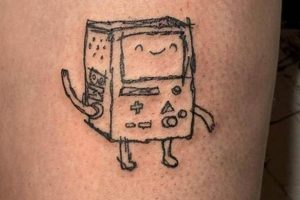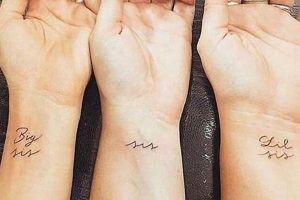



The process of sketching or illustrating potential tattoo designs is a crucial first step in the creation of body art. This visualization stage can involve various mediums, from traditional pencil and paper to digital drawing software, and allows for the exploration of different styles, compositions, and placements on the body. For example, a client might work with an artist to develop a concept for a floral sleeve tattoo, iterating through different flower types, arrangements, and levels of detail.
This pre-ink visualization provides numerous benefits. It enables clear communication between the client and artist, ensuring that the final product aligns with the client’s vision. It allows for experimentation and refinement of the design before the permanent commitment of a tattoo. Historically, this process has evolved from rudimentary sketches to sophisticated digital renderings, reflecting advancements in both artistic tools and tattooing techniques. This careful planning stage minimizes the risk of dissatisfaction and contributes significantly to a successful and meaningful tattoo experience.
The following sections will delve deeper into the various aspects of conceptualizing and creating tattoo designs, covering topics such as design inspiration, working with tattoo artists, and different artistic styles.
1. Concept Development

Concept development serves as the foundational bedrock for realizing a successful tattoo design. It bridges the gap between an abstract idea and a concrete visual representation. This crucial stage involves brainstorming, thematic exploration, and narrative development. A client desiring a tattoo representing resilience might initially present a vague notion. Through concept development, this notion could evolve into a phoenix, a mountain range, or a symbolic combination of elements, each carrying distinct visual and emotional weight. The depth of concept development directly impacts the resonance and personal meaning embedded within the final artwork. Without a well-defined concept, the design risks becoming visually appealing but lacking in depth and personal significance.
A practical example lies in the difference between requesting a simple “rose tattoo” versus requesting a tattoo that embodies “love enduring through hardship.” The latter provides a conceptual springboard from which an artist can develop a more nuanced design. Perhaps the rose is depicted blooming amidst thorns, or intertwined with a weathered but unbroken chain. Concept development allows for the infusion of personal narratives, symbolism, and deeper emotional resonance into the design. This translates into a tattoo that not only adorns the body but also tells a story, representing a significant aspect of the individual’s identity or journey.
In summary, robust concept development is indispensable for creating meaningful and impactful tattoos. It provides the conceptual scaffolding upon which artistic skill and technical expertise can build. Successfully navigating this stage requires introspection, open communication with the artist, and a willingness to explore various visual metaphors and symbolic representations. This investment in the initial conceptual phase yields a final product that transcends mere aesthetics and becomes a powerful expression of personal identity and narrative.
2. Style exploration

Style exploration is integral to the process of developing tattoo ideas and creating effective drawings. It provides a framework for visual communication, influencing the aesthetic direction and technical execution of the tattoo. A clear understanding of various tattoo stylessuch as traditional, realism, neo-traditional, Japanese, watercolor, geometric, and minimalistis crucial for both the artist and the client. This understanding facilitates informed decisions regarding line weight, color palettes, shading techniques, and overall composition. For instance, a client envisioning a bold, highly saturated design might gravitate towards traditional or neo-traditional styles, while someone seeking a softer, more ethereal aesthetic might prefer watercolor or illustrative styles. Choosing the appropriate style dictates the drawing techniques employed during the visualization process, impacting the final artwork’s appearance and longevity.
Effective style exploration necessitates research and visual analysis. Examining existing tattoos within different styles, studying the works of prominent tattoo artists, and understanding the historical and cultural contexts of various traditions can inform design choices. This research translates directly into the drawing process. A tattoo drawn in a traditional style will prioritize clean lines, bold colors, and iconic imagery, whereas a realistic tattoo drawing will focus on intricate details, subtle shading, and accurate anatomical representation. The chosen style will influence the tools and techniques used in the drawing, whether it involves crisp outlines with markers or delicate shading with pencils. This exploration allows the client and artist to align their visions and ensure the final tattoo reflects the desired aesthetic.
In summary, style exploration is not merely an aesthetic consideration; it’s a fundamental component of effective tattoo design. A thorough understanding of diverse tattoo styles provides a visual vocabulary and informs technical decisions throughout the drawing process. This careful consideration of style ensures a cohesive and well-executed design that aligns with the client’s preferences and stands the test of time. Neglecting style exploration can lead to a disconnect between concept and execution, resulting in a final product that fails to capture the intended aesthetic or emotional impact.
3. Placement Considerations

Placement considerations are integral to the overall impact and effectiveness of a tattoo design. The location of a tattoo on the body significantly influences its visual presentation, practicality, and personal significance. Careful consideration of body contours, visibility preferences, and the potential for future additions is essential during the design process. Placement decisions impact how the tattoo flows with the body’s natural lines, how easily it can be concealed or displayed, and how it interacts with other existing or planned tattoos. A well-considered placement enhances the design’s aesthetic appeal and ensures its long-term satisfaction.
- Body Contours and Flow
The human body’s natural curves and contours play a crucial role in how a tattoo design is perceived. A design intended for a flat surface, like the back or chest, might appear distorted or disjointed when applied to a curved area like the shoulder or forearm. Effective tattoo drawings incorporate these contours, ensuring the design complements the body’s shape rather than fighting against it. For example, a long, flowing design might be ideally suited for the length of a leg or arm, while a circular design might be better placed on a shoulder or the center of the back. Understanding these relationships is crucial during the drawing phase, enabling the creation of a design that harmonizes with the body’s unique topography.
- Visibility and Discretion
The desired level of visibility significantly influences placement decisions. Tattoos intended for frequent display are typically placed on areas readily visible, such as hands, wrists, or the neck. Conversely, tattoos intended for more private viewing are often placed on areas easily concealed by clothing, like the back, ribs, or thighs. These preferences directly inform the drawing process. A small, discreet design intended for the inner wrist requires a different artistic approach than a large, intricate design intended for the entire back. Visibility considerations also influence the level of detail and complexity incorporated into the drawing, as smaller, less visible tattoos may require simplified designs for optimal clarity.
- Future Expansion and Cohesion
Planning for future additions is a crucial aspect of placement considerations. If a client anticipates incorporating additional tattoos in the future, the initial tattoo’s placement should accommodate potential expansions. This forward-thinking approach ensures a cohesive overall aesthetic, preventing a disjointed or cluttered appearance as the individual’s tattoo collection grows. For example, if a client envisions a full sleeve tattoo, the initial design should be strategically placed to allow for seamless integration with future elements. This foresight is critical during the drawing stage, enabling the artist to create a foundational design that can be harmoniously expanded upon in subsequent sessions, creating a unified and visually compelling narrative across multiple tattoos.
- Pain Tolerance and Healing
Different areas of the body have varying levels of sensitivity, impacting the tattooing experience. Areas with thinner skin or closer proximity to bone, like the ribs, ankles, or elbows, tend to be more sensitive than areas with thicker skin and more muscle, like the thighs or outer arms. Placement considerations should take these sensitivities into account, particularly for clients with lower pain tolerances. Furthermore, different body areas heal at different rates. Areas subjected to frequent movement or friction, like the hands or feet, may require more diligent aftercare. These factors can influence design choices, encouraging simpler designs or smaller sizes for sensitive areas to minimize discomfort and promote optimal healing. Understanding these nuances allows artists to provide informed guidance during the design process, ensuring a positive and comfortable tattooing experience for the client.
In conclusion, placement considerations are inextricably linked to successful tattoo design. A thoughtfully chosen placement enhances the aesthetic impact of the tattoo, ensures its practicality, and reflects the individual’s personal preferences. By carefully considering body contours, visibility, future expansion, and pain tolerance, clients and artists can collaborate to create a harmonious and meaningful piece of body art that remains visually compelling and personally resonant for years to come.
4. Detail Refinement
Detail refinement represents a crucial stage in the development of tattoo ideas and drawings. It bridges the gap between a general concept and a precise, execution-ready design. This process involves meticulous attention to individual elements within the composition, ensuring clarity, visual balance, and technical feasibility. Refinement may encompass adjustments to line weights, shading intricacies, color gradients, and the incorporation of subtle textures. For instance, a drawing of a feathered wing might initially depict basic feather shapes. Detail refinement would then involve adding individual barbs, variations in feather size and curvature, and subtle gradations in shading to create a realistic and visually engaging representation. The level of detail directly impacts the final tattoo’s visual impact and longevity, with finely tuned details contributing to a richer, more nuanced aesthetic. This stage is particularly crucial for complex designs or styles that demand precision, such as realism or portraiture. Neglecting detail refinement can lead to a final tattoo that lacks definition, appears rushed, or fails to capture the intended intricacy of the design.
The practical significance of detail refinement extends beyond aesthetic considerations. It serves as a crucial communication tool between the client and the artist. A highly refined drawing provides a precise blueprint for the tattoo artist, minimizing the potential for misinterpretation or deviation from the agreed-upon design. This precision reduces the risk of errors during the tattooing process and contributes to a more predictable and satisfactory outcome. Furthermore, detail refinement allows for the identification and resolution of potential technical challenges before the tattooing process begins. For example, overly intricate details in a small-scale design might become blurred or lose definition over time as the tattoo ages. Addressing these potential issues during the drawing phase allows for adjustments in scale, detail level, or placement to ensure the tattoo’s long-term visual integrity. This proactive approach mitigates the risk of future dissatisfaction and ensures a tattoo that ages gracefully.
In summary, detail refinement is an essential component of successful tattoo design. It elevates a basic concept into a meticulously planned artwork, maximizing visual impact and technical feasibility. This process facilitates clear communication between client and artist, reduces the risk of errors, and ensures the tattoo’s long-term aesthetic appeal. Investing time and effort in detail refinement ultimately leads to a more satisfying and enduring piece of body art that accurately reflects the client’s vision and stands the test of time.
5. Collaboration with Artists

Collaboration with a skilled tattoo artist is paramount in translating a nascent tattoo idea into a refined, executable design. This collaborative process significantly elevates the drawing phase, infusing it with technical expertise, artistic insight, and a nuanced understanding of the tattoo medium. The artist’s contribution extends beyond simply drawing the design; it encompasses crucial aspects such as stylistic guidance, technical feasibility assessment, and personalized adaptation of the concept to the individual’s body. For example, a client might present a rough sketch of a wolf, but an experienced artist can transform this rudimentary concept into a dynamic, stylized representation, considering factors like fur texture, anatomical accuracy, and the interplay of light and shadow to create a visually compelling composition. This collaborative refinement ensures the final design is not only aesthetically pleasing but also technically sound and tailored to the client’s unique anatomy and preferences.
The practical significance of artist collaboration becomes evident in several key areas. Firstly, it ensures the design’s technical feasibility. An experienced artist understands the limitations and possibilities of the tattoo medium, advising on aspects such as line weight, color saturation, and level of detail achievable given the chosen placement and size. This expertise prevents unrealistic expectations and ensures the final tattoo translates effectively from drawing to skin. Secondly, collaboration fosters a deeper understanding of the client’s vision. Through dialogue and iterative sketching, the artist can interpret the client’s abstract ideas, suggesting visual metaphors, stylistic choices, and compositional elements that enhance the design’s narrative and emotional resonance. This interactive process ensures the final tattoo reflects the client’s personal story and aesthetic preferences accurately. For instance, a client seeking a tattoo representing growth and transformation might initially envision a simple tree. Through collaborative discussion, the artist might suggest incorporating elements like blooming flowers, intertwined roots, or the transition from bare branches to lush foliage, adding layers of symbolism and visual depth to the design.
In conclusion, collaboration with a skilled tattoo artist is an indispensable component of the tattoo design process. It transforms a rudimentary idea into a refined, technically sound, and personally meaningful artwork. This collaborative approach maximizes the potential of the drawing phase, ensuring the final tattoo not only meets but exceeds the client’s expectations. It fosters a shared understanding of the design’s narrative, technical requirements, and aesthetic goals, resulting in a piece of body art that is both visually compelling and deeply resonant with the individual’s personal journey. Neglecting this collaborative aspect can lead to design flaws, technical challenges, and ultimately, a final result that falls short of the client’s initial vision. The investment in collaborative dialogue and artistic expertise during the drawing stage yields a significantly more rewarding and enduring piece of body art.
6. Reference Gathering
Reference gathering forms an essential foundation for effective tattoo idea drawing. It provides a visual vocabulary and a framework for conceptualizing and refining design elements. Compiling a collection of relevant images, ranging from photographs and artwork to historical artifacts and natural specimens, directly informs the drawing process. This gathered material serves as a springboard for creative exploration, enabling artists and clients to visualize potential styles, compositions, and subject matter. For instance, a client seeking a tattoo of a mythological creature might gather references depicting various artistic interpretations, anatomical studies of similar animals, and cultural depictions of the creature’s symbolism. This collection fuels the drawing process, allowing for a more informed and nuanced representation of the desired subject.
The practical implications of thorough reference gathering are numerous. It facilitates clearer communication between the client and the artist, ensuring a shared understanding of the desired aesthetic and thematic direction. Presenting a curated collection of references allows the client to articulate their vision more effectively, conveying nuances that might be difficult to express verbally. Furthermore, reference material serves as a valuable tool for problem-solving during the drawing process. When faced with challenges in representing a specific texture, anatomical detail, or compositional element, the artist can consult the gathered references to inform their approach, ensuring accuracy and visual coherence. For example, an artist drawing a floral tattoo might refer to botanical illustrations to accurately capture the veining patterns on petals or the structure of the flower’s stem. This attention to detail elevates the quality of the drawing and ultimately contributes to a more successful tattoo.
In conclusion, reference gathering is not merely a preliminary step but an integral component of successful tattoo idea drawing. It provides a rich source of visual inspiration, facilitates clear communication, and enables informed decision-making throughout the design process. A well-curated collection of references empowers both the client and the artist to create a tattoo design that is not only aesthetically pleasing but also deeply meaningful and technically sound. Failing to invest adequate time and effort in reference gathering can result in a design that lacks depth, originality, and technical feasibility, ultimately compromising the final tattoo’s quality and longevity.
Tips for Effective Tattoo Design Visualization
The following tips provide practical guidance for effectively visualizing tattoo designs, ensuring a successful transition from concept to finished artwork.
Tip 1: Start with Thorough Research. Explore various tattoo styles, artists, and imagery to develop a clear understanding of desired aesthetics and technical possibilities. Researching different cultural and historical tattoo traditions can also provide valuable inspiration and symbolic depth. This foundational knowledge informs more effective design choices and facilitates productive communication with tattoo artists.
Tip 2: Embrace Simplicity in Initial Sketches. Begin with basic shapes and outlines to establish the overall composition and placement. Avoid overwhelming the initial sketch with intricate details. This simplified approach allows for greater flexibility in experimentation and refinement as the design evolves.
Tip 3: Utilize Multiple Mediums for Exploration. Experiment with various drawing tools and mediums, from traditional pencil and paper to digital drawing software, to discover which best captures the desired aesthetic and facilitates effective communication of the design. Different mediums offer unique advantages in terms of line weight, texture, and color representation.
Tip 4: Consider Scale and Placement on the Body. Visualize the design on the intended body part, accounting for its contours and how the design will flow with the body’s natural lines. A design intended for a flat surface may require adjustments when applied to a curved area. This consideration ensures the final tattoo complements the body’s form harmoniously.
Tip 5: Focus on Clear Communication with the Artist. Provide the artist with detailed references and articulate design preferences clearly. Open communication fosters a collaborative environment, allowing the artist to interpret the client’s vision accurately and provide valuable technical insights. This collaboration ensures the final design aligns with the client’s expectations.
Tip 6: Iterate and Refine the Design. View the design process as an evolving journey. Don’t hesitate to revisit and revise the drawing based on feedback, further research, or evolving personal preferences. This iterative approach allows for the refinement of details and ensures the final design is thoroughly considered and personally meaningful.
Tip 7: Think Long-Term: Consider Aging and Maintenance. Recognize that tattoos are a permanent form of body art and will evolve over time. Consider how factors like sun exposure, skin aging, and lifestyle choices might affect the tattoo’s appearance in the long term. Discuss these considerations with the artist to make informed decisions regarding design choices, placement, and future maintenance.
By adhering to these tips, individuals embarking on the tattoo journey can ensure a well-defined, technically sound, and personally meaningful design that translates effectively from concept to a beautiful piece of body art.
The subsequent conclusion will summarize key takeaways and offer final recommendations for achieving successful tattoo design visualization.
Frequently Asked Questions about Tattoo Design Visualization
This section addresses common inquiries regarding the process of visualizing tattoo designs, providing clarity and guidance for those embarking on the tattoo journey.
Question 1: How detailed should initial tattoo sketches be?
Initial sketches should prioritize composition and overall concept rather than intricate details. Focusing on basic shapes, placement, and overall flow allows for greater flexibility during subsequent refinement stages. Excessive detail in the initial phase can hinder exploration and adaptability.
Question 2: What are the benefits of working with a professional tattoo artist during the design process?
Professional tattoo artists possess technical expertise and artistic insights crucial for translating concepts into executable designs. They offer guidance on style, placement, technical feasibility, and long-term considerations, ensuring a successful and satisfying tattooing experience.
Question 3: How can one effectively communicate design ideas to a tattoo artist?
Clear communication involves providing visual references, articulating desired aesthetics, and openly discussing symbolic meanings or personal narratives associated with the design. Detailed descriptions, mood boards, and examples of preferred styles facilitate a shared understanding between the client and artist.
Question 4: What factors should be considered when choosing a tattoo placement on the body?
Placement considerations encompass visibility preferences, body contours, potential for future additions, and pain tolerance. A well-considered placement enhances the tattoo’s aesthetic appeal, practicality, and personal significance.
Question 5: How does the chosen tattoo style influence the drawing process?
Different tattoo styles necessitate specific drawing techniques and aesthetic considerations. A traditional style emphasizes bold lines and solid colors, while realism focuses on intricate details and subtle shading. Understanding stylistic nuances informs drawing choices and ensures the final design reflects the intended aesthetic.
Question 6: What are common misconceptions about tattoo design visualization?
A common misconception is that the initial sketch must be a perfect representation of the final tattoo. Design visualization is an iterative process involving refinement and collaboration with the artist. Another misconception is that clients must possess artistic skills to contribute meaningfully to the design process. Clear communication and visual references suffice for conveying design preferences and collaborating effectively with the artist.
Thorough planning and open communication are key to achieving a successful and satisfying tattoo. Addressing these common questions facilitates a more informed and collaborative approach to tattoo design visualization.
The following section provides a concluding overview of key takeaways and emphasizes the importance of thoughtful planning in the tattoo process.
Conclusion
Effective visualization of tattoo designs is paramount to achieving a successful and personally meaningful outcome. This exploration has underscored the crucial role of concept development, style exploration, placement considerations, detail refinement, artist collaboration, and reference gathering in shaping a design’s final form. Each stage contributes significantly to the realization of a compelling and technically sound tattoo, emphasizing the importance of thoughtful planning and meticulous execution. The discussed elements form a cohesive framework for navigating the complexities of tattoo design, ensuring the final product aligns with individual vision and stands the test of time.
The permanence of tattoos necessitates a rigorous and considered approach to design. Investing time and effort in the visualization process ensures a harmonious union of artistic expression and personal narrative, resulting in a powerful piece of body art that resonates deeply with the individual and stands as a testament to the enduring power of visual storytelling. This commitment to thoughtful planning transforms a fleeting idea into a lasting embodiment of personal expression.