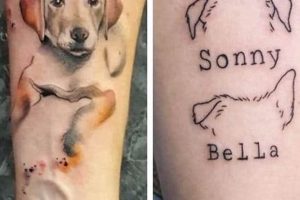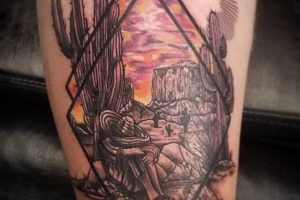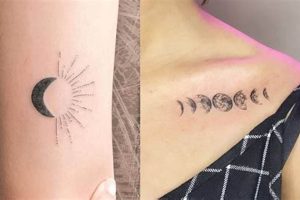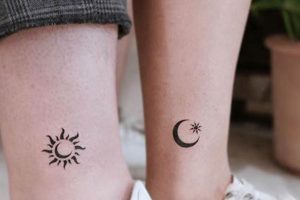



Permanent body art serves as a powerful medium for expressing familial love and appreciation. Designs dedicated to parents can range from simple name or date inscriptions to intricate portraits or symbolic representations of shared experiences, hobbies, or inside jokes. For instance, a design might incorporate birth flowers, meaningful quotes, or imagery associated with a cherished family tradition.
These tributes offer a lasting and visible declaration of love and respect. They can commemorate special moments, celebrate parents’ influence, or simply serve as a constant reminder of their presence. The choice of design often carries deep personal significance, strengthening the emotional bond between parent and child. Throughout history, body art has been used to signify familial connections and heritage across various cultures, though its expression has evolved significantly over time.
Exploring design options, considering placement, and researching reputable artists are crucial steps in the process of creating meaningful and enduring familial tributes. Understanding different styles, from minimalism to realism, can further assist in choosing the most appropriate aesthetic for expressing one’s feelings.
1. Placement

Placement significantly impacts the visibility and symbolic meaning of permanent body art honoring parents. Highly visible areas, like the forearm or wrist, readily display the tribute, while more private locations, such as the chest or back, offer a sense of personal intimacy. Consideration of daily activities and clothing choices informs decisions regarding practicality and long-term visibility. A design honoring a musical parent might be placed on the wrist or forearm, referencing their playing of an instrument. Choosing a location close to the heart holds symbolic weight, underscoring emotional closeness.
Factors such as pain tolerance also influence placement decisions. Areas with thinner skin or closer proximity to bone tend to be more sensitive. Consulting with experienced artists provides valuable insights into placement options and their implications. Understanding the healing process for different body areas is crucial for ensuring optimal results. A large, intricate design might be better suited for a larger area like the back, while smaller, simpler tributes can be accommodated on areas like the wrist or ankle.
Thoughtful placement elevates the tribute beyond mere aesthetics. It becomes an integral part of the design’s narrative, enhancing its emotional resonance and personal meaning. Balancing visibility, symbolism, and practical considerations ensures a meaningful and enduring homage to parental figures. Successfully integrating these elements results in a powerful, personalized expression of familial love and respect.
2. Style

Artistic style significantly influences the aesthetic and emotional impact of permanent body art dedicated to parents. Selecting a style that resonates with both the individual and the honoree ensures a meaningful and visually appealing tribute. Careful consideration of various styles, from minimalist simplicity to intricate detail, allows for a personalized expression of familial love and respect.
- Minimalism
Minimalist designs emphasize clean lines, simple shapes, and limited color palettes. This style offers a timeless and understated elegance, often focusing on symbolic representations rather than intricate detail. Small outlines of significant objects, like a parent’s favorite flower or a shared symbol, exemplify minimalist aesthetics. This approach suits individuals seeking a subtle yet powerful tribute.
- Realism
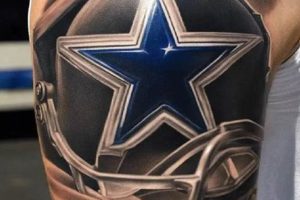
Realism aims to capture intricate details and lifelike representations. Portrait tattoos, often chosen to honor parents, exemplify this style. Realistic depictions of cherished photographs or meaningful objects create a visually striking and emotionally resonant tribute. This style demands a highly skilled artist capable of capturing nuanced details and achieving lifelike accuracy.
- Watercolor
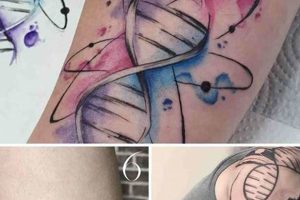
Watercolor tattoos mimic the fluidity and vibrancy of watercolor paintings. This style often incorporates splashes of color and abstract shapes, lending a sense of artistry and emotional depth to the design. Blending colors to represent shared memories or incorporating flowing lines to symbolize a parent’s influence adds a unique and expressive touch to the tribute.
- Traditional
Traditional tattooing, characterized by bold lines, vibrant colors, and iconic imagery, offers a classic and enduring aesthetic. Incorporating traditional elements, such as roses or anchors, while personalizing them to reflect a parent’s personality or shared experiences, creates a powerful and timeless homage. This style suits individuals seeking a bold and enduring tribute.
Choosing an appropriate style significantly contributes to the overall impact and personal meaning of the tribute. The selected style should complement the chosen imagery and placement, creating a cohesive and visually appealing design that effectively expresses the individual’s unique relationship with their parents.
3. Symbolism

Symbolism plays a crucial role in imbuing permanent body art dedicated to parents with deeper meaning and personal significance. Careful selection of symbolic elements elevates the tribute beyond mere aesthetics, transforming it into a powerful expression of familial love, shared history, and enduring connection. Symbolic imagery can represent shared experiences, personality traits, cultural heritage, or inside jokes, adding layers of meaning that resonate deeply with both the wearer and the individuals being honored.
- Birth Flowers
Incorporating birth flowers associated with each parent offers a visually appealing and symbolically rich tribute. Each flower carries its own unique meaning, adding depth and personalization to the design. For example, a carnation for a January birth month symbolizes love and admiration, while a rose for a June birthday represents passion and gratitude. Combining birth flowers creates a visually harmonious representation of familial bonds.
- Shared Hobbies/Interests
Representing shared hobbies or interests through symbolic imagery creates a lasting reminder of cherished moments and shared passions. A design might incorporate elements related to music, travel, nature, or sports, reflecting the unique bond between parent and child. For instance, a fishing rod might symbolize shared fishing trips, while musical notes represent a love of music passed down through generations.
- Animals/Birds
Animals and birds carry symbolic weight across various cultures, offering a powerful way to represent parental qualities or shared values. A lion might symbolize strength and protection, while a dove represents peace and love. Incorporating specific animals or birds that hold personal significance for the family adds a unique and deeply meaningful layer to the tribute.
- Geometric Patterns/Shapes
Geometric patterns and shapes offer a visually striking and symbolically rich way to represent familial connections. Interlocking circles can symbolize unity and eternity, while triangles represent strength and stability. Combining geometric elements with other symbolic imagery creates a cohesive and visually compelling design that reflects the complexity and enduring nature of familial bonds.
By carefully selecting and integrating symbolic elements, individuals can create deeply personal and meaningful tributes that honor their parents in a lasting and visually compelling way. These symbolic representations elevate the design beyond mere aesthetics, transforming it into a powerful expression of love, respect, and enduring connection, serving as a constant reminder of the unique bond between parent and child.
4. Quotes/Text

Incorporating carefully selected quotes or text adds a deeply personal and meaningful dimension to permanent body art honoring parents. These textual elements can convey sentiments, express shared values, or immortalize inside jokes, enriching the tribute with emotional depth and personal significance. The chosen text serves as a powerful focal point, encapsulating the essence of the relationship and serving as a constant reminder of shared experiences or cherished memories.
Short, poignant phrases expressing love, gratitude, or admiration offer a concise yet impactful way to honor parental figures. Quotes from literature, song lyrics, or even family mottos can further personalize the tribute, reflecting shared interests or values. A quote like “My heart belongs to my parents” directly expresses deep affection, while a phrase like “Forever grateful” conveys lasting appreciation. Using a meaningful date, such as a parent’s birthday or anniversary, adds another layer of personalization.
Choosing a typeface that complements the overall design enhances the visual appeal and readability of the text. Script fonts convey elegance and intimacy, while bolder typefaces offer a more assertive statement. The size and placement of the text also play a crucial role in its impact. A small, discreetly placed inscription offers a sense of personal intimacy, while a larger, more prominent text makes a bolder statement. Integrating the chosen quote or text seamlessly with other design elements, such as symbolic imagery or portraits, creates a cohesive and visually compelling tribute that honors parents in a lasting and deeply meaningful way.
5. Portraits
Portrait tattoos offer a powerful and deeply personal way to honor parents within the realm of permanent body art. Capturing a loved one’s likeness in ink serves as a lasting tribute, preserving their memory and celebrating their influence. The process of translating a photograph or memory into a permanent artwork requires careful consideration of various stylistic approaches, levels of detail, and emotional nuances.
- Realism
Realistic portrait tattoos strive for lifelike representation, capturing intricate details of facial features, expressions, and even textures. This style demands a highly skilled artist with a mastery of shading, linework, and capturing the nuances of human likeness. A realistic portrait can immortalize a parent’s image at a specific age or capture a cherished expression, creating a powerful and emotionally resonant tribute.
- Black and Gray
Black and gray portraits utilize varying shades of black and gray ink to create depth, contrast, and a timeless aesthetic. This style often evokes a sense of classic elegance and focuses on capturing the essence of the subject’s personality through subtle shading and highlights. Black and gray portraits can be particularly effective in conveying a sense of nostalgia or honoring the memory of a deceased parent.
- Abstract/Stylized
Abstract or stylized portraits offer a more interpretive approach, focusing on capturing the essence of a parent’s personality or a shared memory rather than achieving perfect realism. This style allows for greater artistic freedom, incorporating elements of other styles, such as watercolor or geometric patterns, to create a unique and personalized tribute. An abstract portrait might emphasize a parent’s defining characteristic, like a warm smile or expressive eyes, through exaggerated features or symbolic imagery.
- Combined Elements
Combining portraiture with other symbolic elements, such as birth flowers, meaningful quotes, or shared hobbies, adds layers of meaning and personalization to the tribute. Integrating a portrait with a parent’s favorite flower or a quote that reflects their personality creates a visually rich and emotionally resonant composition. This approach allows for a more comprehensive and nuanced representation of the relationship between parent and child.
Ultimately, the choice of portrait style depends on individual preferences and the desired emotional impact. Careful consideration of these stylistic approaches ensures a meaningful and enduring tribute that honors parents in a deeply personal and visually compelling way. A well-executed portrait tattoo serves not only as a beautiful piece of art but also as a powerful symbol of love, respect, and enduring connection.
6. Birthdates/Initials
Birthdates and initials serve as concise yet powerful elements within the broader context of permanent body art dedicated to parents. These succinct representations offer a discreet and deeply personal way to honor parental figures. A birthdate etched in Roman numerals or a parent’s initials subtly interwoven with other design elements can hold significant emotional weight. This minimalist approach allows for a lasting tribute without the need for large or elaborate designs. The permanence of these markings underscores the enduring nature of familial bonds.
The choice between using full birthdates, just the month and day, or solely initials often reflects the individual’s personal preference and the overall design aesthetic. Combining initials with symbolic imagery, such as birth flowers or shared hobbies, adds layers of meaning and personalization. For example, intertwining a parent’s initials with the outline of their favorite flower creates a visually appealing and symbolically rich tribute. Similarly, incorporating birthdates into a larger design, such as a family tree or a symbolic representation of a shared memory, adds a historical dimension to the artwork. These combinations create a powerful narrative, weaving together personal history and familial connection within the design itself.
The placement of birthdates and initials also carries symbolic weight. Positioning a parent’s birthdate over the heart signifies their central role in the individual’s life. Discreetly placing initials on the wrist, ankle, or behind the ear offers a sense of personal intimacy. Ultimately, the choice of how to incorporate birthdates and initials depends on individual preferences and the desired level of personal expression. This minimalist approach offers a powerful yet subtle way to honor parental figures, creating a lasting tribute that resonates deeply with personal meaning and familial connection.
Tips for Meaningful Parent-Honoring Tattoos
Creating a lasting tribute requires careful planning. These tips offer guidance for designing meaningful body art honoring parents.
Tip 1: Collaborative Design
Open communication with parents fosters a collaborative design process. Discussing ideas and preferences ensures the final design resonates with everyone involved, strengthening the familial bond reflected in the artwork.
Tip 2: Research and Artist Selection
Thorough research is crucial. Investigate reputable artists specializing in the desired style. Reviewing portfolios and seeking recommendations helps ensure the chosen artist possesses the necessary skill and artistic vision.
Tip 3: Meaningful Symbolism
Incorporate elements holding personal significance. Shared hobbies, inside jokes, or meaningful objects imbue the design with emotional depth, transforming it from a simple image into a powerful symbol of familial connection.
Tip 4: Placement Considerations
Thoughtful placement enhances the design’s impact. Consider visibility preferences, pain tolerance, and how the chosen location interacts with the body’s natural contours. A discreet placement can hold personal meaning, while a more visible location proudly displays the tribute.
Tip 5: Scalability and Detail
Balance desired detail with the chosen size and placement. Intricate designs require sufficient space to avoid blurring or loss of detail over time. Discuss scalability with the artist to ensure the design remains clear and impactful regardless of size.
Tip 6: Longevity and Aftercare
Permanent body art requires ongoing care. Following the artist’s aftercare instructions diligently ensures the design’s longevity and vibrancy. Proper care preserves the artwork, maintaining its integrity as a lasting tribute.
Tip 7: Budgetary Planning
High-quality, meaningful body art represents a financial investment. Establish a realistic budget early in the planning process. Discuss pricing transparently with the chosen artist to avoid unexpected expenses and ensure the project aligns with financial constraints.
Careful consideration of these factors contributes significantly to creating a meaningful and enduring tribute. These steps transform the process into a collaborative and fulfilling experience, resulting in body art that honors parental figures in a deeply personal and visually compelling way.
By following these guidelines, individuals can embark on the journey of creating a lasting tribute that not only honors their parents but also strengthens the bonds of familial love and connection. The resulting artwork serves as a powerful symbol of respect, gratitude, and enduring affection.
Frequently Asked Questions
Addressing common inquiries regarding permanent body art dedicated to parents provides clarity and facilitates informed decision-making. The following addresses key considerations for those contemplating such tributes.
Question 1: How does one select an appropriate design?
Design selection involves careful consideration of personal preferences, parental relationships, and symbolic representation. Meaningful elements, such as shared hobbies, inside jokes, or significant dates, enhance personalization.
Question 2: What factors influence placement decisions?
Placement depends on desired visibility, pain tolerance, and design size. Visible areas, like forearms, readily display tributes, while less visible locations offer discretion. Pain sensitivity varies across body areas.
Question 3: How does one find a reputable artist?
Thorough research, portfolio reviews, and recommendations are essential for finding reputable artists. Specialization in desired styles, experience, and hygiene practices should be considered.
Question 4: What is the typical cost range?
Costs depend on design complexity, size, artist experience, and geographic location. Detailed, larger pieces by experienced artists typically command higher prices. Obtaining quotes from multiple artists allows for comparison and informed budgeting.
Question 5: What aftercare procedures are necessary?
Diligent aftercare is crucial for proper healing and longevity. Following the artist’s specific instructions, which may include keeping the area clean, moisturized, and protected from sun exposure, ensures optimal results.
Question 6: Can these designs be modified or removed later?
Modifications and removals are possible, but complexities and limitations exist. Consultations with experienced artists provide insights into modification feasibility. Laser removal is an option, though complete removal may not always be achievable and can be costly.
Careful consideration of design, placement, artist selection, and aftercare ensures a meaningful and lasting tribute. Thorough research and open communication with artists facilitate informed decisions and positive outcomes.
Understanding these aspects allows individuals to create deeply personal and enduring tributes that honor parental figures in a meaningful and visually compelling way. The resulting body art serves as a powerful symbol of familial love, respect, and enduring connection.
Conclusion
Exploring permanent body art dedicated to parents reveals a profound method of expressing familial love and appreciation. Careful consideration of design elements, stylistic choices, symbolic representation, and placement ensures a meaningful and lasting tribute. From minimalist initials to intricate portraits, the diverse range of options allows for personalized expressions of enduring connection. Understanding the importance of artist selection, aftercare procedures, and budgetary planning further contributes to a successful and fulfilling experience.
Permanent tributes to parents represent more than mere aesthetics; they embody a powerful expression of love, respect, and enduring connection. Thoughtful planning and execution transform these artistic expressions into lasting symbols of familial bonds, preserving cherished memories and celebrating the profound influence of parents in one’s life. This enduring form of remembrance serves as a constant reminder of the unique and irreplaceable relationship between parent and child.