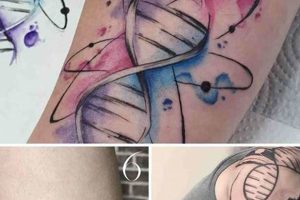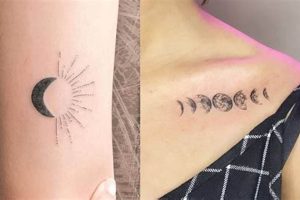



Permanent body art commemorating parental figures serves as a lasting tribute. Designs can range from minimalist initials and birthdates to elaborate portraits and symbolic imagery representing family bonds, such as trees, infinity symbols, or cardinal directions. For example, a popular choice involves incorporating children’s names or birth flowers alongside the parent’s name or a significant date.
These permanent expressions of love and appreciation offer a tangible connection to family, preserving memories and honoring the role parents play in one’s life. This practice of commemorating loved ones through body art has ancient roots, echoing historical practices across various cultures where tattoos symbolized lineage, protection, or spiritual beliefs. Modern interpretations often emphasize personalization and artistic expression, reflecting the unique dynamics of each family.
Further exploration will delve into various design elements, stylistic choices, and practical considerations for those contemplating a permanent homage to their parents. Topics include symbolic imagery, placement options, artist selection, and aftercare tips. This information will empower individuals to make informed decisions about design choices that resonate deeply with their personal experiences and family narratives.
1. Symbolic Imagery

Symbolic imagery plays a crucial role in imbuing tattoos commemorating parents with profound personal meaning. Selecting appropriate symbols transforms a simple design into a powerful narrative representing the unique bond between parent and child. Careful consideration of these symbolic elements allows for a deeply personal and enduring tribute.
- Birth Flowers
Incorporating birth month flowers associated with each parent or child adds a layer of personalized symbolism. For example, a carnation for a January birth or a rose for June, combined with other elements, creates a visually appealing and meaningful representation of family members. This offers a subtle yet elegant way to signify individual family members within a unified design.
- Trees of Life
The tree of life, a universal symbol of growth, strength, and interconnectedness, represents the enduring nature of familial bonds. Its branches can symbolize individual family members extending from shared roots, creating a visual metaphor for family history and legacy. This imagery evokes a sense of continuity and shared heritage.
- Infinity Symbols
The infinity symbol represents limitless love and connection, making it a fitting choice for a tattoo honoring parents. Often intertwined with names or dates, it reinforces the eternal nature of familial bonds. This simple yet powerful symbol effectively conveys the enduring nature of parental love.
- Cardinal Directions
Representing guidance and protection, cardinal directions can symbolize the guiding influence of parents in one’s life. A compass or a subtle representation of North, South, East, and West, can signify the constant presence and support provided by parents. This imagery evokes a sense of security and direction attributed to parental guidance.
The thoughtful integration of symbolic imagery elevates a tattoo honoring parents beyond a mere aesthetic choice, transforming it into a poignant and enduring expression of love, appreciation, and connection. These symbols, interwoven with personalized elements, create a powerful visual narrative that resonates deeply with individual family stories and experiences.
2. Placement

Placement significantly influences the overall impact and personal meaning of tattoos commemorating parents. Factors such as visibility, size, and design complexity intertwine with placement considerations. A highly visible location, like the forearm or wrist, allows for frequent personal reflection and readily conveys the tribute to others. Conversely, a more discreet placement, such as the back or ribcage, offers privacy and may hold deeper personal significance. The physical dimensions of the design necessitate appropriate placement; larger, more intricate pieces require ample surface area while smaller, minimalist designs adapt well to various locations. For instance, a detailed portrait necessitates a larger area like the back, while a small, symbolic heart fits comfortably on the wrist. Considering the interplay between placement and design ensures a harmonious and meaningful outcome.
Practical considerations further underscore the importance of placement. Certain areas of the body experience higher sensitivity during the tattooing process. Individuals with lower pain tolerance may opt for less sensitive locations. Additionally, the healing process varies depending on placement; areas subject to frequent movement or friction may require more diligent aftercare. Professional tattoo artists offer valuable insights into placement choices, considering individual pain thresholds, design intricacies, and desired levels of visibility. Consulting with an experienced artist ensures informed decisions aligned with individual needs and preferences.
In summary, thoughtful placement amplifies the intended message and personal resonance of tattoos honoring parents. Harmonizing visibility preferences, design complexity, and practical considerations, such as pain sensitivity and healing times, results in a well-executed tribute that effectively conveys profound emotions and enduring familial connections. Careful deliberation regarding placement contributes significantly to a lasting and meaningful commemoration.
3. Style

Style significantly influences the aesthetic and emotional impact of tattoos commemorating parents. Choosing a style that resonates with personal preferences and effectively conveys the intended sentiment is crucial. Various stylistic approaches, each with unique characteristics, offer diverse avenues for expressing the parental bond. Careful consideration of these styles ensures a visually appealing and deeply meaningful tribute.
- Realism
Realistic portraits capture the likeness of parents with intricate detail, creating a lifelike representation. This style, demanding high artistic skill, results in a powerful and personal tribute. However, realism requires significant space and may not be suitable for smaller tattoos.
- Watercolor
Watercolor tattoos mimic the fluidity and vibrancy of watercolor paintings, offering a softer, more artistic approach. This style lends itself well to floral motifs and abstract designs, conveying a sense of gentle affection and remembrance. However, watercolor tattoos may require more frequent touch-ups due to their delicate nature.
- Minimalism
Minimalist designs prioritize simplicity and clean lines, often using geometric shapes, fine lines, or small symbols. This style effectively conveys profound meaning through understated elegance. Minimalist tattoos are versatile in terms of placement and size, making them suitable for various body areas.
- Linework
Linework tattoos focus on bold, clean lines to create intricate patterns or outlines of images. This style, versatile and visually striking, ranges from simple contours to complex geometric designs. Linework tattoos age well and maintain clarity over time.
Selecting an appropriate style enhances the personal and artistic expression of a tattoo honoring parents. By considering the unique characteristics of each style, individuals can choose an approach that aligns with their aesthetic preferences and effectively conveys the depth of their emotions. The chosen style ultimately contributes to a lasting tribute that resonates with both personal and familial significance.
4. Artist Selection
Selecting a skilled artist is paramount when considering permanent body art honoring parents. The artist’s expertise significantly influences the final result, impacting both the aesthetic quality and the longevity of the tattoo. A thoughtful approach to artist selection ensures the realization of a meaningful and enduring tribute.
- Portfolio Examination
A thorough review of an artist’s portfolio provides crucial insights into their style, technical proficiency, and specialization. Examining previous work allows individuals to assess the artist’s ability to execute specific design elements relevant to parental tributes, such as portraiture, floral motifs, or script. A portfolio showcasing consistent quality and relevant experience indicates a higher likelihood of achieving desired results.
- Hygiene and Safety Practices
Stringent hygiene practices are non-negotiable in tattooing. A reputable artist adheres to strict sterilization protocols, uses single-use needles, and maintains a clean workspace. Confirming adherence to these standards safeguards health and minimizes potential complications. Prioritizing hygiene ensures a safe and responsible tattooing experience.
- Consultations and Communication
Open communication with the artist is essential. Consultations allow individuals to discuss design ideas, explore customization options, and address any concerns. A receptive artist actively listens to client preferences, offers professional guidance, and collaborates to refine the design concept. Effective communication fosters a collaborative environment, resulting in a tattoo that accurately reflects personal vision.
- Experience and Specialization
While general tattoo artists can execute various designs, seeking an artist specializing in the desired style, such as realism or watercolor, often yields superior results. Specialized expertise ensures a deeper understanding of the intricacies of the chosen style, resulting in a more refined and technically proficient execution. Matching artist specialization with design preferences maximizes the likelihood of achieving the desired aesthetic.
Careful artist selection ensures that the permanent tribute to parents is executed with skill and precision. By considering factors such as portfolio quality, hygiene practices, communication style, and relevant experience, individuals invest in a meaningful and enduring piece of art that honors the parental bond with the respect and care it deserves. The chosen artist ultimately plays a pivotal role in transforming a personal vision into a lasting reality.
5. Personalized Elements

Personalized elements imbue tattoos commemorating parents with unique sentimental value, transforming a generic design into a deeply personal tribute. These elements forge a direct connection between the wearer and the individuals being honored, reflecting the specific dynamics of their relationship. Incorporating such details elevates the tattoo beyond a visual representation, imbuing it with emotional resonance and narrative depth. This personalization allows for a nuanced expression of love, respect, and remembrance.
Specific examples illustrate the power of personalized elements. Integrating handwritten notes or signatures adds an intimate touch, preserving the unique penmanship of a parent. Birthdates, anniversaries, or significant dates etched into the design commemorate shared milestones and memories. Incorporating elements reflecting shared interests, such as a musical note for a music-loving parent or a quote from a beloved book, further deepens the personal connection. These details transform the tattoo into a tangible embodiment of shared experiences and cherished memories. A portrait combined with a handwritten recipe, for example, commemorates not only a parent’s likeness but also a cherished family tradition. These personalized touches amplify the emotional significance of the tattoo.
The thoughtful inclusion of personalized elements ensures the tattoo remains a meaningful and enduring tribute. These details weave a narrative of familial connection, reflecting the unique bond between parent and child. While generic designs offer visual appeal, personalized elements imbue the tattoo with lasting emotional significance. This personalization fosters a deeper connection with the artwork, transforming it into a cherished memento of familial love and legacy. The integration of personalized elements distinguishes a commemorative tattoo, ensuring its enduring resonance and personal significance.
Tips for Choosing Parent-Honoring Tattoos
Careful planning ensures a meaningful and enduring tribute. These tips offer guidance for selecting design elements, placement, and artists, facilitating informed decisions aligned with personal preferences and familial narratives.
Tip 1: Reflect on the Relationship
Consider the unique dynamics of the relationship with each parent. A shared hobby, a cherished memory, or a defining personality trait can inspire meaningful design elements.
Tip 2: Explore Symbolic Representation
Research symbols that resonate with familial bonds, such as trees, infinity symbols, or celestial bodies. Incorporate elements that represent shared values or beliefs.
Tip 3: Consider Placement Carefully
Placement impacts visibility and accessibility. Highly visible areas, like the forearm, facilitate frequent personal reflection, while discreet locations, like the back, offer privacy.
Tip 4: Choose a Style that Resonates
Explore various tattoo styles, from realism to minimalism, and select one that aligns with personal aesthetics and effectively conveys the intended sentiment.
Tip 5: Prioritize Artist Selection
Thoroughly research potential artists, examining portfolios and verifying adherence to hygiene standards. Choose an artist whose style and experience align with design goals.
Tip 6: Incorporate Personal Touches
Integrate elements unique to the relationship, such as handwritten notes, birthdates, or shared symbols. These details amplify the emotional resonance of the tattoo.
Tip 7: Plan for the Long Term
Consider the tattoo’s longevity. Choose designs and placements that age well and maintain clarity over time. Discuss aftercare procedures with the artist.
Careful consideration of these tips facilitates the creation of a permanent tribute that honors the parental bond with enduring significance. Thoughtful planning ensures a design that resonates deeply with personal experiences and family narratives.
By following these guidelines, individuals embark on a journey of creating a lasting homage that celebrates the profound impact of parents in their lives. The subsequent conclusion will summarize key takeaways and offer final considerations for embarking on this meaningful endeavor.
Frequently Asked Questions
This section addresses common inquiries regarding permanent body art honoring parents, offering practical insights and guidance for those contemplating such a tribute.
Question 1: What are common symbolic representations used in tattoos honoring parents?
Common symbols include birth flowers, trees of life, infinity symbols, cardinal directions, hearts, anchors, and swallows. Each symbol carries specific connotations related to family, love, protection, and guidance.
Question 2: How does placement affect the visibility and meaning of the tattoo?
Placement influences how readily the tattoo is seen by oneself and others. Visible placements, like the forearm, convey the tribute openly, while discreet locations, like the back, offer privacy and personal reflection.
Question 3: What stylistic approaches are suitable for parent-themed tattoos?
Suitable styles range from realism and watercolor to minimalism and linework. The chosen style impacts the overall aesthetic and should align with personal preferences and the intended emotional tone.
Question 4: How does one select a qualified tattoo artist for this type of tribute?
Thorough portfolio review, verification of hygiene standards, and open communication during consultations are crucial for selecting a skilled and reputable artist.
Question 5: How can personal elements be incorporated into the design?
Handwritten notes, signatures, birthdates, significant dates, shared symbols, and elements reflecting shared interests personalize the tattoo, adding emotional depth and narrative.
Question 6: What factors contribute to the longevity and clarity of a tattoo over time?
Design simplicity, placement, ink quality, and adherence to aftercare instructions contribute to the tattoo’s longevity and clarity. Consulting with a reputable artist ensures informed decisions regarding these factors.
Careful consideration of these frequently asked questions empowers individuals to make informed decisions when planning a permanent tribute to their parents. Thoughtful planning ensures a meaningful and enduring commemoration of the parental bond.
The following conclusion will summarize the essential information and offer final guidance for embarking on this significant personal journey.
Conclusion
Permanent body art honoring parents offers a powerful medium for expressing enduring love and appreciation. Exploration of design elements, stylistic choices, and practical considerations reveals the multifaceted nature of these tributes. Symbolic imagery, placement, style, artist selection, and personalized elements converge to create a lasting commemoration of the parental bond. Careful consideration of these aspects ensures a meaningful and resonant piece of art.
Permanent tributes to parents represent more than mere aesthetic adornments; they embody profound emotions and cherished memories. Thoughtful planning and execution transform these expressions of love into enduring legacies, preserving familial connections across generations. The permanence of these tributes serves as a constant reminder of the profound impact parents have on shaping individual lives.