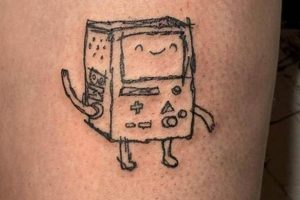



Miniature, intricate designs constitute a popular trend in body art. These small-scale tattoos often feature simple lines, minimalist symbols, or tiny, detailed illustrations. Examples include single words, small geometric shapes, delicate floral motifs, or miniature portraits of beloved pets.
The appeal of these diminutive designs lies in their subtlety and versatility. They can be easily concealed or displayed depending on personal preference and social context. This adaptability makes them attractive to individuals entering the world of body modification for the first time, or for those seeking a less conspicuous form of self-expression. Furthermore, smaller designs typically require shorter tattooing sessions and heal more quickly. While the practice of tattooing has a long and rich history across various cultures, the focus on extremely small designs has gained significant popularity more recently, driven by social media trends and evolving aesthetic preferences.
The subsequent sections will explore various design categories, placement considerations, aftercare practices, and the selection of reputable artists specializing in this delicate art form.
1. Placement

Placement is a critical factor in the success and longevity of micro tattoos. The small scale of these designs necessitates careful consideration of body location to ensure both aesthetic appeal and preservation of the tattoo’s integrity over time. Areas subjected to frequent friction, stretching, or exposure to the elements may experience faster ink fading and blurring. Consequently, areas like the inner wrist, ankle, behind the ear, or the side of the finger are often preferred for their relative stability and lower exposure to wear. For example, a delicate floral design placed on the ribcage might be less susceptible to fading than one placed on the inside of a finger, which experiences frequent contact.
Beyond longevity, placement also contributes to the overall impact of the micro tattoo. A small design placed strategically can complement the natural contours of the body, enhancing its visual appeal. A tiny constellation, for example, might follow the curve of the collarbone, or a single word could be subtly placed along the spine. Such choices maximize the aesthetic potential of the design, transforming the body itself into a canvas. This also allows for discretion; a micro tattoo placed behind the ear is easily concealable, while one on the wrist can be shown or hidden as desired.
Successful micro tattoo placement requires a balance between aesthetic considerations and practical limitations. Consulting with a skilled tattoo artist is essential. A professional can assess skin type, lifestyle factors, and the specific design to recommend optimal placement. Careful planning in the initial stages ensures a visually appealing and long-lasting result, maximizing the impact and personal significance of the chosen design.
2. Symbolism

Symbolism plays a crucial role in micro tattoo design, allowing individuals to express complex ideas and personal narratives through minimal imagery. The condensed nature of these tattoos necessitates careful selection of symbols that effectively convey meaning despite their small size. Understanding the historical and cultural context of various symbols enhances the depth and significance of these miniature works of art.
- Cultural Significance
Symbols derived from specific cultures often carry rich historical and traditional meaning. For instance, a small Om symbol can represent Hinduism’s spiritual essence, while an Ankh can evoke ancient Egyptian concepts of life and eternity. Incorporating these culturally significant symbols allows individuals to connect with their heritage or express admiration for a specific tradition. Careful research is vital to ensure respectful and accurate representation.
- Personal Narratives
Micro tattoos can serve as permanent reminders of significant life events, relationships, or personal beliefs. A small semicolon, for example, has become a powerful symbol of resilience and mental health awareness, while a single initial can represent a loved one. These personal symbols imbue the tattoo with deep emotional meaning, transforming it into a private and enduring memento.
- Abstract Representations
Abstract symbols offer a versatile means of conveying complex emotions or concepts. Geometric shapes, minimalist linework, and small-scale patterns can represent ideas like balance, growth, or interconnectedness. These abstract forms allow for individual interpretation, adding a layer of personal meaning beyond the literal representation.
- Nature-Inspired Imagery
Elements from the natural world, such as small flowers, leaves, or animals, are popular choices for micro tattoos. These symbols can represent characteristics associated with the chosen element, such as resilience (represented by a dandelion) or wisdom (represented by an owl). Nature-inspired imagery often evokes a sense of tranquility and connection to the natural world.
Ultimately, the chosen symbol elevates the micro tattoo beyond mere aesthetics, imbuing it with personal significance and narrative depth. The careful selection and thoughtful placement of a symbol transforms a small design into a powerful statement of identity and belief.
3. Design Simplicity

Design simplicity is paramount in micro tattoo artistry. The reduced canvas size necessitates careful consideration of detail and linework. Intricate designs, while visually appealing on a larger scale, often lose clarity and definition when miniaturized. Simplicity ensures the design remains legible and aesthetically pleasing, even at a smaller size. A complex image with fine details might blur into an indistinguishable mass when scaled down, whereas a simple outline or silhouette retains its impact. For instance, a small, single-line drawing of a bird in flight translates effectively as a micro tattoo, while a detailed rendering of the same bird, including individual feathers, would likely lose clarity. This principle also impacts color choices; a limited color palette or even a single color often works best in micro tattoos, preventing a muddled appearance.
The practical implications of design simplicity extend beyond aesthetics. Simpler designs typically require less intricate needlework and shorter tattooing sessions. This reduces trauma to the skin, promoting faster healing and minimizing discomfort. Furthermore, simpler designs tend to age better than complex ones. As tattoos age, ink can spread slightly beneath the skin. In complex designs, this can blur fine details, compromising the overall image. Simpler designs, with their bolder lines and minimal detail, are less susceptible to this blurring, retaining their clarity over time. Choosing a simple design therefore contributes to both the immediate and long-term success of a micro tattoo.
Effective micro tattoo design hinges on a balance between artistic expression and practical limitations. Embracing design simplicity ensures the chosen image translates effectively onto the skin, maintains its clarity over time, and minimizes the challenges associated with tattooing and healing on a small scale. Careful consideration of these factors contributes to a successful and aesthetically pleasing micro tattoo that holds its meaning and visual appeal for years to come. Consultation with a skilled artist specializing in micro tattoos remains essential. They possess the experience and technical expertise to guide design choices and ensure successful execution, respecting the inherent constraints of the miniature art form.
4. Linework Intricacy

Linework intricacy presents a unique challenge within the realm of micro tattoo design. While the small scale necessitates simplicity, skilled artists can utilize intricate linework to enhance visual depth and artistic expression. This delicate balance between detail and minimalism requires careful planning and precise execution. The following facets explore the complexities and considerations of intricate linework in micro tattoos.
- Precision and Skill
Executing intricate linework on a small scale demands a high level of precision and technical skill. Artists must possess exceptional control over their tools and a keen understanding of how lines interact at miniature sizes. Slight tremors or inconsistencies can significantly impact the overall design, blurring fine details or compromising clarity. This necessitates specialized training and experience in micro tattoo application, as the techniques differ significantly from those used in larger-scale tattooing.
- Line Weight Variation
Varying line weights can create depth and dimension within a micro tattoo. Thicker lines can define primary elements, while thinner lines add subtle details and shading. This interplay of line weights enhances visual interest and prevents the design from appearing flat or simplistic. However, excessive variation can overwhelm the small canvas; careful balance is essential for a successful outcome.
- Design Considerations
Not all designs lend themselves to intricate linework at a micro scale. Overly complex imagery can become muddled and lose definition when miniaturized. Suitable designs often incorporate elements like geometric patterns, delicate floral motifs, or minimalist portraits. These designs allow for intricate linework to enhance the existing imagery without overwhelming the limited space.
- Longevity and Healing
Intricate linework in micro tattoos requires careful consideration of longevity and the healing process. Fine lines are more susceptible to fading and blurring over time, particularly in areas exposed to friction or sunlight. Proper aftercare and placement are crucial for preserving the integrity of the design. Furthermore, intricate linework can sometimes lead to more complex healing, requiring meticulous attention to prevent ink bleeding or scarring.
Successfully incorporating intricate linework into micro tattoos requires a confluence of artistic vision, technical expertise, and careful planning. While the challenges are significant, the potential rewards are substantial. A skilled artist can utilize intricate linework to elevate a simple design, adding depth, texture, and artistic nuance to a miniature masterpiece. Understanding the complexities and limitations of this technique is essential for both the artist and the individual seeking a micro tattoo, ensuring a successful and enduring result.
5. Artist Specialization
Artist specialization is paramount when considering micro tattoos. These intricate designs require a different skill set than traditional tattooing, necessitating artists with experience and expertise in the nuances of miniature artwork. Selecting a specialist significantly impacts the quality, longevity, and overall success of the micro tattoo. The following facets highlight the crucial connection between artist specialization and successful micro tattoo design.
- Technical Proficiency
Micro tattoo application demands exceptional technical proficiency. Artists must possess a steady hand, precise needle control, and an understanding of how ink behaves on a smaller scale. Specialized techniques, such as single-needle tattooing, are often employed to achieve the fine lines and intricate details characteristic of micro tattoos. An artist specializing in larger-scale work may lack the necessary finesse and precision for successful micro tattoo application. Examples include the ability to create crisp, clean lines without blowouts or blurring, and the expertise to pack color densely into small areas for vibrant, long-lasting results.
- Design Expertise
Experienced micro tattoo artists possess a keen understanding of design principles specific to the miniature art form. They can advise on design choices, ensuring the chosen image translates effectively onto the skin at a reduced size. They also understand the limitations of the medium, recognizing which designs are too intricate or detailed for micro application. For example, an experienced artist will recognize that a highly detailed portrait might not translate well to a micro tattoo and suggest simplifying the design or choosing a different subject altogether. This specialized design expertise is crucial for achieving a successful and aesthetically pleasing outcome.
- Equipment and Ink Knowledge
Specialization often extends to equipment and ink selection. Micro tattoo artists frequently use specialized needles, machines, and inks formulated for fine lines and intricate details. They understand how different inks react on various skin types and can select the appropriate ink to ensure longevity and vibrancy. For instance, some inks are better suited for fine lines and delicate shading, while others are more resistant to fading. This specialized knowledge is essential for maximizing the visual impact and longevity of the micro tattoo.
- Aftercare Guidance
Specialized aftercare procedures are crucial for preserving the integrity of micro tattoos. Experienced artists provide detailed instructions specific to the care of small-scale tattoos, emphasizing the importance of gentle cleaning, appropriate moisturizing, and sun protection. This specialized guidance helps minimize the risk of infection, fading, and blurring, ensuring the tattoo heals properly and retains its clarity over time. For example, an artist might recommend specific aftercare products or advise against certain activities that could damage the delicate tattoo during the healing process.
Selecting an artist specializing in micro tattoos is not simply a matter of preference; it is a crucial factor determining the success and longevity of the design. Their specialized skills, knowledge, and experience ensure the intricate artwork translates effectively onto the skin, heals properly, and retains its visual appeal for years to come. Investing time in research and seeking out a reputable specialist is an investment in the quality and longevity of the micro tattoo itself, transforming a small design into a lasting work of art.
Tips for Micro Tattoo Ideas
Careful planning ensures successful micro tattoo design and application. Consideration of the following tips contributes significantly to a satisfying and enduring result.
Tip 1: Research Thoroughly
Extensive research should precede any tattoo decision, particularly for micro tattoos. Investigate potential artists, focusing on portfolios showcasing successful micro tattoo work. Examine line quality, precision, and healed results. Artist experience in this specialized area is crucial for successful execution.
Tip 2: Design Simplicity is Key
Prioritize simple, clean designs. Intricate details often blur at smaller scales. Opt for bold lines and minimalist aesthetics. A simple design translates more effectively and ages better than a complex one.
Tip 3: Consider Placement Carefully
Placement affects visibility, longevity, and how the tattoo interacts with the body’s contours. Discuss placement options with the chosen artist. Areas less prone to friction, stretching, and sun exposure typically yield better long-term results.
Tip 4: Size Matters
While “micro” implies small, consider the absolute minimum size for the chosen design. Excessively small designs can lose clarity or blur over time. Consult with the artist to determine the optimal size for design integrity.
Tip 5: Color Considerations
Limit the color palette. Micro tattoos often benefit from a single color or a very restricted palette. Too many colors can appear muddled at a small scale. Discuss color choices and their long-term impact with the artist.
Tip 6: Prioritize Aftercare
Meticulous aftercare is essential for all tattoos, but especially crucial for micro tattoos. Follow the artist’s aftercare instructions precisely. Proper healing is vital for preserving the design’s clarity and preventing complications.
Careful consideration of these tips maximizes the potential for a successful and satisfying micro tattoo experience. Thoughtful planning, combined with the expertise of a skilled artist, ensures a miniature artwork that retains its beauty and meaning for years to come.
The following concluding section provides final thoughts and emphasizes the importance of informed decision-making.
Frequently Asked Questions
This section addresses common inquiries regarding miniature tattoo designs, offering concise and informative responses.
Question 1: How long do these small tattoos typically last?
Longevity varies based on factors like placement, ink quality, and individual skin characteristics. Areas with less friction and sun exposure generally retain ink better. Proper aftercare is crucial for maximizing longevity. While some fading is expected over time, well-executed designs can last for many years.
Question 2: Are these designs more painful than larger tattoos?
Pain perception is subjective. However, due to smaller size and shorter application time, discomfort is often described as less intense than larger pieces. The location on the body also influences pain levels.
Question 3: How much do these small tattoos typically cost?
Pricing varies based on artist experience, design complexity, and studio location. While generally less expensive than larger tattoos due to size and application time, quality should not be compromised for cost. Consult with reputable artists for accurate pricing.
Question 4: Can these small tattoos be easily removed or covered up if desired?
Removal is possible through laser treatments, but complete removal is not always guaranteed. Cover-up options are limited by size and existing design. Careful consideration of design choice and placement is paramount due to these limitations.
Question 5: What are the typical healing times for these small tattoos?
Healing typically takes several weeks, similar to larger tattoos. Smaller designs may heal slightly faster due to less trauma to the skin. Proper aftercare significantly influences healing time and minimizes risk of complications.
Question 6: How does one find a reputable artist specializing in these small tattoos?
Thorough research is crucial. Seek artists whose portfolios demonstrate consistent high-quality micro tattoo work. Examine healed results, linework precision, and design suitability for the miniature scale. Online reviews and recommendations can also provide valuable insights.
Careful consideration of these frequently asked questions, combined with thorough research and consultation with reputable artists, facilitates informed decision-making and increases the likelihood of a successful and satisfying micro tattoo experience.
For further inquiries or to schedule a consultation, contact a reputable tattoo artist specializing in micro tattoo design and application.
Micro Tattoo Ideas
Miniature tattoo designs offer a unique avenue for self-expression, combining artistic precision with symbolic significance. Exploration of placement, symbolism, design simplicity, linework intricacy, and artist specialization reveals the multifaceted nature of these small-scale artworks. Successful execution hinges on careful planning, design consideration, and the expertise of skilled artists specializing in the intricacies of micro tattoo application. Understanding these elements allows individuals to make informed decisions, ensuring a result that aligns with personal aesthetics and enduring satisfaction.
The increasing popularity of miniature tattoos reflects a broader shift towards subtle yet impactful forms of self-expression. As artistic techniques and technologies evolve, the potential for innovative and personalized micro tattoo designs continues to expand. Ultimately, the enduring appeal of these miniature artworks lies in their capacity to encapsulate profound meaning within a delicate and enduring form.