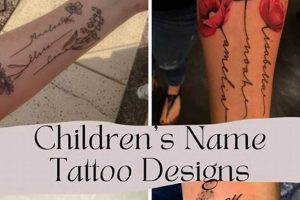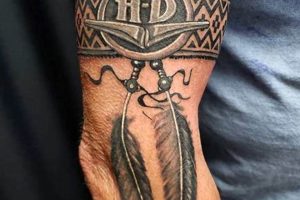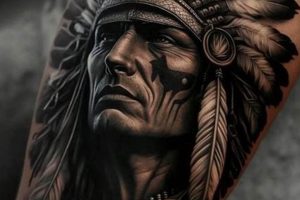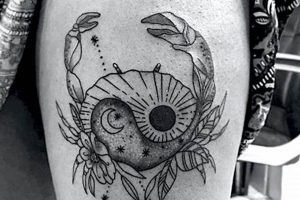



Simple tattoo designs for beginners often involve clear outlines, minimal shading, and symbolic imagery. Examples include geometric shapes, small animals, outlines of flowers, or single words rendered in straightforward fonts. These designs prioritize ease of execution, making them ideal for novice artists developing their skills or individuals seeking less complex, smaller tattoos.
Choosing a less intricate design offers several advantages. It minimizes the risk of errors during the tattooing process, reduces the overall time and discomfort involved, and often results in a lower cost. Historically, many traditional tattoo styles, such as tribal markings, began with simpler designs representing specific cultural elements. This focus on clarity and symbolic meaning continues to influence contemporary tattoo design, providing inspiration for those seeking minimalist or readily recognizable imagery.
Considerations for selecting a suitable design include personal meaning, placement on the body, and the artist’s skill level. Researching various styles and themes, such as minimalist, floral, or geometric, can provide a foundation for creating a meaningful and aesthetically pleasing tattoo.
1. Simplicity

Simplicity forms the cornerstone of accessible tattoo designs. A less intricate design translates to fewer lines, simpler shapes, and reduced shading, all of which contribute to easier execution. This direct correlation between simplicity and ease of creation makes it a crucial consideration for both novice tattoo artists and individuals seeking their first tattoo. A simple design minimizes the potential for errors, reducing the time required and lessening discomfort during the process. For example, a single, clean-lined symbol is significantly easier to execute than a portrait requiring intricate detail and shading.
The inherent manageability of simpler designs offers practical advantages. Beginners can focus on mastering fundamental techniques like line work and needle control without the added pressure of complex compositions. This approach allows for skill development and confidence building, fostering a stronger foundation for tackling more challenging designs in the future. Furthermore, simpler designs often heal more predictably and require less touch-up work, contributing to a smoother overall experience.
Ultimately, understanding the significance of simplicity empowers individuals to choose designs appropriate for their skill level or comfort level regarding permanence. While complex designs can be visually stunning, starting with a simpler concept offers a valuable learning experience and frequently results in a cleaner, more effective final product. Embracing simplicity does not limit creativity; rather, it provides a framework for developing artistic skills and exploring personal expression through the medium of tattooing.
2. Clear Outlines

Clear outlines constitute a foundational element of successful, easy-to-execute tattoo designs. Their presence provides a defined structure, guiding the application process and ensuring the final result retains its intended form. This clarity is particularly crucial for simpler designs, where the outline often serves as the primary visual element.
- Definition and Structure
Clear outlines provide the blueprint for a tattoo, defining its shape and separating distinct elements within the design. This visual clarity allows for precise execution, minimizing the risk of blurring or unintentional merging of lines during the tattooing process. A well-defined outline ensures the design remains recognizable and maintains its integrity over time.
- Simplified Application
Precise outlines simplify the application process for both novice and experienced artists. They serve as a guide for needle placement, ensuring consistent line weight and shape. This guidance reduces the likelihood of errors, resulting in a cleaner, more professional-looking tattoo. A clear outline minimizes the need for extensive corrections or touch-ups, streamlining the overall process.
- Visual Impact and Longevity
Strong, clear outlines contribute significantly to the visual impact and longevity of a tattoo. They create a sense of boldness and definition, making the design stand out even with minimal shading or color. Over time, as the tattoo ages, clear outlines help maintain the design’s legibility and prevent it from becoming indistinct or blurry.
- Adaptability and Versatility
Clear outlines lend themselves to a wide range of styles and subject matter, from minimalist geometric shapes to more intricate floral patterns. This versatility makes them a practical choice for various tattoo designs, accommodating diverse aesthetic preferences and skill levels. The adaptability of clear outlines ensures their effectiveness across different body placements and scales.
In the context of easy tattoo drawing ideas, clear outlines represent a crucial factor in achieving a successful outcome. Their role in providing structure, simplifying application, and ensuring visual impact makes them an essential consideration for both the design process and the final execution of the tattoo. A well-defined outline establishes a strong foundation, contributing to a visually appealing and enduring result.
3. Minimal Shading

Minimal shading plays a significant role in the realm of easy tattoo drawing ideas. Its judicious use contributes directly to a design’s simplicity, impacting both the execution process and the final aesthetic. Restricting shading simplifies the technical demands on the artist, making the design more achievable for beginners. It also frequently results in a cleaner, more distinct image that ages well over time.
The relationship between minimal shading and ease of execution stems from the inherent complexities of shading techniques. Creating smooth transitions and realistic depth requires considerable skill and control. By minimizing shading, the technical challenge decreases substantially. A simple outline design with minimal or no shading requires less time, reduces the potential for errors, and minimizes discomfort for the recipient. Consider a small, solid-black silhouette of a cat versus a photorealistic rendering; the former exemplifies the effectiveness of minimal shading in creating a striking yet simple tattoo. Similarly, floral designs can utilize linework to suggest petal contours and overlapping shapes, eliminating the need for complex shading to convey depth and form.
Understanding the impact of shading on a tattoo’s longevity is equally important. Densely shaded areas, particularly those using darker inks, are more susceptible to blurring and fading over time. Minimal shading, conversely, tends to age more gracefully. The simpler application process also reduces trauma to the skin, promoting quicker healing and a cleaner final result. Ultimately, the strategic use of minimal shading contributes to designs that are not only easier to execute but also visually impactful and enduring, aligning perfectly with the principles of easy tattoo drawing ideas.
4. Symbolic Imagery

Symbolic imagery plays a crucial role in the creation of easy tattoo drawing ideas. Representing complex concepts through simplified visuals allows for profound meaning to be conveyed within designs that remain accessible for both artists and recipients. This approach marries aesthetic appeal with personal significance, making symbolic imagery a powerful tool in tattoo design. A simple anchor, for instance, can represent stability and hope, while a small semicolon embodies resilience and overcoming adversity. Such concise visual representations offer a potent form of self-expression, readily understood and appreciated.
The effectiveness of symbolic imagery lies in its ability to condense complex narratives into readily digestible forms. Consider the image of a single, unfurling fern frond. This seemingly simple design can symbolize new beginnings, growth, and connection to nature. Similarly, a series of interconnected lines might represent family bonds or the interconnectedness of life. These examples demonstrate how symbolic imagery facilitates the communication of intricate ideas without requiring intricate artistic execution. This accessibility is particularly advantageous for beginner tattoo artists and individuals seeking less complex designs, allowing them to engage with meaningful imagery while staying within their technical comfort zone. The practical significance of this understanding lies in the empowerment it offers individuals to create personally resonant tattoos, regardless of their artistic experience.
In summary, the incorporation of symbolic imagery into easy tattoo drawing ideas offers a compelling balance between simplicity and depth of meaning. By harnessing the power of symbolic representation, individuals can express complex ideas and personal narratives through designs that remain accessible and aesthetically pleasing. This approach broadens the possibilities of tattooing, making it a more inclusive and meaningful form of self-expression. While challenges may arise in finding the right symbol to convey a specific meaning, the vast repertoire of symbolic imagery available ensures a wealth of options for those seeking to create tattoos that are both simple and significant.
5. Small Scale
Small scale plays a pivotal role in the feasibility and accessibility of easy tattoo drawing ideas. The reduced size directly influences the technical difficulty of execution, making smaller designs more manageable for less experienced artists. A smaller canvas requires fewer lines, less shading, and overall simpler detailing, reducing the potential for errors and shortening the duration of the tattooing process. This correlation between size and ease of application makes small-scale designs ideal for beginners and individuals seeking less time-intensive tattoo experiences. A small wrist tattoo featuring a simple outline of a heart, for example, is considerably less challenging than a large, intricately shaded back piece. The practical implications of this connection are significant, as it allows a wider range of individuals to participate in the art of tattooing, regardless of their artistic skill level.
Furthermore, the smaller surface area involved in small-scale tattoos contributes to faster healing and reduced discomfort. Less skin trauma occurs during the application process, minimizing the risk of complications and promoting a smoother recovery. This factor is particularly relevant for individuals with sensitive skin or lower pain thresholds. From a design perspective, the constraints of a smaller canvas can encourage creativity and thoughtful simplification. Artists must prioritize essential elements and distill their concepts into concise visual statements. This process of refinement often results in elegant and impactful designs, demonstrating that limitations can foster innovation. A small, stylized wave on the ankle, for instance, can be as evocative as a large, detailed seascape on the back.
In conclusion, the connection between small scale and easy tattoo drawing ideas is fundamental. The reduced size simplifies execution, promotes faster healing, and encourages thoughtful design choices. While limitations in detail and complexity exist, these constraints can ultimately enhance the creative process, leading to visually compelling and personally meaningful tattoos. This understanding empowers individuals to explore the art of tattooing with greater confidence and accessibility, regardless of their experience level, allowing for a wider range of self-expression through this enduring art form.
6. Adaptable Designs

Adaptable designs represent a crucial aspect of easy tattoo drawing ideas. Their inherent flexibility simplifies the creative process, allowing for modifications that accommodate individual preferences, skill levels, and various body placements. This adaptability ensures broader accessibility, making the process less daunting for both novice artists and individuals seeking their first tattoo. A design’s capacity to be easily modified contributes significantly to its overall feasibility and success.
- Placement Versatility
Adaptable designs transition seamlessly between different body placements. A simple wave pattern, for example, can be effectively applied to a wrist, ankle, or along the collarbone. This versatility eliminates the need for entirely new designs for each location, streamlining the selection process and offering greater flexibility. Consider a small geometric design; its inherent symmetry and simplicity make it equally suitable for placement on a finger, behind the ear, or as part of a larger composition.
- Scalability
Adaptable designs can be easily scaled up or down without compromising their visual integrity. A small, minimalist floral design can be expanded to incorporate more details or reduced to its essential elements for a smaller, more discreet tattoo. This scalability allows for adjustments based on the desired size and the available canvas, ensuring the design remains impactful regardless of its dimensions. A tribal band, for instance, can encircle a bicep or be miniaturized to fit around a finger, retaining its characteristic patterns and symbolism.
- Customization Potential
Adaptable designs offer ample opportunities for personalization. A simple outline of a bird can be modified to represent a specific species, or a geometric pattern can be adjusted to incorporate meaningful symbols or initials. This customization potential empowers individuals to create tattoos that reflect their unique identities and preferences. A simple compass design, for instance, can be personalized by adding directional markers pointing towards significant locations or life goals.
- Simplified Execution
The inherent simplicity of adaptable designs contributes to easier execution, making them ideal for beginners. Clean lines, minimal shading, and easily modifiable shapes reduce the technical challenges associated with the tattooing process. This ease of execution minimizes the potential for errors and facilitates a smoother, more efficient application. Consider a single-line drawing of a mountain range; its simplicity makes it achievable for even novice artists while still offering a visually striking result.
In conclusion, adaptable designs represent a valuable asset in the context of easy tattoo drawing ideas. Their versatility, scalability, customization potential, and simplified execution contribute significantly to the accessibility and success of these designs. By understanding the key characteristics of adaptable designs, individuals can navigate the tattooing process with greater confidence and create meaningful, personalized tattoos that reflect their unique style and preferences. This focus on adaptability ultimately expands the creative possibilities within the realm of easy tattoo drawing ideas, promoting a more inclusive and empowering experience for both artists and recipients.
Tips for Easy Tattoo Drawing Ideas
Selecting and developing simple tattoo designs requires careful consideration of several key factors. The following tips provide guidance for navigating the process effectively, ensuring both aesthetic appeal and ease of execution.
Tip 1: Start with Simple Shapes: Begin by practicing fundamental geometric shapes like circles, squares, and triangles. Mastering these foundational elements builds a strong base for creating more complex designs later. These shapes can be combined and modified to create a variety of images, from simple flowers to abstract patterns.
Tip 2: Embrace Line Art: Line art offers a clean, minimalist aesthetic that translates well to tattoos. Focus on creating clear, consistent lines with varying thicknesses to add depth and visual interest. Examples include simple outlines of animals, objects, or single-line floral designs.
Tip 3: Utilize Stencils: Stencils provide a reliable guide for transferring designs onto the skin accurately. This ensures clean lines and simplifies the tattooing process, particularly for beginners. Pre-made stencils are readily available, or custom stencils can be created from original designs.
Tip 4: Focus on Symbolism: Choose symbols that hold personal meaning. Simplified representations of animals, nature elements, or geometric patterns can convey profound messages within a concise visual format. Research the symbolism behind different images to ensure the chosen design aligns with the intended meaning.
Tip 5: Consider Placement: The location of the tattoo influences both its visibility and the way the design conforms to the body’s contours. Smaller, simpler designs are often well-suited for areas like wrists, ankles, or behind the ear. Larger, more complex designs might be better placed on the back, chest, or thigh.
Tip 6: Practice on Paper: Before committing to a permanent tattoo, practice the design repeatedly on paper. This allows for refinement of lines, shading, and overall composition, ensuring confidence and proficiency before applying the design to skin.
Tip 7: Consult with a Tattoo Artist: Professional tattoo artists offer valuable insights into design choices, placement, and appropriate techniques. They can provide guidance on simplifying complex designs, ensuring the final result is both aesthetically pleasing and technically feasible.
By adhering to these guidelines, individuals can approach the design process with greater confidence and create tattoos that are both meaningful and achievable. Careful consideration of these elements contributes significantly to a successful and fulfilling tattooing experience.
These tips offer a solid foundation for those exploring easy tattoo drawing ideas. The subsequent conclusion will summarize the key takeaways and offer final recommendations for embarking on this creative journey.
Frequently Asked Questions
This section addresses common inquiries regarding simple tattoo designs, providing clarity and guidance for those considering this form of self-expression.
Question 1: How does one choose a design that reflects personal style?
Design selection should align with individual aesthetics and personal narratives. Exploring diverse artistic styles, such as minimalism, geometric, or traditional, can provide inspiration. Reflecting on personal interests, hobbies, or significant life events can also inform design choices.
Question 2: What factors influence the longevity of a simple tattoo?
Several factors impact a tattoo’s longevity, including ink quality, placement on the body, and aftercare practices. Sun exposure, skin type, and the overall health of the individual also play a role. Consulting with a reputable tattoo artist can provide further guidance on maximizing longevity.
Question 3: Are simpler designs less expensive?
Simpler designs often require less time and intricate work, which can translate to a lower cost compared to larger, more complex pieces. However, pricing varies based on factors such as the artist’s experience, location, and the specific design elements.
Question 4: Can simple designs be incorporated into larger pieces later?
Absolutely. Simple designs can serve as starting points for larger, more intricate compositions. A skilled tattoo artist can seamlessly integrate existing tattoos into new artwork, creating a cohesive and evolving piece over time.
Question 5: What are the best placement options for a first tattoo?
Areas less exposed to regular friction and sunlight, such as the inner forearm, upper arm, or thigh, are often recommended for first tattoos. These locations tend to heal more predictably and experience less wear and tear.
Question 6: How can one find a reputable tattoo artist for a simple design?
Researching local tattoo studios and artists specializing in the desired style is crucial. Reviewing online portfolios, seeking recommendations from trusted sources, and scheduling consultations can help individuals find an artist whose skills and aesthetic align with their vision.
Understanding these fundamental aspects empowers individuals to approach the tattooing process with greater knowledge and confidence. Thorough research and careful consideration contribute significantly to a successful and fulfilling tattoo experience.
This concludes the frequently asked questions section. The following section will offer a concluding summary of the key takeaways discussed throughout this exploration of easy tattoo drawing ideas.
Conclusion
Easy tattoo drawing ideas offer an accessible entry point into the art of tattooing. Emphasis on simplicity, clear outlines, minimal shading, and symbolic imagery allows for designs that are both aesthetically pleasing and technically manageable. Small scale and adaptability further enhance the feasibility of these designs, accommodating various skill levels and personal preferences. Understanding these core principles empowers individuals to explore self-expression through tattooing with greater confidence and control. Careful consideration of placement, symbolism, and consultation with experienced artists contribute significantly to a positive and fulfilling outcome.
The exploration of easy tattoo drawing ideas reveals a pathway to meaningful and enduring body art. By embracing the principles of simplicity and adaptability, individuals can embark on a creative journey that reflects personal narratives and aesthetic sensibilities. This approach fosters greater accessibility within the art of tattooing, allowing a wider audience to engage with this powerful form of self-expression. The enduring appeal of simple, impactful designs underscores their significance in the ongoing evolution of tattoo artistry.