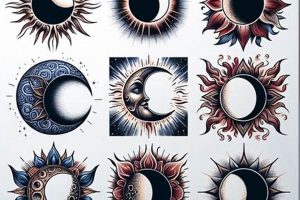



Tattoos representing karmic principles often incorporate symbolic imagery drawn from various cultures and philosophies. These designs can range from simple depictions of the dharma wheel to intricate mandalas or depictions of cause and effect. For example, a tattoo might depict a lotus flower rising from mud, symbolizing growth and enlightenment despite challenging circumstances.
Choosing a design that reflects this spiritual concept can serve as a powerful personal reminder of the interconnectedness of actions and consequences. This constant visual cue can encourage mindful living and ethical decision-making. Historically, body art has been used across cultures to express spiritual beliefs and values, and representations of karmic principles continue this tradition in a contemporary context.
Exploring design options requires careful consideration of personal beliefs and aesthetic preferences. Factors such as placement, size, and artistic style play a crucial role in creating a meaningful and visually appealing representation of this complex philosophical concept. Subsequent sections will delve into popular visual motifs, discuss stylistic interpretations, and offer guidance on selecting a design that resonates with individual values.
1. Symbolic Imagery

Symbolic imagery forms the core of meaningful representations of karmic principles in tattoo art. Visual metaphors communicate complex philosophical concepts effectively, offering a constant reminder of the interconnectedness of actions and their consequences. The choice of imagery acts as a personal statement, reflecting individual understanding and interpretation of karmic philosophy. For example, the unalome symbol, representing the path to enlightenment, embodies the idea of life’s journey with its twists, turns, and eventual straight path towards spiritual growth. Similarly, the endless knot symbolizes the interconnectedness of all things and the cyclical nature of cause and effect, visually reinforcing the core tenets of karmic philosophy.
Choosing appropriate symbolic imagery requires careful consideration. A deep understanding of the chosen symbol’s meaning within its cultural context avoids misappropriation and ensures respectful representation. Incorporating elements like the Hamsa hand, a protective symbol believed to ward off negative energy, can be combined with other karmic symbols to create a personalized representation of protection from negative consequences. The integration of multiple symbolic elements allows for nuanced expressions of personal beliefs regarding karmic principles.
Ultimately, effective use of symbolic imagery in these designs depends on informed choices. Researching the historical and cultural significance of potential symbols is crucial. This understanding not only ensures respectful representation but also enhances the depth and personal meaning embedded within the design. A well-chosen symbol transforms a tattoo into a powerful visual representation of one’s understanding and commitment to karmic principles.
2. Cultural Significance

Cultural significance plays a vital role in the design and interpretation of tattoos representing karmic principles. Many symbols commonly associated with karma originate from specific cultures, primarily those rooted in Eastern philosophies such as Buddhism, Hinduism, and Jainism. Understanding the historical and cultural context of these symbols is essential to avoid misappropriation and ensure respectful representation. For instance, the dharma wheel, a central symbol in Buddhism, represents the Buddha’s teachings and the path to enlightenment. Using this symbol without understanding its significance risks trivializing a deeply meaningful religious icon. Similarly, Sanskrit scripts, often used in karma-related tattoos, require careful consideration to ensure accurate translation and avoid misrepresenting sacred texts.
Ignoring the cultural significance of chosen imagery can lead to unintended consequences, ranging from cultural offense to a misrepresentation of personal beliefs. A tattoo intended to represent balance and harmony might inadvertently convey disrespect if it incorporates culturally significant elements out of context. Practical application of this understanding requires thorough research before committing to a design. Consulting with cultural experts or individuals familiar with the specific traditions associated with the chosen symbolism can provide valuable insights and ensure respectful representation. This approach demonstrates a commitment to cultural sensitivity and enhances the personal meaning embedded within the tattoo.
Ultimately, recognizing and respecting the cultural significance of chosen imagery elevates a tattoo from mere body art to a powerful expression of personal values. This approach avoids cultural insensitivity and imbues the design with deeper meaning. Careful consideration of cultural context contributes to a more authentic and respectful representation of karmic principles, ensuring the chosen design aligns with both personal beliefs and the rich cultural heritage from which the imagery originates.
3. Placement Considerations

Placement significantly impacts the effectiveness and personal meaning of tattoos representing karmic principles. The chosen location on the body influences visibility, both to the wearer and others, and can contribute to the overall message conveyed. A highly visible placement, such as the forearm, can serve as a constant reminder of karmic principles, promoting mindful actions throughout the day. Conversely, a more discreet placement, like the back or ribcage, might hold deeper personal significance, serving as a private reflection of one’s beliefs. Consider a wrist tattoo of the Ens circle, a Zen Buddhist symbol representing enlightenment and the cyclical nature of existence; its constant visibility reinforces these concepts in daily life. In contrast, a larger, more intricate depiction of a Bodhi tree, symbolizing enlightenment, placed on the back, offers a powerful yet private representation of ones spiritual journey.
The size and complexity of the design also influence placement decisions. Intricate mandalas or detailed depictions of deities require sufficient space to capture their full artistic expression, often favoring larger areas like the back or chest. Smaller, simpler symbols, like the unalome, can be effectively placed on the wrist, ankle, or behind the ear, maintaining a subtle yet impactful presence. Placement also intertwines with the intended message. A tattoo meant to promote personal reflection might be placed in a less visible location, while one intended to inspire others might be more prominently displayed. A small, symbolic representation of the dharma wheel on the finger could serve as a discreet personal reminder, whereas a larger depiction on the forearm might spark conversations and inspire others to explore karmic principles.
Careful consideration of placement ensures the chosen design aligns with both aesthetic preferences and the intended message. Factors like pain tolerance, healing time, and potential impact on professional life also influence placement choices. Ultimately, the ideal placement enhances the tattoo’s personal meaning and effectiveness as a visual representation of karmic principles, transforming it into a powerful reminder of one’s commitment to these beliefs.
4. Stylistic Choices

Stylistic choices significantly influence the visual impact and personal meaning of tattoos representing karmic principles. The chosen artistic style should complement the selected imagery and resonate with the individual’s aesthetic preferences. A thoughtfully chosen style enhances the tattoo’s ability to convey the complex concepts associated with karma effectively.
- Linework and Detail
The level of detail, ranging from minimalist linework to intricate dotwork or fine lines, drastically alters a tattoo’s appearance. Simple linework can create a clean, modern aesthetic, while intricate detailing allows for greater complexity and depth. A fine line tattoo of a lotus flower might emphasize its delicate nature, while a bold, traditional style could highlight its strength and resilience. Consider the impact of line weight and shading on the overall design and its ability to convey the desired message. A minimalist unalome, for example, emphasizes simplicity and directness, while a highly detailed mandala promotes contemplation and introspection.
- Color Palette
Color palettes play a crucial role in conveying mood and emotion. Black and grey ink create a timeless, classic look, often emphasizing the symbolic meaning over visual flamboyance. Color can add layers of meaning, with specific colors holding cultural or personal significance. Red, for example, can represent passion and energy, while blue can symbolize peace and tranquility. Incorporating color requires careful consideration of its symbolic meaning within the chosen design and its long-term impact, as colors can fade differently over time.
- Cultural Style Influences
Drawing inspiration from traditional tattoo styles, such as Japanese, Polynesian, or Tibetan, can add cultural depth and authenticity to the design, particularly if the chosen imagery originates from a specific culture. Incorporating elements of traditional Japanese tattooing, for example, can enhance a design featuring a koi fish, a symbol of perseverance and good fortune in Japanese culture. This approach requires respect for the chosen cultural style and a deep understanding of its traditions and conventions to avoid misappropriation or misrepresentation.
- Integration with Existing Tattoos
For individuals with existing tattoos, stylistic consistency or intentional contrast creates a cohesive overall aesthetic. A new tattoo representing karmic principles can be designed to complement existing pieces or stand out as a distinct element, depending on personal preference. A new minimalist karma-related tattoo could complement existing minimalist designs, while a bold, traditional style piece might provide an intentional contrast, drawing attention to its specific meaning and significance.
Ultimately, the chosen stylistic elements should work harmoniously to create a visually appealing and meaningful representation of karmic principles. The interplay of linework, color, cultural influences, and integration with existing tattoos contributes to a design that resonates with the individual’s personal beliefs and aesthetic sensibilities. A thoughtfully chosen style amplifies the tattoo’s power to serve as a constant reminder of the interconnectedness of actions and their consequences.
5. Personal Interpretation

Personal interpretation is paramount in designing tattoos representing karmic principles. While established symbolism provides a foundation, the individual’s understanding and experience of karma shape the design’s true meaning. Cause and effect, central to karmic philosophy, manifest uniquely in each life. A tattoo can reflect this personal narrative, symbolizing lessons learned, challenges overcome, or aspirations for future actions. Consider someone choosing a serpent shedding its skin alongside a lotus flower: the serpent might represent overcoming past mistakes, while the lotus symbolizes growth and enlightenment. This combined imagery conveys a personal narrative of transformation rooted in karmic understanding. Another individual, focusing on the present, might choose a design incorporating the dharma wheel intertwined with a compass, symbolizing guidance and adherence to righteous principles in current actions.
This personalization elevates the tattoo beyond generic symbolism, transforming it into a powerful expression of individual belief. Practical application of this concept necessitates introspection and careful consideration of one’s personal karmic narrative. What events or experiences have shaped their understanding of cause and effect? What aspirations or intentions guide their present actions? These reflections inform design choices, resulting in a tattoo that resonates deeply with the wearer’s unique journey. For example, someone who has overcome addiction might incorporate imagery of a phoenix rising from ashes, symbolizing rebirth and the triumph of will over past negative actions. This personal narrative infuses the symbol with unique meaning, creating a powerful reminder of resilience and the ongoing karmic cycle.
Ultimately, a successful karma tattoo transcends mere aesthetics, embodying a personalized narrative of cause and effect. This personal interpretation imbues the design with profound meaning, transforming it into a permanent reminder of lived experiences, learned lessons, and ongoing commitment to karmic principles. The design becomes a visual manifestation of one’s unique understanding of karma, reflecting their personal journey and aspirations for future actions. This personalized approach strengthens the connection between the individual and the chosen symbolism, making the tattoo a truly powerful and meaningful representation of their karmic journey.
6. Ethical Implications

Ethical implications are intrinsically linked to tattoos representing karmic principles, adding another layer of complexity beyond aesthetics and personal meaning. The very concept of karma centers on ethical action and its consequences. Therefore, the process of choosing and displaying a karma-related tattoo must also align with ethical considerations. Cultural appropriation presents a significant ethical challenge. Utilizing symbols from cultures not one’s own without understanding their significance risks trivializing or disrespecting deeply held beliefs. For instance, appropriating Indigenous spiritual symbols for aesthetic purposes without understanding their sacred meaning demonstrates a lack of respect and potentially perpetuates harmful stereotypes. This disregard for cultural context contradicts the core principles of karma, which emphasize mindfulness, respect, and understanding of interconnectedness.
Furthermore, the commodification of spiritual or religious symbols for personal adornment raises ethical questions. Transforming a symbol of deep spiritual meaning, like the Om symbol in Hinduism, into a fashion statement risks diminishing its sacred significance. This act can be viewed as disrespectful by those who hold the symbol sacred. Ethical considerations extend beyond cultural appropriation to the potential impact of chosen imagery. Depictions of deities or other culturally sensitive figures require careful consideration. For example, depicting a Buddha in a disrespectful manner or trivial context undermines the reverence afforded to this figure within Buddhist traditions. These ethical concerns underscore the importance of informed decision-making when choosing a karma-related tattoo. Thorough research and respectful engagement with relevant cultural traditions are essential to ensure the chosen design aligns with ethical principles.
Ultimately, ethical considerations are inseparable from the process of designing and displaying a karma-related tattoo. Ignoring these implications undermines the very principles of karma the tattoo intends to represent. Respectful engagement with cultural context, careful consideration of symbolic meaning, and a commitment to avoiding appropriation are crucial. This approach ensures the chosen design aligns with ethical principles, enhancing its meaning and reflecting a genuine understanding of karmic philosophy. A thoughtfully chosen and ethically sound tattoo serves as a powerful reminder of the interconnectedness of actions and their consequences, reflecting a commitment to both personal growth and respectful engagement with the world.
Tips for Choosing a Karma Tattoo
Selecting a tattoo that embodies karmic principles requires careful consideration. These tips provide guidance for navigating the process thoughtfully and ensuring a meaningful outcome.
Tip 1: Research Symbolism Thoroughly: Deeply research the chosen symbol’s meaning within its cultural context. Misinterpretation or misappropriation can lead to unintended negative consequences. Consulting resources specific to the symbol’s origin ensures respectful representation.
Tip 2: Consider Placement Carefully: Placement influences visibility and personal meaning. Reflect on whether the design should serve as a personal reminder or a public statement. Placement also affects the tattoo’s interaction with body movement and clothing.
Tip 3: Prioritize Quality Artistry: A skilled tattoo artist translates concepts into visually compelling and technically sound artwork. Research artists specializing in the desired style, review their portfolios, and discuss design ideas thoroughly before committing.
Tip 4: Reflect on Personal Significance: Infuse the design with personal meaning by connecting it to individual experiences and understanding of karma. This imbues the tattoo with deeper significance, making it a powerful personal symbol.
Tip 5: Avoid Impulsive Decisions: Tattoos are permanent. Avoid impulsive choices driven by trends or fleeting inspiration. Take time to reflect on the chosen design’s long-term significance and ensure it aligns with personal values.
Tip 6: Plan for Long-Term Care: Tattoos require ongoing care to maintain their vibrancy and integrity. Consult with the tattoo artist regarding aftercare procedures and follow them diligently for optimal healing and longevity.
Tip 7: Consult with Cultural Experts: When incorporating culturally significant symbols, seek guidance from experts within the relevant culture. This demonstrates respect and helps avoid misappropriation or misrepresentation.
Thoughtful consideration of these factors ensures a design that resonates deeply and serves as a powerful, lasting representation of karmic principles.
By following these guidelines, individuals can approach the process of choosing a karma tattoo with intention and respect, resulting in a design that holds profound personal meaning and stands the test of time.
Frequently Asked Questions about Karma Tattoos
This section addresses common inquiries regarding the selection, design, and cultural implications of tattoos representing karmic principles.
Question 1: What are common symbols used in karma tattoos?
Common symbols include the dharma wheel, lotus flower, unalome, endless knot, Hamsa hand, and Sanskrit scripts. However, the choice of symbol should reflect individual understanding and cultural respect.
Question 2: How does placement affect the meaning of a karma tattoo?
Placement influences visibility and personal meaning. A visible placement serves as a constant reminder, while a discreet location maintains privacy. Size and complexity also influence placement decisions.
Question 3: Are there cultural sensitivities to consider when choosing a karma tattoo?
Cultural sensitivity is paramount. Many karma-related symbols originate from specific Eastern traditions. Research and respectful representation are crucial to avoid misappropriation and cultural offense.
Question 4: How can one ensure a karma tattoo aligns with personal beliefs?
Reflection on personal experiences and understanding of karmic principles allows for personalized designs. Integrating individual narratives and chosen symbols creates a meaningful representation of one’s beliefs.
Question 5: What are the ethical implications of getting a karma tattoo?
Ethical considerations encompass avoiding cultural appropriation, respecting religious iconography, and ensuring mindful design choices. Thorough research and cultural sensitivity are essential.
Question 6: How does one choose a reputable tattoo artist for a karma tattoo?
Research artists specializing in the desired style. Review portfolios, seek recommendations, and discuss design ideas thoroughly before making a decision. A skilled artist ensures a technically sound and aesthetically pleasing result.
Careful consideration of these questions ensures a design that aligns with personal beliefs, respects cultural context, and embodies the principles of karma thoughtfully and ethically.
For further exploration of specific design elements and stylistic interpretations, consult the preceding sections detailing symbolic imagery, cultural significance, and stylistic choices.
Conclusion
Representations of karmic principles through body art offer a powerful means of expressing personal beliefs and values. Careful consideration of symbolic imagery, cultural significance, placement, and artistic style ensures a meaningful and respectful design. Personal interpretation imbues the chosen design with individual significance, reflecting a unique understanding of karmic philosophy. Ethical considerations remain paramount throughout the process, emphasizing the importance of avoiding cultural appropriation and respecting the rich traditions associated with chosen symbols.
Ultimately, a thoughtfully chosen design serves as a permanent reminder of the interconnectedness of actions and consequences, encouraging mindful living and ethical decision-making. This enduring visual representation fosters continued reflection on karmic principles and their profound influence on life’s journey. Embracing these considerations transforms a tattoo into a powerful symbol of personal growth, ethical awareness, and commitment to living in harmony with karmic principles.