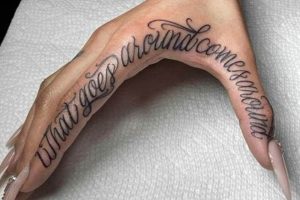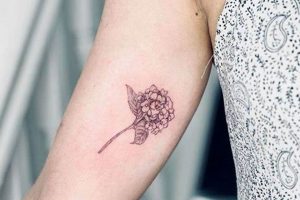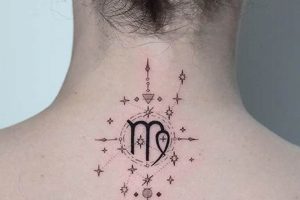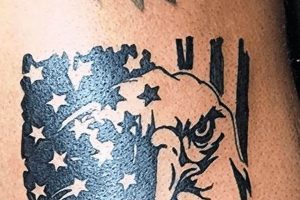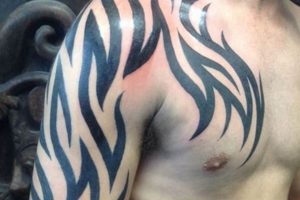



The application of varying tones and densities of ink within a tattoo design creates depth, dimension, and visual interest. This technique can transform a flat, two-dimensional image into a realistic or stylized artwork, highlighting contours, creating textures, and suggesting light and shadow. A portrait, for example, relies heavily on skillful shading to convey the subtle curves of a face, while a floral design might utilize contrasting shades to mimic the natural folds and textures of petals.
Effective tonal variation is essential for achieving a visually compelling and professional-looking tattoo. It contributes significantly to the overall aesthetic impact, enhancing the design’s legibility and conveying the artist’s intended mood or message. Historically, shading techniques have evolved alongside tattooing itself, from simple lines and dots in traditional practices to complex gradients and photorealistic representation made possible by modern tools and pigments. The evolution and refinement of these techniques represent a significant aspect of tattoo artistry.
Several factors influence the final outcome, including needle selection, ink consistency, machine voltage, and the artist’s experience. Exploring various approaches, from classic techniques like whip shading and stippling to contemporary methods involving color blending and realism, will provide a deeper understanding of this critical element of tattoo art.
1. Black and Gray Realism
Black and gray realism represents a demanding yet rewarding approach within tattoo artistry. This style hinges on meticulous shading to create photorealistic depictions, often of portraits, animals, or scenes. Mastering this technique requires a deep understanding of light, shadow, and tonal gradations, pushing the boundaries of what’s achievable with ink on skin.
- Value and Contrast
Value, the relative lightness or darkness of a shade, forms the foundation of black and gray realism. Controlling the transition between different values creates contrast, which gives the tattoo depth and dimension. A skilled artist uses a range of needle sizes and techniques to achieve smooth transitions, mimicking the subtle gradations found in photographs. This precise control of value is crucial for achieving realistic depictions of three-dimensional forms.
- Texture and Detail
Beyond simply recreating an image, black and gray realism often strives to capture the texture of the subject. This could involve rendering the fine lines on a weathered face, the individual hairs in an animal’s fur, or the rough surface of a stone. Achieving this level of detail requires careful attention to needle selection and ink application, often incorporating techniques like stippling and whip shading to create intricate textures.
- Composition and Perspective
Successful black and gray realism considers composition and perspective to create a believable and engaging image. Understanding how elements within the tattoo relate to one another, and how to use perspective to create depth and a sense of space, is essential for producing a compelling piece. This involves careful planning and execution, ensuring that the overall composition complements the realism of the individual elements.
- Reference Material and Adaptation
Black and gray realism frequently utilizes photographic references. However, directly replicating a photograph often falls short. Skillful artists adapt the reference material, considering the contours of the body and the unique properties of the medium. This adaptation process ensures the final tattoo works as a cohesive piece of art, rather than a mere copy of a photograph.
These facets of black and gray realism demonstrate the significant skill and understanding of shading required to execute this style effectively. The interplay of value, texture, composition, and adaptation of reference material allows artists to create powerful and evocative tattoos that capture the essence of realism in the medium of ink and skin.
2. Color Blending

Color blending represents a sophisticated aspect of tattoo shading, moving beyond monochromatic tones to introduce vibrant hues and seamless transitions. This technique allows artists to create dynamic and visually rich tattoos, mimicking the way light interacts with color in the natural world. Understanding the principles of color theory and their application within tattooing is essential for successful color blending.
- Color Theory Fundamentals
Color theory provides the framework for understanding how colors interact. The color wheel, a visual representation of color relationships, guides artists in selecting harmonious color combinations. Understanding primary, secondary, and tertiary colors, as well as complementary and analogous color schemes, is crucial for creating visually appealing and balanced color blends. These theoretical underpinnings inform the practical application of color in tattooing.
- Ink Properties and Interaction
Different tattoo inks possess varying properties, such as transparency and opacity. These properties influence how colors blend and interact on the skin. Some inks are more translucent, allowing underlying colors to show through, while others are opaque, completely covering the skin. Understanding these properties allows artists to predict and control the final result of color blending, achieving the desired effects.
- Techniques for Smooth Transitions
Achieving smooth transitions between colors requires specific techniques. These can include layering inks, diluting pigments, and using specialized needles. Layering involves applying multiple layers of ink to build up color and create depth. Diluting pigments allows for subtle variations in color intensity. Specialized needles, such as magnum needles, facilitate smooth blending by distributing ink evenly across a larger area.
- Color Realism and Stylization
Color blending facilitates both realistic and stylized representations. In realistic tattoos, color blending is essential for recreating the subtle nuances of skin tones, the vibrant hues of flowers, or the iridescent sheen of insect wings. In stylized tattoos, color blending can be used to create bold contrasts, dramatic effects, or to evoke specific moods or emotions. The versatility of this technique allows for diverse artistic expression.
Effective color blending elevates tattoo designs from simple outlines to complex, multi-dimensional artwork. By understanding the interplay of color theory, ink properties, and blending techniques, artists can create visually stunning tattoos that capture the full spectrum of color and light. This mastery of color blending enhances the overall impact and artistry of the tattoo, contributing to a richer and more expressive visual experience.
3. Dotwork Shading

Dotwork shading stands as a distinct technique within the broader spectrum of tattoo shading ideas. Rather than relying on continuous lines or blended gradients, dotwork utilizes meticulously placed dots to create varying tones and textures. This method offers unique aesthetic qualities, lending itself to both intricate geometric patterns and nuanced representational imagery. The density and placement of the dots determine the value and texture of the shaded area, demanding precision and control from the artist.
- Precision and Control
Dotwork demands a high degree of precision and control. Each dot contributes to the overall composition, and even slight variations in placement or pressure can affect the final outcome. Artists must carefully consider the spacing and size of each dot to achieve the desired tonal gradations and textures. This meticulous approach makes dotwork a time-intensive technique, requiring patience and a steady hand.
- Tonal Variation and Depth
Despite its seemingly simple nature, dotwork allows for a surprising range of tonal variation. Areas with densely clustered dots appear darker, while sparsely dotted areas appear lighter. This controlled variation in dot density creates a sense of depth and dimension, allowing artists to build up complex shading and highlights. This technique offers a unique textural quality compared to blended shading.
- Stylistic Versatility
Dotwork adapts well to various styles, from geometric mandalas and intricate patterns to realistic portraits and natural scenes. In geometric designs, dotwork enhances the precision and intricacy of the patterns. In representational work, it can create a textured, almost stippled effect, adding a unique dimension to the imagery. This versatility allows artists to explore diverse aesthetic expressions.
- Healing and Longevity
The density and distribution of ink in dotwork can influence the healing process and the longevity of the tattoo. Densely packed dots can sometimes lead to raised or textured skin, while sparsely placed dots may fade more quickly over time. Understanding these factors allows artists to make informed decisions about dot placement and density, ensuring the tattoo heals well and maintains its visual integrity over time.
Dotwork, as a specialized shading technique, expands the possibilities within tattoo artistry. Its emphasis on precision, control, and tonal variation through dot placement allows for unique aesthetic effects, contributing to the diverse range of tattoo shading ideas available to both artists and clients. The techniques distinctive visual texture and adaptability across various styles further solidifies its position as a compelling approach to tattoo shading.
4. Whip Shading

Whip shading stands as a dynamic technique within the broader context of tattoo shading ideas. It involves a rapid, controlled flicking motion of the tattoo machine needle, creating a series of tapered lines that resemble brushstrokes. This technique offers a distinctive textured appearance, adding depth and movement to tattoo designs. Understanding the nuances of whip shading allows artists to achieve a range of effects, from subtle gradations to bold, dramatic strokes.
The effectiveness of whip shading relies on several factors. Needle angle, machine speed, and hand movement all contribute to the final result. A shallow needle angle creates finer lines, while a steeper angle produces thicker, bolder strokes. Machine speed influences the density and saturation of the lines. Faster speeds result in lighter, less saturated lines, while slower speeds produce darker, more saturated marks. Controlling the hand movement is crucial for creating the characteristic tapered effect of whip shading. A smooth, consistent flicking motion is essential for achieving even, predictable results. For example, in a feather design, whip shading can effectively recreate the delicate barbs and the subtle variations in tone and texture. In a portrait, it can be used to suggest the flow of hair or the contours of muscles.
Whip shading offers significant advantages within tattoo artistry. Its versatility allows for both subtle transitions and bold, textured effects. It integrates well with other shading techniques, enhancing their impact and adding depth. Mastering whip shading expands an artist’s creative toolkit, providing another method for achieving realistic or stylized depictions. However, whip shading can be challenging to master, requiring practice and a deep understanding of machine control and needle manipulation. The dynamic nature of the technique makes it susceptible to inconsistencies if not executed properly. Despite these challenges, the unique visual texture and expressive potential of whip shading contribute significantly to the richness and diversity of tattoo shading ideas.
5. Brush stroke effects

Brush stroke effects in tattooing offer a unique approach to shading, mimicking the textures and visual qualities of traditional painting. This technique adds an artistic flair, creating depth, movement, and a sense of dynamism within a tattoo design. By replicating the varied strokes achievable with a paintbrush, artists can imbue tattoos with a painterly aesthetic, expanding the possibilities of shading beyond traditional methods.
- Ink Flow and Viscosity
Ink flow and viscosity play a crucial role in achieving convincing brush stroke effects. Thinner inks tend to flow more readily, creating softer, more diffuse strokes, while thicker inks yield bolder, more defined lines. Artists often adjust ink consistency to achieve specific effects, mimicking the behavior of different paint mediums. Controlling ink flow is essential for replicating the nuanced gradations and textures characteristic of brush strokes.
- Needle Choice and Manipulation
Specialized needles, such as shaders and magnums, are often employed to create brush stroke effects. The shape and configuration of the needle tips influence the distribution of ink, allowing artists to create varied stroke widths and textures. Furthermore, the angle and depth of needle penetration affect the saturation and intensity of the ink, contributing to the overall visual impact of the brush stroke.
- Pressure and Speed Control
Varying the pressure and speed of the tattoo machine allows artists to modulate the intensity and character of the brush strokes. Lighter pressure and faster speeds produce delicate, feathery strokes, while heavier pressure and slower speeds create bolder, more pronounced marks. This control over pressure and speed is analogous to a painter’s control over a brush, enabling the creation of nuanced textures and dynamic visual effects.
- Stylistic Applications and Examples
Brush stroke effects find application across various tattoo styles, from traditional Japanese and watercolor tattoos to illustrative and neo-traditional designs. In Japanese tattoos, brush strokes can mimic the bold, sweeping lines of sumi-e painting. In watercolor tattoos, they contribute to the fluid, ethereal quality of the style. The adaptability of brush stroke effects allows artists to enhance and personalize their work, adding a distinctive artistic touch.
Brush stroke effects elevate tattoo shading beyond simple gradations, adding a layer of artistic expression and visual interest. By understanding the interplay of ink properties, needle manipulation, and machine control, artists can effectively replicate the dynamic qualities of brushstrokes, enriching the texture, depth, and overall aesthetic impact of their tattoo designs. This technique bridges the gap between traditional painting and tattoo artistry, expanding the creative possibilities within the realm of tattoo shading ideas.
6. Negative Space Usage
Negative space, the area surrounding and between the main elements of a design, plays a crucial role in shaping the overall composition and impact of a tattoo. Within the context of tattoo shading ideas, negative space acts as an essential counterpoint to shaded areas, enhancing contrast and creating visual interest. Strategic use of negative space can dramatically influence the perception of depth, form, and even the emotional resonance of a tattoo.
- Contrast and Definition
Negative space serves to define and emphasize the shaded areas of a tattoo. By leaving areas of skin untouched, the artist creates a stark contrast with the inked areas, making the design stand out more prominently. This interplay of ink and skin enhances the visual impact of the shading, allowing for greater clarity and definition within the composition. For example, in a floral design, the negative space surrounding the petals can accentuate their shaded contours, creating a sense of depth and realism.
- Illusion of Depth and Dimension
Skillful use of negative space can create the illusion of depth and dimension in a tattoo. By strategically positioning areas of untouched skin, artists can suggest overlapping elements, create shadows, and give the design a three-dimensional quality. This technique is particularly effective in styles like black and grey realism, where the interplay of light and shadow is crucial for achieving a lifelike representation. A portrait, for example, can benefit from the use of negative space to define the contours of the face and create a sense of volume.
- Compositional Balance and Flow
Negative space contributes significantly to the overall balance and flow of a tattoo design. It provides visual breathing room, preventing the composition from feeling overcrowded or cluttered. The strategic placement of negative space can guide the viewer’s eye through the design, creating a sense of movement and harmony. In a complex design with multiple elements, negative space acts as a unifying force, tying the various components together into a cohesive whole.
- Symbolic Meaning and Storytelling
Negative space can also be used to convey symbolic meaning or enhance the narrative within a tattoo. The shapes created by the untouched skin can represent abstract concepts, add layers of symbolism to existing imagery, or even form hidden images that reveal themselves upon closer inspection. This technique adds a layer of intellectual and emotional depth to the tattoo, transforming it from a purely visual piece into a more complex and meaningful work of art.
Understanding the strategic use of negative space elevates tattoo shading from a purely technical skill to a powerful artistic tool. By carefully considering the interplay of ink and skin, artists can enhance contrast, create depth, balance the composition, and even imbue their work with symbolic meaning. The effective use of negative space adds another layer of complexity and sophistication to tattoo shading ideas, demonstrating the thoughtful artistry behind a well-executed design.
Tips for Effective Tattoo Shading
Achieving impactful and aesthetically pleasing tattoo shading requires careful consideration of several key factors. These tips offer guidance for both aspiring and experienced artists seeking to refine their shading techniques and elevate their tattoo work.
Tip 1: Practice on Artificial Skin: Consistent practice is crucial for developing shading proficiency. Artificial skin provides a valuable medium for honing techniques without the permanence of real skin. Experimenting with different needle depths, angles, and machine speeds on artificial skin allows artists to build confidence and control before working on clients.
Tip 2: Understand Needle Selection: Different needles produce distinct shading effects. Magnum needles, for example, are well-suited for smooth blending and larger areas, while round shaders are ideal for tighter details and sharper lines. Selecting the appropriate needle for the desired effect is fundamental to successful shading.
Tip 3: Control Ink Consistency: Ink viscosity influences the flow and saturation of the shading. Experimenting with different ink dilutions allows artists to achieve a range of tonal values and textures. Thinner inks create softer, more diffuse shading, while thicker inks produce bolder, more defined results.
Tip 4: Master Machine Control: Consistent machine speed and voltage are essential for even shading. Fluctuations in machine operation can lead to uneven ink deposition and inconsistent results. Practicing smooth, controlled movements with the tattoo machine is paramount for achieving professional-quality shading.
Tip 5: Observe Light and Shadow: Studying the interplay of light and shadow in the natural world is crucial for developing a keen eye for shading. Observing how light falls on different surfaces and creates highlights and shadows informs the artist’s ability to replicate these effects in a tattoo.
Tip 6: Study the Work of Masters: Examining the work of accomplished tattoo artists provides valuable insights into shading techniques and artistic approaches. Analyzing how other artists utilize shading to create depth, texture, and emotion can inspire and inform one’s own artistic development.
Tip 7: Consider Skin Tone and Texture: Skin tone and texture influence how ink appears and heals. Darker skin tones may require different shading approaches than lighter skin tones. Understanding these factors allows artists to tailor their techniques for optimal results on each individual client.
By consistently applying these tips, artists can refine their shading skills, enhance their artistic expression, and create tattoos that stand out for their technical proficiency and aesthetic impact. Dedication to practice, a deep understanding of the tools and materials, and a keen eye for detail are essential for mastering the art of tattoo shading.
These essential tips provide a strong foundation for achieving effective tattoo shading, paving the way for a more comprehensive exploration of specific techniques and stylistic approaches.
Frequently Asked Questions about Tattoo Shading
This section addresses common inquiries regarding tattoo shading, providing concise and informative answers to help individuals understand this critical aspect of tattoo artistry.
Question 1: How does tattoo shading impact the overall design?
Shading is fundamental to creating depth, dimension, and visual interest in a tattoo. It transforms flat designs into dynamic artwork by mimicking light and shadow, adding realism and texture.
Question 2: What are the primary shading techniques used in tattooing?
Various techniques exist, including smooth shading, blending, stippling, whip shading, and lining, each offering unique aesthetic qualities and levels of complexity.
Question 3: How does an artist choose the right shading technique for a specific design?
The chosen technique depends on the desired aesthetic, the subject matter, the artist’s skill set, and the client’s preferences. Realistic portraits often benefit from smooth shading and blending, while geometric designs might utilize stippling or lining.
Question 4: Does shading hurt more than outlining?
Shading often involves larger needle groupings and may cover more surface area, potentially resulting in a different sensation than outlining. Individual pain tolerance varies significantly.
Question 5: How does aftercare affect shaded tattoos?
Proper aftercare is crucial for all tattoos, including shaded pieces. Following the artist’s aftercare instructions diligently ensures optimal healing, color retention, and prevents complications.
Question 6: How can one find a tattoo artist skilled in specific shading techniques?
Researching artists’ portfolios, either online or in person, is essential. Look for artists whose work demonstrates proficiency in the desired shading style and whose aesthetic aligns with personal preferences. Consulting with multiple artists allows for informed decision-making.
Understanding these fundamental aspects of tattoo shading empowers individuals to make informed decisions when planning their tattoos and facilitates effective communication with tattoo artists.
Further exploration of specific shading styles and techniques will provide a more comprehensive understanding of the artistry and possibilities within tattoo shading.
Conclusion
Exploration of various tattoo shading techniques reveals the profound impact these methods have on a tattoo’s overall aesthetic. From the delicate precision of dotwork to the dynamic energy of whip shading and the painterly quality of brush strokes, each technique offers unique possibilities for creating depth, texture, and visual interest. Understanding the interplay of ink, needles, and artistic skill underscores the importance of shading in transforming a simple design into a compelling work of art. Furthermore, the strategic use of negative space highlights the interplay between inked and un-inked skin, adding another layer of complexity and artistry to the final composition. The mastery of these techniques allows artists to effectively translate their creative visions into lasting expressions on the canvas of human skin.
The evolution of tattoo shading techniques continues to push the boundaries of artistic expression within the tattooing world. As artists explore new tools, technologies, and stylistic approaches, the potential for innovative and captivating shading techniques remains vast. The careful consideration of shading choices empowers both artists and clients to create tattoos that resonate with personal meaning and aesthetic ideals, ensuring that each piece remains a unique and powerful statement of self-expression.