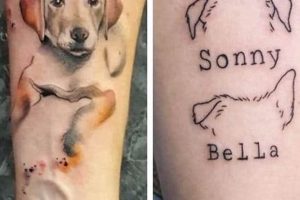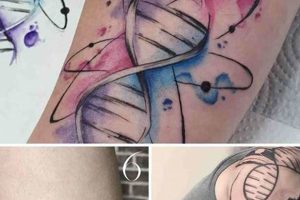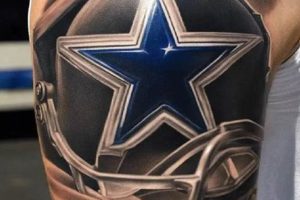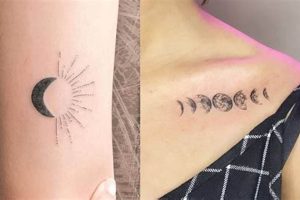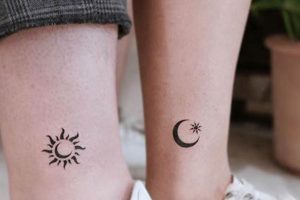



Permanent body art commemorating marital unions offers couples a unique and lasting way to express their commitment. These designs can range from simple matching bands to intricate artwork incorporating dates, names, portraits, or symbolic imagery representing shared values and memories.
Such permanent expressions of love serve as intimate reminders of a couple’s bond and can represent a meaningful departure from traditional wedding keepsakes. The practice of marking significant life events on the body has a long history across various cultures, demonstrating the powerful human desire to externalize and preserve cherished moments. In the modern context, these permanent designs provide a highly personalized and enduring testament to a couple’s shared journey.
Exploring the myriad design options, placement considerations, and artistic styles available will allow couples to find the perfect permanent artwork that reflects their unique relationship and celebrates their commitment.
1. Matching Designs
Matching designs represent a popular choice within the realm of permanent body art commemorating marital unions. This approach emphasizes the couple’s shared commitment and interconnectedness. Identical or complementary tattoos symbolize unity and signify a joint journey. Examples include matching bands, identical symbols (e.g., hearts, infinity symbols), or complementary designs that form a whole when placed side-by-side.
The significance of matching designs lies in their visual representation of a shared identity and purpose. They serve as constant reminders of the partnership and the mutual commitment undertaken. Choosing matching designs can further strengthen the bond between partners by solidifying a shared experience and creating a lasting, visible symbol of their connection. Practical considerations include ensuring the chosen design holds significance for both individuals and that the placement complements both partners’ aesthetics.
Matching tattoo designs offer a powerful way for couples to express their unity and commitment. While individual expression remains important, opting for a shared design reinforces the concept of partnership and creates a lasting visual testament to the couple’s shared journey. Careful consideration of design elements and placement ensures a meaningful and aesthetically pleasing outcome that resonates with both partners.
2. Symbolic Imagery
Symbolic imagery plays a crucial role in permanent body art commemorating marital unions, offering a rich language for expressing complex emotions, shared values, and the enduring nature of love. These visual metaphors imbue the designs with deeper meaning beyond mere aesthetics, transforming them into powerful personal statements.
- Intertwined Elements:
Designs featuring intertwined elements, such as rings, vines, or knots, symbolize the inseparable bond between partners. The continuous, interwoven nature of these elements visually represents the couple’s commitment to navigate life’s journey together, supporting and strengthening one another. Celtic knots, for example, symbolize eternity and interconnectedness, while intertwined rings represent the unbroken circle of marriage.
- Flora and Fauna:
Specific flowers and animals carry symbolic weight, adding layers of meaning to permanent artwork. Roses symbolize love and passion, while lilies represent purity and devotion. Birds, often depicted in pairs, symbolize freedom, loyalty, and lifelong companionship. Incorporating flora and fauna allows couples to personalize their designs based on shared affinities and symbolic associations.
- Geometric Patterns:
Geometric patterns often hold cultural or spiritual significance. Mandala designs, for instance, represent wholeness and balance, reflecting the harmony sought within a marital union. Triangular patterns can symbolize strength and stability, while spiral patterns represent growth and transformation, signifying the continuous evolution of the relationship.
- Religious or Spiritual Symbols:
For couples with shared religious or spiritual beliefs, incorporating relevant symbols can add profound meaning. Crosses, Om symbols, or other sacred imagery can represent shared faith and values, serving as a constant reminder of the spiritual foundation of their union. Such symbols can also offer comfort and guidance throughout the couple’s journey together.
By carefully selecting symbolic imagery that resonates with their shared values and aspirations, couples can create permanent body art that serves as a profound and lasting testament to their love. These symbols transcend the purely aesthetic, acting as powerful reminders of the couple’s commitment and the unique narrative of their relationship.
3. Personalized Dates
Personalized dates represent a cornerstone of permanent body art commemorating marital unions. Incorporating significant dates, such as the wedding day, anniversary, or the date the couple met, imbues the designs with profound personal meaning. These numerical representations anchor the artwork to specific moments in time, transforming the tattoo into a permanent timeline of the couple’s shared journey. The inclusion of dates adds a layer of specificity and intimacy, moving beyond symbolic representation to commemorate concrete milestones in the relationship. For example, Roman numerals or unique typographic styles can further personalize the date’s presentation.
The permanence of these dates etched onto the skin serves as a constant reminder of the couple’s history and the enduring nature of their commitment. These visual cues trigger memories and emotions associated with the commemorated dates, reinforcing the significance of the relationship. Practical applications extend beyond the wedding date itself. Birthdays of children or other significant family members can be incorporated, weaving a richer narrative of the couple’s evolving family history. This approach transforms the body art into a living document, marking the passage of time and the growth of the relationship.
Personalized dates offer a powerful mechanism for anchoring permanent body art to specific, meaningful moments in a couple’s shared narrative. This approach imbues the designs with deep personal significance, transforming them into lasting tributes to the relationship’s evolution. The inclusion of dates enhances the commemorative function of the artwork, creating a tangible connection to cherished memories and milestones. This personalization elevates the tattoo beyond mere aesthetics, solidifying its role as a powerful symbol of enduring commitment and shared history.
4. Incorporating Names

Within the realm of permanent body art commemorating marital unions, incorporating names represents a deeply personal and enduring expression of love and commitment. This practice allows couples to carry a tangible reminder of their partner, solidifying the bond and celebrating their shared identity. The following explores various facets of integrating names into such designs.
- Partner’s Name:
The most direct approach involves tattooing a partner’s full name, initials, or a nickname. This serves as a constant, visible declaration of love and commitment. Placement can range from highly visible areas, such as the wrist or forearm, to more discreet locations. Typographic styles, from elegant script to bold block letters, further personalize the design.
- Combined Monograms:
Monograms, combining the initials of both partners, offer a more subtle and symbolic representation. Intricate designs can intertwine the letters, creating a visual representation of the couple’s interconnectedness. This approach allows for artistic expression while maintaining a degree of privacy compared to full names.
- Names Integrated into Larger Designs:
Names can be seamlessly integrated into larger, more complex artwork. For example, a partner’s name might be incorporated into a floral design, woven into a banner, or placed within a symbolic frame. This approach allows for greater artistic flexibility and can create visually stunning pieces that tell a more comprehensive story.
- Names in Different Languages or Scripts:
Adding a layer of cultural significance, names can be tattooed in languages other than the couple’s native tongue. This might involve using a language significant to their shared history or choosing a script known for its aesthetic beauty. This approach adds depth and symbolism, reflecting the couple’s unique narrative.
Incorporating names into permanent body art commemorating marital unions represents a powerful way to personalize the designs and solidify the bond between partners. From simple name placements to intricate integrations within larger artworks, the options allow couples to express their commitment in a deeply personal and enduring manner. Careful consideration of placement, typography, and design elements ensures a meaningful and aesthetically pleasing outcome that reflects the unique narrative of their relationship.
5. Placement Considerations

Placement considerations constitute a crucial aspect of permanent body art commemorating marital unions. The chosen location significantly impacts the design’s visibility, aesthetics, and symbolic meaning. Careful deliberation ensures the tattoo complements the body’s natural contours and aligns with individual preferences regarding discretion and personal expression.
- Visibility:
The degree of visibility plays a significant role in the overall impact of the body art. Highly visible placements, such as the hands, wrists, or neck, allow for constant viewing and serve as public declarations of commitment. Conversely, more discreet placements, such as the ribs, back, or inner arm, offer a sense of intimacy and privacy. Couples must consider their comfort levels with public displays of affection and their individual preferences regarding personal expression when determining visibility.
- Aesthetics:
The body’s natural contours and the design’s shape influence placement decisions. Certain designs lend themselves well to specific body parts. For instance, elongated designs might complement the forearm or calf, while circular designs might suit the shoulder or upper arm. Placement should enhance the design’s aesthetic appeal and create a harmonious visual balance. Careful consideration of the body’s natural lines and the design’s composition ensures a visually pleasing outcome.
- Symbolism:
Placement can amplify the symbolic meaning of permanent body art. A tattoo placed over the heart, for example, emphasizes the emotional significance of the design. Ring finger tattoos, mirroring traditional wedding bands, represent a direct and visible symbol of commitment. Placement can enhance the design’s narrative, adding layers of meaning and personal significance.
- Practicality:
Practical considerations include factors such as clothing restrictions, professional dress codes, and lifestyle choices. Certain professions may require tattoos to be covered. Additionally, sun exposure and the potential for fading should be considered when choosing a location. Practicality ensures the longevity and continued aesthetic appeal of the artwork over time.
Careful consideration of placement elevates permanent body art commemorating marital unions beyond mere aesthetics. A well-chosen location enhances the design’s visibility, complements the body’s natural contours, amplifies symbolic meaning, and ensures practicality. By considering these factors, couples create permanent artwork that resonates deeply with their individual preferences and celebrates their unique bond in a meaningful and enduring manner.
6. Artistic Styles

Artistic styles play a pivotal role in shaping the aesthetic and expressive qualities of permanent body art commemorating marital unions. The chosen style significantly impacts the design’s visual impact, conveying specific emotions and reflecting the couple’s unique personalities and shared narrative. Understanding the diverse range of artistic styles available allows couples to select an approach that resonates with their individual preferences and effectively translates their vision into a lasting piece of art.
- Minimalism:
Characterized by clean lines, geometric shapes, and a focus on simplicity, minimalism offers a timeless and elegant approach. Fine linework and delicate detailing create understated yet impactful designs. This style often incorporates symbolic imagery, such as intertwined rings or geometric patterns, rendered with precision and restraint. Minimalist permanent artwork emphasizes the essence of the design without unnecessary embellishment, creating a sophisticated and enduring tribute.
- Watercolor:
Mimicking the fluidity and vibrancy of watercolor paintings, this style imbues designs with a soft, dreamlike quality. Gradients, splashes of color, and organic shapes create a sense of movement and depth. Watercolor permanent artwork often incorporates floral motifs, abstract patterns, or portraits rendered with a painterly aesthetic. This style evokes a sense of romance and artistic expression, capturing the emotional intensity of the marital union.
- Realism:
Focusing on detailed and accurate representation, realism captures the likeness of subjects with precision. Portraits, landscapes, or objects are rendered with meticulous attention to detail, creating lifelike depictions. This style can be used to commemorate specific moments, places, or individuals significant to the couple’s relationship. Realistic permanent artwork serves as a powerful visual reminder of cherished memories and shared experiences.
- Traditional:
Rooted in the history of tattooing, traditional styles feature bold lines, vibrant colors, and iconic imagery. Anchors, hearts, roses, and nautical stars are common motifs, often rendered with a distinct vintage aesthetic. Traditional permanent artwork evokes a sense of timelessness and classic appeal, honoring the enduring nature of love and commitment.
Selecting an appropriate artistic style enhances the expressive potential of permanent body art commemorating marital unions. By understanding the nuances of each style, couples can choose an approach that effectively translates their vision and captures the unique essence of their relationship. The chosen style becomes an integral part of the design’s narrative, shaping its visual impact and ensuring a lasting tribute to their shared journey.
Tips for Choosing Wedding Tattoos
Careful planning ensures permanent body art commemorating marital unions holds lasting significance and aesthetic appeal. The following tips provide practical guidance for couples embarking on this journey.
Tip 1: Collaborative Design: Open communication and collaborative design ensure both partners feel represented and satisfied with the final artwork. Shared input fosters a sense of ownership and strengthens the symbolic meaning of the shared tattoo.
Tip 2: Research Artists: Thorough research helps identify artists specializing in desired styles. Reviewing portfolios and seeking recommendations ensures artistic compatibility and quality workmanship.
Tip 3: Consider Longevity: Placement and design complexity influence a tattoo’s longevity. Discuss long-term maintenance and potential fading with a chosen artist to ensure enduring aesthetic appeal.
Tip 4: Budget Appropriately: High-quality permanent artwork represents a financial investment. Establishing a budget beforehand helps manage expectations and ensures alignment with financial capabilities.
Tip 5: Reflect on Symbolism: Choose symbols and imagery that resonate deeply with shared values and experiences. Meaningful symbolism enhances personal significance and creates a lasting tribute to the relationship.
Tip 6: Prioritize Placement: Placement impacts visibility, aesthetics, and practicality. Consider lifestyle, professional requirements, and personal preferences when selecting a location.
Tip 7: Schedule Consultations: Consultations with chosen artists allow for in-depth discussions about design preferences, placement options, and technical considerations. Open communication ensures a clear understanding and facilitates the realization of the desired artwork.
Tip 8: Aftercare Diligence: Proper aftercare is essential for preserving the tattoo’s vibrancy and preventing complications. Follow artist instructions diligently to ensure optimal healing and longevity.
By following these tips, couples can navigate the process of selecting permanent body art commemorating marital unions with confidence. Careful planning and consideration ensure the chosen designs hold lasting significance, reflect shared values, and serve as beautiful reminders of their enduring commitment.
These considerations pave the way for a fulfilling experience, resulting in permanent body art that symbolizes a couple’s unique bond and celebrates their shared journey.
Frequently Asked Questions
This section addresses common inquiries regarding permanent body art commemorating marital unions, providing clarity and guidance for couples considering this option.
Question 1: What is the average cost of a wedding-themed tattoo?
Pricing varies significantly based on factors such as design complexity, size, artist experience, and studio location. Small, simple designs may range from $50 to $200, while larger, more intricate pieces can cost several hundred or even thousands of dollars. Obtaining quotes from multiple reputable artists is advisable.
Question 2: How painful are wedding tattoos?
Pain levels vary depending on individual pain tolerance, placement, and design intricacies. Generally, areas with thinner skin or closer proximity to bone tend to be more sensitive. Consulting with a chosen artist regarding pain management techniques can alleviate discomfort during the process.
Question 3: How long does a wedding tattoo take to heal?
Healing typically takes two to four weeks, depending on individual factors and the tattoo’s size and complexity. Proper aftercare, as instructed by the artist, is crucial for optimal healing and preventing complications.
Question 4: Can wedding tattoos be removed or altered later?
Removal or alteration is possible but can be costly, time-consuming, and may not yield perfect results. Laser removal is the most common method, requiring multiple sessions. Cover-up tattoos can conceal unwanted designs but necessitate larger artwork. Careful consideration of design choices beforehand minimizes the need for future modifications.
Question 5: What are suitable placement options for wedding tattoos?
Placement options vary based on individual preferences and design characteristics. Popular choices include the ring finger, wrist, forearm, ankle, and ribs. Visibility, practicality, and aesthetic considerations should inform placement decisions.
Question 6: What if one partner changes their mind later?
Open communication and mutual agreement are paramount before undertaking permanent body art commemorating marital unions. Recognizing the permanence of tattoos and discussing potential future implications are crucial for preventing regret.
Careful consideration of these frequently asked questions enables informed decision-making regarding permanent body art commemorating marital unions. Addressing potential concerns beforehand contributes to a positive and meaningful experience.
For further inquiries or personalized guidance, consulting with reputable tattoo artists and exploring design resources offers additional support.
Conclusion
Permanent body art commemorating marital unions offers a powerful medium for expressing commitment and celebrating shared journeys. Careful exploration of design elements, symbolic imagery, placement considerations, and artistic styles allows couples to create deeply personal and enduring tributes to their relationships. Matching designs, personalized dates, incorporated names, and meaningful symbols transform these permanent markings into powerful narratives etched onto the skin. Practical considerations, such as artist selection, placement choices, and aftercare diligence, ensure the longevity and aesthetic appeal of these commemorative artworks.
The decision to embark on this journey represents a significant commitment. Thorough planning, open communication, and thoughtful reflection ensure these permanent expressions of love resonate with personal significance and stand the test of time, serving as lasting reminders of a shared commitment and the unique narrative of a couple’s enduring bond.