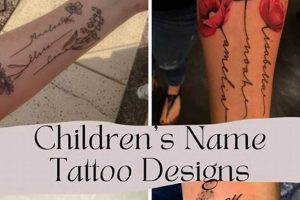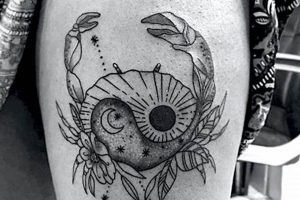



Botanical-themed body art encompasses a vast array of flora, from delicate blossoms and verdant leaves to towering trees and intricate root systems. Examples include minimalist line drawings of a single stem, vibrant watercolor depictions of wildflowers, or detailed black and grey renderings of medicinal herbs.
The enduring appeal of floral motifs in body art stems from their rich symbolism and inherent beauty. Flowers have long held cultural significance, representing everything from love and remembrance to growth and resilience. This allows individuals to express personal narratives, beliefs, or aesthetic preferences through their chosen design. Furthermore, the versatility of botanical imagery lends itself to diverse artistic styles and placement on the body, offering a wide range of creative possibilities.
The following sections will explore popular botanical themes, design considerations, and the artistic process involved in creating stunning and meaningful botanical tattoos.
1. Species Selection

Species selection forms the foundation of botanical tattoo design, imbuing the artwork with specific meaning and visual character. The chosen flora transcends mere aesthetics, acting as a powerful symbol reflecting personal narratives, cultural associations, or deeply held values. A lotus flower, for instance, might represent spiritual enlightenment and rebirth, while a sunflower could symbolize joy, optimism, and longevity. The inherent characteristics of the plant itself also contribute to the overall design; the delicate tendrils of a vine lend themselves to flowing, graceful compositions, whereas the sturdy form of an oak tree evokes strength and stability. Careful consideration of these factors ensures the chosen species aligns with the intended message and desired aesthetic.
Practical implications of species selection extend beyond symbolic representation. Certain plants are traditionally associated with particular cultures or geographic regions. Incorporating these elements can create a tattoo that honors one’s heritage or celebrates a connection to a specific place. Furthermore, the natural growth patterns and physical attributes of the plant can inform design choices. The vibrant colors of a tropical flower might inspire a bold, watercolor-style tattoo, while the intricate details of a fern could be captured through fine linework. Understanding the inherent qualities of the chosen species allows for a more harmonious integration of the design with the contours of the body.
In summary, species selection serves as a crucial starting point in botanical tattoo design. This choice informs not only the symbolic meaning of the tattoo but also influences the artistic style, color palette, and overall composition. Careful consideration of the plant’s cultural significance, natural characteristics, and personal resonance ensures a final result that is both visually striking and deeply meaningful.
2. Symbolic Meaning

Symbolic meaning forms the core of many botanical tattoo designs, elevating them beyond mere aesthetic adornment. The inherent symbolism associated with specific flora allows individuals to express complex emotions, personal beliefs, and significant life experiences through a visual language. This imbues the tattoo with a deeper layer of significance, transforming it into a personal emblem or a lasting tribute to a cherished memory. For example, a poppy might be chosen to represent remembrance, while a sprig of olive branches could symbolize peace and reconciliation. The symbolic resonance of a plant species often stems from cultural traditions, historical events, or mythological narratives. Understanding these associations allows for a more informed design choice, ensuring the tattoo accurately reflects the intended message.
The interplay between symbolic meaning and botanical imagery creates a powerful form of self-expression. A single flower can convey a multitude of meanings depending on its species, color, and accompanying elements. A red rose, for instance, typically signifies romantic love and passion, whereas a white rose might represent purity and innocence. The addition of thorns can further nuance the symbolism, introducing themes of resilience, loss, or protection. This layered approach to meaning allows for highly personalized designs that resonate deeply with the individual. Furthermore, the incorporation of symbolic elements can transform seemingly simple botanical tattoos into intricate narratives, reflecting personal growth, overcoming challenges, or honoring loved ones.
In summary, careful consideration of symbolic meaning is essential for creating impactful and resonant botanical tattoos. Choosing flora based on its cultural significance, historical context, and personal associations ensures the design accurately reflects the intended message. This thoughtful approach transforms a simple aesthetic choice into a powerful statement of personal identity, belief, or remembrance.
3. Placement on Body

Placement significantly impacts the overall aesthetic and symbolic resonance of botanical tattoos. The human body’s natural contours provide a dynamic canvas, and thoughtfully selecting the location enhances both the visual flow of the design and its personal significance. Consideration of body shape, movement, and visibility allows for a harmonious integration of the tattoo, transforming it into a seamless extension of personal expression.
- Emphasizing Natural Contours
Placement can accentuate the body’s natural curves and musculature. A vine tattoo winding around the arm or leg complements the limb’s shape, creating an illusion of elongation and grace. Similarly, a floral design cascading along the spine or collarbone accentuates the elegance of these areas. This approach utilizes placement to enhance the body’s inherent aesthetics, resulting in a visually striking and harmonious composition.
- Scale and Proportion
The size and complexity of the botanical design should complement the chosen location. Small, delicate blossoms might be suited to the wrist, ankle, or behind the ear, while larger, more elaborate compositions could adorn the back, chest, or thigh. Careful consideration of scale ensures the design remains proportionate to the body, avoiding a cluttered or overwhelming appearance. A sprawling floral arrangement might appear unbalanced on a small area, while a tiny sprig might be lost on a larger canvas.
- Visibility and Personal Significance
Placement influences the visibility of the tattoo, reflecting the individual’s intention for the artwork. A highly visible tattoo, such as one on the hand or forearm, might signify a desire for open self-expression and a celebration of the chosen symbolism. A more discreet placement, like the ribcage or back, might suggest a personal and intimate meaning, reserved for closer observation. This aspect of placement allows for a nuanced approach to self-expression, reflecting the individual’s comfort level and the intended message.
- Movement and Flow
The body’s natural movements can further enhance the aesthetic appeal of botanical tattoos. A design placed on a flexing muscle, such as the bicep or calf, creates a dynamic interplay between the artwork and the body’s movement. This can imbue the tattoo with a sense of life and vitality, particularly with designs incorporating flowing lines, trailing vines, or windswept leaves. Considering the interplay between placement and movement allows for a more dynamic and engaging final result.
Ultimately, placement decisions are deeply personal and should align with individual preferences and the intended narrative of the tattoo. By thoughtfully considering these facets, individuals can ensure their botanical tattoos become a seamless and meaningful extension of their personal expression, enhancing both the visual impact of the design and its symbolic resonance.
4. Artistic Style

Artistic style significantly influences the final presentation and overall impact of botanical tattoo designs. The chosen style dictates the visual language used to depict the flora, impacting the tattoo’s mood, texture, and level of detail. From the delicate lines of minimalist tattoos to the vibrant hues of watercolor renderings, the artistic style imbues the design with a distinct personality and aesthetic. Selecting a style that aligns with both the chosen plant and the individual’s personal preferences is crucial for a cohesive and impactful result. For example, a realistic depiction of a rose rendered in black and grey might evoke a sense of classic elegance, while a stylized, geometric interpretation of the same flower could convey a more modern and abstract aesthetic.
Several artistic styles lend themselves particularly well to botanical themes. Fine line tattoos capture the intricate details of leaves and petals with delicate precision. Watercolor tattoos, with their vibrant hues and fluid transitions, mimic the organic nature of flowers, creating a sense of movement and vitality. Blackwork, characterized by bold lines and solid shading, can produce striking contrasts, highlighting the architectural structure of plants. Neo-traditional tattoos, with their bold outlines and vibrant color palettes, offer a more stylized and graphic interpretation of botanical imagery. The choice of style influences not only the visual presentation but also the perceived emotional impact of the design. A delicate, minimalist fern tattoo might suggest understated elegance, while a bold, traditional depiction of a sunflower could project a sense of vibrancy and joy.
Ultimately, the selection of artistic style should complement the chosen botanical subject matter and reflect the individual’s personal aesthetic. Understanding the nuances of different styles and their potential impact on the final design ensures a cohesive and meaningful result. This informed decision elevates the tattoo beyond mere decoration, transforming it into a personalized work of art that resonates with both the wearer and the observer. The interplay between artistic style and botanical imagery allows for a wide range of creative expression, ensuring each tattoo remains unique and reflective of individual taste and narrative.
5. Color Palette
Color palette selection significantly impacts the mood, visual impact, and overall effectiveness of botanical tattoo designs. Color choices influence the perceived realism, symbolic meaning, and emotional resonance of the depicted flora. A vibrant, multicolored palette can evoke feelings of joy and exuberance, as seen in watercolor-style floral arrangements featuring bright pinks, oranges, and yellows. Conversely, a muted palette of greens and browns, often used in realistic depictions of foliage, can create a sense of tranquility and connection with nature. Monochromatic palettes, such as those used in black and grey realism, offer a timeless and classic aesthetic, emphasizing texture and form over vibrant hues. The interplay of light and shadow becomes paramount in these designs, creating depth and dimension within the botanical subject matter. Understanding the psychological and emotional associations of different colors allows for intentional color choices that amplify the intended message of the tattoo.
Beyond aesthetics, color palette choices can also enhance the symbolic meaning of botanical tattoos. Specific colors carry cultural and historical significance. Red roses, for example, universally symbolize love and passion, while white lilies often represent purity and mourning. Incorporating these color associations can add layers of meaning to the design, creating a personalized narrative. Furthermore, color can highlight specific aspects of the chosen flora. Deep greens and browns can emphasize the earthy qualities of a fern, while vibrant blues and purples can accentuate the delicate beauty of an iris. The skillful use of color can also create visual depth and dimension, making the tattoo appear more lifelike and captivating. Subtle variations in shading and tone can give the illusion of light and shadow, adding realism and texture to the design.
In summary, careful color palette selection is essential for creating effective and meaningful botanical tattoos. Color choices influence not only the visual appeal but also the symbolic resonance and emotional impact of the design. Understanding the interplay between color, symbolism, and artistic style allows for informed decisions that elevate the tattoo beyond mere decoration, transforming it into a personalized work of art that resonates with both the wearer and the observer. The careful consideration of color palettes ensures the botanical tattoo remains visually striking and symbolically meaningful for years to come.
6. Size and Detail
Size and detail are integral considerations in botanical tattoo design, profoundly influencing the visual impact, longevity, and practicality of the artwork. The scale of a tattoo dictates the level of detail achievable and impacts its placement on the body. A large-scale piece allows for intricate details like individual veins on leaves or the delicate texture of petals. A smaller design necessitates simplification, focusing on essential lines and shapes to maintain clarity and prevent blurring over time. For example, a large-scale peony tattoo across the back can showcase the intricate folds of its petals and subtle color gradations, while a small peony tattoo on the wrist might prioritize clean lines and simplified shapes to ensure visual clarity. The interplay between size and detail directly impacts the overall aesthetic and longevity of the tattoo. Intricate details on a small tattoo might lose definition over time as ink spreads, while a larger, simpler design will retain its clarity longer.
Practical considerations also influence decisions regarding size and detail. Highly detailed tattoos require more time and skill to execute, influencing the overall cost and artist selection. Placement also plays a crucial role. Areas with more flesh, such as the thigh or back, offer larger canvases for intricate designs, while areas with thinner skin or closer to bone, such as the wrist or ankle, might be better suited for smaller, less detailed work. The desired level of visibility also factors into size considerations. A bold, large-scale botanical tattoo on the forearm makes a strong statement, while a small, detailed design behind the ear offers a more discreet form of personal expression. Furthermore, individual pain tolerance should be considered, as larger, more detailed tattoos require longer sessions.
In conclusion, the relationship between size and detail in botanical tattoo design requires careful consideration of artistic vision, practical limitations, and personal preferences. Balancing these elements ensures a visually compelling and enduring result. Understanding the impact of size on detail allows for informed decisions regarding design complexity, placement, and artist selection, ultimately contributing to a tattoo that effectively embodies both aesthetic appeal and personal significance. A well-executed botanical tattoo, regardless of size, can be a powerful form of self-expression when the level of detail is appropriately tailored to the chosen scale and placement.
Tips for Botanical Tattoo Designs
Achieving a successful botanical tattoo requires careful planning and consideration. The following tips provide guidance for navigating the design process, ensuring a result that is both aesthetically pleasing and personally meaningful.
Tip 1: Research Thoroughly
Extensive research is crucial before committing to a design. Explore various plant species, considering their symbolic meanings, cultural associations, and visual characteristics. Gather reference images from diverse sources, including botanical illustrations, photographs, and existing tattoo designs.
Tip 2: Collaborate with a Skilled Artist
Selecting a skilled tattoo artist specializing in botanical designs is essential. Review portfolios, paying attention to linework, color application, and composition. A collaborative relationship with the artist ensures the design aligns with personal preferences and translates effectively onto the skin.
Tip 3: Consider Placement Carefully
Placement impacts the tattoo’s visibility, aesthetic flow, and how it interacts with the body’s natural contours. Consider the size and complexity of the design when choosing a location. Larger pieces suit areas like the back or thigh, while smaller designs are appropriate for wrists, ankles, or behind the ear.
Tip 4: Choose a Style that Complements the Subject
Artistic style significantly influences the overall aesthetic. Fine linework suits delicate floral patterns, while watercolor styles capture the vibrant hues of blossoms. Blackwork creates bold contrasts, and realism emphasizes intricate details. Select a style that aligns with the chosen flora and personal preferences.
Tip 5: Reflect on Color Palette
Color choices impact the mood and symbolic meaning. Vibrant colors convey energy and joy, while muted tones evoke tranquility. Monochromatic palettes emphasize texture and form. Consider the emotional impact and cultural associations of different colors when selecting a palette.
Tip 6: Prioritize Longevity
Factor in the longevity of the design. Intricate details may fade or blur over time, especially in smaller tattoos. Discuss placement and design choices with the artist to ensure the tattoo ages gracefully. Regular touch-ups might be required to maintain vibrancy and clarity.
Tip 7: Plan for Aftercare
Proper aftercare is crucial for preserving the tattoo’s vibrancy and preventing complications. Follow the artist’s instructions diligently, which typically include keeping the tattoo clean and moisturized, avoiding sun exposure, and refraining from swimming or soaking for several weeks.
By considering these tips, individuals can ensure their botanical tattoos are well-executed, meaningful, and enduring works of art that reflect their personal style and values.
The concluding section will summarize the key elements discussed and emphasize the enduring appeal of botanical-themed body art.
Frequently Asked Questions
This section addresses common inquiries regarding botanical-themed tattoo designs, offering practical insights and clarifying potential concerns.
Question 1: How does one select an appropriate plant species for a tattoo?
Plant selection should reflect personal values, cultural associations, or desired symbolism. Researching various species and their meanings ensures a design resonates with individual preferences.
Question 2: What factors influence the longevity of a botanical tattoo?
Longevity depends on factors such as placement, ink quality, sun exposure, and individual skin characteristics. Areas with less friction and sun exposure typically retain ink better. Proper aftercare is crucial for preserving vibrancy.
Question 3: Are certain artistic styles better suited for specific botanical subjects?
Style choices should complement the plant’s characteristics. Delicate flowers might benefit from fine linework or watercolor styles, while bolder plants could suit traditional or blackwork approaches. The artist’s expertise also influences style suitability.
Question 4: What is the average healing time for a botanical tattoo?
Healing typically takes two to four weeks, depending on size, placement, and individual healing rates. Proper aftercare, including keeping the tattoo clean and moisturized, promotes efficient healing.
Question 5: How can one determine the appropriate size and level of detail for a botanical tattoo?
Size and detail considerations should align with the chosen placement and artistic style. Intricate details require larger areas, while smaller placements necessitate simplified designs. Consulting with a skilled artist helps determine optimal proportions.
Question 6: What are the key considerations for choosing a reputable tattoo artist for a botanical design?
Selecting a reputable artist specializing in the desired style is crucial. Review portfolios, seek recommendations, and consult with potential artists to discuss design ideas and ensure compatibility.
Careful consideration of these factors contributes to informed decisions and successful botanical tattoo designs.
The following conclusion summarizes the key aspects of botanical tattoo design and reinforces their enduring appeal as a form of personal expression.
Conclusion
Botanical tattoo designs offer a diverse range of options for personal expression, drawing from the rich symbolism and inherent beauty of the natural world. Careful consideration of plant species, placement, artistic style, color palette, and size ensures a cohesive and impactful result. Successful execution relies on thorough research, collaboration with a skilled artist, and diligent aftercare. These elements combine to create lasting works of art that resonate with individual narratives and aesthetic preferences.
The enduring appeal of botanical tattoos lies in their ability to capture the essence of personal growth, resilience, and connection to nature. As artistic techniques evolve and cultural interpretations shift, botanical themes continue to offer a timeless canvas for self-expression, allowing individuals to connect with the natural world in a deeply personal and meaningful way.