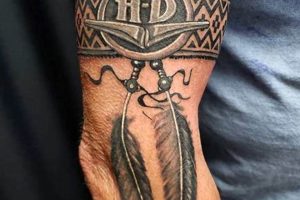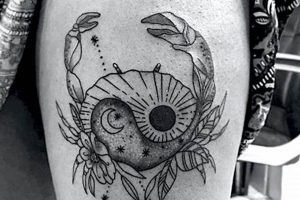



Custom-designed body art allows for unique expressions of individuality, incorporating meaningful symbols, dates, portraits, or quotations. Examples include a pet’s portrait rendered in a realistic style, a child’s name incorporated into a floral design, or a significant date written in Roman numerals. The possibilities are virtually limitless, restricted only by the client’s imagination and the artist’s skill.
Such bespoke artwork offers a powerful way to tell a story, commemorate a loved one, express a belief, or simply showcase a passion. Unlike generic flash art, a custom design ensures the tattoo holds deep personal significance, transforming body art into a powerful statement of self. The practice of embedding meaning into body modification has a rich history across various cultures, often serving as markers of tribal affiliation, spiritual beliefs, or social status. Today, this tradition continues, albeit with a greater emphasis on individual expression.
The subsequent sections delve deeper into the process of developing bespoke tattoo concepts, offering guidance on choosing a reputable artist, selecting appropriate imagery, and considering placement and aftercare.
1. Meaningful Symbolism

Symbolism lies at the heart of impactful body art. The selection of imagery imbues a tattoo with personal significance, transforming it from mere decoration into a powerful narrative. Exploring symbolic representation allows individuals to express complex ideas, beliefs, and experiences through a visual language etched onto the skin.
- Cultural Heritage
Tapping into one’s cultural heritage provides a rich source of symbolic imagery. From ancestral symbols to traditional motifs, these designs can represent a deep connection to family history and cultural identity. For example, Celtic knots represent interconnectedness, while Japanese Kanji characters convey specific words or concepts. Incorporating cultural elements allows individuals to honor their roots and express their heritage visually.
- Personal Experiences
Life experiences, both significant and mundane, can be translated into powerful symbolic representations. A specific flower might represent a loved one, a compass might symbolize a journey, or a geometric pattern might represent a personal philosophy. These personalized symbols transform seemingly ordinary images into potent reminders of individual narratives.
- Abstract Concepts
Abstract concepts such as love, loss, hope, or resilience can be effectively communicated through symbolic imagery. A phoenix represents rebirth, a semicolon represents perseverance, and an infinity symbol represents eternity. These symbols offer a concise visual language for complex ideas, allowing individuals to externalize internal states or beliefs.
- Nature and Animals
Elements from the natural world, including animals, plants, and celestial bodies, hold a wealth of symbolic potential. Lions represent strength and courage, wolves symbolize loyalty and family, and cherry blossoms represent fleeting beauty. Incorporating natural imagery can connect individuals to the broader world and express their appreciation for the natural environment.
By carefully considering the symbolic meaning embedded within a tattoo design, individuals can ensure that their body art resonates deeply with their personal values and experiences. This thoughtful approach elevates the tattoo beyond mere aesthetics, transforming it into a powerful expression of self.
2. Placement Considerations

Placement plays a crucial role in the overall impact and personal significance of a tattoo. The chosen location on the body interacts with the design itself, influencing its visibility, aesthetic appeal, and even its perceived meaning. Careful consideration of placement ensures the design harmonizes with the body’s natural contours and aligns with the individual’s lifestyle and preferences. A small, delicate design intended for personal reflection might be placed on the inner wrist or ankle, while a larger, more expressive piece might be suited for the back or chest.
Several factors influence placement decisions. Visibility preferences dictate whether a tattoo is intended for public display or private appreciation. The body’s natural canvasits curves, muscles, and bone structurecan either enhance or detract from a design. Pain tolerance also plays a role, as certain areas are more sensitive than others. Practical considerations, such as professional dress codes, should also be factored into the decision-making process. For instance, a visible tattoo might be unsuitable for certain professions. A band tattoo around the bicep can complement the muscle definition, while a sprawling landscape design suits the broader expanse of the back.
Ultimately, successful placement enhances the narrative the tattoo is meant to convey. It ensures the design integrates seamlessly with the individual’s body, creating a cohesive and aesthetically pleasing result. By understanding the interplay between placement and design, individuals can maximize the impact and personal meaning of their body art. Neglecting this aspect can result in a visually jarring or impractical outcome, diminishing the intended effect of the personalized design.
3. Consultations with Artists
The collaborative relationship between artist and client forms the cornerstone of truly personalized tattoo designs. Consultations provide the crucial link between an individual’s vision and the artist’s technical expertise. Open communication during these sessions allows abstract ideas to take concrete form, ensuring the final design accurately reflects the client’s desires and personal narrative. A client wishing to commemorate a deceased pet, for example, might bring photographs and discuss preferred artistic styles with the artist. This dialogue enables the artist to develop a design that captures the pet’s essence and resonates with the client’s emotional connection. Without such consultations, the resulting tattoo may fall short of the client’s expectations, lacking the personal significance initially envisioned.
Effective consultations involve a thorough exchange of information. Clients articulate their desired imagery, symbolism, and placement, while artists offer professional insights into design feasibility, technical limitations, and aesthetic considerations. This collaborative process often leads to a synergistic evolution of the initial concept, resulting in a design that surpasses the client’s original vision. For instance, an artist might suggest incorporating complementary elements or adjusting the placement to enhance the design’s flow and visual impact on the body. A client initially envisioning a simple quote might, through consultation, agree to incorporate related imagery that amplifies the quote’s meaning. This dynamic exchange fosters a deeper understanding between artist and client, resulting in a more meaningful and personalized outcome.
In essence, consultations serve as the foundation upon which personalized tattoo designs are built. They represent a critical investment of time and communication, ultimately leading to a more fulfilling and personally resonant piece of body art. The absence of thorough consultations can result in misinterpretations, design compromises, and ultimately, dissatisfaction with the final result. A well-executed consultation maximizes the likelihood of a successful outcome, ensuring the tattoo becomes a cherished expression of personal identity and meaning.
4. Style Selection

Style selection represents a critical component within the realm of personalized tattoo design. The chosen style significantly impacts the final aesthetic and how effectively the tattoo communicates its intended message. Styles range from photorealism, known for its intricate detail and lifelike representation, to minimalism, characterized by clean lines and simplified forms. Other popular styles include traditional American, Japanese, tribal, and watercolor, each possessing unique characteristics and cultural connotations. A portrait, for instance, demands a realistic style to capture accurate likeness, while a symbolic design representing abstract concepts might benefit from the fluidity and expressiveness of watercolor or the bold simplicity of minimalism. Matching style to subject matter ensures the tattoo’s visual language aligns with its intended meaning.
The interplay between style and subject matter contributes significantly to the personalization process. A client’s personal aesthetic preferences, cultural background, and the specific narrative they wish to convey influence the choice of style. Someone seeking a tattoo representing strength and resilience might choose a tribal style known for its bold lines and powerful imagery, while someone seeking a tattoo representing delicate beauty might opt for a watercolor style characterized by soft hues and flowing transitions. Consider a client wishing to commemorate a loved one with a floral design. A realistic style would emphasize botanical accuracy, while a traditional American style would offer a bolder, more graphic interpretation. Understanding these nuances enables individuals to select a style that amplifies the personal significance of their chosen imagery. Failing to consider stylistic implications can result in a disconnect between the intended message and the final visual representation.
Effective style selection ensures the tattoo resonates with the individual’s personal expression and desired aesthetic. It transforms a simple image into a powerful statement of self, reflecting individual tastes and narratives. By carefully considering the stylistic implications of their design choices, individuals can create body art that holds deep personal meaning and stands the test of time. The synergy between style and subject matter elevates personalized tattooing from mere body decoration to a true art form, capable of conveying complex emotions, beliefs, and experiences with visual eloquence.
5. Incorporating Personal Elements

Truly personalized tattoo designs transcend generic imagery, incorporating unique elements that resonate deeply with the individual. These personal touches transform body art into a powerful form of self-expression, narrating individual stories, commemorating significant moments, and showcasing deeply held values. By weaving personal elements into the design, individuals create tattoos that serve as permanent reminders of loved ones, milestones, or personal mantras.
- Names and Dates
Incorporating names and dates allows individuals to honor loved ones or commemorate significant life events. A child’s birthdate rendered in Roman numerals, a parent’s name intertwined with a symbolic image, or a wedding anniversary represented by a meaningful date all serve as permanent tributes. These elements transform the tattoo into a lasting memorial, carrying profound emotional weight.
- Portraits and Likenesses
Capturing the likeness of a cherished individual, pet, or even a revered figure through portraiture adds a deeply personal dimension to tattoo design. Realistic portraits rendered in meticulous detail or stylized representations that capture the essence of the subject create powerful visual reminders of loved ones or sources of inspiration. These tattoos serve as intimate portraits etched onto the skin, preserving memories and connections.
- Quotes and Text
Meaningful quotes, lyrics, or personal mantras embedded within a tattoo design add a layer of depth and intellectual resonance. These textual elements can represent guiding principles, inspirational messages, or cherished memories associated with specific words. A favorite line from a poem, a powerful quote from a historical figure, or a personal affirmation can serve as a constant source of motivation or reflection.
- Handwriting and Personal Scripts
Reproducing handwriting or personal scripts adds an intimate and irreplaceable element to tattoo designs. A loved one’s signature, a handwritten note, or a personal message rendered in one’s own handwriting transforms the tattoo into a tangible connection to cherished individuals or personal experiences. This element imbues the design with unparalleled sentimental value.
These personal elements elevate tattoo designs beyond mere aesthetics, transforming them into deeply meaningful expressions of self. By incorporating these unique touches, individuals create tattoos that serve as powerful reminders of personal narratives, cherished connections, and deeply held values. The incorporation of personal elements transforms a tattoo from a decorative element into a tangible embodiment of personal identity, preserving memories and expressing individuality in a profound and lasting way.
6. Long-Term Care
Preserving the vibrancy and integrity of personalized tattoo designs requires a commitment to long-term care. These designs, often rich in personal symbolism and meaning, represent significant investments of time, consideration, and emotional energy. Proper aftercare and maintenance ensure these intricate artworks withstand the test of time, retaining their visual appeal and intended significance for years to come. Neglecting these practices can lead to premature fading, blurring, and discoloration, diminishing the impact and personal value of the tattoo.
- Sun Protection
Exposure to ultraviolet (UV) radiation from sunlight constitutes a primary factor in tattoo fading and degradation. Consistent application of broad-spectrum sunscreen with a high SPF, particularly during prolonged sun exposure, shields the ink from harmful UV rays, preserving its vibrancy. Consider an individual with a vibrant watercolor tattoo; diligent sun protection safeguards the delicate hues from fading, ensuring the design’s longevity. Neglecting sun protection can result in a once-vibrant tattoo becoming dull and indistinct, losing its artistic impact and personal significance.
- Moisturization
Maintaining healthy, hydrated skin supports the long-term vibrancy of a tattoo. Regularly moisturizing the tattooed area with fragrance-free, hypoallergenic lotions prevents dryness and cracking, which can compromise the ink’s integrity. Individuals with tattoos in areas prone to dryness, such as elbows or knees, benefit significantly from consistent moisturizing. A well-hydrated tattoo retains its smooth texture and vibrant color saturation, preserving the design’s visual appeal and preventing premature aging.
- Hygiene Practices
Maintaining meticulous hygiene practices plays a critical role in preventing infections and ensuring optimal healing during the initial stages, and preserving the tattoo’s long-term health. Keeping the tattooed area clean and avoiding harsh chemicals or abrasive scrubbing helps prevent complications that can damage the ink or surrounding skin. An individual with a new tattoo must follow strict hygiene protocols to prevent infection and ensure proper healing, setting the stage for long-term vibrancy. Ignoring hygiene can lead to infections that compromise both the aesthetic and structural integrity of the tattoo, potentially necessitating costly and time-consuming corrective procedures.
- Touch-Ups and Refreshments
Even with meticulous care, some degree of fading or blurring can occur over time due to natural skin aging and environmental factors. Periodic touch-ups by a qualified tattoo artist restore vibrancy and maintain the design’s clarity. Individuals with tattoos exposed to significant sunlight or friction may require more frequent touch-ups. For example, a detailed portrait tattoo might require occasional touch-ups to maintain its intricate details and realistic representation. These touch-ups represent an investment in preserving the tattoo’s artistic value and personal significance over the long term.
Dedication to these long-term care practices ensures personalized tattoo designs retain their vibrancy, clarity, and intended meaning. This commitment safeguards the emotional and artistic investment represented by these deeply personal artworks, allowing individuals to cherish their chosen designs for years to come. By viewing tattoos not as ephemeral decorations but as enduring expressions of self, individuals embrace the responsibility of preserving their unique narratives etched onto their skin.
Tips for Custom Tattoo Design
Developing a custom tattoo requires careful planning and consideration. The following tips offer guidance for creating body art that resonates with personal meaning and stands the test of time.
Tip 1: Reflect on Personal Values. A tattoo should align with one’s core values and beliefs. Consider what aspects of life hold deep significancefamily, spirituality, nature, or personal philosophies. A nature enthusiast might choose imagery reflecting a love of mountains or forests, while someone deeply connected to family might incorporate symbolic representations of familial bonds.
Tip 2: Research Symbolism Carefully. Symbols carry diverse meanings across cultures and contexts. Thorough research ensures chosen imagery accurately reflects intended symbolism. A client considering a lion tattoo should research its various interpretationsstrength, courage, royaltyto ensure alignment with personal meaning. Misinterpretations can lead to unintended connotations, highlighting the importance of thorough symbolic research.
Tip 3: Choose an Experienced Artist. An artist’s skill and style significantly impact the final result. Review portfolios, seek recommendations, and schedule consultations to find an artist whose expertise aligns with desired aesthetics and subject matter. A client desiring a photorealistic portrait should seek an artist specializing in that style, while someone envisioning a traditional Japanese design should find an artist experienced in that specific tradition.
Tip 4: Consider Placement and Size. Placement impacts visibility, aesthetics, and even symbolic meaning. Consider body contours, lifestyle, and pain tolerance when choosing a location. A large, intricate design might suit the back, while a smaller, more discreet design might be better suited for the wrist or ankle. Placement also impacts how the design interacts with body movement and clothing.
Tip 5: Plan for the Long Term. Tattoos are permanent. Consider how the design might age and how personal tastes might evolve over time. Choose imagery and styles that hold enduring appeal and resonate with long-term values. A trendy design might lose its appeal over time, while a timeless, classic design will likely remain personally meaningful for years to come.
Tip 6: Communicate Effectively with the Artist. Open communication with the artist is essential. Clearly articulate desired imagery, symbolism, and placement. Provide reference images and discuss any specific details or preferences. This collaborative dialogue ensures the final design accurately reflects the client’s vision and avoids misinterpretations.
Tip 7: Prioritize Aftercare. Proper aftercare is crucial for preserving the tattoo’s vibrancy and longevity. Follow the artist’s instructions diligently regarding cleaning, moisturizing, and sun protection. Neglecting aftercare can lead to fading, infection, and other complications that compromise the tattoo’s aesthetic and personal significance.
By following these tips, individuals can navigate the process of designing a custom tattoo with greater confidence and ensure the final result becomes a cherished expression of personal identity and meaning.
The following conclusion synthesizes the key elements discussed, emphasizing the importance of thoughtful planning and collaboration in creating meaningful, personalized body art.
Frequently Asked Questions
This section addresses common inquiries regarding custom tattoo design, offering concise and informative responses to facilitate informed decision-making.
Question 1: How does one select an appropriate tattoo style?
Style selection hinges on several factors, including personal aesthetics, subject matter, and cultural influences. Researching various stylesrealism, traditional, watercolor, minimalismand consulting with experienced artists helps align aesthetic preferences with the intended message of the tattoo.
Question 2: What factors influence tattoo placement?
Placement considerations encompass visibility preferences, body contours, pain tolerance, and practical limitations like professional dress codes. A design’s size and complexity further influence optimal placement, ensuring harmonious integration with the body’s natural canvas.
Question 3: How can one ensure a tattoo’s longevity?
Long-term vibrancy relies on diligent aftercare, including consistent sun protection, regular moisturizing, and adherence to hygiene practices. Periodic touch-ups by a qualified artist can also restore faded ink and maintain the design’s clarity over time.
Question 4: What role does symbolism play in custom tattoo design?
Symbolism imbues tattoos with personal meaning. Careful research into cultural interpretations and symbolic representations ensures chosen imagery accurately reflects intended values and narratives. This research prevents misinterpretations and ensures the design resonates with personal significance.
Question 5: What is the importance of artist consultations?
Consultations facilitate open communication between artist and client, allowing abstract ideas to materialize into concrete designs. This collaborative process ensures the final artwork aligns with the client’s vision, incorporating technical expertise and artistic insights to refine the design’s execution.
Question 6: How can one estimate the cost of a custom tattoo?
Cost estimations depend on factors like size, complexity, style, artist’s experience, and geographical location. Consulting with artists provides accurate quotes based on specific design requirements. Viewing tattoos as long-term investments justifies the associated costs for quality artistry and personalized expression.
Careful consideration of these frequently asked questions empowers individuals to embark on the journey of personalized tattoo design with greater knowledge and confidence, ensuring a fulfilling and meaningful outcome.
The following section offers concluding thoughts on the significance of personalized tattoos as a powerful form of self-expression and storytelling.
Conclusion
Personalized tattoo designs offer a powerful medium for self-expression, transforming the body into a living canvas that tells unique stories. This exploration has highlighted the crucial elements contributing to successful custom tattoo design, from the careful consideration of meaningful symbolism and meticulous placement to the collaborative relationship between client and artist. The selection of appropriate styles, the incorporation of deeply personal elements, and the commitment to long-term care all contribute to the creation of body art that resonates with individual identity and values.
Personalized tattoos represent more than mere adornment; they embody narratives etched onto the skin, preserving memories, beliefs, and aspirations. The process demands thoughtful reflection, careful planning, and a commitment to artistic integrity. By embracing these principles, individuals transform personalized tattoo ideas into enduring expressions of self, capable of conveying profound meaning and enriching the human experience.