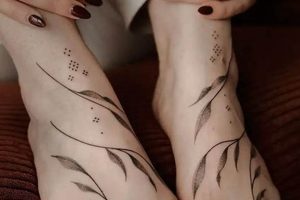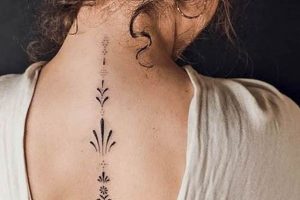



Floral vine tattoos combine the beauty of individual blossoms with the flowing, graceful lines of a vine. These designs can incorporate a wide variety of flowers, from delicate cherry blossoms to bold roses, interwoven with leaves and tendrils. A simple example might feature a strand of ivy with small forget-me-nots, while a more complex design could depict a vibrant bougainvillea climbing around the arm.
The versatility of these designs contributes to their enduring popularity. They can be adapted to various body placements, scaling from minimal and delicate to large and dramatic statements. Historically, both flowers and vines have held symbolic meaning across cultures, representing growth, connection, beauty, and the cycle of life. This imbues the tattoos with a deeper significance, allowing for personalized expressions of these themes.
Exploring specific flower and vine combinations, placement options, and stylistic choices will further illuminate the potential of these expressive body art designs.
1. Flower Symbolism

Flower symbolism plays a crucial role in imbuing vine tattoos with personal meaning. Specific flowers carry established cultural and historical significance, allowing individuals to express complex emotions and ideas through their chosen design. For instance, a cherry blossom vine can represent the ephemeral nature of beauty and life, while a poppy vine might symbolize remembrance or consolation. The selection of specific blooms transforms the aesthetic design into a narrative, communicating a deeply personal message.
Understanding the symbolic language of flowers allows for greater intentionality in design choices. A vine featuring intertwined roses and lilies, for example, could represent a harmonious union of love and purity. Similarly, incorporating thorns or withered blossoms alongside vibrant blooms can add layers of complexity, representing hardship alongside growth and resilience. These choices amplify the expressive potential of the tattoo, moving beyond purely aesthetic considerations to convey profound personal narratives.
Careful consideration of flower symbolism elevates vine tattoo designs from decorative elements to powerful personal statements. By leveraging the rich history and cultural significance associated with different flowers, individuals can create tattoos that resonate deeply with their own experiences and values. This understanding is fundamental to achieving a design that is not only visually appealing but also rich in symbolic meaning.
2. Vine Style

Vine style significantly impacts the overall aesthetic and symbolic meaning of flower vine tattoos. The choice of vine dictates the design’s flow, visual weight, and the way it interacts with the body’s contours. A delicate, sparsely-leaved vine evokes a sense of fragility and elegance, while a thick, thorny vine conveys strength and resilience. The vine’s direction, whether ascending, descending, or encircling, further contributes to the overall composition and can influence the perceived movement and energy of the design. For instance, a climbing vine might represent growth and aspiration, whereas a drooping vine could symbolize release or acceptance.
Different vine styles also lend themselves to specific flower choices and placements. A delicate, meandering vine might complement small, delicate blossoms like forget-me-nots or jasmine, placed subtly on the wrist or ankle. Conversely, a bold, robust vine can support larger, more prominent flowers like roses or sunflowers, creating a striking statement piece on the back or thigh. The interplay between vine and flower creates a visual narrative, enhancing the overall symbolic meaning. A thorny rose vine, for example, might represent the complexities of love, while a smooth, flowing ivy vine could symbolize connection and eternity.
Understanding the impact of vine style is essential for creating a cohesive and meaningful flower vine tattoo. Careful consideration of the vine’s characteristics, including thickness, texture, direction, and leaf structure, allows for a design that harmonizes with the chosen flowers and complements the individual’s body and personal narrative. This awareness ensures the final tattoo is not merely a collection of beautiful elements but a unified and expressive work of art.
3. Placement on Body

Placement significantly influences the visual impact and symbolic meaning of flower vine tattoos. The body’s natural contours provide a dynamic canvas, and careful placement allows the design to flow organically and harmoniously. A vine tattoo encircling the wrist or ankle emphasizes these delicate areas, creating an elegant and understated statement. Larger, more elaborate designs can utilize the back, chest, or thigh, allowing for greater detail and complexity. Placement also affects how the tattoo interacts with movement and clothing, adding another layer of consideration to the design process.
Consideration of the body’s anatomy is crucial for maximizing the aesthetic potential of vine tattoos. A vine winding around the spine can accentuate the back’s natural curves, creating a visually striking and sensual design. Similarly, a vine flowing across the collarbone or shoulder blade can highlight these graceful areas. Strategic placement enhances the interplay between the tattoo and the body, resulting in a design that appears seamless and integrated. Practical considerations, such as clothing coverage and visibility, also influence placement choices, allowing individuals to curate the degree of exposure and personal expression.
Effective placement elevates flower vine tattoos from simple adornments to dynamic expressions of personal style and symbolism. By understanding how the design interacts with the body’s unique contours, individuals can achieve a cohesive and impactful aesthetic. Careful consideration of placement ensures the tattoo complements the individual’s form and enhances the overall narrative conveyed by the chosen flowers and vine style. This holistic approach results in a tattoo that is not only visually appealing but also deeply meaningful and personally resonant.
4. Color Palette

Color palette profoundly impacts the overall mood and visual impact of flower vine tattoos. Color choices influence the perceived vibrancy, realism, and symbolic meaning of the design. A vibrant palette featuring saturated hues like reds, yellows, and blues creates a bold, energetic aesthetic, often associated with joy, passion, or growth. Conversely, a muted palette utilizing softer tones like pastels or grayscale evokes a sense of serenity, elegance, or remembrance. Monochromatic designs, particularly in black ink, offer a timeless, classic appeal, emphasizing linework and shading over vibrant color. The chosen color palette interacts with the chosen flowers and vine style, creating a cohesive visual narrative. For example, a realistic depiction of a red rose vine might utilize shades of red, green, and brown to capture the flower’s natural beauty, while a stylized cherry blossom vine might employ soft pinks and grays for a more ethereal effect.
Understanding color theory allows for strategic color choices that enhance the tattoo’s expressive potential. Complementary colors, such as red and green or blue and orange, create visual contrast and vibrancy. Analogous colors, like shades of blue and green, create a harmonious and calming effect. The use of light and shadow, achieved through shading and highlighting, adds depth and dimension to the design, regardless of the chosen color palette. Color can also be used to highlight specific elements of the design, drawing attention to particular flowers or sections of the vine. For instance, a single brightly colored flower amidst a monochrome vine can create a focal point and amplify its symbolic meaning.
Careful consideration of color palette is crucial for achieving a visually compelling and symbolically resonant flower vine tattoo. Color choices should complement the chosen flowers, vine style, and overall theme of the design. Effective use of color creates a cohesive and impactful piece of art, transforming the tattoo into a powerful expression of personal style and narrative. This understanding allows individuals to make informed decisions about color, ensuring the final tattoo is not only aesthetically pleasing but also deeply meaningful and personally relevant.
5. Overall Composition

Overall composition is the unifying factor in successful flower vine tattoo designs. It dictates how individual elementsflower choices, vine style, color palette, and placementharmonize to create a cohesive and visually appealing whole. Composition considers the balance, flow, and visual weight of the design, ensuring a dynamic and engaging final product. A well-composed tattoo guides the viewer’s eye through the design, highlighting key elements and creating a sense of movement and depth. For example, a vine that gracefully curves around the arm, featuring strategically placed clusters of blossoms and leaves, creates a more dynamic and engaging composition than a straight, uniform vine with evenly spaced flowers. The interplay of positive and negative space is also crucial; allowing the skin to show through in certain areas can enhance the visual impact of the design and prevent it from appearing cluttered or overwhelming. Compositional choices can also create an illusion of three-dimensionality, adding depth and realism to the tattoo.
Effective composition enhances the symbolic meaning embedded within the design. A vine that appears to grow and flourish conveys a sense of vitality and growth, while a vine that appears tangled or constrained might represent struggle or overcoming adversity. The placement of specific flowers within the overall composition can further emphasize their symbolic meaning. A prominent central flower, for instance, might represent a core value or belief, while smaller, surrounding flowers could symbolize supporting ideas or influences. Skilled tattoo artists utilize compositional principles to create visual narratives, ensuring the design communicates the intended message effectively. Understanding these principles allows individuals to collaborate effectively with their artist, articulating their vision and ensuring the final tattoo reflects their personal narrative.
Masterful composition elevates flower vine tattoos from mere decoration to impactful works of art. It harmonizes individual elements, creating a unified and visually compelling design that resonates with both the wearer and the observer. The interplay of lines, shapes, colors, and negative space creates a dynamic and engaging visual experience. By understanding the principles of composition, individuals can collaborate effectively with their tattoo artist to create a design that is not only aesthetically pleasing but also rich in symbolic meaning and deeply personal. This understanding is essential for achieving a tattoo that embodies individual expression and stands the test of time.
Tips for Flower Vine Tattoo Designs
Achieving a stunning and meaningful flower vine tattoo requires careful planning and consideration. These tips offer guidance for navigating the design process and ensuring a successful outcome.
Tip 1: Research Flower Symbolism: Thoroughly research the symbolic meanings associated with different flowers before making selections. This ensures the chosen blooms align with the intended message and personal values.
Tip 2: Consider Vine Style and Placement: Vine style and placement should complement both the chosen flowers and the individual’s body. A delicate vine suits smaller flowers and placements like the wrist or ankle, while a bolder vine complements larger flowers and placements like the back or thigh. Placement should accentuate the body’s natural contours.
Tip 3: Explore Color Palettes: Experiment with different color palettes to determine the desired mood and visual impact. Consider the symbolic meanings associated with different colors and how they interact with the chosen flowers. Consult with a tattoo artist for professional guidance on color selection.
Tip 4: Prioritize Composition: Composition is crucial for a visually appealing and balanced design. Ensure the elements flow harmoniously and create a sense of movement and depth. Discuss compositional choices with the tattoo artist to optimize the design for the chosen placement.
Tip 5: Choose a Skilled Artist: Selecting a reputable and experienced tattoo artist specializing in floral designs is paramount. Review portfolios and seek recommendations to find an artist whose style aligns with the desired aesthetic.
Tip 6: Communicate Effectively: Clearly communicate design preferences, including flower choices, vine style, color palette, and placement, to the chosen artist. Open communication ensures the final design reflects the individual’s vision.
Tip 7: Plan for Aftercare: Proper aftercare is essential for preserving the vibrancy and longevity of the tattoo. Follow the artist’s instructions diligently to ensure proper healing and prevent complications.
By following these tips, individuals can navigate the design process with confidence and achieve a flower vine tattoo that is both beautiful and meaningful, a true reflection of personal style and symbolism.
The subsequent conclusion will summarize key takeaways and offer final considerations for embarking on this expressive journey of body art.
Frequently Asked Questions
This section addresses common inquiries regarding flower vine tattoo designs, offering clarity and guidance for prospective enthusiasts.
Question 1: How much do flower vine tattoos typically cost?
Cost depends on factors like size, complexity, artist’s experience, and geographic location. Smaller, simpler designs may cost less than larger, more intricate pieces requiring multiple sessions.
Question 2: What are the most popular flower choices for vine tattoos?
Roses, lilies, cherry blossoms, jasmine, and lotus flowers are frequently incorporated into vine designs, each carrying symbolic weight and aesthetic appeal.
Question 3: Are certain vine styles better suited for specific body placements?
Delicate vines often complement the wrist, ankle, or collarbone, while bolder vines suit larger areas like the back, thigh, or ribcage. Placement should harmonize with the vine’s style and the body’s contours.
Question 4: How painful are flower vine tattoos?
Pain tolerance varies, but areas with thinner skin or closer proximity to bone tend to be more sensitive. Discuss pain management options with the chosen artist.
Question 5: How long does it take for a flower vine tattoo to heal?
Healing typically takes 2-4 weeks, depending on size, placement, and individual healing rates. Proper aftercare is crucial for optimal healing and color retention.
Question 6: Can flower vine tattoos be easily covered up or removed?
Covering or removing a tattoo depends on factors like size, color saturation, and skin type. Consult with a tattoo artist or removal specialist for personalized advice.
Careful consideration of these frequently asked questions provides valuable insights for informed decision-making regarding flower vine tattoo designs.
The following conclusion will summarize key takeaways and offer final considerations for embarking on this expressive journey of body art.
Conclusion
Flower vine tattoo designs offer a rich canvas for personal expression, blending aesthetic beauty with symbolic depth. Careful consideration of flower symbolism, vine style, placement, color palette, and overall composition is crucial for a successful and meaningful tattoo. These elements intertwine to create a visual narrative that reflects individual values, experiences, and aspirations. Effective collaboration with a skilled tattoo artist ensures the final design harmonizes with the wearer’s body and effectively communicates the intended message.
Ultimately, the enduring appeal of flower vine tattoos lies in their capacity to embody growth, connection, and the cyclical nature of life. These designs transcend mere decoration, transforming into powerful personal statements etched onto the skin. The journey of selecting and realizing a flower vine tattoo requires thoughtful introspection and careful planning, resulting in a lasting piece of art that resonates with both the wearer and the observer.