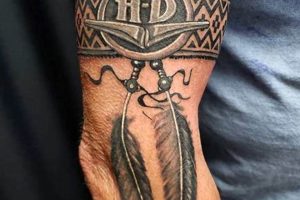



Patriotic or commemorative designs featuring banners, standards, or colors of nations, organizations, or groups represent a popular category within the art of tattooing. These designs can range from simple depictions of a national flag to complex, personalized compositions incorporating related imagery such as eagles, anchors, or historical figures.
Such body art allows individuals to express national pride, commemorate historical events, honor military service, or display affiliation with a specific group or cause. The symbolism embedded within these designs carries significant personal meaning and can serve as a powerful visual representation of one’s values and identity. Historically, flags have served as potent symbols of unity, revolution, and remembrance, a meaning that translates directly into the permanence of a tattoo.
This article will explore various design considerations, symbolic interpretations, and stylistic approaches for those considering permanent ink inspired by vexillology. Topics covered will include popular design choices, color symbolism, placement on the body, and the importance of working with a skilled tattoo artist to achieve a meaningful and aesthetically pleasing result.
1. National Pride

National pride constitutes a significant motivation for choosing a flag tattoo. These designs become a permanent declaration of one’s affinity for and connection to a specific nation, reflecting a deep sense of belonging and shared cultural identity.
- Patriotic Symbolism:
Flags function as instantly recognizable emblems of national identity. Incorporating a national flag into a tattoo serves as a powerful visual statement of patriotism, demonstrating allegiance and loyalty to one’s country. Examples include the American flag, the Union Jack, or the Canadian maple leaf flag. These symbols evoke a sense of shared history, values, and cultural heritage.
- Cultural Heritage:
Flag tattoos can represent a connection to ancestral heritage and cultural roots. Individuals may choose to honor their family’s country of origin, even if they were born elsewhere. This can represent a powerful link to familial history and traditions. For example, someone with Irish ancestry might choose a Celtic-inspired design incorporating the Irish tricolor.
- National Achievements:
Flags can symbolize national achievements and milestones, serving as reminders of significant historical events or periods of progress. Sporting events, scientific breakthroughs, or artistic accomplishments can all inspire flag-related tattoos. For example, a flag tattoo might commemorate a nation’s victory in a major sporting competition or honor a significant scientific discovery.
- Diaspora Identity:
For individuals living abroad, a flag tattoo can represent a tangible connection to their homeland. It provides a visual reminder of their roots and serves as a symbol of cultural identity within a new environment. This can be particularly important for individuals navigating the complexities of diaspora identity and belonging.
These diverse facets of national pride contribute to the enduring popularity of flag tattoos. These designs represent more than mere aesthetic choices; they symbolize deep-seated emotional connections, cultural heritage, and shared national experiences, transforming individual bodies into canvases for expressing patriotic sentiment.
2. Historical Commemoration

Flags serve as powerful reminders of historical events, embodying the struggles, triumphs, and sacrifices of past generations. Incorporating historical flags into tattoo designs provides a tangible link to these pivotal moments, allowing individuals to express reverence, remembrance, and a deep connection to the past.
- Battle Flags and Military Conflicts:
Tattoos featuring battle flags or regimental colors commemorate specific military conflicts and honor the service of those who fought. Examples include the Confederate flag, the Gadsden flag, or specific unit insignias. These designs often serve as personal tributes to ancestors who participated in these conflicts or as general expressions of respect for military history. The choice of specific battle flags can also reflect individual perspectives on historical events and their lasting impact.
- Revolutionary Movements and Social Change:
Flags often play a central role in revolutionary movements, symbolizing the ideals and aspirations of those seeking social and political change. Tattoos incorporating these flags can represent a commitment to these ideals and a desire to honor the individuals who fought for them. Examples include the “Betsy Ross” American flag, the French tricolor, or the black liberation flag. These designs can symbolize ongoing struggles for social justice and equality.
- Anniversaries and Commemorative Dates:
Specific dates and anniversaries hold significant historical weight. Flag tattoos can commemorate these occasions, serving as permanent reminders of historical triumphs, tragedies, or milestones. A tattoo might incorporate a specific date alongside a relevant flag, such as a date of independence or the anniversary of a significant historical event. This personalized approach adds a deeper layer of meaning to the design.
- Historical Figures and Leaders:
Flags associated with specific historical figures or leaders can serve as tributes to their contributions and legacies. These designs often incorporate portraits or other symbolic elements related to the individual. For example, a tattoo might feature a historical flag alongside an image of a revolutionary leader or a prominent political figure. These designs reflect admiration for these individuals and their impact on history.
By permanently etching these historical emblems onto their skin, individuals create a lasting connection to the past, ensuring that the stories and sacrifices of previous generations remain vividly present. These tattoos transform personal narratives into living historical documents, reflecting individual interpretations of the past and its ongoing relevance in the present.
3. Military Tribute

Military tribute represents a prominent theme within flag tattoo designs, offering a powerful means of expressing respect, remembrance, and solidarity with armed forces. These tattoos serve as permanent declarations of gratitude for military service, commemorating sacrifices made by service members and veterans. The connection between military tribute and flag tattoos stems from the flag’s symbolic representation of national identity, patriotism, and the values defended by military personnel. The act of embodying this symbol through a tattoo signifies a deep appreciation for the individuals who uphold these values.
Several design elements contribute to the creation of meaningful military tribute tattoos. Incorporating specific military branch insignias alongside national flags adds a layer of personalization, honoring service within a particular branch. Subdued color palettes, often utilizing black and grey ink, reflect the solemnity and respect associated with military commemoration. The inclusion of dates, names, or unit designations further personalizes the tribute, creating a lasting memorial to individual service members or fallen comrades. For example, a tattoo might feature a subdued American flag alongside the insignia of the US Army and the dates of service of a family member. Another example might depict a regimental flag with the names of fallen soldiers inscribed beneath it. These specific details transform the tattoo into a deeply personal and meaningful tribute. The placement of the tattoo also carries significance, with common locations including the chest, back, or shoulders, symbolizing the bearing of the weight of service and sacrifice.
Understanding the significance of military tribute within flag tattoo designs is crucial for both the individual receiving the tattoo and the artist creating it. This understanding ensures that the design is executed with sensitivity and respect, accurately reflecting the intended message of commemoration and honor. Furthermore, it emphasizes the importance of researching specific symbols and their historical context to avoid misinterpretations or unintended meanings. Military tribute flag tattoos are not simply aesthetic choices; they represent profound expressions of gratitude, remembrance, and solidarity with those who have served. They transform personal narratives into visible testaments of respect, ensuring that the sacrifices of military personnel are never forgotten.
4. Symbolic Representation

Symbolic representation forms a core element within flag tattoo designs, extending beyond simple national affiliations to encompass a wide range of personal beliefs, values, and group identities. Flags, inherently symbolic objects, acquire layered meanings through historical context, cultural associations, and individual interpretations. Understanding this symbolic depth is crucial for creating meaningful and impactful flag tattoos.
Flags representing specific causes or movements, such as the rainbow flag for LGBTQ+ pride or the anarcho-syndicalist flag, allow individuals to express solidarity and commitment to these ideals. These tattoos become visible declarations of support and shared values, fostering a sense of community and belonging. Incorporating symbolic elements beyond the flag itself, such as specific animals, plants, or geometric patterns, further enhances the tattoo’s representational depth. A dove superimposed on a peace flag, for example, amplifies the message of peace and non-violence. Similarly, a clenched fist on a red and black flag may symbolize resistance and revolutionary ideals. Historical context also plays a significant role in symbolic interpretation. A Confederate flag tattoo, for instance, can hold vastly different meanings depending on individual perspectives, ranging from Southern heritage to white supremacy. Understanding the multifaceted nature of such symbols is crucial for avoiding unintended interpretations.
The practical significance of recognizing symbolic representation within flag tattoo designs lies in the ability to create tattoos that resonate with individual experiences and beliefs. Careful consideration of the intended message, the chosen symbols, and their potential interpretations ensures that the tattoo accurately reflects the wearer’s values and identity. This understanding facilitates effective communication through visual language, transforming personal narratives into powerful symbolic statements. Ultimately, recognizing the symbolic depth of flag tattoos elevates the art form beyond mere aesthetics, fostering a deeper appreciation for the power of symbols in personal expression and identity formation. It reinforces the importance of informed decision-making when choosing a flag tattoo design, ensuring that the chosen symbols align with the individual’s intended message and resonate with their personal narrative.
5. Artistic Style
Artistic style significantly influences the final aesthetic and impact of flag tattoo ideas. The chosen style dictates the visual representation of the flag, impacting its perceived meaning and overall effect. Careful consideration of artistic style is crucial for aligning the design with the individual’s personal preferences and the intended message of the tattoo.
- Realism:
Realistic portrayals of flags emphasize detail and accuracy, mimicking the appearance of a fabric flag waving in the wind. This style often incorporates intricate details like stitching, texture, and light reflections, creating a lifelike representation. Realistic flag tattoos can evoke a strong sense of patriotism or commemoration, particularly when combined with other realistic elements such as portraits or landscapes. This style requires a skilled artist capable of capturing fine details and achieving a high degree of verisimilitude.
- Watercolor:
The watercolor style mimics the fluidity and vibrancy of watercolor paintings, creating a softer, more artistic interpretation of the flag. This style often features blended colors, diffused edges, and painterly brushstrokes. Watercolor flag tattoos can convey a sense of artistic expression and individuality, offering a less traditional approach to flag representation. This style works well for designs that incorporate other artistic elements like floral motifs or abstract patterns.
- Traditional/Neo-Traditional:
Traditional and neo-traditional styles draw inspiration from classic tattooing, employing bold lines, solid colors, and iconic imagery. Flag tattoos in these styles often feature simplified designs with strong outlines and vibrant color palettes. These styles can evoke a sense of timelessness and classic Americana, particularly when combined with traditional tattoo motifs like eagles, anchors, or roses. Neo-traditional styles often incorporate modern elements and interpretations while retaining the core elements of traditional tattooing.
- Abstract/Geometric:
Abstract and geometric styles offer a more conceptual approach to flag representation, utilizing geometric shapes, lines, and patterns to create stylized interpretations of the flag. This style allows for greater creative freedom and can convey a sense of modernism and individuality. Abstract flag tattoos can represent a more nuanced or personalized interpretation of national identity or symbolism. This style can be particularly effective for incorporating personal meanings or abstract concepts into the design.
The chosen artistic style significantly impacts the overall message and aesthetic of a flag tattoo. Selecting a style that aligns with individual preferences and the intended meaning of the design ensures a cohesive and impactful result. Collaborating with a skilled tattoo artist experienced in the chosen style is crucial for achieving a high-quality and meaningful tattoo that effectively translates the chosen flag into a powerful piece of body art.
6. Placement and Size
Placement and size are critical considerations in flag tattoo design, impacting both the aesthetic appeal and the symbolic meaning conveyed. These factors influence the visibility of the tattoo, its relationship to the body’s contours, and the overall composition of the design. Careful planning of placement and size ensures the tattoo harmonizes with the individual’s physique and effectively communicates the intended message.
- Visibility and Personal Preference:
Visibility plays a key role in determining placement. Individuals seeking prominent displays of patriotism or affiliation might choose highly visible areas like the forearm, bicep, or calf. More discreet placements, such as the back, ribs, or thigh, offer a sense of personal significance while maintaining a degree of privacy. Personal preference ultimately dictates the level of visibility desired, reflecting individual comfort levels and intended audiences.
- Body Contours and Design Flow:
The natural contours of the body influence the flow and composition of the tattoo. Flags, often rectangular or square, require careful placement to avoid distortion or awkward draping. Curved areas like the shoulder or chest can complement flowing flag designs, while flatter areas like the back provide ample space for larger, more detailed compositions. Skilled tattoo artists consider these contours to ensure the design integrates seamlessly with the body’s shape.
- Size and Detail Complexity:
Size directly impacts the level of detail achievable within the design. Small flag tattoos necessitate simplified designs, focusing on essential elements like color and basic shape. Larger tattoos allow for intricate details, including complex imagery, text, or subtle shading. Balancing size with detail complexity ensures the design remains clear and legible, avoiding a cluttered or muddled appearance. The desired level of detail informs the appropriate size and placement of the tattoo.
- Symbolic Significance of Placement:
Placement can enhance the symbolic meaning of a flag tattoo. A flag positioned over the heart, for instance, signifies deep emotional connection and patriotism. Placement on the back might represent carrying the weight of responsibility or honoring a legacy. These symbolic considerations add layers of meaning to the design, transforming the placement from a purely aesthetic choice to an integral part of the tattoo’s narrative.
Careful consideration of placement and size elevates flag tattoo designs beyond mere visual representations. These factors, when thoughtfully addressed, contribute to the overall impact and symbolic resonance of the tattoo, ensuring a cohesive and meaningful piece of body art that effectively communicates individual narratives and values.
Tips for Flag Tattoo Designs
Careful planning ensures a successful and meaningful flag tattoo. These tips offer guidance for navigating the design process.
Tip 1: Research Thoroughly: Thorough research is crucial before committing to a design. Investigate the specific flag’s historical context, symbolic meanings, and potential interpretations to avoid unintended connotations. Understanding the flag’s full significance ensures an informed and respectful design choice.
Tip 2: Collaborate with a Skilled Artist: A skilled tattoo artist specializing in the desired style is essential. Discuss design ideas, placement options, and symbolic intentions with the artist to ensure a collaborative approach. A skilled artist can offer valuable insights and translate concepts into a high-quality tattoo.
Tip 3: Consider Placement Carefully: Placement impacts visibility, aesthetic appeal, and symbolic meaning. Consider the body’s contours, desired visibility, and the tattoo’s intended message when selecting a location. Placement should complement the design and harmonize with the individual’s physique.
Tip 4: Choose an Appropriate Size: Size determines the level of detail and overall impact of the tattoo. Small flags require simplified designs, while larger sizes accommodate greater complexity. Balance size with detail to ensure clarity and legibility.
Tip 5: Reflect on Personal Meaning: A flag tattoo carries personal significance. Reflect on the intended message, emotional connection, and symbolic representation desired. Personal meaning elevates the tattoo beyond mere aesthetics, transforming it into a powerful statement of identity or belief.
Tip 6: Explore Color Symbolism: Colors hold symbolic weight. Research the specific colors within the chosen flag and their cultural associations. Understanding color symbolism adds depth and nuance to the design, enhancing its overall meaning.
Tip 7: Plan for Long-Term Care: Tattoos require ongoing care to maintain vibrancy and prevent fading. Discuss aftercare procedures with the tattoo artist and commit to proper maintenance. Long-term care preserves the tattoo’s quality and ensures a lasting tribute.
These tips provide a framework for creating meaningful and well-executed flag tattoos. Careful consideration of these elements ensures a design that resonates with personal narratives, effectively communicates intended messages, and stands the test of time.
This comprehensive exploration of flag tattoo ideas provides a foundation for informed decision-making. By understanding the historical context, symbolic meanings, artistic styles, and practical considerations, individuals can embark on the tattoo journey with confidence and clarity, ensuring a result that embodies personal values and aesthetic preferences.
Frequently Asked Questions about Flag Tattoos
This section addresses common queries regarding flag tattoo designs, providing clarity and guidance for those considering such a tattoo.
Question 1: Are flag tattoos disrespectful?
Respectfulness depends on the specific flag, its historical context, and the individual’s intentions. Some flags carry controversial connotations, requiring careful consideration. Respectful depictions honor the flag’s symbolism and avoid trivializing its meaning.
Question 2: How much do flag tattoos typically cost?
Cost varies based on size, complexity, artist’s experience, and geographic location. Smaller, simpler designs typically cost less than larger, more intricate pieces. Consulting with multiple artists allows for price comparisons and informed budget decisions.
Question 3: What are the most popular flag tattoo designs?
National flags, military flags, and historically significant flags remain popular choices. Specific designs incorporating personal elements or symbolic imagery offer unique expressions of identity and belief. Trends vary based on cultural influences and current events.
Question 4: How long does a flag tattoo take to heal?
Healing typically takes several weeks, depending on size, placement, and individual healing rates. Proper aftercare, as advised by the tattoo artist, is crucial for optimal healing and color retention. Following aftercare instructions diligently minimizes complications and ensures a healthy outcome.
Question 5: Can flag tattoos be removed or covered up?
Removal is possible through laser treatments, although complete removal may be challenging depending on ink color and depth. Cover-up tattoos offer an alternative, transforming existing designs into new artwork. Consult with a tattoo artist or removal specialist to explore options.
Question 6: What should one consider when choosing a flag tattoo design?
Key considerations include personal meaning, historical context, artistic style, placement, size, and the artist’s skill. Reflecting on these factors ensures a design that resonates with individual values, communicates the intended message, and complements the individual’s physique.
Thorough research and informed decision-making are crucial for a successful and meaningful flag tattoo experience. Consulting with experienced professionals and carefully considering personal preferences ensures a design that holds lasting significance.
This FAQ section has offered essential insights into various aspects of flag tattoos. The subsequent sections will delve further into specific design considerations and symbolic interpretations.
Conclusion
This exploration of flag tattoo designs has provided a comprehensive overview of the multifaceted considerations involved. From symbolic representation and historical context to artistic style and placement, the significance of informed decision-making is paramount. Careful consideration of these elements ensures a design that resonates with personal narratives, accurately reflects intended messages, and harmonizes with individual aesthetics. The enduring popularity of flag tattoos underscores their power to communicate complex ideas, affiliations, and beliefs through a visually striking medium.
Ultimately, flag tattoos represent more than mere aesthetic choices; they embody personal narratives, historical connections, and symbolic declarations. The permanence of these designs necessitates thoughtful consideration, thorough research, and collaboration with skilled artists. By approaching flag tattoo designs with respect, understanding, and a commitment to informed decision-making, individuals can transform their bodies into canvases that tell powerful stories of identity, belief, and belonging.