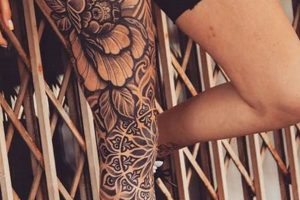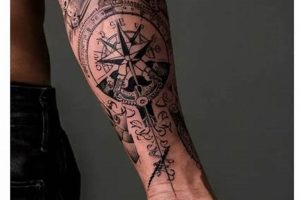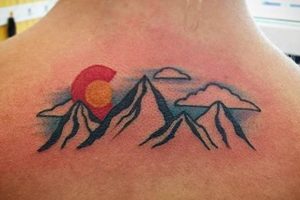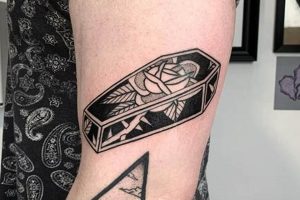



Tattoos featuring bovine imagery encompass a wide range of styles and symbolic meanings. Designs can vary from realistic depictions of the animal to stylized outlines, geometric patterns incorporating cow silhouettes, or whimsical cartoon versions. Examples include a portrait of a beloved farm animal, a longhorn skull with floral accents, or a minimalist outline of a cow’s head.
These designs can represent various concepts, including agricultural heritage, gentle strength, nurturing qualities, connection to nature, or abundance and prosperity. Historically, cows have held significant cultural value in numerous societies, symbolizing sustenance and maternal energy. This rich history lends depth and personal meaning to bovine-themed body art.
Exploring different artistic interpretations, symbolic associations, and placement considerations provides valuable insights for those considering permanent bovine-themed artwork.
1. Placement

Placement is a crucial factor in bovine-themed tattoo design. The chosen location influences not only the visibility of the tattoo but also how the design interacts with the body’s natural contours and the overall aesthetic impact.
- Size and Detail:
Large-scale, detailed designs, such as full-body cow portraits or complex landscape scenes incorporating cattle, often suit larger areas like the back, chest, or thigh. These areas provide ample space for intricate artwork and allow for greater visual impact. Smaller, simpler designs, such as minimalist outlines or small cow silhouettes, can be effectively placed on areas like the wrist, ankle, or behind the ear.
- Body Contours:
The natural curves and muscles of the body can be used to enhance the tattoo’s three-dimensionality. For instance, a cow’s profile placed along the curve of the bicep or calf can create a visually dynamic effect. Circular designs can be positioned on rounded areas like the shoulder or upper arm to complement the body’s shape.
- Visibility and Personal Preference:
Placement also relates to how prominently the individual wishes to display their tattoo. Easily visible locations like the forearm or neck suggest a desire for open expression, while more discreet placements, such as the ribcage or back, offer a sense of personal intimacy. Individual preferences regarding visibility play a significant role in placement decisions.
- Composition and Flow:
Careful placement can create a harmonious flow between the tattoo and the body. A cow’s head facing downwards might be positioned near the shoulder, creating a visual descent that complements the natural lines of the body. Alternatively, a herd of cows could be depicted moving across the back, following the spine’s natural curvature.
Ultimately, optimal placement depends on the specific design, its size and complexity, and the individual’s personal aesthetic and lifestyle. Thoughtful consideration of these factors ensures a cohesive and impactful result, seamlessly integrating the bovine imagery with the body’s canvas.
2. Style (realistic, geometric, etc.)

Style significantly impacts the overall aesthetic and symbolic representation within bovine-themed tattoos. The chosen style dictates the level of detail, the emotional tone conveyed, and the cultural or artistic references evoked. A realistic portrayal of a cow, capturing intricate details of its hide and musculature, can evoke a sense of reverence for the animal’s physical presence. This style often suits individuals with a strong connection to specific animals or agricultural life. Conversely, a geometric representation, using lines and shapes to form a stylized cow silhouette, can create a modern and minimalist feel. This approach might appeal to those drawn to abstract art or symbolic representation. Similarly, watercolor styles offer a vibrant and expressive interpretation, lending a dreamlike quality to the imagery. The flowing colors and soft edges can symbolize the gentle nature often associated with cows.
Examples further illustrate style’s influence. A photorealistic tattoo of a prize-winning bull might convey pride in agricultural heritage or a specific breed. A tribal-inspired design featuring a stylized bull’s head could symbolize strength and power. A cartoonish depiction of a cow might express a lighthearted and whimsical personality. Japanese-style ink paintings of cows, often incorporating cherry blossoms or other natural elements, can represent harmony and tranquility. The chosen style interacts with other design elements, such as color palettes and additional imagery, to create a cohesive and meaningful whole. A realistic style might employ a muted color palette to emphasize naturalism, while a geometric style might use bold, contrasting colors to highlight the abstract forms.
Understanding the diverse range of stylistic approaches allows for informed decisions regarding the desired aesthetic and symbolic resonance. Choosing a style that aligns with personal preferences and the intended meaning ensures a tattoo that effectively communicates its message and remains aesthetically pleasing over time. The interplay between style, symbolism, and personal significance ultimately determines the tattoo’s effectiveness as a form of self-expression and artistic representation.
3. Breed (Highland, Longhorn, etc.)

Breed selection significantly influences the symbolic meaning and visual impact of bovine-themed tattoos. Specific breeds possess distinct characteristics and cultural associations, allowing for personalized expressions of heritage, admiration, or symbolic representation. A Highland cow, with its long, shaggy coat and majestic horns, often symbolizes resilience, adaptability, and connection to Scottish heritage. Choosing this breed for a tattoo might reflect an individual’s ancestry, appreciation for rugged landscapes, or admiration for the animal’s hardiness. Conversely, a Texas Longhorn, known for its impressive horns and association with the American West, can represent independence, pioneering spirit, and a connection to ranching culture. This breed might be chosen by individuals who identify with these values or have a personal connection to the region.
Other breeds offer further symbolic possibilities. A Hereford cow, with its distinctive red and white markings, is often associated with the beef industry and agricultural traditions. A Guernsey cow, known for its rich milk production, might symbolize nurturing and abundance. Depicting a specific breed allows for nuanced storytelling within the tattoo. A portrait of a family’s prized dairy cow could serve as a tribute to agricultural heritage and a connection to the land. A stylized image of a bull of a specific fighting breed might represent courage, strength, and respect for cultural traditions.
Understanding breed-specific traits and cultural significance provides depth and personal meaning to bovine-themed tattoos. This knowledge empowers individuals to select breeds that resonate with their personal values, heritage, or aesthetic preferences. Careful consideration of breed selection ensures a tattoo that accurately communicates its intended message and remains a meaningful symbol of personal expression.
4. Symbolism (nurturing, strength)

Symbolism plays a crucial role in imbuing bovine-themed tattoos with deeper meaning. Cows hold diverse symbolic weight across cultures, representing concepts ranging from nurturing and fertility to strength and resilience. Understanding these symbolic associations allows individuals to select imagery that resonates with personal values and experiences.
- Nurturing and Motherhood
Cows, particularly dairy breeds, are often associated with motherhood, nurturing, and provision. Their role in providing milk, a source of sustenance for many cultures, has linked them to feminine energy and life-giving qualities. A tattoo featuring a cow and calf can represent the strong bond between mother and child, while imagery of flowing milk might symbolize abundance and prosperity.
- Strength and Resilience
Certain breeds, such as bulls or Highland cattle, embody strength, resilience, and power. Bulls, in particular, are often seen as symbols of virility and untamed energy. Highland cows, with their ability to withstand harsh climates, represent adaptability and fortitude. These symbolic associations can be incorporated into tattoo designs to convey inner strength, determination, or connection to one’s heritage.
- Fertility and Abundance
In many agricultural societies, cows represent fertility and abundance due to their role in providing food and sustaining communities. The cyclical nature of calving and milk production reinforces this association with life cycles and renewal. Tattoo designs incorporating imagery of lush pastures or a cow surrounded by crops can symbolize prosperity, growth, and the interconnectedness of life.
- Connection to Nature and the Earth
Cows, as grazing animals, are inherently connected to the natural world. Their presence in landscapes often signifies a harmonious relationship between humans and nature. Tattoo designs featuring cows in natural settings, such as meadows or forests, can represent a reverence for the environment, a connection to rural life, or a desire for peaceful coexistence with the natural world.
By exploring these symbolic layers, individuals can create bovine-themed tattoos that transcend mere aesthetic representation and become powerful expressions of personal values, beliefs, and connections to the broader cultural landscape. Combining symbolic elements with specific breeds and artistic styles further enhances the tattoo’s narrative and personal significance.
5. Additional elements (flowers, skulls)

Incorporating additional elements enhances the narrative depth and symbolic complexity of bovine-themed tattoos. These additions, ranging from floral motifs to skulls and geometric patterns, interact with the central bovine imagery to create layered meanings and personalized expressions. Flowers, often associated with growth, beauty, and life cycles, can soften the imagery and introduce themes of femininity, nature, or remembrance. For instance, a cow skull adorned with vibrant blossoms might represent the cyclical nature of life and death, or a celebration of a beloved animal’s memory. Specific flower choices further refine the symbolism; roses signify love and passion, while lilies represent purity and innocence. Integrating floral elements allows for nuanced storytelling within the tattoo, reflecting personal experiences, values, or spiritual beliefs.
Skulls, a potent symbol of mortality and the transient nature of life, introduce contrasting themes to bovine imagery. A cow skull, juxtaposed with the animal’s living form, can represent the duality of life and death, the acceptance of mortality, or a connection to ancestral heritage. Skulls can also be incorporated into larger compositions, such as a pastoral landscape featuring both grazing cattle and skeletal remains, to symbolize the cyclical nature of the agricultural world. The stylistic rendering of the skull further influences its meaning; a realistic depiction might emphasize the raw reality of death, while a stylized or ornate skull could represent reverence for the deceased or a celebration of life’s ephemeral nature. Geometric patterns offer additional avenues for symbolic expression, adding layers of visual interest and cultural significance. Triangles can represent strength and stability, while circles symbolize wholeness and cyclical continuity. Incorporating these patterns into bovine-themed tattoos allows for abstract representations of concepts related to nature, spirituality, or personal identity.
Thoughtful selection and placement of additional elements are crucial for achieving a cohesive and meaningful design. The chosen elements should complement the central bovine imagery and contribute to the overall narrative of the tattoo. Understanding the symbolic weight of these additions allows for a nuanced and personalized expression of individual values, beliefs, and experiences. By carefully considering the interplay between the central image and supporting elements, bovine-themed tattoos can transcend mere aesthetic decoration and become powerful symbols of personal and cultural significance.
Tips for Cow Tattoo Designs
Careful planning ensures a successful and meaningful bovine-themed tattoo. The following tips provide guidance for navigating design choices, placement considerations, and symbolic representation.
Tip 1: Research Breed Symbolism: Explore the cultural and historical significance of different breeds. A Texas Longhorn holds different connotations than a Highland cow. Choosing a breed that aligns with personal values adds depth to the design.
Tip 2: Consider Placement Carefully: Body contours and visibility play crucial roles. Large, detailed designs suit larger areas like the back or thigh. Smaller, simpler designs work well on the wrist or ankle.
Tip 3: Explore Different Styles: From realism to geometric abstraction, various styles evoke different moods. Match the style to the desired aesthetic and the breed’s characteristics.
Tip 4: Think About Color Palette: Color significantly impacts a tattoo’s mood. Naturalistic colors suit realistic designs, while vibrant colors enhance stylized or abstract representations.
Tip 5: Incorporate Meaningful Elements: Flowers, skulls, or geometric patterns add layers of symbolism. Research their meanings to ensure they complement the central bovine imagery.
Tip 6: Consult with a Reputable Artist: A skilled tattoo artist provides valuable input regarding design feasibility, placement, and technical execution. Discuss ideas and collaborate to achieve the desired result.
Tip 7: Reflect on Personal Significance: A tattoo is a permanent form of self-expression. Ensure the chosen design resonates with personal values and holds lasting meaning.
By considering these tips, individuals can create bovine-themed tattoos that are not only aesthetically pleasing but also deeply meaningful and reflective of personal narratives. Careful planning and thoughtful consideration of symbolic elements ensure a tattoo that remains a source of pride and personal significance for years to come.
Ultimately, a well-designed bovine tattoo becomes a powerful statement of personal identity and connection to the rich cultural heritage surrounding these remarkable animals.
Frequently Asked Questions about Cow Tattoos
This section addresses common inquiries regarding bovine-themed tattoo designs, offering practical insights and clarifying potential concerns.
Question 1: What is the average cost of a cow tattoo?
Cost depends on size, complexity, artist’s experience, and geographic location. Smaller, simpler designs typically cost less than large, intricate pieces. Consulting with several artists allows for price comparison and portfolio assessment.
Question 2: How painful are cow tattoos?
Pain levels vary based on individual pain tolerance, placement, and tattoo size. Areas with thinner skin or closer proximity to bone tend to be more sensitive. Discussing pain management options with the artist can alleviate discomfort.
Question 3: How long does it take for a cow tattoo to heal?
Healing typically takes 2-4 weeks. Proper aftercare, as advised by the tattoo artist, is crucial for optimal healing and preventing infection. Factors like individual healing rates and overall health can influence healing time.
Question 4: Can cow tattoos be covered up or removed?
Cover-ups and removals are possible, but their complexity depends on the original tattoo’s size, color saturation, and placement. Laser removal requires multiple sessions and may not completely erase the tattoo. Consulting with a specialist is essential for assessing options and potential outcomes.
Question 5: What are some popular design elements to incorporate with cows?
Popular additions include floral motifs, geometric patterns, skulls, landscapes, and other farm-related imagery. These elements can enhance the symbolic meaning and create visually appealing compositions.
Question 6: What are the cultural significances associated with cow tattoos?
Cows hold diverse cultural meanings, representing nurturing, strength, abundance, and connection to nature, varying across different societies and historical periods. Researching these cultural associations adds depth and personal significance to the design.
Understanding these practical aspects and symbolic considerations allows for informed decisions and successful realization of meaningful bovine-themed body art. Thorough research and consultation with experienced professionals are essential steps in the process.
By addressing these frequently asked questions, individuals gain valuable insights for embarking on their cow tattoo journey with confidence and clarity.
Cow Tattoo Ideas
Exploration of bovine-themed tattoo designs reveals a rich tapestry of stylistic interpretations and symbolic meanings. From realistic portrayals of specific breeds to stylized geometric representations, these designs offer diverse avenues for personal expression. Placement considerations, breed selection, symbolic associations, and the incorporation of additional elements like flowers or skulls all contribute to the final composition’s narrative depth. Understanding these factors empowers informed decision-making, ensuring a tattoo that resonates with individual values and aesthetic preferences.
Ultimately, bovine imagery in tattoo art transcends mere aesthetic decoration. It serves as a powerful medium for communicating personal narratives, cultural heritage, and profound connections to the natural world. Careful consideration of design choices ensures a lasting piece of body art that embodies individual stories and symbolic significance for years to come. The enduring appeal of bovine-themed tattoos lies in their ability to capture the multifaceted symbolism of these remarkable animals and translate it into enduring works of personal expression.