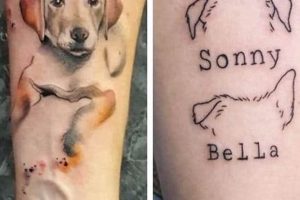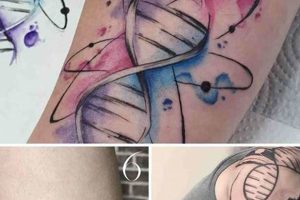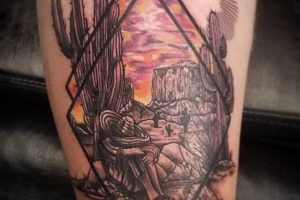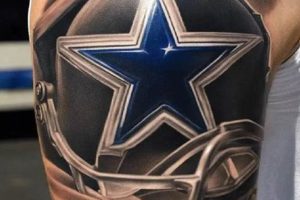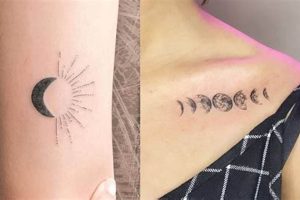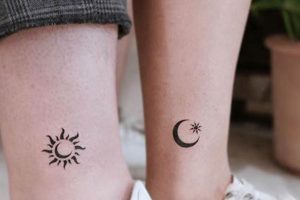



Fragmented imagery in tattoo design, where the visual narrative appears fractured or incomplete, constitutes a distinct aesthetic. This style often incorporates seemingly disparate elements, such as shattered glass, torn paper, or disjointed anatomical renderings, to create a cohesive, albeit unconventional, whole. A shattered heart, for example, might represent past heartbreak, while a fractured portrait could symbolize the multifaceted nature of identity.
This artistic approach allows for deeply personal and symbolic expressions, resonating with individuals drawn to unconventional aesthetics. Its rise in popularity aligns with contemporary artistic movements that embrace imperfection and the beauty of the incomplete. By visually representing disruption or fragmentation, these designs offer a powerful means of communicating complex emotions, experiences, and personal narratives. This style can be particularly effective in conveying themes of resilience, overcoming adversity, or embracing change.
Exploration of specific motifs, artist portfolios showcasing expertise in this style, and a discussion of the technical considerations for creating and maintaining such designs will follow.
1. Shattered Imagery

Shattered imagery forms a core component of fragmented tattoo designs. This visual representation of brokenness serves as a powerful metaphor for a range of experiences, including overcoming adversity, processing trauma, and embracing imperfection. The shattered aesthetic manifests in various ways, from depictions of fractured glass and broken mirrors to disjointed portraits and fragmented landscapes. The effect relies on visually disrupting wholeness, creating a sense of incompleteness that invites interpretation. A shattered skull, for instance, might represent mortality and the fragility of life, while a broken clock could symbolize a significant moment frozen in time.
The choice of subject matter within shattered imagery further personalizes the tattoo’s meaning. A shattered depiction of a beloved object can represent loss or the bittersweet memories associated with it. Similarly, fragmented portraits can convey the multifaceted nature of identity or the impact of significant life events on one’s sense of self. The deliberate fragmentation allows for a nuanced exploration of complex emotions, making it a particularly resonant style for those seeking deeply personal and symbolic body art. This approach often integrates other artistic elements like negative space and abstract design to enhance the overall impact.
Successfully incorporating shattered imagery requires careful consideration of composition, placement, and the technical skill of the tattoo artist. The fragmented elements must coalesce into a cohesive design, maintaining a balance between disruption and visual harmony. Effective use of shading, line work, and color can further emphasize the shattered effect and enhance the tattoo’s emotional impact. Ultimately, the power of shattered imagery lies in its ability to transform the concept of brokenness into a visually compelling and deeply meaningful form of self-expression.
2. Disrupted Lines
Disrupted lines constitute a fundamental element within fragmented tattoo designs, contributing significantly to the overall aesthetic and symbolic meaning. Rather than flowing continuously, these lines are intentionally broken, jagged, or otherwise interrupted, mirroring the theme of fragmentation central to this style. This technique creates a visual sense of discontinuity and enhances the impression of a shattered or incomplete image.
- Emphasis on Imperfection
Disrupted lines move away from the traditional pursuit of perfect, unbroken lines in tattooing. This deliberate imperfection reflects the acceptance of flaws and the beauty found in incompleteness. Examples include jagged edges mimicking broken glass or uneven lines representing scars. Within the context of fragmented tattoos, these imperfect lines contribute to the overall aesthetic of brokenness and resilience.
- Visual Representation of Disruption
The breaks and interruptions within the lines visually represent disruption and discontinuity. This can symbolize a life event, emotional upheaval, or a period of transformation. A line abruptly ending or changing direction can signify a sudden shift or change in one’s life. This disruption reinforces the fragmented nature of the design, adding depth and complexity to its symbolic meaning.
- Creating Depth and Texture
Beyond symbolic representation, disrupted lines also contribute to the visual depth and texture of the tattoo. Short, choppy lines can create a sense of roughness or fragmentation, while strategically placed breaks can add shadows and highlights, enhancing the three-dimensional quality of the design. This technique can be particularly effective in depicting shattered objects or creating a sense of movement and energy within the tattoo.
- Guiding the Eye
Disrupted lines can also be used to guide the viewer’s eye across the tattoo, emphasizing specific elements or creating a sense of visual flow despite the fragmentation. By strategically placing breaks and interruptions, the artist can control how the viewer perceives the design, leading them through the fragmented imagery and highlighting key symbolic elements. This technique adds another layer of complexity and artistry to the tattoo.
In summary, disrupted lines play a multifaceted role in fragmented tattoo designs. They contribute to the overall aesthetic of brokenness, enhance the symbolic representation of disruption and change, add depth and texture, and guide the viewer’s eye through the design. These elements combine to create powerful and evocative tattoos that resonate with individuals seeking to express complex emotions and personal narratives through fragmented imagery.
3. Incomplete Forms

Incomplete forms represent a crucial element in the aesthetic of broken tattoo ideas. The deliberate omission of parts of an image reinforces the theme of fragmentation, creating a visual narrative that speaks to incompleteness, the passage of time, or the ephemeral nature of memory. This technique allows for powerful symbolic representation, suggesting that beauty can exist in imperfection and that narratives can be compelling even without a definitive conclusion. Consider the image of a face with missing features, a landscape dissolving into abstract lines, or a wilting flower gradually fading into nothingness. These incomplete forms evoke a sense of mystery and invite the viewer to complete the narrative, fostering a deeper engagement with the artwork. The effect relies on the tension between what is present and what is absent, allowing for a nuanced exploration of complex themes like loss, decay, and the transient nature of existence.
The power of incomplete forms lies in their ability to suggest rather than explicitly state. A partially rendered bird taking flight, for example, might symbolize the pursuit of freedom or the overcoming of limitations, while a fading portrait could represent the gradual erosion of memory or the acceptance of mortality. The use of negative space plays a vital role in this technique, allowing the un-inked skin to become part of the composition, further emphasizing the sense of absence and incompleteness. This approach can be particularly effective in conveying abstract concepts or evoking specific emotional responses. A series of fragmented geometric shapes, for instance, could represent the complexities of human relationships, while a dissolving cityscape might symbolize the relentless march of time and the inevitable decay of all things.
Understanding the role of incomplete forms provides insight into the broader significance of broken tattoo ideas. These designs challenge conventional notions of beauty and completeness, offering a powerful means of expressing complex emotions, personal narratives, and philosophical concepts. The inherent ambiguity of incomplete imagery allows for deeply personal interpretations, fostering a stronger connection between the wearer and the tattoo. While technically demanding, the successful execution of incomplete forms hinges on a delicate balance between suggestion and clarity, requiring a skilled artist to create a visually compelling and meaningfully resonant piece.
4. Symbolic Fragmentation

Symbolic fragmentation serves as a core principle underlying broken tattoo designs. These designs utilize visual fragmentation to represent abstract concepts, personal experiences, and emotional states. The brokenness depicted in the tattoo becomes a metaphor for a broader theme, enriching the design with layers of meaning beyond the purely aesthetic.
- Resilience and Healing
A prominent theme represented through symbolic fragmentation is resilience in the face of adversity. Broken objects or fractured images can symbolize past traumas, struggles, or periods of brokenness. However, the act of incorporating these fragmented elements into a cohesive tattoo design can represent the process of healing, piecing oneself back together, and finding strength in imperfection. A broken bone mended with golden lines, for example, could symbolize overcoming physical or emotional trauma. This resonates with individuals who have faced challenges and emerged stronger, viewing their experiences as integral parts of their personal narrative.
- Embracing Imperfection (Wabi-Sabi)
Symbolic fragmentation aligns with the Japanese aesthetic philosophy of wabi-sabi, which finds beauty in imperfection, impermanence, and incompleteness. Broken tattoo designs, by their very nature, embrace imperfections and irregularities, celebrating the beauty of the unfinished and the authentic. A cracked teacup, a chipped stone, or a flower with missing petals, rendered in a fragmented style, can embody the wabi-sabi aesthetic, representing the acceptance of flaws and the transient nature of life. This appeals to individuals drawn to unconventional beauty and the appreciation of the natural world’s imperfections.
- The Multifaceted Self
Fragmented imagery can also represent the complexities and multifaceted nature of personal identity. A portrait rendered in broken lines or a face with missing features can symbolize the different aspects of oneself, the hidden depths, or the ongoing process of self-discovery. This fragmentation reflects the understanding that identity is not a monolithic entity but rather a collection of experiences, memories, and perspectives that shape who we are. Such designs resonate with individuals who embrace their complex identities and see beauty in their own unique narratives.
- Deconstruction and Reconstruction
Symbolic fragmentation can represent the process of deconstruction and reconstruction, both intellectually and emotionally. A design depicting a familiar object broken down into its constituent parts and then reassembled in a new configuration can symbolize the process of analyzing, understanding, and rebuilding one’s beliefs, values, or sense of self. This theme appeals to individuals who engage in critical self-reflection and embrace change as a catalyst for personal growth. A fragmented and reassembled butterfly, for instance, could represent metamorphosis and transformation.
By visually representing these abstract concepts through fragmentation, broken tattoo designs move beyond mere aesthetics and become powerful statements of personal identity, resilience, and philosophical perspectives. The brokenness depicted in the tattoo becomes a symbol of strength, growth, and the ongoing journey of self-discovery.
5. Emotional Resonance
Emotional resonance forms a crucial link between the visual aesthetic of broken tattoo designs and their personal significance for the wearer. These designs often represent deeply personal experiences, allowing individuals to externalize complex emotions and narratives through symbolic imagery. The fragmented aesthetic mirrors the often-fractured nature of emotional processing, offering a powerful means of expressing feelings that may be difficult to articulate verbally.
- Externalizing Internal Struggles
Broken tattoo designs provide a visual language for externalizing internal struggles, such as overcoming trauma, navigating grief, or managing mental health challenges. A shattered mirror, for instance, can represent a fragmented sense of self, while a broken chain might symbolize breaking free from past traumas or addictive behaviors. The act of choosing and displaying this imagery can be a cathartic process, allowing individuals to acknowledge and process difficult emotions.
- Memorializing Loss and Change
Fragmented imagery can serve as a powerful memorial for loss and change. A wilting flower, a crumbling building, or a broken heart can represent the end of a relationship, the death of a loved one, or a significant life transition. The brokenness reflects the emotional impact of the loss, while the permanence of the tattoo serves as a lasting tribute or a reminder of personal growth. This allows individuals to carry their memories and experiences with them in a tangible and symbolic way.
- Expressing Resilience and Growth
While often associated with difficult experiences, broken tattoo designs can also represent resilience, growth, and the ability to overcome adversity. The Japanese art of Kintsugi, which repairs broken pottery with gold, offers a relevant analogy. Similarly, a tattoo depicting a fractured object mended with metallic lines or vibrant colors can symbolize the process of healing and finding strength in brokenness. This offers a visual representation of the transformative power of challenging experiences.
- Finding Beauty in Imperfection
The fragmented aesthetic challenges conventional notions of beauty, finding meaning and value in imperfection and incompleteness. This resonates with individuals who embrace their own flaws and find beauty in the unique narratives of their lives. A design featuring a broken object or an incomplete image can serve as a reminder that beauty exists in unconventional forms and that wholeness can be found even in fragmentation. This promotes self-acceptance and challenges societal pressures for unattainable perfection.
The emotional resonance of broken tattoo designs lies in their ability to externalize internal experiences, offering a tangible and symbolic representation of complex emotions. This connection between visual aesthetic and personal meaning transforms the tattoo into more than just body art; it becomes a powerful tool for self-expression, healing, and embracing the complexities of the human experience.
6. Personal Narratives

Fragmented tattoo designs offer a unique canvas for expressing personal narratives, particularly those marked by challenge, resilience, and transformation. The broken aesthetic mirrors the often-disrupted flow of personal experiences, allowing individuals to visually represent their unique life stories through symbolic imagery. This connection between personal narrative and fragmented design transforms the tattoo into a deeply personal and meaningful form of self-expression.
- Visual Metaphors for Life Events
Specific elements within a fragmented tattoo can serve as visual metaphors for significant life events. A broken clock, for instance, might represent a pivotal moment frozen in time, while a shattered mirror could symbolize a period of self-reflection or a fractured sense of identity. A lightning bolt splitting a tree could represent a sudden, disruptive event that caused significant change. These visual metaphors allow individuals to encapsulate complex experiences within a concise and powerful symbolic representation.
- Chronicling Overcoming Adversity
The process of overcoming adversity often involves fragmentation and rebuilding. Fragmented tattoos can visually represent this journey, depicting broken objects being pieced back together, or fractured images transforming into something new. A phoenix rising from fragmented ashes, a broken chain with a single link reforged, or a shattered heart with vines growing through the cracks can symbolize resilience, growth, and the ability to find strength in brokenness. This allows individuals to chronicle their personal struggles and triumphs in a deeply meaningful way.
- Expressing Emotional Landscapes
Fragmented imagery can effectively capture the complex and often-contradictory nature of emotional landscapes. The use of contrasting colors, textures, and imagery within a fragmented design can represent the interplay of different emotions, such as grief and hope, anger and forgiveness, or vulnerability and strength. A grayscale portrait with splashes of vibrant color, or a landscape divided between darkness and light, can symbolize the complexities of emotional experience. This offers a powerful means of expressing feelings that may be difficult to articulate verbally.
- Commemorating Relationships and Connections
Fragmented designs can also represent the complexities of human relationships and the impact of connection and loss. Intertwined yet broken lines, fragmented portraits facing each other, or two halves of a broken object can symbolize the intertwined nature of relationships, the pain of separation, or the enduring impact of connection. This allows individuals to commemorate significant relationships and acknowledge the role they have played in shaping their personal narratives.
By incorporating these elements, fragmented tattoos transcend mere aesthetics and become powerful narratives etched onto the skin. The brokenness depicted in the design becomes a testament to the wearer’s personal journey, a symbolic representation of their unique story of resilience, transformation, and the ongoing process of becoming.
Tips for Fragmented Tattoo Designs
Careful consideration of several factors ensures a successful fragmented tattoo design. These tips offer guidance for both conceptualization and execution.
Tip 1: Concept Development: Thorough planning is essential. Consider the specific emotion or narrative to convey. Select imagery that resonates symbolically with the chosen theme. A shattered clock, for example, might represent a significant moment frozen in time.
Tip 2: Artist Selection: Choose a tattoo artist experienced in this specific style. Examine portfolios for evidence of skillful execution of fragmented imagery, linework, and shading techniques crucial for this aesthetic. Discuss the concept in detail to ensure the artist understands the desired outcome.
Tip 3: Placement and Composition: Placement significantly impacts the overall effect. Consider the body’s contours and how the fragmented design will interact with them. Careful composition ensures the fragmented elements coalesce into a visually cohesive whole, even with intentional breaks and discontinuities.
Tip 4: Linework and Shading: Skillful linework and shading are paramount. Disrupted and jagged lines enhance the fragmented aesthetic. Strategic shading creates depth and dimension, emphasizing the shattered effect and adding realism to the design. Subtle variations in line weight and shading density create visual interest and enhance the sense of fragmentation.
Tip 5: Color Palette: Color choice significantly impacts the tattoo’s emotional resonance. Muted tones can convey a sense of melancholy or introspection, while vibrant colors can represent resilience and healing. Monochromatic palettes emphasize texture and form, while strategic use of contrasting colors can highlight specific elements or create visual disruption.
Tip 6: Incorporation of Negative Space: Negative space, the un-inked skin within the design, plays a crucial role in fragmented tattoos. It can emphasize the sense of incompleteness and create a sense of depth and movement within the fragmented imagery. Skillful use of negative space enhances the overall impact and symbolic meaning of the design.
Tip 7: Aftercare and Maintenance: Fragmented tattoos, due to their intricate details and fine lines, require diligent aftercare. Follow the artist’s instructions carefully to ensure proper healing and prevent ink bleeding or fading. Regular moisturizing and sun protection maintain the tattoo’s vibrancy and prevent premature aging of the design.
By following these guidelines, individuals seeking a fragmented tattoo can ensure a design that is not only visually compelling but also deeply meaningful and resonant with their personal narrative.
The subsequent conclusion will synthesize the key elements discussed and offer final reflections on the significance of fragmented tattoo designs.
Frequently Asked Questions about Fragmented Tattoo Designs
This section addresses common inquiries regarding fragmented tattoo designs, offering clarity on practical and conceptual aspects.
Question 1: What makes fragmented tattoos distinct from other tattoo styles?
Fragmented tattoos distinguish themselves through the deliberate use of broken lines, incomplete forms, and disrupted imagery. This creates a visual aesthetic of incompleteness, contrasting with styles that prioritize clean lines and cohesive imagery. The fragmentation serves a symbolic purpose, often representing themes of resilience, healing, and the acceptance of imperfection.
Question 2: Are fragmented tattoos more prone to fading or blurring over time?
Due to the frequent use of fine lines and intricate details, fragmented tattoos may require more diligent aftercare and maintenance to prevent premature fading or blurring. Choosing an experienced artist specializing in this style is crucial, as is adhering to proper aftercare procedures.
Question 3: How does one choose appropriate imagery for a fragmented tattoo?
Image selection should align with the personal narrative or emotional theme one wishes to convey. Consider the symbolic meaning of various objects and images. Researching existing fragmented artwork and consulting with a tattoo artist can provide further inspiration and guidance.
Question 4: What are the key considerations for placement of a fragmented tattoo?
Placement depends on the specific design and the individual’s preferences. Consider the body’s natural contours and how the fragmented elements will interact with them. Larger, more complex designs may suit larger areas like the back or chest, while smaller, more minimalist designs can be placed on the wrist, ankle, or forearm.
Question 5: Can fragmented tattoos be incorporated with other tattoo styles?
Fragmented elements can be integrated with other styles, such as realism, geometric, or watercolor, to create unique and personalized designs. This allows for greater creative expression and the blending of different aesthetics to achieve a specific visual effect.
Question 6: What is the typical cost range for a fragmented tattoo?
Cost varies based on the design’s size, complexity, the artist’s experience and hourly rate, and geographic location. Consulting with multiple artists and obtaining detailed quotes is advisable before committing to a design.
Understanding these aspects allows individuals considering a fragmented tattoo to make informed decisions, ensuring a design that is both aesthetically pleasing and deeply meaningful.
The following section will offer a conclusion, summarizing the key takeaways and highlighting the enduring appeal of fragmented tattoo designs.
Conclusion
Exploration of fragmented tattoo designs reveals a powerful form of self-expression. Shattered imagery, disrupted lines, and incomplete forms combine to create a unique aesthetic representing complex themes of resilience, healing, and the acceptance of imperfection. Symbolic fragmentation allows individuals to externalize personal narratives, translating emotional landscapes into visual metaphors etched onto the skin. Technical considerations, including artist selection, placement, and color palette, significantly impact the design’s overall effect and longevity. Understanding these elements provides valuable insight into the artistry and emotional depth inherent in fragmented tattoo designs.
The enduring appeal of fragmented imagery lies in its ability to transform brokenness into beauty, offering a potent visual language for navigating the complexities of the human experience. This style continues to evolve, driven by individual expression and artistic innovation, solidifying its place as a compelling form of personal storytelling within the broader tapestry of tattoo art. Further exploration of individual artists specializing in this genre and evolving technical approaches promises continued dynamism within this expressive art form.