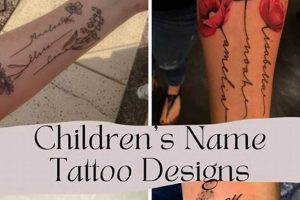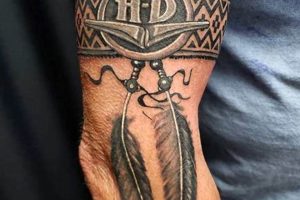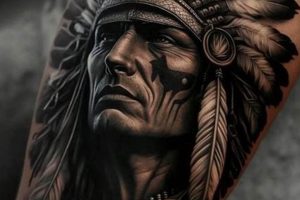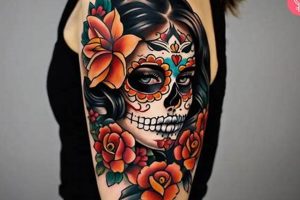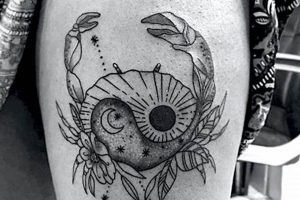



Body art expressing concepts of tranquility, harmony, and non-violence represent a popular motif. These designs can range from simple symbols like doves and peace signs to more complex and personalized imagery incorporating elements of nature, spirituality, or cultural significance. Examples include olive branches, lotus flowers, or specific quotations advocating peaceful coexistence. The choice of imagery often reflects individual values and aspirations for a more peaceful world.
Permanent markings signifying peace hold significant cultural and personal value. They can serve as a constant reminder of one’s commitment to non-violence, inner peace, or a specific cause. Historically, certain symbols, such as the peace sign, have been associated with particular social movements and eras, adding another layer of meaning. Such body art can also function as a conversation starter, prompting dialogue about peace and its importance in a world often marked by conflict. These designs can foster a sense of community among individuals who share similar values.
The subsequent sections will explore various design categories, symbolic interpretations, stylistic approaches, and practical considerations for those seeking permanent body art representing ideals of peace.
1. Symbolism

Symbolism plays a crucial role in conveying meaning within the context of peace tattoos. The chosen imagery acts as a visual language, communicating values and aspirations related to tranquility, harmony, and non-violence. Specific symbols carry established cultural and historical weight, adding depth and complexity to the design. For example, the crane, in various cultures, represents peace and longevity, while the lotus flower embodies purity and spiritual enlightenment. Understanding the inherent meaning of different symbols allows individuals to select imagery that resonates with their personal beliefs and desired message.
Careful selection of symbolic elements adds layers of significance beyond the immediate visual appeal. A dove carrying an olive branch, for instance, signifies hope and a peaceful resolution, drawing upon biblical and classical symbolism. Geometric patterns, such as the mandala, can represent balance and inner peace, reflecting spiritual traditions. Incorporating symbolic elements relevant to specific causes, like the peace sign associated with anti-war movements, adds a historical dimension to the tattoo and can foster a sense of shared values among individuals. The effective use of symbolism transforms a simple design into a powerful statement.
Understanding the rich tapestry of symbolism associated with peace allows individuals to create meaningful and impactful body art. This knowledge facilitates informed choices, enabling the wearer to express their personal values and aspirations through carefully selected visual metaphors. Recognizing the cultural and historical context surrounding these symbols deepens their resonance and facilitates communication with others who share similar ideals. Ultimately, the power of symbolism elevates the peace tattoo beyond mere aesthetics, transforming it into a potent expression of personal belief and a commitment to a more peaceful world.
2. Placement

Placement significantly impacts the overall effect of body art expressing peaceful ideals. Consideration of visibility, personal meaning, and the design’s interaction with the body’s natural contours influences the final aesthetic and symbolic impact. A small, delicate design on the inner wrist, for instance, offers a sense of personal intimacy, while a larger piece on the back allows for greater detail and visibility. The chosen location can also amplify the message; a peace symbol placed over the heart emphasizes a deeply held personal commitment. The interplay between design and placement enhances the narrative conveyed by the tattoo.
Practical considerations also influence placement decisions. Certain areas of the body experience higher sensitivity during the tattooing process, while others are more prone to fading due to sun exposure or friction. Placement choices should reflect these factors alongside aesthetic and symbolic concerns. For example, a detailed design may be better suited to a larger, flatter area like the back or thigh, whereas a simpler symbol might be more appropriate for a smaller, more sensitive area like the wrist or ankle. Understanding these practicalities ensures the longevity and visual integrity of the tattoo.
Strategic placement maximizes the impact of a tattoo advocating for peace. Whether subtle or prominent, the chosen location contributes to the overall message and personal significance. A visible placement can initiate conversations and raise awareness, while a more discreet location can hold deeper personal meaning for the wearer. Careful consideration of both practical and aesthetic aspects allows individuals to select a placement that best expresses their individual commitment to peaceful principles and ensures a visually compelling and lasting piece of body art.
3. Size
Size represents a crucial design element within the realm of peace tattoos, significantly influencing the visual impact and detail achievable. The scale of a design should harmonize with the chosen imagery, body placement, and overall aesthetic goals. Intricate designs featuring detailed elements, such as a complex scene depicting a peace rally or a portrait interwoven with peace symbols, necessitate larger canvases to effectively render the intricacies. Conversely, smaller, minimalist designs, like a single dove outline or a stylized peace sign, maintain clarity and impact at reduced scales. The size selected directly affects the level of detail and overall composition.
Consideration of practical factors related to size ensures the longevity and clarity of the design. Smaller tattoos are more susceptible to blurring over time as ink diffuses under the skin. Larger designs, while offering more space for detail, require longer sessions and potentially higher costs. Individual pain tolerance also influences size decisions, as larger pieces necessitate more extensive work. Balancing artistic vision with practical considerations related to aging, cost, and comfort ensures a satisfactory and lasting outcome. A small, symbolic peace sign on the wrist, for instance, will remain legible for longer than an intricate, large-scale mural on the back. Understanding these factors enables informed decisions that align with individual preferences and practical constraints.
Careful selection of size amplifies the intended message and aesthetic appeal of peace tattoos. Scale dictates the level of detail achievable and influences the overall visual impact. Balancing artistic aspirations with practical considerations ensures a successful outcome, allowing individuals to express their commitment to peace through body art that remains clear, meaningful, and aesthetically pleasing over time. Whether a bold statement or a subtle reminder, the size chosen contributes significantly to the effectiveness and longevity of the design, allowing the wearer to express their values through a visually impactful and enduring medium.
4. Style

Style significantly influences the aesthetic and expressive qualities of peace tattoos. A chosen stylistic approach shapes the visual narrative, impacting how the core message of peace is conveyed. From minimalist linework to intricate watercolor, each style evokes a distinct mood and carries specific cultural or artistic associations. For instance, a tribal-inspired design might evoke ancient traditions of peacemaking, while a geometric, abstract style might represent balance and harmony. Choosing a style aligned with personal aesthetics and the intended message ensures a cohesive and impactful design.
Specific styles lend themselves to particular types of imagery and symbolic representation. Realism, for instance, allows for detailed depictions of doves or portraits of peace activists, capturing nuances of expression and emotion. Watercolor, with its flowing, vibrant hues, can create an ethereal and dreamlike quality, enhancing the sense of tranquility and hope. Minimalist linework offers clean, uncluttered aesthetics, emphasizing simplicity and clarity of message. Geometric patterns, often rooted in sacred geometry, can evoke a sense of order and universal harmony. Understanding the characteristics of different styles allows individuals to select an approach that effectively translates their vision into a visually compelling and meaningful tattoo.
The chosen style impacts not only the immediate visual appeal but also the tattoo’s longevity and cultural relevance. Certain styles, like traditional American or Japanese, carry strong cultural connotations and established design conventions. Others, like minimalist or abstract styles, offer greater flexibility for personalization and contemporary interpretation. Considering the cultural context, stylistic trends, and personal preferences ensures a design that resonates with the individual and effectively conveys their commitment to peace through a visually striking and enduring piece of body art. Careful selection of style elevates the peace tattoo from a simple image to a powerful expression of personal values, beliefs, and aspirations for a more peaceful world.
5. Color

Color imbues peace tattoos with deeper layers of meaning and emotional resonance. Careful color selection amplifies the symbolic power of the chosen imagery, enhancing its visual impact and personal significance. Specific hues evoke particular associations and cultural connotations, contributing to the overall narrative. Soft, pastel shades, for example, often represent tranquility and serenity, while vibrant, bold colors might symbolize hope and resilience. The interplay of colors within a design can create visual harmony or contrast, further enriching the message conveyed. A grayscale dove, for example, might evoke a sense of classicism and remembrance, while a dove rendered in vibrant rainbow hues could symbolize diversity and inclusivity within the broader peace movement. Understanding color psychology and cultural associations allows individuals to select palettes that effectively communicate their individual interpretation of peace.
Practical considerations also influence color choices in tattoo design. Certain ink colors, particularly lighter shades, are more susceptible to fading over time due to sun exposure and the body’s natural healing processes. Skin tone also plays a role, as certain colors appear more vibrant or subdued depending on the individual’s complexion. Furthermore, the complexity of the color scheme impacts the duration and cost of the tattooing process. A minimalist design using a single color can be completed more quickly and economically than a complex, multi-colored piece. Balancing aesthetic desires with practical limitations ensures the longevity and visual integrity of the tattoo. A vibrant, multi-hued design on a frequently sun-exposed area may fade more quickly than a simpler, darker design on a less exposed area. Careful planning and consultation with a skilled tattoo artist ensures a design that remains visually appealing and meaningful over time.
Strategic color selection elevates the peace tattoo from a simple visual representation to a powerful expression of personal values. Color choices amplify symbolism, evoke emotional responses, and contribute to the overall aesthetic impact. Understanding the interplay of color psychology, cultural associations, and practical considerations allows individuals to create body art that resonates deeply and endures through time. Whether subtle or bold, the chosen color palette significantly impacts the tattoo’s ability to communicate a message of peace effectively and meaningfully. This understanding ensures a design that not only visually represents peace but also embodies its essence through a thoughtful and carefully executed use of color.
6. Artist Selection
Artist selection represents a critical step in realizing a meaningful and well-executed peace tattoo. A skilled artist’s expertise translates conceptual ideas into compelling visual representations. Technical proficiency ensures clean lines, accurate color saturation, and appropriate shading, regardless of the chosen style. Experience with specific styles, such as realism, watercolor, or geometric designs, directly impacts the quality and longevity of the final piece. An artist specializing in fine linework, for instance, possesses the skills necessary to render a delicate dove outline with precision, whereas an artist specializing in realism excels at capturing the intricate details of a portrait incorporating peace symbols. Choosing an artist whose skillset aligns with the desired style and subject matter contributes significantly to the tattoo’s aesthetic success. Researching artists’ portfolios and seeking recommendations allows individuals to identify professionals capable of executing their vision effectively.
Beyond technical skills, an artist’s understanding of symbolism and cultural context adds depth and authenticity to peace-themed tattoos. Meaningful dialogue with the chosen artist allows for collaborative exploration of design elements, ensuring alignment between the individual’s vision and the artist’s interpretation. This collaborative process allows for personalization and ensures the final design accurately reflects the intended message. For instance, discussing the historical significance of specific peace symbols or exploring different cultural interpretations of imagery like the lotus flower or the olive branch enriches the design process and imbues the tattoo with greater personal significance. An artist attuned to these nuances facilitates a more meaningful and impactful outcome.
Successful execution of a peace tattoo relies heavily on thoughtful artist selection. Technical expertise ensures visual appeal and longevity, while an understanding of symbolism and cultural context adds depth and authenticity. The collaborative relationship between individual and artist transforms abstract ideas into powerful visual statements, ensuring the final piece resonates with the wearer’s vision and effectively communicates their commitment to peace. Thorough research and meaningful dialogue with potential artists represent crucial steps in this process, leading to a fulfilling and impactful artistic experience. This careful selection process transforms a simple tattoo into a lasting and meaningful expression of personal values.
Tips for Choosing a Peace Tattoo
Selecting a design for permanent body art representing peace requires thoughtful consideration. The following tips offer guidance for navigating this process.
Tip 1: Research Symbolism: Explore the rich history and diverse interpretations of peace symbols. Understanding the cultural and historical context of chosen imagery ensures a meaningful and informed design choice. For example, research the origins and evolving meaning of the peace sign, the cultural significance of the crane in Japanese culture, or the spiritual symbolism of the lotus flower.
Tip 2: Consider Placement Carefully: Placement impacts visibility, personal meaning, and the design’s interaction with the body’s natural contours. Reflect on desired visibility and how placement influences the tattoo’s message. A peace symbol over the heart carries different connotations than one on the ankle.
Tip 3: Size Matters: Balance desired detail and overall aesthetic with practical considerations. Intricate designs require larger canvases, while smaller designs suit discreet placements. Consider the long-term legibility of small, detailed designs.
Tip 4: Explore Different Styles: Research various tattoo styles, from minimalist to watercolor, and select one aligned with personal aesthetics and the desired message. A minimalist dove differs significantly from a photorealistic one.
Tip 5: Understand Color Psychology: Colors evoke specific emotions and cultural associations. Consider how color enhances symbolism and impacts the overall design. Soft pastels convey serenity, while vibrant hues represent energy.
Tip 6: Choose an Experienced Artist: Select a tattoo artist with proven experience in the chosen style and a deep understanding of symbolic representation. Review portfolios and seek recommendations to find a suitable artist.
Tip 7: Plan for the Future: Consider the tattoo’s long-term appearance. Certain colors fade faster than others, and certain placements are more susceptible to blurring over time. Discuss these factors with the chosen artist.
Careful consideration of these tips ensures a meaningful and well-executed tattoo that effectively communicates values associated with peace. A thoughtful approach facilitates a successful and fulfilling artistic experience resulting in a lasting piece of body art.
The following section concludes with key considerations and encourages reflective engagement with the topic of peace tattoos.
Frequently Asked Questions
This section addresses common inquiries regarding tattoos representing peace, offering clarity and guidance for those considering such body art.
Question 1: What are some less common symbols representing peace?
Beyond universally recognized symbols like the peace sign and dove, less common options include the ankh (Egyptian symbol of life and peace), the ginkgo leaf (representing resilience and peace in East Asian cultures), and the Celtic knot (symbolizing interconnectedness and harmony).
Question 2: How can cultural appropriation be avoided when choosing a peace symbol?
Thorough research into a symbol’s origin and cultural significance is crucial. Using symbols respectfully, understanding their intended meaning within their original culture, and avoiding misrepresentation prevents cultural appropriation. Consulting with individuals from those cultures can provide valuable insights.
Question 3: What factors influence the longevity of a peace tattoo?
Ink color, placement, sun exposure, and individual skin characteristics influence a tattoo’s longevity. Lighter colors tend to fade more quickly. Areas exposed to frequent sunlight require more diligent sun protection. Individual healing processes also play a role.
Question 4: How can one ensure a tattoo artist understands the desired aesthetic and symbolic meaning?
Open communication with the artist is crucial. Sharing reference images, discussing symbolic interpretations, and exploring design options collaboratively ensures the artist understands and effectively translates the intended message.
Question 5: What are the typical costs associated with peace tattoos?
Costs vary depending on size, complexity, color usage, artist experience, and geographic location. Small, simple designs typically cost less than large, intricate, multi-colored pieces. Consulting with multiple artists provides a range of estimates.
Question 6: What aftercare practices ensure a peace tattoo heals properly and retains its vibrancy?
Following the artist’s aftercare instructions diligently is essential. This typically includes keeping the tattoo clean, moisturized, and protected from sun exposure during the healing process. Proper aftercare promotes optimal healing and color retention.
Careful consideration of these frequently asked questions facilitates informed decisions and contributes to a positive and meaningful tattooing experience. Thoughtful planning ensures a lasting piece of body art reflecting personal values and aspirations for peace.
This concludes the informational section on peace tattoos. It is recommended to further research specific symbols, styles, and artists to personalize the design process fully.
Conclusion
Explorations of permanent body art representing peace encompass diverse symbolic imagery, stylistic approaches, and practical considerations. Symbolism, deeply rooted in cultural and historical contexts, imbues designs with personal meaning. Placement, size, and style considerations impact visual presentation and longevity. Color selection amplifies symbolism and emotional resonance. Careful artist selection ensures professional execution and meaningful collaboration. Ultimately, informed decision-making ensures a visually compelling and enduring piece of body art effectively communicating values associated with peace.
Body art serves as a powerful medium for expressing personal values and aspirations. Permanent designs representing peace offer a constant reminder of one’s commitment to these ideals, fostering dialogue and promoting thoughtful reflection on the pursuit of a more peaceful world. The enduring nature of these designs underscores the timeless significance of peace as a fundamental human aspiration.