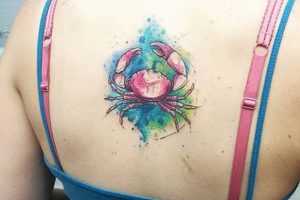



Representations of arthropods on the skin serve as a popular form of body art. These designs range from highly realistic depictions to stylized and abstract interpretations, drawing from a vast array of species including butterflies, moths, beetles, spiders, bees, and dragonflies. Specific examples might include a monarch butterfly with intricate wing patterns, a stylized geometric bee, or a photorealistic praying mantis.
Entomological body art offers a rich source of symbolic meaning, often reflecting themes of transformation, resilience, beauty, and the interconnectedness of nature. Historically, insects have held significant cultural and spiritual importance across various societies, representing different virtues and characteristics. This lends a depth of meaning beyond mere aesthetics, allowing individuals to express personal narratives or beliefs through their chosen design. The diverse forms and vibrant colors found in the insect world also provide ample artistic opportunities, facilitating highly personalized and visually striking tattoos.
Further exploration will examine specific insect choices, symbolic interpretations, artistic styles, and important considerations for those contemplating such body art.
1. Species Selection

Species selection represents a foundational element in entomological body art, significantly impacting the design’s overall aesthetic and symbolic meaning. Each species carries its own unique connotations and visual characteristics. Butterflies, often associated with transformation, beauty, and freedom, offer diverse wing patterns suitable for intricate designs. Moths, symbolic of mystery, nocturnality, and attraction to light, lend themselves to darker, more mystical aesthetics. Bees, representing industriousness, community, and sweetness, provide geometrically appealing forms and opportunities for incorporating floral motifs. Beetles, with their armored exoskeletons and diverse shapes, can convey strength, resilience, and even luck, depending on the specific species chosen. Spiders, frequently associated with patience, cunning, and creativity, allow for intricate web designs and explorations of darker themes.
The choice of species significantly influences the design’s potential interpretations. A dragonfly tattoo, for instance, can symbolize adaptability, change, and self-realization, drawing on the insect’s life cycle and agile flight. A scarab beetle, revered in ancient Egypt, can represent resurrection, rebirth, and protection. A praying mantis might symbolize focus, stillness, and predatory power. Careful consideration of these symbolic associations allows individuals to select a species that resonates with their personal narratives and desired message.
Successful entomological body art hinges on thoughtful species selection, aligning visual appeal with intended symbolism. This deliberate choice ensures a meaningful and impactful design that resonates both personally and aesthetically. Understanding the rich tapestry of cultural and symbolic meanings associated with different insect species provides a crucial foundation for impactful and personalized body art.
2. Symbolic Meaning

Symbolic meaning forms an integral component of entomological body art, imbuing the chosen design with depth and personal significance. Insects, with their diverse characteristics and rich cultural histories, offer a vast repertoire of symbolic associations, enabling individuals to express complex narratives and personal beliefs through their tattoos. Understanding these symbolic connections is crucial for selecting a design that resonates authentically and effectively conveys the intended message.
- Transformation and Rebirth
Metamorphosis, a central feature of many insect life cycles, provides a potent symbol of transformation, rebirth, and personal growth. Butterflies, emerging from their chrysalises, exemplify this process, representing overcoming challenges and embracing change. Similarly, dragonflies, with their dramatic transformation from aquatic nymphs to aerial adults, symbolize adaptability and self-realization. These themes of transformation resonate deeply with individuals embarking on new chapters or navigating significant life changes.
- Resilience and Adaptability
Insects, known for their ability to thrive in diverse environments, often symbolize resilience, adaptability, and survival. Ants, renowned for their industriousness and cooperative spirit, embody perseverance and strength in the face of adversity. Beetles, with their protective exoskeletons, represent armoring oneself against life’s challenges. These symbols of resilience can be particularly meaningful for individuals who have overcome obstacles or seek to embody strength and perseverance.
- Beauty and Elegance
The intricate patterns and vibrant colors found in many insect species offer striking aesthetic possibilities, symbolizing beauty, grace, and the delicate balance of nature. Butterflies, with their iridescent wings and graceful flight, embody ethereal beauty and fragility. Dragonflies, with their shimmering bodies and agile movements, represent elegance and precision. These aesthetic qualities can be particularly appealing to individuals drawn to the natural world and its inherent beauty.
- Death and Decay
Certain insects, particularly those associated with decomposition or darker aspects of nature, can symbolize mortality, decay, and the cycle of life and death. Moths, often drawn to light and associated with the night, can represent mystery, the shadow self, and the transient nature of existence. Certain beetles, involved in the process of decay, can symbolize the acceptance of life’s inevitable end. These darker symbolic interpretations offer opportunities for exploring complex themes and acknowledging the duality of life and death.
The symbolic meanings associated with insect tattoos offer a rich tapestry of interpretations, allowing individuals to personalize their chosen design and imbue it with profound significance. Selecting a species and corresponding symbolism that aligns with one’s personal narrative enhances the tattoo’s power and resonance, transforming it from mere decoration into a powerful statement of self-expression and belief.
3. Placement on Body

Placement significantly influences the overall impact and meaning of entomological body art. The chosen location interacts with the insect’s form, size, and symbolism, creating a dynamic interplay between the design and the body’s contours. Consideration of anatomical placement allows for a harmonious integration of the tattoo, maximizing its aesthetic appeal and symbolic resonance.
Small, delicate insects, such as butterflies or bees, often lend themselves well to placements that emphasize their intricate details. Areas like the wrist, ankle, behind the ear, or the nape of the neck offer discreet canvases for showcasing these smaller designs. Larger, more elaborate insects, like dragonflies or praying mantises, can be positioned on areas that provide ample space, such as the back, chest, thigh, or forearm. These broader canvases allow for greater detail and dynamic compositions, showcasing the insect’s full form and intricate features. The natural curves and lines of the body can be incorporated into the design, further enhancing the visual impact. For instance, a butterfly positioned along the collarbone can appear as if in flight, while a spider positioned on the shoulder blade can accentuate the natural curvature of the area.
Placement also affects the visibility and personal significance of the tattoo. A highly visible placement, such as the forearm or hand, might signify a desire to openly express the chosen symbolism. A more discreet placement, such as the ribcage or back, might suggest a more personal and intimate meaning. Ultimately, placement choices should reflect individual preferences and the desired level of visibility. Careful consideration of these factors ensures a harmonious and impactful design that integrates seamlessly with the body’s natural form and effectively conveys the intended message.
4. Artistic Style

Artistic style significantly impacts the final aesthetic and overall impression of entomological body art. Different styles evoke distinct moods and interpretations, transforming the chosen insect into a unique artistic expression. Selecting a style that complements the insect’s characteristics and intended symbolism is crucial for achieving a cohesive and impactful design.
Realism, a style emphasizing accurate detail and lifelike representation, can capture the intricate textures and vibrant colors of insects. A photorealistic rendering of a butterfly, for instance, can showcase the delicate scales on its wings and the subtle gradations of color. This style effectively conveys the natural beauty and intricacy of the insect world. In contrast, illustrative styles offer greater artistic freedom, allowing for stylized interpretations and the incorporation of symbolic elements. An illustrative bee tattoo might incorporate floral motifs or geometric patterns, enhancing the symbolic representation of pollination and interconnectedness. Abstract styles, focusing on form, color, and composition rather than literal representation, can create evocative and emotionally resonant designs. An abstract dragonfly tattoo, rendered in flowing lines and vibrant colors, might convey a sense of movement, transformation, and spiritual freedom. Other stylistic choices, such as watercolor, neo-traditional, or tribal, further expand the possibilities for artistic expression. Watercolor tattoos mimic the soft, diffused look of watercolor paintings, creating a dreamlike and ethereal aesthetic. Neo-traditional designs draw inspiration from classic tattooing traditions, incorporating bold lines, vibrant colors, and symbolic imagery. Tribal styles, often characterized by bold blackwork and geometric patterns, can evoke a sense of ancient wisdom and connection to nature.
Careful selection of artistic style is paramount for effective entomological body art. The chosen style should harmonize with the insect’s characteristics, desired symbolism, and individual preferences. This deliberate choice ensures a cohesive and meaningful design that resonates both visually and conceptually. A deep understanding of the diverse array of artistic styles available empowers individuals to select an approach that effectively translates their vision into a compelling and personalized work of art.
5. Color Palettes

Color palettes play a crucial role in the aesthetic impact and symbolic representation of entomological body art. Careful selection of hues dramatically influences the overall mood, vibrancy, and interpretive depth of the design. Color choices can enhance realism, evoke specific emotions, and amplify the inherent symbolism of the chosen insect.
- Realistic Coloration
Replicating an insect’s natural colors enhances realism and allows for accurate portrayal of specific species. The vibrant hues of a monarch butterfly, for instance, can be meticulously recreated to achieve a lifelike representation. This approach emphasizes the inherent beauty and diversity found in the natural world.
- Symbolic Color Choices
Colors carry symbolic weight, adding layers of meaning to the design. Green can represent growth, renewal, and connection to nature, while black can symbolize mystery, elegance, or even mourning. Red might convey passion, danger, or vitality. Incorporating these symbolic color associations allows for a deeper and more personalized expression of meaning.
- Monochromatic and Minimalist Palettes
Restricting the color palette to black and grey or utilizing a single color creates a minimalist aesthetic. This approach emphasizes form, linework, and texture, often resulting in a striking and timeless design. A black and grey rendition of a beetle, for example, can highlight the intricate details of its exoskeleton.
- Vibrant and Contrasting Colors
Employing vibrant and contrasting colors enhances visual impact and creates a bold statement. A dragonfly rendered in iridescent blues and greens, for instance, can evoke a sense of energy and vibrancy. This approach allows for artistic expression and emphasizes the dynamic qualities of the chosen insect.
Effective color palette selection enhances the overall impact and symbolic resonance of entomological body art. Whether aiming for realism, symbolic representation, or a specific aesthetic mood, careful consideration of color choices is essential for achieving a cohesive and impactful design. Harmonizing color palettes with the chosen insect, artistic style, and intended message ensures a visually compelling and personally meaningful work of art.
6. Size and Detail
Size and detail represent crucial considerations in entomological body art, significantly impacting the design’s visual impact, feasibility, and longevity. Careful evaluation of these factors ensures a successful outcome that aligns with individual preferences and anatomical limitations. The interplay between size and detail determines the level of intricacy achievable and influences the overall aesthetic of the tattoo.
- Scale and Proportion
The scale of the tattoo relative to the body part influences its visibility and impact. A small, detailed ant might be easily overlooked on a large area like the back, while a large, intricately rendered butterfly could overwhelm a smaller area like the wrist. Proportion is crucial for maintaining visual balance and ensuring the design harmonizes with the body’s contours. Careful consideration of scale and proportion ensures that the tattoo complements, rather than overwhelms, the chosen placement.
- Level of Detail and Intricacy
The desired level of detail directly impacts the tattoo’s complexity and execution time. Highly detailed designs, such as photorealistic renderings of insects with intricate wing patterns or textured exoskeletons, require greater skill and longer sessions. Simpler, more stylized designs can be executed more quickly and may be more suitable for smaller areas or individuals with lower pain tolerance. Balancing detail with feasibility ensures a successful and satisfying outcome.
- Longevity and Aging
Intricate details, particularly fine lines and closely spaced elements, are more susceptible to fading and blurring over time. Larger, bolder designs tend to age better, maintaining their clarity and visual impact for longer periods. Placement also influences longevity, with areas exposed to frequent sunlight or friction more prone to fading. Understanding these factors allows individuals to make informed decisions regarding design complexity and placement to maximize the tattoo’s lifespan.
- Artist Skill and Specialization
The complexity of the design should align with the artist’s skill level and specialization. Artists specializing in fine linework or realism are better equipped to execute highly detailed designs, while those specializing in bolder styles might be more suitable for simpler, more graphic representations. Selecting an artist whose skills and style align with the desired level of detail ensures a successful and satisfying outcome.
Successful entomological body art requires careful consideration of size and detail. Balancing these elements with desired aesthetic, placement, and artist expertise ensures a well-executed and enduring design. Understanding the interplay between these factors empowers individuals to make informed decisions that result in a tattoo that resonates both visually and personally for years to come.
Tips for Choosing Insect Tattoos
Selecting appropriate entomological body art requires careful consideration of several factors. These guidelines offer valuable insights for navigating the decision-making process effectively.
Tip 1: Research Thoroughly
Comprehensive research is crucial. Explore various insect species, symbolic meanings, and artistic styles. Gathering extensive information enables informed decisions aligned with personal preferences and desired symbolism. Examining existing tattoo designs and consulting with experienced tattoo artists can further enhance understanding and inspire creative choices.
Tip 2: Consider Symbolic Resonance
Reflect on the desired message and personal connection to the chosen insect. Symbolic meaning adds depth and significance. A butterfly might represent transformation, while a bee could symbolize community. Aligning symbolism with personal values enhances the tattoo’s meaningfulness.
Tip 3: Prioritize Placement Carefully
Placement impacts visibility, aesthetic appeal, and symbolic interpretation. Consider body contours and how the design interacts with natural lines. A dragonfly on the back might convey freedom, while a small bee behind the ear could represent subtle sweetness.
Tip 4: Choose a Reputable Artist
Selecting a skilled and experienced tattoo artist specializing in the desired style ensures a high-quality, well-executed design. Review portfolios, seek recommendations, and consult with potential artists to discuss design ideas and assess their expertise.
Tip 5: Evaluate Size and Detail Realistically
Balance desired detail with practical considerations, such as pain tolerance, healing time, and long-term clarity. Intricate designs require more time and may fade faster. Consider placement and potential visibility when determining size and detail.
Tip 6: Reflect on Color Palette
Color significantly influences mood and symbolic meaning. Realistic colors enhance natural beauty, while symbolic colors add interpretive layers. Monochromatic palettes emphasize form and linework, offering a timeless aesthetic. Consider the overall message and desired visual impact when selecting colors.
Tip 7: Plan for Long-Term Care
Proper aftercare ensures vibrant color and longevity. Follow artist instructions diligently for cleaning, moisturizing, and sun protection. Regular touch-ups might be necessary to maintain the tattoo’s vibrancy over time.
Careful consideration of these tips facilitates informed decisions, resulting in a meaningful and aesthetically pleasing tattoo that resonates for years to come. These guidelines empower informed choices, fostering a positive and fulfilling tattooing experience.
In conclusion, these considerations provide a comprehensive framework for navigating the process thoughtfully and achieving a result that aligns with individual preferences and desired outcomes.
Frequently Asked Questions about Insect Tattoos
This section addresses common queries regarding entomological body art, providing concise and informative responses.
Question 1: What are the most popular insect choices for tattoos?
Butterflies, moths, bees, beetles, dragonflies, and spiders frequently appear as tattoo subjects due to their diverse symbolic meanings and aesthetic qualities. Selection often hinges on personal resonance and desired symbolism.
Question 2: What factors influence the cost of an insect tattoo?
Size, complexity, color palette, artist experience, and geographical location all contribute to the overall cost. Intricate designs requiring longer sessions typically incur higher costs. Consulting with prospective artists allows for accurate cost estimations based on individual design specifications.
Question 3: How painful are insect tattoos?
Pain levels vary depending on placement, size, and individual pain tolerance. Areas with thinner skin or closer proximity to bone generally experience higher sensitivity. Discussing pain management strategies with the chosen artist can mitigate discomfort during the process.
Question 4: What is the typical healing time for an insect tattoo?
Healing typically requires two to four weeks. Adherence to proper aftercare procedures, provided by the tattoo artist, is crucial for optimal healing and minimizing the risk of complications. Factors such as individual healing rates and overall health can influence the healing duration.
Question 5: How should one choose the right tattoo artist for an insect design?
Researching artist portfolios, seeking recommendations, and scheduling consultations are essential steps. Look for artists specializing in the desired style and possessing experience with similar subject matter. A consultation allows for open communication regarding design preferences and assessment of artist expertise.
Question 6: Can insect tattoos be successfully covered up or removed?
Cover-ups and removals are possible, though their success depends on factors such as the original tattoo’s size, color saturation, and placement. Laser removal is a common method for fading or eliminating unwanted tattoos. Consulting with a tattoo artist or laser removal specialist allows for assessment of removal or cover-up feasibility.
Careful consideration of these commonly asked questions allows individuals to approach the process with greater understanding and make informed decisions. Thorough research and open communication with experienced professionals are crucial for ensuring a positive and successful outcome.
Conclusion
Entomological body art offers a rich tapestry of symbolic expression, drawing from the diverse forms, behaviors, and cultural significance of insects. Careful consideration of species selection, symbolic meaning, placement, artistic style, color palettes, and size allows for the creation of deeply personalized and aesthetically compelling designs. The process necessitates thorough research, collaboration with skilled artists, and a commitment to proper aftercare to ensure a successful and enduring result.
Ultimately, entomological designs represent more than mere adornment; they serve as powerful statements of personal narrative, belief systems, and appreciation for the natural world. The enduring popularity of these designs reflects a deep fascination with the insect world and its capacity to inspire meaningful artistic expression. Thoughtful engagement with the multifaceted aspects of entomological body art empowers individuals to create lasting tributes to the beauty, resilience, and symbolic richness of the insect kingdom.