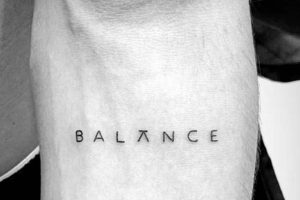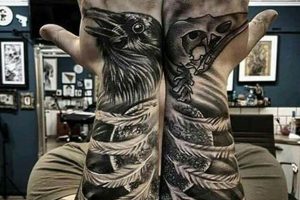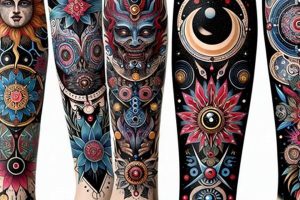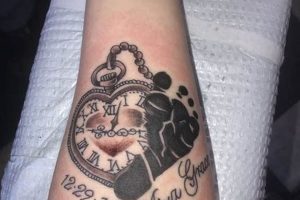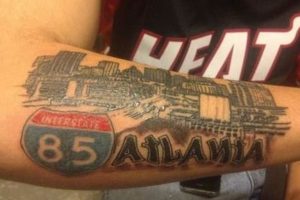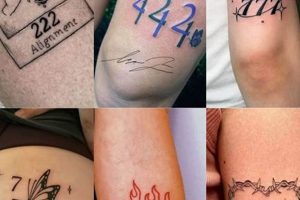



Tattoos designed as banners offer a versatile framework for showcasing text, quotes, names, or dates. These designs typically feature a ribbon-like shape, often unfurled or draped, with the chosen inscription prominently displayed. Examples include banners incorporating names of loved ones, motivational phrases, or significant dates rendered in various fonts and artistic styles.
The enduring popularity of banner tattoos stems from their adaptability and symbolic potential. The flowing form lends itself well to body contours, allowing placement on various areas such as arms, legs, chest, and back. Furthermore, the banner motif implies a declaration or proclamation, giving weight and significance to the incorporated message. Historically, banners signified heraldry, achievement, and affiliation, adding a layer of historical depth to this tattoo style.
Exploring the possibilities within this genre requires consideration of design elements like font selection, ribbon styling, accompanying imagery, and placement. Subsequent sections will delve into these aspects, providing a detailed guide for those considering a banner tattoo.
1. Placement

Placement is paramount in banner tattoo design, impacting both aesthetics and symbolic meaning. The flowing form of a banner necessitates careful consideration of body contours. A banner intended for the forearm, for example, might follow the natural curve of the muscle, creating a sense of movement and dynamism. Conversely, a banner across the chest might be rendered with a more straightened appearance, emphasizing breadth and stability. Placement also influences the visual balance of the tattoo, especially when incorporating accompanying elements. A banner draped around a larger design element, such as a portrait or animal, needs precise placement to frame the image effectively without obscuring crucial details.
Understanding the interplay between placement and the banner’s message further enriches the design. A memorial banner dedicated to a loved one might be placed close to the heart, signifying emotional closeness. Alternatively, a banner celebrating personal strength or resilience could be prominently displayed on the bicep, emphasizing power and determination. The choice of placement further enhances the overall message conveyed by the tattoo. For example, a banner encircling the wrist or ankle can evoke a bracelet or anklet, suggesting adornment and personal style.
Successfully integrating placement into banner tattoo design requires a holistic approach, considering the individual’s anatomy, the banner’s message, and any accompanying elements. Skilled tattoo artists excel in guiding these decisions, ensuring the banner complements the body’s natural lines and amplifies the intended symbolism. The ultimate result is a visually captivating and deeply personal piece of art.
2. Font selection

Font selection plays a crucial role in the overall impact of banner tattoos. The chosen typeface significantly influences legibility, style, and the conveyed message. Script fonts, with their flowing lines and elegant curves, often evoke a sense of classicism or romance, while bolder, blockier fonts can project strength and authority. Consider the intended message: a delicate script may suit a memorial banner, whereas a bold gothic font might better accompany a motivational phrase. Legibility remains paramount, particularly with smaller banners or intricate designs. Highly stylized or excessively ornate fonts can become illegible when scaled down, diminishing the tattoo’s impact and rendering the message unclear. For example, a long quote rendered in an elaborate script on a small banner wrapped around the wrist might become unreadable, losing its intended meaning.
The font choice should complement the overall design aesthetic. A banner featuring traditional imagery might benefit from a classic serif or blackletter font, enhancing the established theme. Conversely, a more modern or minimalist banner could utilize a clean sans-serif font, maintaining visual coherence. Font weight and spacing also warrant attention. Bold fonts create a strong visual presence, while lighter fonts offer subtlety. Adjusting letter spacing can enhance legibility and prevent crowding, especially within confined banner spaces. For instance, a banner depicting a name in a heavy metal font might overwhelm a smaller area like the inner wrist, whereas a lighter, spaced-out rendition of the same font could achieve a more balanced appearance.
Effective font selection elevates banner tattoo design from a simple inscription to a personalized artistic statement. Careful consideration of typeface, legibility, and overall design cohesion ensures the chosen font effectively communicates the intended message. Consulting with experienced tattoo artists proves invaluable in navigating font choices, as they possess the expertise to guide clients toward typefaces that complement their vision and body placement. The result is a visually striking and meaningful tattoo that stands the test of time, retaining its legibility and impact for years to come.
3. Ribbon embellishments

Ribbon embellishments significantly enhance the depth and visual interest of banner tattoos. These details transform a simple ribbon shape into a dynamic element, adding realism and conveying a sense of history or wear. Understanding the various embellishment options allows for greater creative control and personalization, resulting in a more compelling and meaningful tattoo.
- Tears and Rips
Introducing tears or rips to the banner creates a sense of age and resilience. These imperfections suggest the banner has weathered storms, symbolizing overcoming challenges or enduring hardship. The placement and severity of the tears contribute to the overall narrative. A single, clean tear might represent a specific event, while multiple, frayed rips could symbolize a period of struggle. In the context of memorial tattoos, tears can represent the pain of loss and the enduring strength of memory.
- Folds and Creases
Folds and creases introduce dimension and movement to the banner. These details mimic the natural draping of fabric, adding realism and visual texture. The direction and depth of folds can be strategically used to emphasize certain words or images within the banner. For example, deep creases might shadow a significant date, subtly highlighting its importance. The interplay of light and shadow created by folds adds a sense of dynamism, making the banner appear more lifelike.
- Stitching and Seams
Incorporating stitching or seams offers an opportunity to introduce subtle details and enhance the banner’s realism. Different stitching patterns, such as cross-stitching or saddle stitching, can create visual texture and allude to the banner’s construction. This detail can be particularly effective when combined with other embellishments, such as patches or repairs, furthering the narrative of a well-worn and cherished banner. For example, visible stitching might reinforce the edges of a torn banner, suggesting resilience and repair.
- Shadows and Highlights
The skillful use of shadows and highlights significantly impacts the banner’s three-dimensionality. Subtle shading creates depth and volume, making the ribbon appear to curve and drape realistically. Highlights add a sense of light and movement, catching the eye and enhancing the banner’s visual appeal. The strategic placement of shadows and highlights can further emphasize folds and creases, accentuating the banner’s texture and form. This interplay of light and shadow elevates the design, making the banner appear more tangible and integrated with the body.
The strategic incorporation of ribbon embellishments elevates banner tattoo designs, adding layers of meaning and visual appeal. By carefully considering the placement, style, and symbolism of these details, individuals can create personalized banners that reflect their unique stories and experiences. These embellishments transform the banner from a simple shape into a powerful symbol of resilience, memory, and personal expression.
4. Incorporated Imagery
Incorporated imagery significantly expands the narrative potential of banner tattoos. While text provides a direct message, accompanying visuals add layers of symbolism and personalization. Careful selection of imagery allows for deeper storytelling and creates a visually richer, more compelling design. The relationship between the chosen imagery and the banner’s text establishes a thematic connection, amplifying the intended message. For instance, a banner inscribed with a loved one’s name might incorporate their birth flower, adding a personal touch and symbolizing remembrance. Similarly, a banner bearing a motivational quote could be enhanced with imagery representing strength and resilience, such as a lion or a phoenix.
The choice of imagery also influences the overall aesthetic of the tattoo. Realistic portraits, intricate floral designs, or stylized geometric patterns each contribute a distinct visual style. Matching the imagery’s style to the banner’s font and overall composition ensures a cohesive and harmonious design. A banner featuring traditional Japanese imagery, for example, might pair well with a bold, angular font and vibrant color palette. Conversely, a banner with delicate botanical illustrations might benefit from a flowing script and softer color scheme. The scale and placement of imagery require careful consideration. Larger images can serve as focal points, while smaller elements provide subtle accents. The interplay between the banner and incorporated imagery should create a balanced composition, where each element complements the other without overwhelming the overall design.
Successful integration of imagery within banner tattoos requires a thoughtful approach, considering symbolism, aesthetics, and composition. Imagery should enhance, not detract from, the banner’s central message. Consultation with experienced tattoo artists proves invaluable in this process. Artists can guide image selection, placement, and stylistic choices, ensuring the final design is both visually striking and deeply meaningful. The resulting tattoo becomes a powerful expression of personal narrative, combining text and imagery to create a lasting piece of art.
5. Overall composition

Overall composition orchestrates the diverse elements of banner tattoo designs into a harmonious and impactful whole. It governs the interplay between the banner’s shape, the chosen font, incorporated imagery, and any embellishments. A well-composed banner tattoo guides the viewer’s eye through the design, creating a sense of balance and visual appeal. Compositional choices directly influence the tattoo’s legibility, aesthetic impact, and how effectively it communicates the intended message. For example, a banner encircling the bicep might feature a central inscription flanked by symmetrical imagery, creating a balanced and visually appealing composition. Conversely, a banner draped across the shoulder blade might utilize asymmetrical placement and varying element sizes to create a more dynamic and expressive design.
Several factors contribute to successful banner tattoo composition. Balance and visual weight distribution ensure no single element overpowers the others. A large, intricate image might be balanced by a simpler font and minimal embellishments. Strategic use of negative space prevents the design from appearing cluttered, allowing each element to breathe and contribute to the overall aesthetic. Flow and movement, achieved through the banner’s curves and the arrangement of accompanying elements, guide the viewer’s eye through the design. A flowing script paired with gracefully draped ribbon creates a sense of elegance and movement, while a bold, blocky font combined with sharp angles might convey strength and stability. Consider the intended message and how compositional choices can reinforce that message. A memorial banner might feature a subdued color palette and flowing lines to evoke a sense of peace and remembrance, whereas a celebratory banner could utilize vibrant colors and dynamic lines to convey joy and excitement. The relationship between these elements determines how effectively the design communicates.
Mastering overall composition elevates banner tattoos from simple inscriptions to sophisticated works of art. It ensures the design’s individual elements work together seamlessly, creating a unified and visually compelling piece. Skilled tattoo artists possess a deep understanding of compositional principles and can guide clients toward choices that best realize their vision. The result is a tattoo that not only looks aesthetically pleasing but also effectively conveys its intended message with clarity and impact.
Tips for Banner Tattoo Designs
Achieving a successful banner tattoo requires careful planning and consideration. These tips offer guidance for navigating the design process and ensuring a satisfying result.
Tip 1: Research and Gather Inspiration: Thorough research is crucial. Explore various fonts, imagery, and banner styles. Compile a collection of examples that resonate, noting specific elements that appeal. This process clarifies design preferences and facilitates communication with the tattoo artist.
Tip 2: Prioritize Legibility: Intricate fonts or excessive text on small banners can become illegible. Prioritize clarity, especially for names, dates, or significant quotes. Opt for fonts that remain readable even when scaled down.
Tip 3: Consider Placement Carefully: Banner placement significantly impacts the design’s visual flow and interaction with body contours. Discuss placement options with the artist to ensure the banner complements the chosen body part and enhances the intended message.
Tip 4: Harmonize Imagery and Text: Incorporated imagery should complement the banner’s message and overall aesthetic. Ensure a cohesive narrative between visual elements and the chosen text, creating a unified design.
Tip 5: Balance Detail and Simplicity: While embellishments enhance visual interest, excessive detail can overwhelm the design. Strive for a balance between intricate elements and negative space, allowing the eye to navigate the tattoo comfortably.
Tip 6: Consult with a Reputable Artist: Experienced tattoo artists provide invaluable expertise in design, placement, and technical execution. Seek out artists specializing in the desired style and openly communicate design preferences.
Tip 7: Plan for Long-Term Care: Tattoos require ongoing care to maintain vibrancy and prevent fading. Discuss aftercare procedures with the artist and commit to proper maintenance for a lasting, beautiful result.
By following these guidelines, individuals can navigate the design process with confidence, resulting in a banner tattoo that is both visually striking and deeply meaningful. These considerations ensure a tattoo that not only meets initial expectations but also stands the test of time, remaining a source of personal pride and expression for years to come.
The subsequent conclusion will summarize the key takeaways and offer final thoughts on the enduring appeal of banner tattoos.
Frequently Asked Questions
This section addresses common inquiries regarding banner tattoo designs, offering concise and informative responses.
Question 1: What is the average cost of a banner tattoo?
Pricing varies significantly depending on size, complexity, artist’s experience, and geographic location. Small, simple banners might start around $100, while larger, more intricate designs can cost several hundred dollars or more. Consulting with a chosen artist provides a personalized quote.
Question 2: How long does a banner tattoo typically take to complete?
Session duration depends on design complexity and size. Small, simple banners might require an hour or less, while larger pieces incorporating intricate details or extensive shading could necessitate multiple sessions spanning several hours each.
Question 3: What are the most suitable body placements for banner tattoos?
Banners adapt well to various body contours, including forearms, upper arms, chest, back, thighs, and calves. Placement choices should consider the banner’s size, shape, and intended message. A skilled artist can advise on optimal placement based on individual anatomy and design elements.
Question 4: Can banner tattoos be easily covered up or removed?
Covering a banner tattoo depends on its size, color saturation, and the desired cover-up design. Laser removal is an option but typically requires multiple sessions and may not completely erase the tattoo. Consulting with a tattoo artist specializing in cover-ups or a laser removal technician offers tailored advice based on the specific tattoo.
Question 5: What are the best aftercare practices for banner tattoos?
Proper aftercare is crucial for healing and color retention. Following the artist’s specific instructions is essential. General guidelines include keeping the tattoo clean, moisturized, and protected from sun exposure during the healing period, which typically lasts several weeks. Avoiding harsh soaps, excessive rubbing, and submerging the tattoo in water promotes optimal healing.
Question 6: How can one find a reputable tattoo artist for a banner design?
Researching local artists specializing in the preferred style is essential. Examining portfolios, reading reviews, and seeking recommendations help identify experienced and reputable artists. Consultations with prospective artists allow discussion of design ideas, assessment of their expertise, and establishment of a comfortable working relationship.
These responses address common queries regarding banner tattoo designs. Thorough research and consultation with experienced professionals are crucial for ensuring a successful and satisfying tattoo experience.
The following section offers a concluding perspective on the enduring popularity and artistic versatility of banner tattoos.
Conclusion
Banner tattoos offer a versatile canvas for self-expression, effectively combining textual and visual elements. Careful consideration of placement, font selection, ribbon embellishments, and incorporated imagery contributes to a cohesive and impactful design. Successful execution relies on understanding compositional principles and collaborating with skilled artists. Thorough research and attention to detail ensure a tattoo that resonates with personal meaning and stands the test of time.
The enduring appeal of banner tattoos lies in their adaptability and symbolic potential. They offer a powerful means of proclaiming personal values, commemorating significant events, or honoring cherished individuals. The ability to personalize banners with unique inscriptions and accompanying imagery allows for deeply individual expressions of identity and narrative. This enduring form of body art continues to evolve, offering a timeless yet adaptable medium for conveying personal stories and artistic visions.