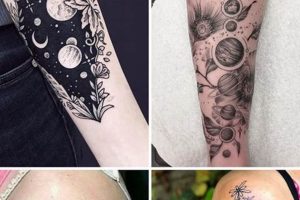



Exceptional and unconventional body art concepts, often featuring intricate designs, bold imagery, and personalized symbolism, represent a growing trend in self-expression. Examples include incorporating elements of fantasy, horror, or abstract art into unique and visually striking designs.
Permanent body modification offers individuals a powerful means of communicating personal narratives, beliefs, and aesthetic preferences. Historically, tattoos have served diverse cultural purposes, from signifying tribal affiliation to marking rites of passage. The increasing popularity of complex and artistic designs reflects a contemporary desire for individualized and meaningful forms of self-expression. This artistic medium allows for the exploration of profound themes, the commemoration of significant events, and the embodiment of individual identities.
Exploring specific design categories, such as realism, neo-traditional, or geometric patterns, can provide further insight into the diverse world of striking and memorable body art. Understanding the artistic process, including consultation with skilled artists and careful consideration of placement and aftercare, is essential for achieving a successful and meaningful result.
1. Concept Development

Concept development forms the crucial foundation of exceptional and unconventional tattoo designs. A well-defined concept ensures the final piece resonates with personal meaning and artistic vision. This process involves exploring themes, imagery, and symbolism relevant to the individual. A strong concept provides a roadmap for the artist, facilitating the creation of a cohesive and impactful design. For example, a concept centered around “overcoming adversity” might involve imagery of a phoenix rising from flames, interwoven with personal symbols representing specific challenges overcome.
Effective concept development requires introspection and research. Individuals seeking unique and meaningful tattoos benefit from exploring diverse sources of inspiration, including mythology, literature, nature, and personal experiences. This exploration allows for the development of a nuanced and layered concept, enriching the final tattoo’s narrative. Considering the interplay of different visual elements, such as contrasting imagery or complementary color palettes, enhances the concept’s depth and visual impact. A concept focusing on the duality of human nature, for instance, might incorporate contrasting light and dark imagery, symbolizing internal conflicts and resolutions.
Careful concept development ensures the resulting tattoo transcends mere aesthetics, becoming a powerful form of personal expression. This foundational stage allows for a collaborative dialogue between the individual and the tattoo artist, resulting in a design that authentically reflects individual narratives and aspirations. The process itself can be transformative, fostering self-discovery and a deeper understanding of personal values. By prioritizing concept development, individuals invest in creating a tattoo that remains meaningful and visually compelling throughout their lives.
2. Artistic Style

Artistic style is a critical component of impactful tattoo design, significantly influencing the final aesthetic and overall impression. Selecting an appropriate style ensures the tattoo effectively communicates the intended concept and resonates with the individual’s personal preferences. The chosen style dictates the visual language of the tattoo, impacting its composition, color palette, and level of detail. A clear understanding of various artistic styles empowers individuals to collaborate effectively with tattoo artists, resulting in a cohesive and visually striking piece.
- Realism
Realism focuses on depicting subjects with lifelike accuracy, emphasizing detail and precise rendering. Portraits, wildlife depictions, and intricate object representations often employ this style. In the context of exceptional tattoo designs, realism can create visually stunning and emotionally evocative pieces. A realistic depiction of a loved one’s face or a powerful image from nature can hold deep personal significance. However, realism demands a high level of skill from the artist and requires careful consideration of skin tones and textures for optimal results. The style’s reliance on fine details necessitates meticulous aftercare to maintain the tattoo’s integrity over time.
- Neo-Traditional
Neo-traditional draws inspiration from classic American traditional tattooing while incorporating modern artistic sensibilities. Bold lines, vibrant colors, and iconic imagery like roses, anchors, and eagles characterize this style. Neo-traditional offers a striking and timeless aesthetic, lending itself well to bold statements and symbolic representations. Within exceptional tattoo design, this style provides a framework for incorporating personalized elements and narratives into established visual tropes. The style’s adaptability allows for creative interpretations, such as incorporating unique color palettes or reimagining traditional motifs with contemporary twists.
- Geometric
Geometric tattooing utilizes precise lines and shapes to create intricate patterns and abstract designs. This style often draws inspiration from sacred geometry, mandalas, and mathematical concepts. Geometric designs can convey a sense of order, balance, and symmetry. In the realm of exceptional tattoos, this style offers a platform for exploring complex visual concepts and creating mesmerizing optical illusions. The minimalist nature of geometric designs can be particularly impactful, offering a striking contrast to more elaborate styles. Careful consideration of line weight and placement is crucial for achieving a harmonious and visually balanced geometric tattoo.
- Watercolor
Watercolor tattoos mimic the fluidity and vibrancy of watercolor paintings, creating a dreamlike and ethereal aesthetic. This style often features soft color gradients, gentle brushstrokes, and abstract compositions. Watercolor tattoos offer a unique and expressive approach to body art, allowing for artistic interpretations of various subjects, from floral motifs to abstract landscapes. Within the context of exceptional tattoo design, watercolor provides an avenue for capturing emotions and creating visually captivating pieces with a sense of movement and depth. However, the delicate nature of this style necessitates careful consideration of placement and sun exposure to maintain color vibrancy over time.
The interplay between artistic style and concept allows for the creation of truly exceptional tattoos. By carefully considering the stylistic approach that best complements the intended message and desired aesthetic, individuals can collaborate with skilled tattoo artists to bring their visions to life. The chosen style acts as a powerful tool for amplifying the tattoo’s meaning and ensuring a lasting piece of personal art. For instance, a memorial tattoo might utilize realism to capture a loved one’s likeness, while a tattoo representing personal growth might employ watercolor to symbolize fluidity and transformation. The careful selection of artistic style is integral to achieving a wicked tattoo that resonates with both the individual and the observer.
3. Placement

Strategic placement significantly amplifies the impact of exceptional tattoo designs. Consideration of body contours, visibility preferences, and the design’s composition enhances the tattoo’s overall aesthetic and narrative. Thoughtful placement ensures the design harmonizes with the body’s natural lines, maximizing its visual appeal and symbolic significance. This crucial element elevates a striking design into a true work of art, seamlessly integrating with the individual’s form.
- Body Contours
Body contours play a crucial role in how a tattoo design flows and interacts with the body’s natural shape. A skilled artist utilizes the body’s curves and musculature to enhance the design’s visual impact. For example, a serpentine design might gracefully wrap around the arm or leg, accentuating its form. Ignoring body contours can result in a distorted or disjointed appearance. A large, intricate design placed on a small, uneven area might appear cramped and lose its visual coherence. Careful consideration of body contours ensures the tattoo complements the individual’s physique, creating a harmonious and aesthetically pleasing result.
- Visibility
Visibility preferences dictate whether a tattoo is intended for personal reflection or public display. Easily concealed placements offer privacy and discretion, allowing individuals to control when and where their tattoo is visible. Conversely, prominent placements, such as the hands or neck, maximize visibility and serve as bold statements of self-expression. Choosing the right placement based on visibility preferences ensures the tattoo aligns with the individual’s lifestyle and comfort level. A discreet tattoo might hold deep personal meaning without the need for constant public display, while a highly visible tattoo might serve as a conversation starter and a form of personal branding.
- Composition and Flow
The tattoo design’s composition and flow interact directly with its placement on the body. A well-placed tattoo complements the design’s inherent movement and visual balance. For instance, a design with upward movement might be placed on the arm or leg to accentuate its verticality. Disregarding composition and flow can result in a visually jarring or unbalanced appearance. A symmetrical design placed off-center might appear awkward and disrupt the intended aesthetic. Careful consideration of composition and flow ensures the tattoo integrates seamlessly with the body, enhancing its visual impact and narrative.
- Size and Scale
Size and scale significantly impact a tattoo’s visibility and overall effect. Larger designs offer greater detail and visual complexity, while smaller designs provide subtlety and discretion. The chosen size should complement the design’s complexity and the available canvas on the body. A highly detailed design might require a larger area to avoid appearing cramped or losing intricate elements. Conversely, a minimalist design might be more impactful at a smaller scale, preserving its clean lines and simplicity. Balancing size and scale ensures the tattoo remains proportionate and visually appealing, maximizing its impact regardless of its dimensions.
Strategic placement elevates exceptional tattoo designs, transforming them into powerful statements of personal expression. By carefully considering body contours, visibility preferences, composition, and scale, individuals ensure their chosen design integrates seamlessly with their form, creating a harmonious and impactful piece of art. These considerations, combined with a strong concept and skilled artistry, result in a tattoo that resonates with personal meaning and aesthetic excellence. The interplay of these elements ensures the tattoo remains a compelling and visually stunning representation of individual identity.
4. Symbolism

Symbolism imbues exceptional tattoo designs with profound meaning, transforming them from mere aesthetic adornments into powerful narratives of personal identity. The deliberate incorporation of symbolic elements elevates a tattoo, connecting it to deeper layers of individual experience, cultural heritage, or shared human archetypes. This connection transforms the tattoo into a visual language, communicating complex ideas, beliefs, and aspirations through carefully chosen imagery.
The potency of symbolism lies in its ability to evoke emotions and convey multifaceted concepts with visual brevity. A single image, such as a raven, can simultaneously represent wisdom, mystery, and transformation, depending on the individual’s interpretation and cultural context. Similarly, geometric patterns can symbolize order, balance, and interconnectedness, while floral motifs can evoke growth, beauty, and resilience. These symbolic layers enrich the tattoo’s narrative, inviting contemplation and personal reflection. For example, a tattoo featuring a compass and a map might symbolize a journey of self-discovery or a commitment to lifelong exploration. A skull intertwined with blooming flowers could represent the cyclical nature of life and death, celebrating both mortality and renewal. These symbolic choices transform the tattoo into a personalized emblem of individual values and experiences.
Understanding the significance of symbolism empowers individuals to create tattoos that resonate deeply with personal meaning. This understanding facilitates a collaborative process with the tattoo artist, ensuring the chosen imagery accurately reflects the intended narrative. Effective use of symbolism transforms exceptional tattoo designs into powerful expressions of self, connecting the individual to a broader tapestry of human experience and cultural heritage. The result is a tattoo that transcends mere aesthetics, becoming a permanent reminder of personal values, aspirations, and the ongoing journey of self-discovery. The challenges lie in selecting symbols that remain personally relevant and culturally sensitive over time, as meanings can evolve and interpretations can shift. Therefore, careful consideration and research are essential for ensuring the chosen symbolism aligns with the individual’s long-term vision and values.
5. Artist Selection

Artist selection is paramount in realizing exceptional and unconventional tattoo designs. A skilled artist translates concepts into impactful visual narratives, ensuring the final piece aligns with the individual’s vision. Technical expertise, artistic style, and collaborative capacity distinguish a competent artist. Technical proficiency ensures clean lines, smooth shading, and vibrant color saturation, essential for a high-quality, long-lasting tattoo. An artist’s distinct style should complement the desired aesthetic, whether it be realism, neo-traditional, or another genre. Effective communication and a collaborative approach enable the artist to interpret the individual’s concept accurately, incorporating personal nuances and symbolic elements. For instance, an artist specializing in biomechanical designs might possess the technical skills and stylistic sensibilities to execute a complex, three-dimensional tattoo featuring intricate gears and pistons interwoven with organic elements. Conversely, an artist specializing in delicate watercolor tattoos may not be the ideal choice for someone seeking a bold, traditional Japanese-style piece.
Choosing the right artist significantly impacts the tattoo’s overall quality and longevity. A skilled artist understands skin as a canvas, adapting designs to body contours and considering factors such as skin tone and texture. This expertise ensures the tattoo ages gracefully and maintains its visual integrity over time. Thorough research, portfolio reviews, and consultations are essential for informed artist selection. Examining an artist’s previous work reveals their strengths, stylistic preferences, and technical capabilities. Consultations allow for open communication, ensuring a shared understanding of the desired concept and the artist’s ability to execute it effectively. For example, an individual seeking a realistic portrait tattoo should prioritize artists with a demonstrable expertise in portraiture, evident in their portfolio and client testimonials. Similarly, someone envisioning a large-scale, intricate back piece should select an artist experienced in managing such complex projects, ensuring cohesive composition and consistent execution across multiple sessions.
Successful artist selection ensures the realization of exceptional tattoo designs. This crucial step transforms a concept into a tangible piece of art that resonates with personal meaning and aesthetic excellence. Diligent research, careful consideration of artistic styles, and open communication contribute to a successful artist-client partnership, resulting in a tattoo that embodies individual identity and stands the test of time. The challenge lies in navigating the vast landscape of tattoo artists and identifying the individual whose skills and style best align with the specific project. Overcoming this challenge requires proactive engagement, leveraging online resources, seeking recommendations, and prioritizing quality over convenience. The reward, however, is a unique and impactful piece of art that reflects the individual’s vision and the artist’s mastery of their craft.
Tips for Exceptional Tattoo Designs
Achieving a truly exceptional tattoo requires careful planning and consideration. These tips provide guidance for navigating the process, ensuring a result that resonates with personal meaning and aesthetic excellence.
Tip 1: Invest Time in Concept Development:
Thorough concept development is crucial. Explore diverse sources of inspiration, including mythology, literature, and personal experiences. A well-defined concept ensures the final piece reflects individual values and aspirations.
Tip 2: Research Artistic Styles:
Understanding various artistic styles, such as realism, neo-traditional, and watercolor, empowers informed decisions. Selecting a style that complements the concept enhances the tattoo’s visual impact and narrative.
Tip 3: Prioritize Placement:
Consider body contours, visibility preferences, and the design’s composition when choosing placement. Strategic placement ensures the tattoo harmonizes with the body’s natural lines and maximizes its visual appeal.
Tip 4: Embrace Symbolism:
Incorporating meaningful symbols adds depth and complexity. Research symbolic imagery to ensure chosen elements align with intended meanings and personal narratives.
Tip 5: Choose a Skilled Artist:
Thorough research and portfolio reviews are essential for selecting a skilled artist. Technical expertise, artistic style, and a collaborative approach are crucial for realizing a high-quality tattoo.
Tip 6: Communicate Effectively:
Open communication with the chosen artist ensures a shared understanding of the desired concept. Clear communication facilitates the accurate translation of personal vision into a tangible piece of art.
Tip 7: Plan for Aftercare:
Proper aftercare is crucial for preserving the tattoo’s vibrancy and longevity. Follow the artist’s instructions diligently to ensure optimal healing and prevent complications.
By following these tips, individuals can navigate the process of acquiring exceptional body art with confidence and foresight. These considerations contribute to a result that embodies personal meaning and artistic excellence, creating a lasting piece of self-expression.
The journey towards an exceptional tattoo involves careful planning, thoughtful consideration, and a collaborative partnership with a skilled artist. These combined elements ensure a result that transcends mere aesthetics, becoming a powerful statement of personal identity.
Frequently Asked Questions about Exceptional Tattoo Concepts
Addressing common queries regarding the process of acquiring exceptional and unconventional tattoos provides clarity and facilitates informed decision-making.
Question 1: How does one translate abstract ideas into concrete tattoo designs?
Collaborating with a skilled artist bridges the gap between abstract concepts and tangible designs. Visual brainstorming, mood boards, and reference imagery assist in articulating nuanced ideas and translating them into visual language. Open communication with the artist ensures accurate interpretation of the concept’s essence.
Question 2: What factors influence the longevity of a tattoo’s vibrancy?
Several factors impact a tattoo’s longevity, including ink quality, UV exposure, and skin type. High-quality inks are less prone to fading. Protecting tattoos from sun exposure with sunscreen is crucial. Individual skin types react differently to ink; certain skin tones may retain vibrancy longer than others. Proper aftercare, including moisturizing and avoiding harsh chemicals, also plays a significant role in preserving color saturation.
Question 3: How does one determine the appropriate size and placement for a complex design?
Design complexity, body contours, and visibility preferences influence size and placement decisions. Intricate designs often require larger canvases to avoid compromising detail. Body contours should complement the design’s flow and composition. Visibility preferences dictate whether a tattoo is intended for personal reflection or public display.
Question 4: What are the potential risks associated with unconventional tattooing techniques?
Unconventional techniques may present unique challenges. Certain ink colors pose higher allergy risks. Techniques involving extensive skin manipulation require meticulous aftercare to prevent complications. Thorough research and consultation with experienced artists mitigate potential risks.
Question 5: How can cultural sensitivity be maintained when incorporating symbolic elements?
Thorough research and respectful consideration of cultural contexts are essential when incorporating symbolic elements. Consulting with cultural experts ensures appropriate representation and avoids misappropriation of culturally significant imagery.
Question 6: What steps should one take if dissatisfied with a completed tattoo?
Open communication with the artist is the first step. Minor imperfections might be addressed through touch-ups. In cases of significant dissatisfaction, laser removal or cover-up options can be explored. Seeking a second opinion from another reputable artist can provide valuable insights and alternative solutions.
Careful consideration of these frequently asked questions empowers individuals to approach the process of acquiring exceptional tattoos with informed awareness, maximizing the likelihood of achieving a meaningful and aesthetically satisfying result.
Further exploration of specific design elements, such as color palettes and imagery, enhances understanding of the diverse possibilities within the realm of exceptional tattoo art.
Wicked Tattoo Ideas
Exceptional and unconventional tattoo concepts represent a powerful form of self-expression, demanding careful consideration of concept development, artistic style, placement, symbolism, and artist selection. These elements converge to create impactful and meaningful designs that resonate with individual narratives and aesthetic preferences. Strategic placement enhances the visual impact, while symbolic elements imbue the tattoo with deeper meaning. Skilled artistry ensures the seamless translation of concepts into tangible works of art.
The pursuit of exceptional tattoo designs necessitates informed decision-making and a collaborative approach. Thorough research, open communication, and a commitment to artistic excellence empower individuals to acquire tattoos that embody personal values and stand the test of time. The transformative potential of body art lies in its ability to capture individual narratives, aspirations, and the ongoing journey of self-discovery. Exceptional tattoos transcend mere aesthetics, becoming powerful symbols of personal identity and enduring expressions of the human spirit.