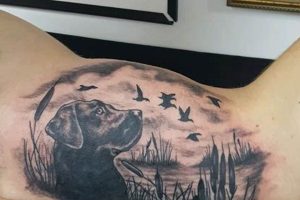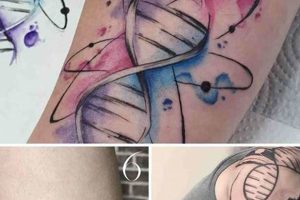



The inner bicep offers a relatively flat and sizable canvas for body art, making it a popular location for various tattoo designs. The area’s natural contours can be incorporated into the artwork, allowing for dynamic and visually appealing compositions. Examples include script, mandalas, floral designs, and portraits, customized to fit the individual’s anatomy and preferences.
This placement provides a balance of visibility and discretion. While easily displayed with a short-sleeved shirt, the artwork can be concealed when desired. Historically, bicep tattoos have held cultural significance in various societies, often symbolizing strength, protection, or spiritual beliefs. This area remains relevant in contemporary tattoo culture due to its versatility and suitability for both large, intricate designs and smaller, more minimalist pieces. The relative lack of nerve endings in this location can also contribute to a less painful tattooing experience compared to other body parts.
Factors influencing design choices for this placement include pain tolerance, skin tone, overall aesthetic, and practicality. Further exploration will cover design considerations, aftercare, and the importance of selecting a reputable artist.
1. Placement

Optimal placement is paramount for inside bicep tattoos, maximizing aesthetic impact and ensuring the design harmonizes with the body’s natural contours. Careful consideration of the musculature and its movement influences how the tattoo appears both flexed and relaxed.
- Orientation and Flow
Design orientation must complement the bicep’s curve. Vertical orientations, following the muscle’s length, are common for elongated designs like script or floral patterns. Horizontal orientations can emphasize the bicep’s width, suitable for band-like designs or landscapes. Circular or mandala designs can effectively utilize the central area. Understanding muscle movement ensures the design flows naturally and doesn’t appear distorted when the arm is bent.
- Upper vs. Lower Bicep
The upper bicep offers greater visibility, while the lower bicep provides more discretion. Upper bicep placements are often chosen for larger, statement pieces. Lower bicep placements are better suited for smaller, more intimate designs. Consideration of clothing choices and desired level of visibility informs this decision.
- Incorporating the Bicep Crease
The crease of the elbow presents a unique design challenge and opportunity. Designs that flow across the crease must account for skin folding and potential distortion. Skilled artists can leverage the crease to create dynamic, three-dimensional effects, integrating it seamlessly into the overall composition. However, this placement requires meticulous planning and execution.
- Relationship to Existing Tattoos
If other tattoos are present on the arm, the placement of an inside bicep tattoo should create a balanced and cohesive overall aesthetic. The new design can either complement existing artwork thematically or stylistically, or it can stand alone as a separate piece while still maintaining visual harmony.
Strategic placement enhances the aesthetic appeal and longevity of inside bicep tattoos. A well-placed design becomes an integral part of the body’s canvas, showcasing artistry and personal expression effectively.
2. Size and Scale

Size and scale are critical factors in inside bicep tattoo design. The available canvas, while relatively large compared to other locations like the wrist or ankle, necessitates careful planning to ensure the design’s proportions harmonize with the individual’s physique. A large, intricate design on a smaller bicep can appear cluttered and lose detail, while a small, minimalist design on a larger bicep may appear insignificant. Effective use of size and scale creates a balanced and visually appealing composition.
Consider a detailed portrait. Executed on a larger scale, the artist can capture intricate facial features and expressions. Reducing the scale significantly would compromise the detail and impact of the portrait. Conversely, a small, symbolic design, like a single flower or geometric shape, can be highly effective on a smaller bicep, maintaining clarity and visual impact. Scaling this design up drastically might overwhelm the area and appear disproportionate. Therefore, understanding the interplay between size and scale is essential for successful inside bicep tattoo design. This consideration also affects the time and cost associated with the tattoo, as larger, more complex designs require more sessions and artistic expertise.
Appropriate scaling ensures design clarity and visual impact. Designs should be proportionate to the individual’s anatomy and the available canvas. This understanding impacts not only the aesthetic result but also the practical aspects of tattooing, such as time commitment and cost. Achieving visual harmony between the tattoo and the body is paramount for a successful and aesthetically pleasing outcome. Careful consideration of size and scale contributes significantly to this goal.
3. Design Style
Design style is a crucial element in inside bicep tattooing, impacting the tattoo’s overall aesthetic and personal significance. A thoughtfully chosen style harmonizes with the wearer’s individuality and the bicep’s natural contours. Understanding various styles and their suitability for this location ensures a cohesive and impactful result.
- Realism
Realism focuses on depicting subjects with lifelike accuracy, often involving intricate detail and shading. Portraits, animals, and natural scenes are common subjects. While visually striking, realism demands technical expertise and may require larger canvases to achieve the desired level of detail. The inner bicep, offering a relatively flat and sizable area, can accommodate realistic designs, showcasing the artist’s skill and the wearer’s appreciation for detailed artistry.
- Traditional
Traditional tattooing, with its bold lines, vibrant colors, and iconic imagery (e.g., anchors, roses, skulls), offers a timeless aesthetic. This style lends itself well to the inner bicep’s curvature, creating visually striking pieces. The bold lines and solid colors age well, maintaining their vibrancy over time. Traditional designs often carry symbolic meaning, adding a layer of personal significance to the tattoo.
- Geometric
Geometric tattoos emphasize precise lines, shapes, and patterns, often incorporating mandalas, sacred geometry, or abstract designs. These designs can be adapted to the inner bicep’s shape, creating visually dynamic compositions. Geometric styles range from minimalist, single-line designs to complex, interwoven patterns. The precision required for this style necessitates a skilled artist with experience in geometric tattooing.
- Watercolor
Watercolor tattoos mimic the fluidity and vibrancy of watercolor paintings, creating a soft, dreamlike aesthetic. Floral designs, abstract shapes, and animal portraits are popular choices. This style, while visually appealing, requires careful consideration of color saturation and placement due to potential fading over time. The inner bicep, offering some protection from direct sunlight, can be a suitable location for watercolor tattoos, provided the artist has expertise in this technique.
Design style selection is integral to a successful inside bicep tattoo. By considering factors such as personal preference, the design’s complexity, and the artist’s expertise, individuals can ensure a meaningful and aesthetically pleasing result that complements their individuality and the chosen location’s unique characteristics. The chosen style contributes significantly to the tattoo’s overall impact and longevity.
4. Color Palette
Color palette selection significantly influences the final aesthetic and longevity of inside bicep tattoos. Careful consideration of skin tone, design style, and desired visual impact is crucial. A well-chosen palette enhances the design’s vibrancy and ensures its enduring appeal. Understanding the interplay between color, skin, and design contributes to a successful and aesthetically pleasing tattoo.
- Skin Tone Considerations
Skin tone acts as the canvas for the tattoo, influencing how colors appear. Darker skin tones often showcase richer, deeper colors effectively, while lighter skin tones provide better contrast for lighter, brighter colors. Certain color families may complement specific skin tones more effectively. Consulting with an experienced tattoo artist is crucial for selecting a color palette that harmonizes with individual skin tones, maximizing visual impact and longevity.
- Color Symbolism and Meaning
Colors carry symbolic meaning across cultures and personal beliefs. Red can represent passion or anger, blue can symbolize tranquility or sadness, and green can evoke nature or growth. Integrating color symbolism into the design adds depth and personal significance. Understanding these associations allows individuals to choose colors that resonate with their intended message or emotional expression.
- Color Theory and Application
Applying color theory principles, such as complementary or analogous color schemes, creates visual harmony and balance within the tattoo. Complementary colors, positioned opposite each other on the color wheel (e.g., red and green), create contrast and vibrancy. Analogous colors, located adjacent to each other (e.g., blue, green, and yellow), create a smoother, more harmonious effect. Understanding these principles allows for strategic color choices that enhance the overall aesthetic and visual impact of the design.
- Color Saturation and Longevity
Color saturation, the intensity and purity of a color, influences the tattoo’s visual impact and how it ages over time. Highly saturated colors appear more vibrant initially but may fade faster than less saturated colors. Placement on the body also impacts color longevity, as areas with more sun exposure tend to experience faster fading. The inner bicep, offering some protection from direct sunlight, can contribute to longer-lasting color vibrancy.
A well-chosen color palette elevates inside bicep tattoos from simple body art to powerful expressions of personal style and meaning. By considering skin tone, color symbolism, color theory, and longevity factors, individuals can collaborate with skilled artists to create visually stunning and enduring pieces that resonate with their individuality and aesthetic vision. The interplay of these elements results in a tattoo that not only looks beautiful but also holds personal significance and stands the test of time.
5. Pain Management
Pain management is an integral aspect of the inside bicep tattoo experience. While generally considered a less painful location compared to areas with thinner skin or closer proximity to bone, individual pain thresholds vary. Effective pain management strategies contribute significantly to a more comfortable and positive tattooing process, allowing clients to focus on the artistic process rather than discomfort. Understanding and implementing these strategies is crucial for both the client and the artist.
- Pre-Tattoo Preparation
Adequate rest, hydration, and nourishment prior to the appointment are essential. Avoiding alcohol and caffeine can minimize bleeding and sensitivity. Mental preparation, such as meditation or deep breathing exercises, can also help manage anxiety and discomfort during the procedure. Proper preparation sets a positive foundation for the entire experience.
- During the Tattoo Session
Deep, controlled breathing techniques can help manage pain spikes during the tattooing process. Focusing on the breath helps distract from the sensation and promotes relaxation. Communicating openly with the artist about pain levels allows for breaks when needed. Maintaining open communication ensures a collaborative and supportive environment.
- Topical Anesthetics
Topical anesthetic creams, applied prior to or during the session (with artist approval), can numb the area and reduce pain sensation. However, some artists advise against their use as they can affect the skin’s texture and the tattooing process. Discussing the use of numbing creams with the artist beforehand is essential to determine their suitability and potential impact on the final result.
- Post-Tattoo Care
Proper aftercare practices, including keeping the tattoo clean and moisturized, contribute to healing and minimize discomfort. Following the artist’s aftercare instructions diligently is crucial for preventing infection and ensuring optimal healing. Effective aftercare is essential for long-term tattoo health and appearance.
Effective pain management contributes significantly to a positive and comfortable inside bicep tattoo experience. By implementing pre-tattoo preparation strategies, employing coping mechanisms during the session, discussing topical anesthetic options with the artist, and adhering to post-tattoo care instructions, individuals can minimize discomfort and focus on the artistic process, resulting in a more enjoyable and successful outcome. A well-managed pain experience allows for greater appreciation of the artistry and the personal significance of the tattoo.
Inside Bicep Tattoo Tips
Successfully navigating the process of acquiring an inside bicep tattoo requires careful planning and consideration. These tips provide valuable insights for achieving a satisfying and aesthetically pleasing outcome.
Tip 1: Research and Select a Reputable Artist: Thorough research is paramount. A skilled artist’s portfolio should demonstrate proficiency in the desired style. Client reviews and testimonials offer valuable insights into the artist’s professionalism and hygiene practices. A reputable artist prioritizes client safety and satisfaction.
Tip 2: Design Collaboration and Customization: Open communication with the chosen artist is crucial. Clearly conveying design preferences, including style, size, and color palette, ensures the final design aligns with individual expectations. A collaborative approach fosters a shared understanding between artist and client.
Tip 3: Anatomical Considerations: The inner bicep’s anatomy, including muscle contours and skin elasticity, influences design choices. Designs should complement the body’s natural curves and allow for comfortable movement. Understanding anatomical factors contributes to a harmonious and aesthetically pleasing result.
Tip 4: Long-Term Vision and Placement: Tattoo placement should consider both current aesthetics and potential changes in body composition over time. Factors such as muscle growth or weight fluctuations can impact a tattoo’s appearance. A long-term perspective ensures the tattoo remains aesthetically pleasing throughout life’s changes.
Tip 5: Pain Tolerance and Preparation: While generally considered less painful than other locations, individual pain thresholds vary. Mental and physical preparation, including adequate rest and hydration, can significantly improve comfort during the tattooing process. Understanding potential discomfort allows for realistic expectations.
Tip 6: Aftercare Commitment: Proper aftercare is essential for optimal healing and long-term tattoo vibrancy. Following the artist’s aftercare instructions diligently, including cleaning and moisturizing, minimizes the risk of infection and ensures the tattoo heals properly. Commitment to aftercare preserves the tattoo’s integrity.
Tip 7: Budgetary Considerations: High-quality tattoos represent an investment. Tattoo costs vary based on size, complexity, and the artist’s experience. Establishing a realistic budget beforehand facilitates informed decision-making and avoids financial strain. Budgeting ensures a positive experience without compromising quality.
Careful consideration of these tips contributes significantly to a positive and fulfilling inside bicep tattoo experience. Thorough planning and informed decision-making empower individuals to acquire body art they will cherish for years to come. A thoughtful approach results in a tattoo that reflects personal style, enhances individuality, and stands the test of time.
The culmination of these considerations paves the way for a meaningful and enduring piece of body art. The next section will conclude this exploration of inside bicep tattoo ideas.
Frequently Asked Questions
This section addresses common inquiries regarding inside bicep tattoos, providing factual information to facilitate informed decision-making.
Question 1: How painful are inside bicep tattoos?
Pain levels vary based on individual pain thresholds. The inner bicep, however, is generally considered a less painful location compared to areas with thinner skin or closer proximity to bone.
Question 2: How long do inside bicep tattoos take to heal?
Healing typically takes 2-4 weeks, depending on individual healing rates and adherence to aftercare instructions.
Question 3: What design styles work well on the inside bicep?
Various styles, including realism, traditional, geometric, and watercolor, can be adapted to the inner bicep. Design choice depends on personal preference and the artist’s expertise.
Question 4: How much do inside bicep tattoos cost?
Cost depends on factors such as size, complexity, and the artist’s experience. Consulting with artists provides specific pricing information.
Question 5: How do I find a reputable tattoo artist for my inside bicep tattoo?
Thorough research, including portfolio reviews, client testimonials, and hygiene practice verification, helps identify reputable artists specializing in the desired style.
Question 6: Can I exercise after getting an inside bicep tattoo?
Strenuous exercise involving the bicep should be avoided for at least a week after tattooing. Following aftercare instructions promotes proper healing and minimizes complications.
Careful consideration of these frequently asked questions contributes to a more informed and successful inside bicep tattoo experience.
The following section offers a conclusion to this comprehensive exploration of inside bicep tattoo ideas.
Inside Bicep Tattoo Ideas
Exploration of this subject has encompassed crucial aspects of design, placement, style, color palettes, pain management, and artist selection. Emphasis has been placed on the importance of informed decision-making, considering individual anatomy, personal aesthetics, and the collaborative relationship between artist and client. Placement considerations maximize visual impact while ensuring design integrity. Style selection reflects individual expression and complements the inner bicep’s natural canvas. Color palettes enhance design longevity and vibrancy. Pain management strategies contribute to a positive tattooing experience. Artist selection, based on thorough research and portfolio review, ensures professional execution and client satisfaction. Understanding these elements allows for thoughtful planning and successful execution of meaningful body art.
The inner bicep, offering a versatile canvas for self-expression, continues to hold relevance within contemporary tattoo culture. A well-executed tattoo in this location becomes an enduring piece of personal art, reflecting individuality and aesthetic preferences. Careful consideration of the factors discussed empowers individuals to make informed choices, resulting in a tattoo that resonates with personal significance and stands the test of time. This enduring power of body art underscores the importance of informed decision-making, transforming a simple tattoo into a powerful statement of self.