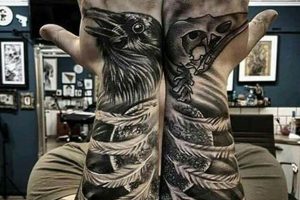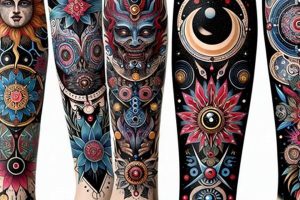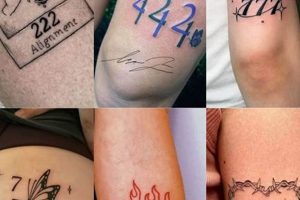



Tattoos symbolizing equilibrium often incorporate visual elements representing duality, symmetry, or opposing forces. These designs can range from simple geometric patterns and scales to complex depictions of natural elements like the sun and moon, yin and yang, or tree of life motifs. They can also feature animals, spiritual figures, or abstract designs that evoke a sense of stability and harmony.
Such body art can serve as a personal reminder of the continuous pursuit of balance in life’s various aspectsphysical, emotional, spiritual, or intellectual. Choosing a design with deep personal meaning can empower individuals and offer a visual representation of their values and aspirations. Historically, many cultures have embraced symbolism representing balance, integrating these concepts into art, architecture, and personal adornment for centuries. This enduring appeal highlights the fundamental human desire for stability and harmony.
Exploring specific design elements, placement considerations, and the artistic styles commonly used to express equilibrium through tattoos will provide a deeper understanding of this rich and evocative form of self-expression.
1. Symbolism

Symbolism forms the core of tattoos representing balance, imbuing the design with deeper meaning and personal significance. Careful selection of symbolic elements allows for a visual representation of abstract concepts related to equilibrium, harmony, and the interplay of opposing forces. This imbues the tattoo with a narrative that resonates with the individual’s personal journey and values.
- Duality and Opposites
Representing balance through contrasting elements is a common approach. Yin and yang, sun and moon, light and dark are classic examples that visually depict the interconnectedness of opposing forces. These symbols often represent the continuous push and pull of life’s experiences and the importance of finding equilibrium within them. A tattoo featuring intertwined serpents, for example, could symbolize the duality of creation and destruction, a concept present in numerous cultures.
- Geometric Patterns
Geometric shapes and patterns, often associated with mathematical precision and order, can effectively represent balance and stability. Mandala designs, for instance, symbolize wholeness and harmony, while symmetrical patterns evoke a sense of visual equilibrium. Incorporating geometric elements allows for intricate and visually striking designs that reflect a desire for order and structure.
- Natural Elements
Nature provides a rich source of symbolic imagery related to balance. Trees, often rooted deeply yet reaching towards the sky, can represent groundedness and aspiration. Feathers, delicately balanced, can symbolize precariousness and resilience. Water, adapting to its container, can evoke adaptability and acceptance. Such imagery connects the individual to the natural world and its inherent equilibrium.
- Spiritual and Cultural Symbols
Many cultures possess unique symbols representing balance and harmony. These symbols, often rooted in spiritual or philosophical traditions, can add a layer of cultural significance to the tattoo. For example, the unalome symbol in Buddhist tradition signifies the path to enlightenment, representing the journey towards balance and inner peace. Incorporating such culturally relevant symbols can deepen the personal meaning of the tattoo.
Ultimately, the chosen symbolism within a balance tattoo reflects the individual’s unique understanding and pursuit of equilibrium. The interplay of these symbolic elements creates a powerful visual narrative that serves as a constant reminder of the desired state of balance, contributing to the tattoo’s enduring personal significance.
2. Placement

Placement plays a crucial role in the overall impact and meaning of balance tattoos. The chosen location on the body influences not only the visibility of the design but also how it interacts with the body’s natural contours, enhancing the visual representation of equilibrium. Consideration of placement should take into account the size and complexity of the design, as well as the individual’s personal preferences regarding visibility and aesthetics. A small, symmetrical design might be subtly placed on the wrist or ankle, serving as a personal reminder of balance, while a larger, more intricate design might be positioned across the back or chest, creating a visually striking statement.
The relationship between placement and the concept of balance can be further emphasized through specific locations on the body. The spine, representing the body’s central axis, is a popular choice for designs symbolizing stability and groundedness. Shoulder blades offer a balanced canvas for symmetrical designs, enhancing the visual representation of equilibrium. Rib cages, expanding and contracting with breath, can be a poignant location for tattoos representing the ebb and flow of life’s opposing forces. Choosing a placement that aligns with the specific symbolism of the tattoo can amplify its meaning and create a deeper connection with the individual’s understanding of balance.
Ultimately, careful consideration of placement contributes significantly to the effectiveness of balance tattoos. The chosen location should complement the design’s symbolism and enhance its visual impact, creating a harmonious integration of art and body. This strategic approach ensures that the tattoo serves as a powerful and enduring reminder of the individual’s pursuit of equilibrium.
3. Design

Design elements are fundamental to effectively conveying the concept of balance within a tattoo. Visual components, carefully chosen and arranged, communicate the desired message of equilibrium and harmony. The design acts as the visual language, translating abstract concepts into a tangible form that resonates with the individual and conveys meaning to others. Specific design choices contribute significantly to the tattoo’s overall impact and personal significance.
- Symmetry and Asymmetry
Symmetry, with its mirrored imagery, often represents stability and order, serving as a classic representation of balance. Asymmetrical designs, while seemingly unbalanced, can achieve equilibrium through careful distribution of visual weight and contrasting elements. A scale, for example, can be depicted symmetrically to represent equal balance or asymmetrically to symbolize the dynamic adjustments required to maintain equilibrium in life.
- Line and Shape
The interplay of lines and shapes contributes significantly to the visual representation of balance. Straight lines can evoke stability and structure, while curved lines suggest fluidity and movement. Geometric shapes, such as circles and squares, can represent wholeness and order, while organic shapes, inspired by nature, can convey growth and adaptation. A design featuring a straight line intersecting a circle, for instance, could symbolize the intersection of stability and change.
- Positive and Negative Space
Effective use of positive and negative space is crucial for creating visually balanced designs. The interplay between filled areas (positive space) and empty areas (negative space) can enhance the overall composition and contribute to the sense of equilibrium. A design featuring a bird in flight, for example, could utilize negative space to emphasize lightness and freedom, balancing the heavier imagery of the bird itself.
- Color and Shading
Color and shading add depth and dimension to balance tattoos, further enhancing their visual impact. Contrasting colors can represent opposing forces, while complementary colors can evoke harmony and unity. Shading techniques can create depth and visual interest, contributing to the overall sense of balance and composition. A tattoo featuring a lotus flower, for example, could utilize shading to emphasize its delicate petals and vibrant colors to represent purity and enlightenment.
The thoughtful integration of these design elements results in a visually compelling representation of balance. By carefully considering the interplay of symmetry, line, shape, space, color, and shading, a tattoo can effectively communicate the desired message of equilibrium and harmony. This cohesive design approach ensures that the tattoo serves as a powerful and enduring symbol of the individual’s pursuit of balance.
4. Size and Scale

Size and scale are integral considerations in the design process of balance tattoos, impacting both the aesthetic appeal and the symbolic representation of equilibrium. The chosen dimensions of the tattoo significantly influence its visibility, detail, and overall impact. Careful consideration of size and scale ensures that the design effectively communicates the desired message of balance while harmonizing with the individual’s body.
- Proportion and Body Placement
Proportion refers to the relationship between the tattoo’s size and the area of the body where it will be placed. A large, intricate design might overwhelm a smaller area like the wrist, while a small, minimalist design might appear lost on a larger area like the back. Careful consideration of proportion ensures that the tattoo complements the body’s natural contours and maintains a sense of visual balance. A sprawling tree of life design, for instance, would be better suited for the back, while a small yin and yang symbol might be more appropriately placed on the inner wrist.
- Detail and Intricacy
The scale of a tattoo directly impacts the level of detail that can be incorporated. Larger tattoos allow for greater intricacy and complexity, enabling the inclusion of finer details and more elaborate patterns. Smaller tattoos, on the other hand, necessitate simpler designs to maintain clarity and avoid visual clutter. A mandala design, for instance, requires a larger scale to accommodate its intricate patterns, while a simple feather design can be effectively rendered at a smaller scale.
- Visual Impact and Visibility
Size influences the visual impact of the tattoo and its visibility to others. Larger tattoos naturally command more attention, making a bolder statement, while smaller tattoos offer a more subtle and intimate expression. Visibility preferences vary depending on personal style and the intended message. A large, vibrant phoenix tattoo on the chest conveys a powerful message of rebirth and transformation, while a small, delicate hummingbird tattoo behind the ear might hold personal significance without demanding attention.
- Symbolism and Meaning
In some cases, size and scale can contribute to the symbolic meaning of a balance tattoo. A large, prominent tattoo might represent a strong commitment to the principles of balance, while a smaller, more discreet tattoo might symbolize a personal and introspective approach to equilibrium. A large, detailed depiction of scales might represent a conscious effort to balance different aspects of life, while a small, minimalist representation of a balancing rock might symbolize a quiet inner strength and stability.
Considering size and scale alongside other design elements ensures a cohesive and impactful representation of balance. These choices should align with both the individual’s aesthetic preferences and the desired symbolic meaning, creating a tattoo that serves as a powerful and enduring reminder of the pursuit of equilibrium.
5. Artistic Style
Artistic style significantly influences the aesthetic and symbolic representation of balance within a tattoo. The chosen style dictates the overall visual impression, affecting how the concept of equilibrium is conveyed and perceived. Different styles offer unique approaches to representing balance, impacting the tattoo’s emotional resonance and personal meaning. Selecting an appropriate artistic style is crucial for effectively translating the abstract concept of balance into a visually compelling and personally meaningful piece of body art.
- Minimalism
Minimalist tattoos emphasize simplicity and clarity, utilizing clean lines, geometric shapes, and limited color palettes. This style effectively conveys balance through precise execution and visual restraint. A small, symmetrical design rendered in black ink, for example, can evoke a sense of quiet strength and stability. Minimalism’s focus on essential elements allows the core concept of balance to shine through without unnecessary embellishment.
- Realism
Realistic tattoos strive for accurate and detailed depictions of objects and imagery. This style can effectively represent balance through lifelike portrayals of natural elements, such as a perfectly balanced feather or a precariously stacked rock formation. Realism’s attention to detail allows for nuanced expressions of equilibrium, capturing the delicate interplay of forces in the natural world. The lifelike representation strengthens the connection between the tattoo and the concept it embodies.
- Watercolor
Watercolor tattoos mimic the fluidity and vibrancy of watercolor paintings, utilizing soft color gradients and flowing lines. This style can represent balance through dynamic compositions and the interplay of contrasting colors, evoking a sense of movement and harmony. A watercolor rendition of a yin and yang symbol, for example, can emphasize the fluidity and interconnectedness of opposing forces. This style offers a vibrant and expressive interpretation of balance.
- Geometric
Geometric tattoos utilize precise lines, shapes, and patterns to create visually structured designs. This style inherently conveys balance through symmetry, repetition, and mathematical precision. Mandala designs, for instance, are often rendered in a geometric style to emphasize their inherent balance and wholeness. The structured nature of geometric tattoos effectively represents the principles of order and equilibrium.
The chosen artistic style acts as a lens through which the concept of balance is interpreted and expressed. Whether through the minimalist’s clean lines, the realist’s detailed depictions, the watercolor artist’s flowing colors, or the geometric artist’s precise patterns, each style offers a unique perspective on equilibrium. Selecting a style that resonates with the individual’s personal aesthetic and symbolic understanding of balance ensures a cohesive and meaningful representation of this fundamental concept.
Tips for Choosing Balance Tattoo Designs
Selecting a tattoo that effectively embodies the concept of balance requires careful consideration of several factors. These tips offer guidance for navigating the design process and ensuring a meaningful and aesthetically pleasing result.
Tip 1: Research Symbolism: Thoroughly research the symbolism associated with potential design elements. Understanding the cultural and historical context of symbols ensures their meaning aligns with the intended message of balance. A feather, while representing lightness, can also symbolize truth and spirituality in some cultures.
Tip 2: Consider Placement Carefully: Placement affects both visibility and how the tattoo interacts with the body’s contours. Consider how the chosen location complements the design and its symbolic meaning. A spine tattoo might emphasize groundedness, while a wrist tattoo could represent intention and action.
Tip 3: Prioritize Visual Harmony: Balance within the tattoo itself is crucial. Ensure the design elements, whether symmetrical or asymmetrical, create a sense of visual equilibrium through proper use of line, shape, and negative space. An asymmetrical design might utilize contrasting elements to achieve balance.
Tip 4: Choose an Appropriate Artistic Style: Select a style that complements both the design and the individual’s personal aesthetic. Minimalism suits simple, symbolic designs, while realism excels in detailed depictions of natural elements. Watercolor adds fluidity, while geometric styles emphasize structure.
Tip 5: Reflect on Personal Meaning: Infuse the design with personal meaning to enhance its significance. Incorporate elements that reflect individual experiences, values, or aspirations related to balance. A specific flower or a meaningful quote can add a personal touch.
Tip 6: Consult with a Tattoo Artist: Collaborate with a skilled tattoo artist to refine the design and ensure its successful execution. Their expertise in composition, technique, and placement is invaluable for achieving the desired result. Discuss color palettes, line weights, and shading techniques for optimal visual impact.
Tip 7: Plan for Long-Term Care: Tattoos are a lifelong commitment. Research proper aftercare procedures and consider the long-term effects of sun exposure and aging on the design. Choose a reputable artist known for high-quality, long-lasting work.
By following these guidelines, individuals can navigate the process of selecting a balance tattoo design with confidence, ensuring a result that is both aesthetically pleasing and deeply meaningful.
These considerations pave the way for a final reflection on the profound impact of body art as a means of self-expression and a lasting symbol of personal values.
Frequently Asked Questions
This section addresses common inquiries regarding tattoos symbolizing balance, offering clarity and guidance for those considering such designs.
Question 1: What are the most popular symbols used in balance tattoos?
Common symbols include yin and yang, mandalas, scales, trees of life, feathers, geometric patterns, and celestial bodies like the sun and moon. The choice of symbol often reflects individual interpretations of balance and personal aesthetic preferences.
Question 2: Where are balance tattoos typically placed on the body?
Placement depends on design size and personal preference. Popular locations include the spine, wrists, ankles, forearms, chest, back, and behind the ear. The body’s natural symmetry can be utilized to enhance the visual representation of balance.
Question 3: How does artistic style influence the representation of balance in tattoos?
Artistic style significantly impacts the tattoo’s overall aesthetic and message. Minimalism emphasizes clean lines and simplicity, while realism focuses on detailed depictions. Watercolor styles offer fluidity, and geometric styles highlight structure and precision. The chosen style should complement the design and personal aesthetic.
Question 4: What factors influence the cost of a balance tattoo?
Cost depends on factors like size, complexity, artist’s experience, and studio location. Larger, more intricate designs require more time and skill, thus increasing the cost. Consulting with several artists allows for comparison and informed decision-making.
Question 5: How can one ensure the longevity of a balance tattoo?
Proper aftercare is essential. Following the artist’s instructions regarding cleaning, moisturizing, and sun protection ensures the tattoo heals properly and retains its vibrancy over time. Choosing a reputable artist known for quality work also contributes to longevity.
Question 6: How can cultural appropriation be avoided when choosing symbols for balance tattoos?
Thorough research and understanding of a symbol’s cultural significance are crucial. If considering a symbol from a culture other than one’s own, it’s important to approach it with respect and avoid misusing or misrepresenting its meaning. Consulting with cultural experts or individuals belonging to that culture can provide valuable insights.
Careful consideration of these frequently asked questions provides a foundation for making informed decisions when selecting a balance tattoo design. Understanding the symbolism, placement options, artistic styles, and cultural implications ensures a meaningful and aesthetically pleasing result.
Further exploration of specific design inspirations and personalized consultations with experienced tattoo artists will facilitate the creation of a truly unique and resonant piece of body art.
Balance Tattoo Ideas
Exploring the multifaceted aspects of tattoos representing balance reveals a rich tapestry of symbolic representation, artistic expression, and personal meaning. From the careful selection of symbolic elements to the strategic placement on the body, each design choice contributes to the tattoo’s overall impact and resonance. The interplay of design elements, artistic style, size, and scale creates a visual narrative that speaks to the individual’s understanding and pursuit of equilibrium. Cultural and historical context further enriches the symbolism, adding depth and significance to the chosen imagery. Ultimately, the effectiveness of a balance tattoo lies in its ability to translate abstract concepts into a tangible and enduring form of self-expression.
Body art serves as a powerful medium for communicating personal values and aspirations. Tattoos representing balance offer a visual reminder of the continuous pursuit of equilibrium in life’s complexities. The thoughtful integration of symbolism, design, and personal meaning transforms these tattoos into enduring emblems of the individual’s journey towards harmony and stability. Further exploration of artistic styles and personalized consultations with skilled tattoo artists will empower individuals to create deeply resonant and visually striking representations of their unique understanding of balance.