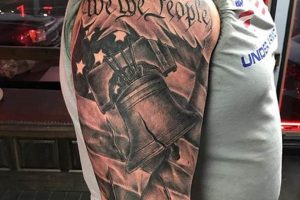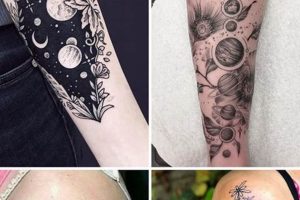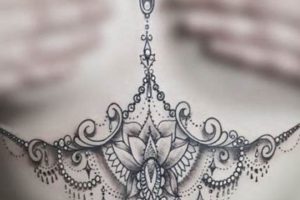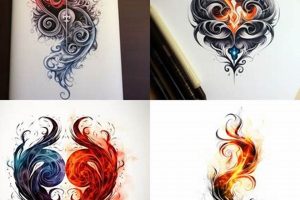



Designs permanently etched onto the skin, celebrating the skill and artistry of metal joining, range from stylized depictions of welding tools and equipment, such as torches, helmets, and sparks, to more abstract representations of molten metal and the welding process itself. Examples include depictions of specific weld types, blueprints, or even portraits of welders in action.
These permanent body modifications serve as powerful expressions of personal identity and professional pride for individuals involved in the welding trade. They can symbolize dedication to the craft, commemorate significant achievements, or simply showcase a passion for the work. Historically, body art has been used to denote membership in specific groups or professions, and these designs continue that tradition in a contemporary context. This form of artistic expression allows welders to connect with their heritage and share a common visual language.
Exploring the diverse world of imagery inspired by metalwork offers a glimpse into the creativity and technical skill within the welding community. Considerations for those seeking such artwork encompass design styles, placement on the body, and the artistic skill of the chosen tattooist.
1. Imagery

The visual language chosen for a welding-themed tattoo carries significant weight, conveying both personal and professional meaning. Imagery acts as the core narrative element, communicating the wearer’s connection to the welding trade. A realistic depiction of a welding helmet, for example, might represent protection and professionalism, while a stylized depiction of sparks could symbolize the dynamic energy of the process. Representations of specific weld types, such as a meticulously detailed fillet weld or a complex groove weld, showcase technical proficiency and attention to detail. Incorporating blueprints or schematics into the design adds another layer of meaning, illustrating the intellectual and planning aspects of the profession.
Effective imagery choices depend on individual preferences and the desired message. Some individuals opt for literal representations of tools and equipment, while others prefer more symbolic or abstract depictions. A flaming torch, for instance, can represent passion and skill, while geometric patterns inspired by welding joints offer a more subtle aesthetic. The inclusion of elements such as molten metal or specific metal types, such as stainless steel or aluminum, can further personalize the design, reflecting the welder’s specialized area of expertise. Portraits of historical figures in welding or depictions of iconic welding projects provide additional avenues for creative expression.
Careful selection of imagery is crucial for achieving a successful and meaningful tattoo. Consideration of the symbolism associated with various elements ensures the final design resonates with the individual’s personal narrative and accurately reflects their connection to the welding trade. The chosen imagery acts as a permanent statement, communicating passion, skill, and dedication to the craft.
2. Placement

Placement significantly influences the visual impact and overall aesthetic of welding-themed tattoos. The body’s natural contours provide a canvas, and careful consideration of placement ensures the design harmonizes with the individual’s physique. A sprawling design featuring intricate details might suit the back or chest, offering ample space for artistic expression. Smaller, more concise designs, such as a stylized welding torch or a simple weld symbol, might find a suitable home on the forearm, bicep, or calf. Placement also affects visibility; a tattoo intended for public display might be placed on the forearm or hand, while a more personal design might be reserved for a less visible area.
The shape and flow of the design should complement the chosen body part. A long, narrow design might accentuate the length of a forearm or leg, while a circular design could be strategically placed on a shoulder or bicep to emphasize muscle definition. Consideration of how the design will appear with body movement is essential; a tattoo spanning a joint, for example, should be designed to flex and move naturally with the body. Practical considerations, such as clothing requirements for specific professions, might also influence placement choices. A welder regularly required to wear long sleeves, for example, might opt for a placement that remains visible even when covered.
Strategic placement enhances the narrative of the tattoo, adding depth and meaning to the chosen imagery. A welding helmet design placed on the shoulder, for instance, can create a visual connection to the protective gear worn in the trade. A spark design radiating outwards from the elbow could mimic the movement and energy of the welding process. Thoughtful placement transforms the tattoo into a cohesive piece of body art, seamlessly integrating the design with the individual’s form and personal narrative. Ultimately, successful placement elevates the tattoo beyond mere decoration, transforming it into a powerful statement of personal and professional identity.
3. Style
Style significantly impacts the aesthetic and overall effect of welding-themed tattoos. Various artistic styles lend themselves to different interpretations of the subject matter, ranging from photorealism capturing the intricate details of welding equipment to abstract designs representing the essence of the process. Realism, often employing shading and fine lines, can create lifelike depictions of welding helmets, torches, or sparks. American traditional, with its bold lines and vibrant colors, provides a striking platform for showcasing iconic welding imagery. Geometric and abstract styles offer opportunities to explore the conceptual aspects of welding, representing molten metal flow, heat dynamics, or the structural integrity of welded joints.
The chosen style influences not only the visual appearance but also the conveyed message. A realistic depiction of a welder’s hand holding a torch, rendered in intricate detail, might emphasize skill and precision. An abstract representation of interwoven lines, symbolizing the fusion of metals, can evoke a sense of artistry and creativity. The style also interacts with the chosen imagery and placement; a large-scale, realistic depiction of a welding scene might suit the back, while a small, minimalist design rendered in a geometric style might be more appropriate for the wrist. Matching the style to the individual’s personality and desired aesthetic is crucial for a successful tattoo. Someone drawn to bold, graphic imagery might prefer the American traditional style, while someone seeking a more subtle and sophisticated look might opt for a minimalist or geometric approach. Examples include a hyperrealistic portrait of a historical welding figure juxtaposed with a traditional depiction of crossed torches and a geometric abstraction of a weld seam.
Careful consideration of style ensures the final tattoo design reflects the wearer’s individual taste and effectively communicates the intended message. The interplay between style, imagery, and placement contributes to a cohesive and impactful piece of body art, transforming a simple concept into a powerful expression of personal and professional identity. Selecting a tattoo artist proficient in the desired style ensures technical expertise and artistic vision align with the individual’s expectations, resulting in a high-quality, enduring piece of artwork.
4. Color

Color selection significantly impacts the visual impact and symbolic meaning of welding-themed tattoos. Thoughtful color choices enhance realism, evoke specific emotions, and contribute to the overall aesthetic of the design. From the vibrant oranges and yellows of molten metal to the cool blues and greys of steel, color palettes can dramatically alter the perception and interpretation of the artwork. Understanding the interplay between color and imagery allows for a more nuanced and expressive representation of the welding trade.
- Realistic Representation
Realistic color palettes aim to mimic the actual hues observed in welding processes. This approach often incorporates shades of orange, yellow, and white to represent sparks, molten metal, and intense heat. The use of greys, blacks, and metallic tones depicts welding tools, equipment, and the base metals being worked. Accurately rendered colors enhance the visual impact of realistic designs, creating a sense of authenticity and capturing the dynamic energy of the welding process. For example, a tattoo depicting a welding torch might feature a bright blue flame at the tip, transitioning to orange and yellow as it spreads outwards, with the surrounding metal rendered in realistic shades of grey or steel blue.
- Symbolic Color Choices
Colors can also be used symbolically to represent abstract concepts related to welding. Red might symbolize the heat and passion involved in the craft, while blue could represent the coolness and precision required for successful welds. Green can evoke a sense of growth and development within the profession, while black and grey can represent the strength and durability of welded structures. For instance, a tattoo depicting a stylized welding helmet might incorporate red accents to represent the heat and intensity of the welding environment, while blue highlights could symbolize the welder’s focus and control.
- Stylized and Artistic Color Palettes
Departing from realism, stylized color palettes offer opportunities for creative expression and personalized interpretations of welding themes. Unconventional color choices, such as purples, greens, or pinks, can create striking visuals and convey unique meanings. These palettes might be inspired by artistic movements, personal preferences, or symbolic associations specific to the individual. A tattoo depicting abstract sparks, for example, could utilize a vibrant rainbow palette to represent the creative energy and artistic potential within the welding trade. Alternatively, a monochromatic palette could be employed to emphasize the structural elements and geometric forms within the design.
- Color and Skin Tone Considerations
Effective color choices consider the individual’s skin tone to ensure vibrancy and longevity. Certain colors might appear more vibrant on lighter skin tones, while others might be better suited for darker complexions. Consulting with a skilled tattoo artist experienced in color theory and skin tone interactions is essential for achieving optimal results. A skilled artist can guide color selection, ensuring the final design complements the individual’s skin tone and retains its vibrancy over time. For example, vibrant oranges and yellows might appear more striking on lighter skin, while deeper blues and greens might be more impactful on darker skin tones. Adjusting color saturation and incorporating contrasting tones ensures visibility and impact regardless of skin tone.
The interplay of color, imagery, and style contributes significantly to the overall impact and meaning of welding-themed tattoos. Careful color selection enhances realism, adds symbolic depth, and allows for personalized expressions of connection to the welding trade. By considering the various facets of color theory and working closely with a skilled tattoo artist, individuals can achieve visually striking and deeply meaningful representations of their passion for the craft.
5. Size
Size plays a crucial role in the effectiveness and impact of welding-themed tattoos. The scale of the design must be carefully considered in relation to the chosen imagery, placement, and desired level of detail. A large-scale tattoo offers ample space for intricate details and complex compositions, allowing for realistic depictions of welding scenes, portraits of welders, or detailed representations of equipment. Smaller tattoos, while more discreet, can be equally impactful, focusing on symbolic imagery or stylized representations of welding processes. A small, precisely rendered welding torch on the wrist, for example, can be as expressive as a large, detailed mural depicting a welding scene on the back. The physical limitations of the chosen body part also influence size considerations; a design intended for a finger will necessarily be smaller and less detailed than one intended for the chest or back. Scaling the design appropriately ensures visual clarity and prevents loss of detail.
The level of detail desired within the tattoo further influences size decisions. Highly detailed designs, such as photorealistic portraits or intricate depictions of machinery, require larger canvases to effectively render the nuances and complexities of the subject matter. Simpler, more stylized designs can be successfully executed at smaller scales without sacrificing visual impact. A small, minimalist representation of a weld bead, for example, can be just as effective as a large, detailed depiction of a welding helmet. The interplay between size and detail contributes significantly to the overall balance and aesthetic of the tattoo. Overly detailed designs crammed into small spaces can appear cluttered and lose clarity, while simplistic designs stretched across large areas might appear sparse and lacking impact. Consider the practical implications of size; larger tattoos require multiple sessions and greater time commitments, while smaller tattoos can often be completed in a single session.
Effective size selection balances the desired imagery, level of detail, and placement, resulting in a harmonious and impactful tattoo. Understanding the relationship between these elements allows individuals to make informed decisions, ensuring the final artwork effectively communicates their connection to the welding trade. Careful planning and consultation with a skilled tattoo artist are essential for achieving optimal results, maximizing visual impact, and ensuring the longevity of the design. Size, therefore, is not merely a dimensional attribute but a crucial design element that contributes significantly to the overall success and meaning of the tattoo.
6. Artist Skill
A skilled tattoo artist’s expertise is paramount in translating welding-themed concepts into impactful body art. Technical proficiency, artistic vision, and experience within the specific style are crucial for achieving high-quality results. A deep understanding of line work, shading, color theory, and composition allows the artist to effectively render the intricate details of welding equipment, capture the dynamic energy of the welding process, and create visually compelling designs. An artist’s ability to translate a client’s vision into a tangible piece of art hinges on their mastery of these fundamental skills. For example, rendering the subtle gradations of light and shadow on a welding helmet requires a skilled hand and a nuanced understanding of shading techniques. Similarly, depicting the fluid dynamics of molten metal necessitates an artistic eye and a command of line work.
Beyond technical skill, an artist’s experience with specific tattoo styles significantly influences the final outcome. An artist specializing in realism, for example, possesses the expertise to create lifelike depictions of welding tools and equipment, capturing the textures and details with precision. An artist specializing in American traditional brings a bold, graphic sensibility to the design, employing strong lines and vibrant colors to create iconic and enduring imagery. Choosing an artist whose style aligns with the desired aesthetic is crucial for achieving a successful tattoo. A welder seeking a photorealistic depiction of their favorite welding machine would benefit from selecting an artist specializing in realism, while someone desiring a stylized, traditional depiction of crossed torches would be better served by an artist specializing in American traditional. Researching an artist’s portfolio and discussing design concepts in detail ensures a shared vision and increases the likelihood of a satisfying result.
The collaborative process between the client and the artist is essential for realizing a successful welding-themed tattoo. Open communication, clear expectations, and a shared understanding of the desired outcome contribute significantly to the final product. A skilled artist not only executes the design with technical proficiency but also provides valuable insights into design elements, placement considerations, and color choices. This collaborative approach ensures the final tattoo not only meets but exceeds the client’s expectations, resulting in a meaningful and enduring piece of body art. Ultimately, the artist’s skill, combined with effective communication and a shared vision, elevates the welding-themed tattoo beyond mere decoration, transforming it into a powerful expression of personal and professional identity.
Tips for Choosing Welding Tattoo Designs
Selecting a design that effectively embodies personal connection to the welding trade requires careful consideration. These tips provide guidance for navigating the process and ensuring a meaningful, well-executed tattoo.
Tip 1: Research Symbolism: Explore the rich symbolism associated with various welding elements. A spark, for example, can represent inspiration or the dynamic energy of the process, while a welding helmet might symbolize protection and professionalism. Understanding these symbolic meanings allows for a more nuanced and personalized design.
Tip 2: Consider Placement Carefully: Placement impacts both the visibility and aesthetic of the tattoo. Larger, more detailed designs might suit the back or chest, while smaller, symbolic designs could be placed on the wrist or forearm. Placement should complement the design and the body’s natural contours.
Tip 3: Explore Different Styles: Tattoo styles range from realism to traditional to abstract. Each style offers a unique approach to depicting welding themes. Research various styles to determine which best aligns with personal aesthetics and the desired message.
Tip 4: Choose Colors Strategically: Color adds depth and impact to tattoo designs. Realistic palettes mimic the actual colors of welding, while symbolic color choices can represent abstract concepts like heat or precision. Consider skin tone when selecting colors to ensure vibrancy and longevity.
Tip 5: Balance Size and Detail: Size should be proportionate to the level of detail within the design and the chosen placement. Intricate designs require larger canvases, while simpler designs can be effectively executed at smaller scales. Ensure the size complements the body part and allows for clear visibility of all elements.
Tip 6: Prioritize Artist Skill: A skilled tattoo artist is essential for a high-quality, well-executed tattoo. Research artists specializing in the desired style and review their portfolios to ensure their skill level aligns with expectations. Discuss design ideas thoroughly with the chosen artist to ensure a shared vision.
Tip 7: Plan for Longevity: Tattoos are permanent, so careful planning is essential. Consider the long-term implications of the chosen design, placement, and size. Think about how the tattoo might age and choose a design that will remain meaningful and aesthetically pleasing over time. Discuss aftercare procedures with the artist to ensure proper healing and maintain the tattoo’s vibrancy.
By following these tips, individuals can navigate the process of selecting a welding-themed tattoo with confidence, ensuring a meaningful and well-executed design that reflects their passion for the trade.
These considerations lay the groundwork for a successful and fulfilling tattoo experience, resulting in a permanent piece of art that embodies both personal and professional significance.
Frequently Asked Questions
Addressing common inquiries regarding permanent body art inspired by metalworking provides clarity and facilitates informed decisions.
Question 1: How much do welding-themed tattoos typically cost?
Cost depends on several factors, including size, complexity, color usage, artist’s skill level, and geographic location. Smaller, simpler designs typically cost less than larger, more intricate pieces. Consulting with a chosen artist allows for accurate pricing based on specific design requirements.
Question 2: How long does it take to get a welding-themed tattoo?
Completion time varies based on design complexity and size. Small, simple designs might take a single session of a few hours. Larger, more intricate pieces often require multiple sessions spaced weeks or months apart to allow for proper healing between sessions. Artists can provide time estimates after reviewing specific design requests.
Question 3: What are the best placement options for welding tattoos?
Optimal placement depends on individual preferences, design size, and desired visibility. Popular locations include forearms, biceps, calves, back, and chest. Placement should complement the design and the body’s natural contours. Practical considerations, such as workplace dress codes, might also influence placement decisions.
Question 4: How should one choose a qualified tattoo artist for a welding-themed design?
Thorough research is essential. Review artist portfolios online and visit studios to assess their work firsthand. Look for artists specializing in the desired style (realism, traditional, etc.) and experience in depicting similar subject matter. Seek recommendations from other individuals with tattoos and consult with potential artists to discuss design ideas and assess their communication style and professionalism. Verify artists adhere to proper hygiene and sterilization procedures.
Question 5: What is the proper aftercare for a welding-themed tattoo?
Proper aftercare is crucial for healing and longevity. Follow the artist’s specific instructions carefully. General aftercare guidelines typically involve keeping the tattoo clean, moisturized, and protected from sun exposure during the healing process. Avoid submerging the tattoo in water and refrain from picking or scratching the healing skin. Consult a healthcare professional if any signs of infection develop.
Question 6: Can welding-themed tattoos be covered up or removed if desired?
Cover-up or removal options exist, but both present challenges. Cover-ups require larger designs incorporating the existing tattoo, limiting design options. Laser removal is a multi-session process that can be costly and time-consuming, with varying degrees of success depending on ink colors and skin type. Careful consideration of design choices before getting a tattoo is essential to minimize future regrets.
Addressing these common concerns helps individuals approach permanent body art decisions with knowledge and foresight, ensuring a positive and fulfilling experience.
Further exploration into the world of welding-inspired artwork delves into specific design motifs and their symbolic interpretations, providing inspiration for those seeking to express their connection to this skilled trade through personal adornment.
Welding Tattoo Ideas
Exploration of permanent body art inspired by metalworking reveals a rich tapestry of designs, styles, and symbolic meanings. Careful consideration of imagery, placement, color palettes, size, and artist skill ensures impactful and enduring artwork. From realistic depictions of tools and equipment to abstract representations of molten metal and welding processes, these designs offer powerful expressions of personal and professional identity within the welding community. Strategic placement complements body contours and enhances the narrative of chosen imagery. Skilled artists translate concepts into high-quality tattoos, reflecting technical proficiency and artistic vision. Proper aftercare ensures longevity and vibrancy of these permanent artistic statements.
Permanent body modifications celebrating the welding trade offer a unique canvas for self-expression and storytelling. These designs symbolize dedication, skill, and passion for the craft, forging a lasting connection between the individual and their chosen profession. As artistic techniques evolve and individual expression continues to flourish, the landscape of welding-inspired body art promises further exploration and innovation. Thoughtful consideration of design elements ensures these permanent markings resonate with personal meaning and serve as powerful symbols of pride and connection within the welding community.