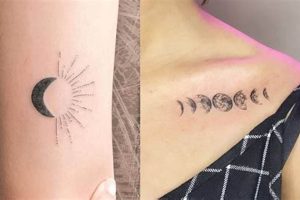



Tattoos representing blessings encompass a wide range of symbolic imagery, often drawn from religious or spiritual traditions. These designs can include scriptural verses, divine figures, protective symbols, or elements from nature associated with prosperity and good fortune. For example, a dove might symbolize peace and divine favor, while a lotus flower can represent purity and enlightenment.
Permanent body art signifying blessings provides a constant visual reminder of one’s values, beliefs, or gratitude for positive influences. Such tattoos can serve as a source of strength, comfort, or inspiration. Historically, body markings have held spiritual significance across diverse cultures, serving as protective talismans, expressions of devotion, or markers of important life events. The enduring appeal of these designs speaks to a fundamental human desire for connection to something larger than oneself.
Exploring various design options, cultural influences, and artistic styles will help individuals seeking permanent expressions of blessings make informed decisions. Factors such as placement, size, and color palette play a crucial role in the final aesthetic and symbolic impact. Understanding the historical and cultural context of different symbols can further enhance the personal meaning embedded within the design.
1. Symbolism

Symbolism lies at the heart of blessing tattoos, imbuing them with depth and personal meaning. Careful selection of symbolic elements transforms simple designs into powerful expressions of belief, hope, and gratitude. The chosen symbols communicate specific intentions and values.
- Religious Iconography
Religious symbols, such as crosses, Hamsas, or Om symbols, represent established faith traditions and offer a visual shorthand for spiritual beliefs. These designs can signify devotion, protection, or connection to a higher power. A cross, for example, signifies Christian faith, while an Om symbol represents the universe in Hinduism and other Dharmic religions.
- Nature-Inspired Imagery
Elements from the natural world carry diverse symbolic meanings. Flowers, animals, and celestial bodies can represent growth, strength, resilience, or connection to the cosmos. A lotus flower symbolizes purity and enlightenment, while a lion represents courage and strength. These natural elements can reflect an appreciation for the beauty and power of the natural world.
- Scriptural or Literary References
Incorporating meaningful text, such as quotes from sacred texts, inspirational verses, or significant literary passages, adds a personalized layer of meaning. These elements can serve as guiding principles or reminders of cherished values. A verse from a favorite poem, for instance, might offer solace and inspiration. The chosen text reflects personal philosophies and guiding principles.
- Protective Symbols and Talismans
Symbols believed to offer protection or good fortune, like dreamcatchers, mandalas, or evil eyes, often feature in blessing tattoos. These designs serve as a visual reminder of desired blessings or positive intentions. A dreamcatcher, for instance, symbolizes protection from negative energy. These talismans offer comfort and a sense of security.
The interplay of these symbolic elements creates a richly layered and deeply personal design. Consideration of cultural context and personal interpretation ensures the chosen symbolism resonates authentically with the individual’s beliefs and values. Ultimately, the power of a blessing tattoo lies in its ability to serve as a constant source of inspiration, strength, and connection to something meaningful.
2. Placement

Placement significantly impacts the overall effect of a blessing tattoo. Consideration of visibility, aesthetics, and personal significance informs optimal placement choices. A tattoo intended for private reflection might be placed on an area less exposed to public view, such as the ribs or inner arm. Conversely, a design meant to serve as a public declaration of faith or belief might be placed more prominently, such as on the forearm or back. The chosen location contributes to the tattoo’s meaning and how it interacts with the body’s natural contours.
The physical location can further amplify the symbolic meaning of the tattoo. For instance, a tattoo representing growth or resilience placed on the wrist or ankle emphasizes the concepts of forward movement and grounding. A protective symbol placed near the heart or over a vulnerable area reinforces the idea of safeguarding and reassurance. Practical considerations, such as potential changes in body shape or skin elasticity over time, should also inform placement decisions. Areas less prone to stretching or distortion, like the upper back or outer arm, ensure the design’s integrity is maintained over time. Certain professions may require tattoos to be easily concealed, influencing placement choices towards areas readily covered by clothing.
Ultimately, placement should be a deliberate choice that reflects both the aesthetic preferences of the individual and the intended meaning of the tattoo. Careful consideration of visibility, symbolism, and practical factors ensures the design remains impactful and meaningful throughout life. A thoughtful approach to placement elevates the tattoo from mere body art to a powerful personal statement.
3. Size and Style
Size and style play crucial roles in the overall impact and effectiveness of blessing tattoos. The scale of a design influences its visibility and detail, while the artistic style conveys specific emotions and cultural connotations. A small, minimalist design might represent understated devotion or personal reflection, while a large, intricate piece could signify a bold statement of faith or a celebration of heritage. The chosen style, whether it be traditional, watercolor, geometric, or realistic, further enhances the symbolic meaning and visual appeal of the tattoo. For instance, a delicate, single-needle tattoo of a flower rendered in a fine line style might evoke a sense of fragility and grace, while a bold, traditional-style depiction of a protective deity could convey strength and power.
The interplay between size and style must align with the intended message and placement of the tattoo. Intricate details in smaller designs might be lost or become blurred over time, while larger designs require sufficient space to fully realize their artistic potential. Matching the style to the symbolism further enhances the tattoo’s meaning. A geometric pattern representing balance and harmony might benefit from clean lines and precise execution, while a flowing scriptural verse might be more effectively rendered in a calligraphic style. Practical considerations, such as pain tolerance and healing time, also factor into decisions regarding size and complexity. Larger, more detailed tattoos typically require multiple sessions and longer healing periods.
Careful consideration of size and style ensures the blessing tattoo remains aesthetically pleasing and symbolically resonant over time. A well-chosen design, executed with skill and precision, transcends mere body art and becomes a powerful expression of personal belief, heritage, and aspiration. The interplay of these elements transforms the tattoo into a lasting symbol of blessing and inspiration.
4. Cultural Significance

Cultural significance plays a vital role in the design and interpretation of blessing tattoos. Designs rooted in specific cultural traditions carry layers of meaning that resonate deeply with individuals connected to those heritages. Understanding the historical and symbolic context of these designs prevents misappropriation and ensures respectful representation. For example, Polynesian tribal tattoos embody ancestral lineage and spiritual beliefs, while Japanese Kanji characters represent specific virtues or concepts. Ignoring the cultural context risks diluting or distorting the intended meaning of these powerful symbols.
Appreciating the cultural significance of a design enhances its personal meaning for the wearer. A tattoo inspired by Native American traditions, for example, might represent a connection to nature and ancestral wisdom. Similarly, a Celtic knot design can symbolize interconnectedness and continuity. Researching the origins and symbolism of culturally significant designs ensures the chosen tattoo reflects genuine understanding and respect for the traditions it represents. This awareness avoids unintentional offense and promotes cross-cultural appreciation. Consulting with cultural experts or artists specializing in specific traditions can further deepen understanding and ensure accurate representation.
Respectful engagement with cultural symbolism elevates blessing tattoos beyond mere aesthetics. It transforms them into powerful expressions of identity, heritage, and spiritual connection. Careful consideration of cultural context enriches the personal meaning and ensures the chosen design resonates with authenticity and respect. This understanding fosters a deeper appreciation for the rich tapestry of human cultures and the diverse ways individuals express their beliefs and values through body art.
5. Artistic Expression

Artistic expression transforms blessing tattoo ideas into unique and personalized works of art. The artistic approach imbues the chosen symbolism with individual flair, reflecting the wearer’s personality and aesthetic preferences. The collaborative process between the individual and the tattoo artist translates abstract concepts into tangible visual representations.
- Style Selection
The chosen artistic style significantly impacts the overall aesthetic and emotional impact of the tattoo. Styles range from traditional and neo-traditional with bold lines and vibrant colors to minimalist, single-needle designs emphasizing delicate details. Realism captures intricate imagery, while watercolor styles create a fluid, dreamlike effect. Geometric patterns offer structured symmetry, and illustrative styles emphasize narrative and symbolic elements. Selecting a style that resonates with the individual’s personality and the intended meaning of the tattoo ensures a cohesive and impactful design. A traditional-style depiction of a religious figure might convey reverence and tradition, while a minimalist rendering of a natural element could evoke a sense of tranquility and peace.
- Customization and Personalization
Collaboration with a skilled tattoo artist allows for customization and personalization of the design. Incorporating unique elements, such as specific colors, patterns, or background details, transforms a generic symbol into a deeply personal expression. Customizing a standard cross design with intricate floral patterns or incorporating birthstones into a protective talisman adds layers of individual meaning. This collaborative process ensures the final design reflects the wearer’s unique story and values. A skilled artist interprets the individual’s vision and translates it into a compelling visual narrative.
- Composition and Flow
The composition and flow of the design impact its visual harmony and how it interacts with the body’s natural contours. Thoughtful placement of elements creates a balanced and aesthetically pleasing composition. A flowing scriptural verse might gracefully wrap around the arm, while a symmetrical mandala design could be centered on the back. Understanding how the design interacts with the body’s movement and curves ensures the tattoo remains visually appealing from all angles. This attention to detail elevates the tattoo beyond a static image and transforms it into a dynamic and integrated part of the body.
- Color Palette
Color choice contributes significantly to the overall mood and symbolism of the tattoo. Vibrant colors can convey joy and celebration, while muted tones might represent introspection or remembrance. The cultural significance of specific colors should also be considered. In some cultures, red symbolizes good fortune, while in others it represents mourning. Careful color selection ensures the chosen palette aligns with the intended meaning and evokes the desired emotional response. A vibrant watercolor depiction of a sunrise might symbolize hope and new beginnings, while a monochromatic rendering of a protective symbol could evoke a sense of strength and resilience.
Artistic expression allows blessing tattoo ideas to transcend their symbolic origins and become unique expressions of personal identity and belief. By considering style, customization, composition, and color palette, individuals collaborate with artists to create meaningful and visually compelling tattoos that serve as lasting reminders of their values and aspirations. The artistic process transforms a simple concept into a powerful piece of personal art that resonates deeply with the individual.
Tips for Choosing Blessing Tattoo Designs
Selecting a meaningful and aesthetically pleasing blessing tattoo requires careful consideration. These tips offer guidance for navigating the decision-making process.
Tip 1: Research Symbolism Thoroughly: Accurate understanding of symbolic meanings avoids misinterpretations. Researching the cultural and historical context of chosen symbols ensures appropriate representation.
Tip 2: Prioritize Quality over Cost: A well-executed tattoo represents a lifelong investment. Prioritizing experienced, reputable artists ensures quality workmanship and longevity of the design. Skilled artists utilize proper techniques and high-quality materials for optimal results.
Tip 3: Consider Placement Carefully: Placement impacts visibility and aesthetics. Consider professional requirements and potential changes in body shape when choosing a location. Areas less prone to stretching or distortion maintain the design’s integrity over time.
Tip 4: Choose a Style that Resonates: Artistic style should complement the chosen symbolism and personal aesthetics. Explore various artistic styles, from traditional to minimalist, to find a style that aligns with the intended message and personal preferences. The chosen style contributes to the overall visual impact and emotional resonance.
Tip 5: Plan for Proper Aftercare: Proper aftercare ensures optimal healing and longevity. Following the artist’s aftercare instructions diligently protects the investment and maintains the vibrancy of the tattoo. Proper aftercare minimizes the risk of infection and fading.
Tip 6: Reflect on Personal Meaning: The chosen design should hold deep personal significance. Reflecting on personal values, beliefs, and aspirations ensures the tattoo resonates authentically and serves as a source of inspiration.
Tip 7: Consult with a Reputable Artist: Collaboration with a skilled artist ensures professional execution and personalized design. Discussing ideas and concerns with an experienced artist helps refine the concept and ensures the final result aligns with expectations. A reputable artist offers expert guidance and technical expertise.
Careful consideration of these tips ensures a meaningful and well-executed blessing tattoo that resonates with personal values and aesthetic preferences. A thoughtful approach results in a lasting piece of art that serves as a source of inspiration and positive reflection.
By following this guidance, individuals can embark on the journey towards a fulfilling and meaningful tattoo experience. The process of thoughtful selection and careful execution results in a cherished piece of personal art.
Frequently Asked Questions about Blessing Tattoos
This section addresses common inquiries regarding tattoos signifying blessings, offering clarity and guidance for those considering such designs.
Question 1: How does one choose appropriate symbolism for a blessing tattoo?
Symbolism should align with personal beliefs and values. Thorough research ensures accurate representation and avoids cultural misappropriation. Consulting with cultural experts or religious leaders offers further guidance.
Question 2: What factors influence the longevity of a blessing tattoo?
Placement, ink quality, and aftercare practices significantly impact longevity. Areas exposed to frequent sunlight or friction may experience faster fading. Adhering to proper aftercare procedures, including moisturizing and sun protection, preserves the design’s vibrancy.
Question 3: Can blessing tattoos be incorporated into existing tattoo designs?
Skilled artists can seamlessly integrate new elements into existing tattoos. Careful planning and consideration of style and placement ensure cohesive and aesthetically pleasing results. Consultations with experienced tattoo artists facilitate design integration.
Question 4: Are there specific cultural or religious sensitivities to consider when choosing a blessing tattoo?
Respect for cultural and religious traditions is paramount. Researching the origins and significance of symbols prevents misappropriation. Consulting with individuals knowledgeable in specific traditions ensures respectful representation.
Question 5: How does one find a reputable tattoo artist specializing in blessing tattoo designs?
Recommendations from trusted sources, online portfolios, and consultations provide valuable insights. Evaluating an artist’s experience, style, and hygiene practices ensures a positive and safe tattooing experience. Assessing the artist’s understanding of symbolic meanings is crucial for accurately representing intended messages.
Question 6: What are the typical costs associated with blessing tattoos?
Costs vary based on size, complexity, artist experience, and geographic location. Detailed designs, larger pieces, and highly sought-after artists typically command higher prices. Requesting quotes from multiple artists allows for comparison and informed decision-making. Prioritizing quality over cost ensures a lasting and well-executed tattoo.
Careful consideration of these frequently asked questions facilitates informed decisions and fosters a positive tattooing experience. Thorough research, consultation with reputable artists, and respectful engagement with cultural symbolism ensure a meaningful and aesthetically pleasing result.
Exploring various design options, cultural influences, and artistic styles allows individuals seeking permanent expressions of blessings to make informed decisions that align with their personal values and aesthetic preferences. Understanding the historical and cultural context of different symbols enhances the personal meaning embedded within the design.
Conclusion
Blessing tattoo designs offer powerful avenues for expressing personal beliefs, values, and aspirations. Careful consideration of symbolism, placement, size, style, cultural significance, and artistic expression ensures a meaningful and aesthetically pleasing result. Thorough research, consultation with reputable artists, and diligent aftercare practices protect the investment and maintain the design’s integrity over time. Addressing frequently asked questions provides clarity and guidance for navigating the decision-making process.
Ultimately, blessing tattoos serve as permanent reminders of cherished values, offering solace, inspiration, and connection to something greater than oneself. Thoughtful selection and execution transform these designs into powerful expressions of identity and belief, leaving a lasting legacy etched onto the skin. The enduring appeal of these tattoos speaks to the profound human desire for meaning, connection, and enduring expressions of one’s innermost convictions.