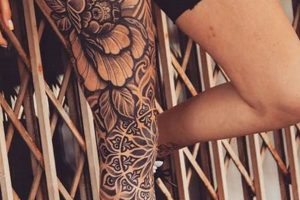



Small, aesthetically pleasing designs suitable for tattooing are increasingly popular. These designs often feature minimalist linework, delicate imagery like flowers, animals, or symbols, and can be placed discreetly on the wrist, ankle, behind the ear, or other less visible areas. Examples include tiny hearts, stars, paw prints, or single-word inscriptions.
The appeal of these diminutive designs lies in their subtle charm and versatility. They offer a way to express personality or commemorate meaningful experiences without the commitment associated with larger, more elaborate tattoos. Historically, smaller tattoos held cultural significance in various societies, often serving as symbols of protection, belonging, or status. This historical context contributes to their enduring popularity in contemporary body art.
Further exploration will delve into popular design choices, placement considerations, and the artistic process behind creating these miniature works of art.
1. Placement

Placement is a crucial factor in the design process for small tattoos. The chosen location significantly impacts the tattoo’s visibility, aesthetic appeal, and overall effect. Consideration of body contours, lifestyle, and desired level of discretion is essential.
- Visibility
Highly visible areas like the wrist or forearm offer a platform for showcasing the design, while more discreet locations like the nape of the neck or behind the ear provide a sense of intimacy. Visibility preferences are highly individual and should align with personal comfort levels.
- Body Contours
The natural curves and lines of the body influence how a tattoo appears. A design that complements the wrist’s curvature might not be as well-suited for a flatter area like the back. Careful consideration of body shape enhances the aesthetic harmony of the tattoo.
- Practicality
Certain professions or lifestyles may necessitate more discreet placement. Areas easily covered by clothing offer flexibility, while exposed areas like hands or fingers require greater consideration of potential societal perceptions.
- Pain Tolerance
Some areas of the body are more sensitive than others. Individuals with lower pain thresholds might prefer less sensitive locations for smaller tattoos, while those with higher tolerances have more placement options available.
Strategic placement elevates a small tattoo from a simple design to a carefully considered personal statement. By evaluating visibility, body contours, practicality, and pain tolerance, individuals can ensure their chosen design harmonizes seamlessly with their body and lifestyle, resulting in a piece of art they will cherish for years to come.
2. Symbolism

Symbolism plays a pivotal role in imbuing small tattoos with profound meaning. While diminutive in size, these designs often carry significant personal weight, representing cherished memories, beliefs, or aspirations. The selection of a symbolic image transforms a simple aesthetic choice into a powerful personal statement. This imbues the tattoo with a narrative that extends beyond its visual appeal. For example, a small wave can symbolize overcoming challenges, a delicate feather can represent freedom, or a tiny compass can signify guidance and direction.
The effectiveness of symbolism in small tattoos lies in the balance between simplicity and depth. A minimalist approach allows the chosen symbol to take center stage, its meaning amplified by its concise representation. This directness of communication avoids visual clutter, ensuring the message remains clear and impactful. A single, carefully chosen symbol can speak volumes, encapsulating complex emotions or experiences in a concise and elegant form. Consider the semicolon tattoo, a small punctuation mark representing resilience and overcoming struggles; its compact form carries immense emotional weight within the mental health community.
Understanding the inherent symbolism within various images is crucial for selecting a design that resonates deeply. Researching potential symbols and their cultural or historical significance allows individuals to make informed choices, ensuring the chosen design accurately reflects their intended message. This mindful approach avoids misinterpretations and ensures the tattoo remains a source of personal meaning and pride. Ultimately, the symbolic power of small tattoos lies in their capacity to encapsulate profound meaning within a delicate and aesthetically pleasing form. This combination of artistry and personal significance elevates these miniature designs into powerful expressions of self.
3. Minimalism

Minimalism, as a design philosophy, finds a natural expression in the realm of small, aesthetically pleasing tattoos. The core principles of minimalismsimplicity, clarity, and essentialismalign perfectly with the delicate nature and limited canvas of these miniature artworks. This section explores the multifaceted relationship between minimalism and small tattoo design.
- Conciseness of Form
Minimalist tattoos prioritize essential lines and shapes, eliminating extraneous details. A single, unbroken line forming an animal silhouette or a few strategically placed dots forming a constellation exemplify this conciseness. This approach ensures the design remains clear and impactful, even at a reduced scale.
- Restricted Color Palettes
Minimalist tattoos often employ a limited color palette, frequently utilizing black ink solely or incorporating a single accent color. This restraint enhances the impact of the chosen colors and contributes to the overall clean aesthetic. A small, black outline of a flower or a tiny red heart are classic examples of this principle in practice.
- Negative Space Utilization
The strategic use of negative spacethe skin left untattooedbecomes crucial in minimalist designs. Negative space provides breathing room, allowing the tattooed elements to stand out while contributing to the overall composition. A silhouette formed by the negative space around it exemplifies this concept.
- Emphasis on Symbolic Simplicity
Minimalism lends itself well to symbolic representation. Simple geometric shapes, single words, or small icons can carry significant meaning without requiring complex visuals. A small triangle representing stability or a single word embodying a personal mantra demonstrates the power of symbolic simplicity in minimalist tattoos.
By embracing these core tenets, minimalist tattoos achieve a unique balance of aesthetic appeal and symbolic depth. The inherent limitations of the small canvas become an advantage, forcing a focus on essential elements and resulting in designs that are both visually striking and rich in personal meaning. This convergence of minimalism and small-scale artistry contributes significantly to the enduring popularity of these delicate and expressive body adornments.
4. Linework

Linework forms the foundation of all tattoos, but its significance is amplified in small, aesthetically pleasing designs. The precision and style of linework dramatically influence the overall impact of these miniature artworks. Understanding the nuances of linework is essential for both artists and individuals seeking these delicate adornments.
- Line Weight Variation
Varying the thickness of lines creates depth and visual interest. Fine lines contribute to delicate details, while bolder lines provide emphasis and structure. In a small floral tattoo, fine lines might depict the petals’ delicate veins, while thicker lines define the stem and leaves. This interplay of line weights adds dimension and prevents the design from appearing flat.
- Line Style Application
Different line styles, such as solid, dotted, or dashed lines, convey different aesthetics. Solid lines create a bold and defined look, while dotted lines offer a softer, more subtle effect. Dashed lines can be used to create movement or suggest texture. A small heart outlined with a dotted line conveys a gentler sentiment than one with a solid outline.
- Impact of Line Consistency
Consistent linework demonstrates skill and professionalism. Uniform lines, whether thick or thin, create a polished and refined appearance. Inconsistencies, such as wobbly or uneven lines, detract from the overall aesthetic, particularly in small tattoos where imperfections are magnified. Clean, crisp lines are essential for a high-quality result.
- Relationship with Design Elements
Linework should complement the overall design. The chosen line style and weight should harmonize with the subject matter and intended aesthetic. Delicate linework suits minimalist designs, while bolder lines might be more appropriate for geometric patterns or tribal-inspired motifs. A small wave rendered in flowing, organic lines captures the fluidity of water, while a geometric design benefits from precise, straight lines.
The interplay of these linework facets significantly impacts the final result. Masterful linework elevates a small tattoo from a simple image to a refined piece of art. By understanding and appreciating the nuances of linework, individuals can collaborate effectively with artists to create small tattoos that are both visually captivating and deeply meaningful.
5. Color palette

Color palette selection significantly influences the aesthetic impact of small, aesthetically pleasing tattoos. Careful consideration of hues, saturation, and the interplay of colors is crucial for achieving the desired visual effect. Color choices contribute not only to the tattoo’s overall appearance but also to its symbolic meaning and longevity.
Vibrant colors, such as bright pinks, blues, or greens, can create a cheerful and eye-catching design. These palettes often suit playful imagery, such as cartoon characters, flowers, or butterflies. Conversely, muted or pastel tones evoke a softer, more delicate aesthetic. These palettes align well with minimalist designs, subtle floral motifs, or abstract patterns. Monochromatic palettes, utilizing varying shades of black or gray, offer a timeless and versatile option, suitable for a wide range of imagery, from intricate mandalas to simple line drawings. The chosen color palette should harmonize with the design’s subject matter and intended emotional impact.
Practical considerations also influence color palette selection. Lighter skin tones often showcase vibrant colors effectively, while darker skin tones may require bolder or deeper hues for optimal visibility. Certain colors, particularly lighter shades, may fade more quickly than others, requiring touch-ups over time. Consulting with a skilled tattoo artist is crucial for selecting a color palette that complements individual skin tone, desired aesthetic, and long-term vibrancy. Informed color choices enhance the artistic merit and enduring appeal of these miniature artworks.
Tips for Choosing Small, Aesthetically Pleasing Tattoos
Careful planning ensures a satisfying and aesthetically pleasing outcome when selecting a small tattoo design. Consideration of practical aspects alongside artistic preferences is essential for a result that aligns with individual style and long-term satisfaction.
Tip 1: Research Thoroughly
Extensive research is crucial before committing to a design. Exploring various artists’ portfolios, online galleries, and design resources provides inspiration and ensures alignment with desired aesthetics. Examining healed tattoos offers a realistic view of long-term appearance.
Tip 2: Consider Placement Carefully
Tattoo placement significantly impacts visibility, comfort, and overall effect. Body contours, lifestyle, and pain tolerance should influence placement decisions. Areas easily covered by clothing offer flexibility, while exposed areas require more consideration.
Tip 3: Prioritize Simplicity
Small tattoos benefit from minimalist designs. Clean lines, limited color palettes, and concise imagery maintain clarity and visual impact at a reduced scale. Overly intricate designs can appear muddled or lose detail over time.
Tip 4: Choose Meaningful Symbolism
Imbue the design with personal significance. Symbols, whether simple or complex, add depth and emotional resonance. Researching symbol meanings ensures accurate representation and avoids unintended interpretations.
Tip 5: Collaborate with a Skilled Artist
A skilled artist translates concepts into aesthetically pleasing realities. Open communication, sharing inspiration images, and discussing placement preferences ensures the final design aligns with individual vision. Artist expertise is crucial for achieving desired linework, color saturation, and overall quality.
Tip 6: Evaluate Long-Term Care
Understanding aftercare procedures is essential for preserving tattoo vibrancy and longevity. Following artist instructions regarding cleaning, moisturizing, and sun protection ensures the tattoo heals properly and maintains its aesthetic appeal over time.
Tip 7: Start Small and Simple
If uncertain about larger commitments, begin with a very small and simple design. This allows adjustment to the experience and informs future tattoo decisions. A small, minimalist design offers an excellent starting point for exploring personal style and comfort levels.
Following these guidelines ensures a positive and fulfilling experience, resulting in a small, aesthetically pleasing tattoo that provides lasting enjoyment and personal expression.
These considerations pave the way for a thoughtfully chosen and beautifully executed piece of body art.
Frequently Asked Questions
This section addresses common inquiries regarding small, aesthetically pleasing tattoo designs, offering practical insights and clarifying potential concerns.
Question 1: How long do small tattoos typically take to complete?
Application time varies depending on design complexity, placement, and artist experience. Simple designs can take as little as 30 minutes, while more intricate pieces may require a few hours. Consultation with the chosen artist provides a more accurate time estimate.
Question 2: Are small tattoos less painful than larger ones?
Generally, smaller tattoos involve less pain due to shorter application times. However, pain perception varies based on individual tolerance and placement. Sensitive areas may experience greater discomfort regardless of design size.
Question 3: Do small tattoos fade more quickly than larger ones?
Fading potential depends more on ink quality, color choice, sun exposure, and aftercare practices than on size. Proper aftercare and sun protection minimize fading for all tattoos, regardless of size.
Question 4: What are the typical costs associated with small tattoos?
Pricing varies based on artist experience, studio location, design complexity, and color usage. Minimum shop rates often apply, even for very small designs. Consulting with prospective artists provides specific cost estimates.
Question 5: What are the best placement options for small, discreet tattoos?
Discreet placement options include the inner wrist, ankle, behind the ear, nape of the neck, or ribcage. These locations can be easily concealed with clothing when desired.
Question 6: How does one find a reputable tattoo artist specializing in small, aesthetically pleasing designs?
Researching artist portfolios, online reviews, and studio reputations is crucial. Seeking recommendations, attending tattoo conventions, and visiting studios allow individuals to assess artist skill and hygiene standards. Specialization in fine linework or minimalist designs indicates suitability for smaller tattoos.
Careful consideration of these practical aspects ensures a positive and well-informed tattooing experience.
Further resources and information regarding tattoo aftercare and design inspiration can be found [link to relevant resources/next section].
Cute Little Tattoo Ideas
Small, aesthetically pleasing tattoo designs offer a unique avenue for self-expression. Exploration of placement, symbolism, minimalism, linework, and color palettes reveals the multifaceted nature of these miniature artworks. Strategic placement enhances visibility and complements body contours. Symbolic resonance imbues designs with personal meaning, transforming simple aesthetics into powerful statements. Minimalism emphasizes essential elements, maximizing impact within limited space. Precision linework and carefully selected color palettes contribute significantly to the overall aesthetic and longevity of these designs.
The enduring appeal of small tattoos lies in their ability to encapsulate profound meaning within delicate forms. Thoughtful consideration of these elements ensures a harmonious balance between artistry and personal significance, resulting in a lasting piece of body art that resonates with individual identity and aesthetic preferences. Further exploration of individual artistic styles and cultural influences within this art form promises continued evolution and innovation.