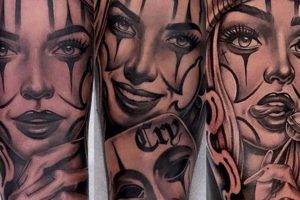



Tattoos featuring clowns encompass a wide range of styles and interpretations, from jovial circus designs to darker, more macabre depictions. These designs can incorporate elements such as balloons, circus tents, and exaggerated makeup, often personalized to reflect individual preferences. Examples include realistic portraits of famous clowns, cartoonish figures, and abstract representations of clown archetypes.
The enduring appeal of clown imagery in tattoo art stems from its rich symbolism and capacity for personal expression. Clowns can represent joy, laughter, and childhood innocence, while others evoke a sense of mystery, mischief, or even fear. Historically, clowns have held a complex place in society, embodying both comedic and tragic elements, providing a potent source of inspiration for artistic exploration through body art. This duality allows for deeply personal and meaningful tattoos, reflecting individual experiences and perspectives.
This exploration will delve into various styles of clown-themed tattoos, examining their cultural significance, artistic representations, and the motivations behind choosing such imagery. Specific examples and design considerations will be provided, offering a comprehensive overview of this unique form of self-expression.
1. Style (e.g., realistic, cartoon)

The chosen artistic style significantly impacts the overall impression and meaning of a clown tattoo. Different styles evoke distinct emotions and interpretations, ranging from playful and whimsical to unsettling and macabre. Careful consideration of the desired aesthetic is essential in conveying the intended message.
- Realism
Realistic clown portraits often capture intricate details of facial features and makeup, emphasizing the human element beneath the costume. This style can evoke a sense of vulnerability or melancholy, particularly when combined with somber expressions. Examples include portraits of classic circus clowns or depictions inspired by historical figures.
- Cartoon/New School
Cartoon and New School styles utilize bold lines, vibrant colors, and exaggerated features to create a more lighthearted or grotesque effect. These designs often incorporate elements of humor and satire, sometimes drawing inspiration from popular culture or comic books. The exaggerated features can amplify specific emotions, such as joy or menace.
- Horror/Surrealism
Horror and surrealist styles frequently depict clowns in a more sinister light, playing on common fears and anxieties. Distorted features, unsettling imagery, and dark color palettes contribute to a sense of unease and psychological depth. This style allows for exploration of darker themes and the unsettling aspects of clown imagery.
- Geometric/Abstract
Geometric and abstract styles offer a more stylized interpretation, focusing on shapes, patterns, and symbolic representation. These designs can incorporate elements of traditional clown imagery, such as diamonds and spirals, but reimagine them in a more contemporary and minimalist aesthetic. This approach can convey a sense of mystery and intrigue.
Ultimately, the chosen style plays a crucial role in shaping the narrative and emotional impact of the clown tattoo. By carefully considering the various styles and their associated connotations, individuals can select an approach that effectively communicates their personal interpretation of this complex and multifaceted figure.
2. Color palette

Color palettes play a crucial role in conveying the desired mood and message within clown tattoo designs. The selection of colors significantly impacts the overall aesthetic and psychological effect, influencing how the tattoo is perceived. Careful consideration of color theory and symbolic associations is essential for creating a cohesive and impactful design.
Vibrant, primary colors, often associated with traditional circus clowns, can evoke a sense of joy, playfulness, and childlike wonder. However, these same colors, when desaturated or used in unconventional combinations, can convey a sense of melancholy or unease. For instance, faded reds and yellows might suggest a worn-out or forgotten circus, while the juxtaposition of bright colors with dark outlines can create a grotesque or unsettling effect. Darker palettes, utilizing blacks, greys, and deep reds, are often employed in horror-inspired clown tattoos, amplifying the sense of menace and fear. The strategic use of contrasting colors can further highlight specific details or create visual interest. Monochromatic palettes, focusing on variations of a single color, can evoke a sense of timelessness or add a touch of elegance to the design.
The interplay of color and imagery allows for a wide range of interpretations and emotional expressions within clown tattoo art. Understanding the psychological impact of different color palettes enables individuals to select combinations that effectively communicate their intended message. Whether aiming for a vibrant and playful design or a darker, more introspective piece, the careful selection of colors is fundamental to the overall success and impact of the tattoo.
3. Composition and placement

Composition and placement are integral to the overall impact of clown tattoo designs. Strategic arrangement of elements within the design and its location on the body significantly influence the visual narrative and personal meaning. Careful consideration of these factors ensures the tattoo effectively communicates the intended message and complements the individual’s form.
- Scale and Proportion
The size of the tattoo and its relationship to the surrounding area influence its prominence and visibility. A large-scale design on the back can showcase intricate details and create a dramatic statement, while a smaller, more discreet tattoo on the wrist or ankle might hold personal significance. Balancing the scale of the clown figure with other elements, such as background details or accompanying objects, ensures a harmonious composition.
- Body Contour and Flow
The natural curves and contours of the body provide a canvas that can enhance or detract from the tattoo’s aesthetic appeal. Skilled tattoo artists consider these contours when designing, ensuring the composition flows naturally with the body’s lines. For example, a design might wrap around the arm or leg, emphasizing its shape, or be positioned to accentuate specific muscle groups. The placement should complement the design and create a sense of visual harmony.
- Visual Hierarchy and Focal Point
Establishing a clear visual hierarchy within the design guides the viewer’s eye and emphasizes key elements. The focal point, often the clown’s face or a symbolic object, draws immediate attention. Supporting elements, such as background details or accompanying imagery, should complement the focal point without overwhelming it. Effective use of contrast, color, and linework creates a dynamic composition that holds the viewer’s interest.
- Interaction with Existing Tattoos
For individuals with existing tattoos, the placement of a new clown design requires careful planning to ensure visual cohesion. The new tattoo should complement, rather than clash with, existing pieces. This might involve incorporating similar styles, color palettes, or thematic elements. Alternatively, the placement could be chosen to create a distinct visual separation, allowing each tattoo to stand on its own while contributing to an overall aesthetic.
By carefully considering these factors, individuals can ensure their clown tattoo is not only visually appealing but also deeply meaningful. The interplay of composition and placement contributes to a cohesive and impactful design that resonates with personal expression and artistic vision. These choices create a powerful narrative, transforming the body into a living canvas that reflects individual identity and aesthetic preferences.
4. Symbolic elements (e.g., tears, balloons)
Symbolic elements play a crucial role in enriching clown tattoo designs, adding layers of meaning and personal significance. These elements often draw upon established iconography associated with clowns, while also allowing for individual interpretations and personalized narratives. Understanding the symbolism embedded within these elements provides deeper insight into the complexities and intentions behind clown-themed tattoos.
- Tears
Tears, often depicted as exaggerated droplets or streams flowing from the clown’s eyes, can represent a range of emotions, from sadness and melancholy to concealed pain or hidden vulnerability. The juxtaposition of a smiling face with flowing tears encapsulates the duality often associated with clowns, hinting at the potential for deeper emotions masked by a comedic exterior. This symbolism resonates with individuals who identify with the concept of hiding personal struggles behind a facade of happiness.
- Balloons
Balloons, a quintessential element of clown imagery, typically symbolize joy, celebration, and childlike innocence. However, their presence in a tattoo can also take on darker connotations. A deflated or broken balloon might represent lost hopes, shattered dreams, or the fleeting nature of happiness. Similarly, a balloon held by a sinister-looking clown can create a sense of unease or impending danger. The interpretation of balloons within a clown tattoo often depends on the overall context and accompanying imagery.
- Masks
Masks, both literal and metaphorical, are central to the clown archetype. A clown’s makeup itself functions as a mask, concealing their true identity and emotions. The inclusion of a mask within a tattoo can represent the duality of self, the concealment of true feelings, or the adoption of a persona. Cracked or broken masks might symbolize vulnerability or the breaking down of facades. The design and style of the mask further contribute to its symbolic meaning, ranging from traditional comedic masks to more grotesque or unsettling depictions.
- Weapons/Sharp Objects
The inclusion of weapons or sharp objects, such as knives, daggers, or scissors, imbues clown tattoos with a distinctly darker tone. These elements can represent aggression, violence, or suppressed anger. They can also symbolize the darker side of human nature or the potential for harm lurking beneath a seemingly jovial exterior. The juxtaposition of these menacing objects with traditional clown imagery creates a striking contrast, highlighting the duality and complexity of the clown archetype.
These symbolic elements, when incorporated thoughtfully into clown tattoo designs, add depth and complexity, moving beyond mere aesthetic representation to convey powerful messages about personal experiences, emotions, and perspectives. The interplay of these elements creates a rich visual language, allowing individuals to express intricate narratives and explore the multifaceted nature of the clown figure within the context of their own lives.
5. Emotional Tone (e.g., joyful, sinister)

The emotional tone of a clown tattoo significantly impacts its overall meaning and how it is perceived. From lighthearted and whimsical to dark and menacing, the spectrum of emotions conveyed through these designs reflects the inherent duality of the clown figure. Carefully chosen design elements communicate specific emotions, allowing for deeply personal and evocative expressions.
- Joyful/Whimsical
Joyful clown tattoos often feature bright colors, exaggerated smiles, and playful elements like balloons or circus animals. These designs evoke a sense of childlike wonder, innocence, and lightheartedness, often associated with traditional circus clowns and childhood memories. They can represent a celebration of humor, an embrace of playful energy, or a nostalgic connection to simpler times.
- Melancholy/Sad
Melancholy clown tattoos explore the more somber aspects of the clown archetype. Often depicted with downturned eyes, single tears, or faded makeup, these designs evoke a sense of sadness, loneliness, or hidden vulnerability. They can represent the contrast between outward appearances and inner emotions, the struggle to maintain a cheerful facade, or the acceptance of sadness as a part of life. Muted color palettes and introspective expressions further emphasize the melancholic tone.
- Sinister/Menacing
Sinister clown tattoos tap into the darker side of clown imagery, often drawing inspiration from horror films and cultural anxieties surrounding clowns. Sharp teeth, distorted features, and menacing grins contribute to a sense of unease and fear. These designs can represent rebellion, a fascination with the macabre, or an exploration of darker emotions. The use of dark colors, aggressive poses, and symbolic elements like weapons further amplifies the sinister tone.
- Mysterious/Intriguing
Mysterious clown tattoos emphasize ambiguity and intrigue, often incorporating elements of surrealism or abstract design. Concealed faces, obscured features, or enigmatic expressions create a sense of mystery and allure. These designs can represent the unknown, the hidden depths of personality, or a fascination with the unconventional. The use of symbolic imagery, intricate patterns, and unconventional color palettes contributes to the overall sense of intrigue.
The emotional tone chosen for a clown tattoo fundamentally shapes its meaning and impact. By carefully considering the desired emotional expression and selecting appropriate design elements, individuals can create tattoos that resonate deeply with their personal experiences and perspectives, transforming the clown figure into a powerful symbol of individual identity and emotional depth.
Tips for Clown Tattoo Designs
Careful planning is crucial for successful clown tattoo designs. These tips offer guidance for navigating the process effectively, ensuring a visually appealing and meaningful result.
Tip 1: Research Different Artists: Tattoo artists specialize in various styles. Review portfolios to find an artist whose style aligns with the desired aesthetic, whether realistic, cartoonish, or macabre.
Tip 2: Consider Placement Carefully: Body placement impacts visibility and how the design interacts with body contours. Larger designs suit larger areas like the back or chest, while smaller designs fit wrists or ankles. Placement also affects how the tattoo ages.
Tip 3: Reflect on Personal Meaning: Clowns hold diverse symbolic meanings. Determine what aspects resonate personally, such as joy, sadness, or mystery, to inform design choices.
Tip 4: Explore Color Palettes: Color significantly impacts the tattoo’s mood. Vivid colors convey joy, while darker tones create a more sinister or melancholic atmosphere. Research color symbolism and discuss options with the chosen artist.
Tip 5: Think Long-Term: Tattoos are permanent. Ensure the chosen design remains meaningful over time. Avoid trendy elements that might lose relevance. Consider how the tattoo will age and discuss potential touch-ups with the artist.
Tip 6: Communicate Effectively with the Artist: Clear communication is vital. Provide visual references and articulate the desired emotional tone and symbolic elements. Openly discuss design modifications and address any concerns.
Tip 7: Prioritize Aftercare: Proper aftercare ensures the tattoo heals correctly and retains vibrancy. Follow the artist’s instructions diligently for cleaning, moisturizing, and sun protection.
Following these tips ensures a well-executed, meaningful clown tattoo that reflects individual preferences and stands the test of time. Careful consideration of these aspects leads to a satisfying and enduring piece of body art.
This information provides a foundation for making informed decisions about clown tattoo designs. The next section will conclude this exploration.
Frequently Asked Questions about Clown Tattoos
This section addresses common queries regarding clown-themed tattoos, offering factual information and clarifying potential misconceptions.
Question 1: Are clown tattoos solely associated with negative connotations?
While some associate clown tattoos with horror or negativity, the imagery encompasses diverse interpretations. Clowns can symbolize joy, sadness, resilience, or simply an appreciation for circus culture. The specific design and incorporated elements dictate the overall meaning.
Question 2: How does one choose the right clown tattoo style?
Selecting a style depends on individual preferences and the intended message. Realistic portraits convey depth and emotion, while cartoon styles offer a more lighthearted approach. Horror or abstract styles express darker themes or artistic interpretations. Researching various artists specializing in different styles is crucial.
Question 3: What factors influence the cost of a clown tattoo?
Cost depends on factors like size, complexity, color palette, artist’s experience, and studio location. Larger, more intricate designs requiring multiple sessions naturally incur higher costs. Consulting with the chosen artist provides a precise estimate.
Question 4: What are the critical aftercare considerations for clown tattoos?
Proper aftercare is essential for optimal healing and color retention. Follow the artist’s specific instructions, which typically include keeping the tattoo clean, moisturized, and protected from sun exposure. Neglecting aftercare can lead to infection or fading.
Question 5: Can clown tattoos be effectively covered up or removed?
Covering or removing a clown tattoo presents challenges depending on its size, color saturation, and location. Laser removal is an option, but multiple sessions are often required, and complete removal isn’t always guaranteed. Consultations with experienced tattoo artists or laser removal specialists are recommended.
Question 6: Do clown tattoos hold specific cultural or historical significance?
Clowns have a complex history, varying across cultures. Their depiction in tattoos can draw upon these historical contexts, referencing circus traditions, theatrical performances, or specific cultural interpretations. Researching these historical and cultural connections can add depth to the design’s meaning.
Addressing these common questions provides a clearer understanding of clown tattoo designs. Consulting with reputable tattoo artists and conducting thorough research are crucial for a successful and meaningful tattoo experience.
This concludes the exploration of clown tattoo ideas. We encourage further research and thoughtful consideration before making a permanent artistic choice.
Clown Tattoo Ideas
Clown tattoo ideas encompass a wide spectrum of styles, symbolism, and emotional tones. From the vibrant joy of classic circus designs to the darker, more unsettling depictions found in horror-inspired art, these tattoos offer a powerful medium for personal expression. Careful consideration of style, color palette, composition, symbolic elements, and placement is crucial for creating a meaningful and visually impactful tattoo. The exploration of historical and cultural contexts further enriches the design’s significance. Effective communication with a skilled tattoo artist and diligent aftercare are essential for a successful and enduring result.
Ultimately, the decision to embrace clown imagery in body art represents a deeply personal choice, reflecting individual experiences, perspectives, and aesthetic preferences. These tattoos, whether celebrating joy, confronting fears, or exploring the complexities of the human condition, serve as permanent reminders of the wearer’s unique narrative and chosen form of self-expression. Continued exploration of artistic styles and symbolic interpretations within this realm promises an evolving landscape of clown tattoo ideas for years to come.